

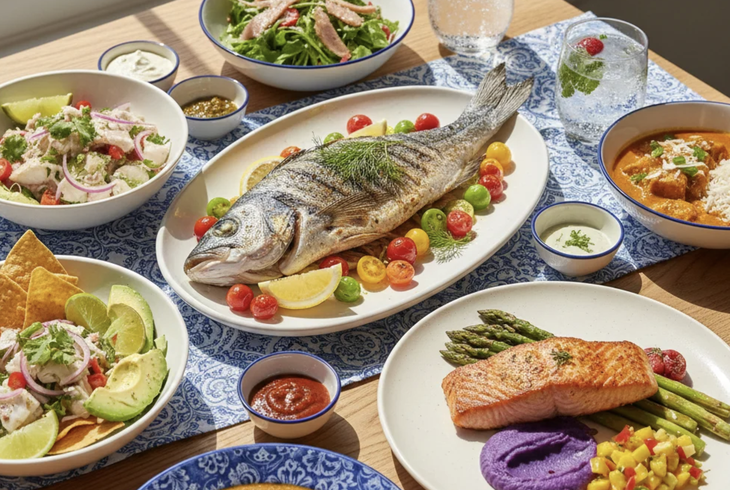
Adding fish to meals helps provide more nutrition for the elderly - Illustration photo
Nutrition from fish
According to Dr. Tran Chau Quyen - Head of the Department of Adult Nutrition Consultation, National Institute of Nutrition, eating fish regularly helps protect the heart, support brain function, reduce inflammation and maintain muscle mass - all of which are very important for the elderly.
Eating fish is good for heart health: Fish fat contains a lot of omega-3 fatty acids (both EPA and DHA), which help reduce blood triglycerides, control blood pressure, and reduce the risk of cardiovascular events.
Eating fish helps protect brain function: Omega-3s in fish oil are essential for brain health and may help slow cognitive decline. Studies have shown that regularly eating fish reduces the risk of dementia and Alzheimer's disease.
Maintain muscle and strength: Due to its low fibrous connective tissue content, fish meat is easily digested and absorbed, providing the body with enough protein to help maintain muscle mass, thereby supporting mobility, balance and overall body function.
Ability to reduce inflammation and joint pain: Thanks to the anti-inflammatory properties of omega-3 in fish oil, it helps relieve the symptoms of arthritis or chronic inflammatory conditions common in the elderly.
Provides vitamins and minerals: Fish is rich in vitamin D (important for bone health and immune function), vitamin B12 (supports nerve health and prevents anemia), selenium and iodine (supports thyroid and metabolic function).
What should be noted when eating fish?
Although fish brings many health benefits, Dr. Quyen noted that some types of fish contain high levels of mercury, which can affect the brain and nervous system when eaten continuously for a long time; often found in fish living in deep sea waters such as mackerel, tuna, swordfish, and shark.
Fish can be contaminated with bacteria such as listeria or salmonella, so use fresh fish or fish that is properly refrigerated and cook thoroughly before eating; avoid eating raw fish.
High salt content: Ocean fish and processed fish (such as dried, canned or smoked fish) contain high levels of salt, which can be harmful to people with high blood pressure and kidney disease.
Risk of bone stuck in throat: Elderly people often have poor eyesight and ineffective teeth and mouth function, making it easy to swallow fish bones when eating. Therefore, be very careful and remove all bones before eating.
So how to use fish to optimize effectiveness for the elderly?
According to Dr. Quyen, in terms of frequency, you should eat at least 3 fish meals per week, especially fatty fish. Each time you should eat 100-150g.
Cooking method, should be simple to preserve the natural flavor of the fish such as steaming or boiling, if frying is needed, it should be fried with fat to limit burning of oil (because vegetable oil has poor heat resistance), avoid deep frying, because it will add unhealthy fat and can cause indigestion. You can add some spices when cooking such as marinating fish with ginger, lemongrass, turmeric or tea to remove the fishy smell of the fish.
To ensure safety, the elderly should use boneless or ground/crushed fish fillets (like making fish cakes) to avoid choking on bones.
"In short, fish is a very good food for the health of the elderly and accompanies the healthy aging process. However, it is necessary to ensure safety when using fish to optimize the benefits of fish for the health of the elderly," Dr. Quyen shared.
Source: https://tuoitre.vn/nguoi-cao-tuoi-nen-an-bao-nhieu-ca-mot-tuan-20251205101703611.htm

![[Photo] Cat Ba - Green island paradise](/_next/image?url=https%3A%2F%2Fvphoto.vietnam.vn%2Fthumb%2F1200x675%2Fvietnam%2Fresource%2FIMAGE%2F2025%2F12%2F04%2F1764821844074_ndo_br_1-dcbthienduongxanh638-jpg.webp&w=3840&q=75)





























































































Comment (0)