

Prepare early, and in advance.
According to statistics from the Vietnam Road Administration, the total cost needed to repair the damage caused by storms and floods to the road sector amounts to more than 2,000 billion VND.
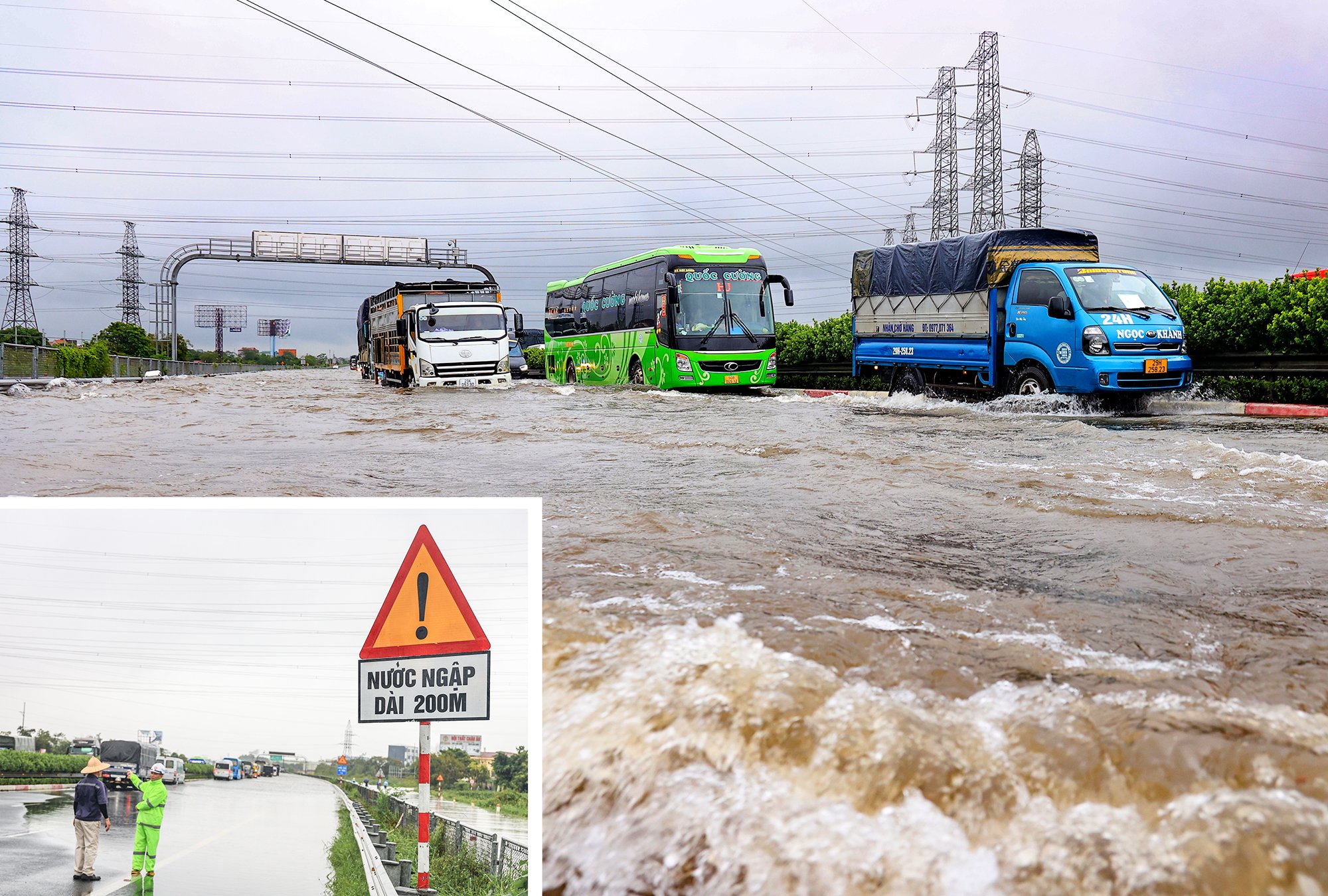
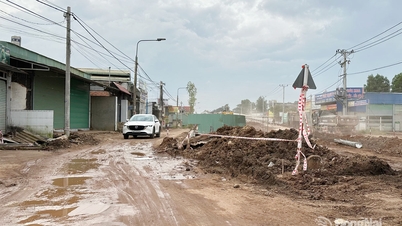
Failure to handle the flooding on the Phap Van - Cau Gie expressway promptly and effectively could lead to Hanoi being isolated. Photo: Ta Hai.
According to Mr. Bui Quang Thai, Director of the Vietnam Road Administration, the first lesson learned after Typhoon No. 3 is the need for early and proactive preparation, including the development of a comprehensive plan. The plan should also be adjusted flexibly and promptly to adapt to the level of destruction caused by the storm and floods.
"For example, the task force of the Department of Roads went directly to the Phong Chau bridge area, coordinating with the local authorities to support the remediation efforts. When the water level rose, they had to dismantle the pontoon bridge and switch to ferry transportation. Or when the Phap Van - Cau Gie expressway was flooded, if the situation wasn't handled flexibly and promptly, it could lead to Hanoi being isolated," Mr. Thai cited as an example.
According to Mr. Thai, the "4 on-site, 3 ready" principle has proven effective, with on-site materials and logistical support being used flexibly and deployed promptly between road management areas, moving from distant locations to nearby ones to ensure traffic flow…
Streamline procedures and redefine unit prices.
However, Mr. Le Hong Diep, Head of the Traffic Management Department of the Vietnam Road Administration, said that the response to Typhoon No. 3 also revealed some limitations such as difficulty in finding locations to stockpile materials, and lengthy procedures for compensation and land clearance for bypass roads around landslide areas…
"Many roads are isolated, making it difficult to access the site and open up construction areas for remediation. The standard rates for clearing landslides, especially for placing gabions, are very low, causing difficulties for the construction units," Mr. Diep said.
According to Mr. Diep, the complete restoration of infrastructure will take a long time and significant financial resources. Therefore, priority should be given to allocating resources to mitigate the consequences of natural disasters and amending regulations accordingly, including the standards for clearing landslides and other related issues.
"Based on the lessons learned from the Trung Ha and Phong Chau bridges, we need to study and develop specialized inspection standards for bridge piers and abutments. The current general regulations are unclear in the context of heavy rain and floods. Resources allocated to units responsible for flood and storm damage recovery are still limited, restricting their proactive approach," Mr. Diep said.
Professor Bui Xuan Cay, a senior lecturer in the Faculty of Civil Engineering at the University of Transport and Communications, stated that each type of construction project is designed with a specific frequency of storms and floods in mind. With super typhoon number 3, even with the best possible preparations, damage would still occur to a certain extent. This is not unique to Vietnam; it also happens in developed countries.
"To address this quickly, priority should be given to allocating budget to disadvantaged localities, streamlining investment procedures, and allowing investors to award contracts through direct negotiation," Mr. Cay proposed.
Urgent matters require urgent solutions.
The 2024 Road Law stipulates that road infrastructure must be built to adapt to natural disasters and climate change. However, experts believe that the law only provides general principles and needs to be quickly reviewed, amended, and appropriate standards and regulations developed.
According to Dr. Duong Nhu Hung from Ho Chi Minh City University of Technology, to reduce negative impacts, a thorough assessment of natural disaster risks in each area is necessary. Regions that frequently face high risks should apply higher design standards.
Professor Bui Xuan Cay stated that developing effective adaptation strategies requires appropriate investment policies, forecasting the level and scope of impact, and developing flexible adaptation solutions.
According to Mr. Bui Quang Thai, the established norms for materials in flood and storm prevention and mitigation are no longer appropriate, especially for locally sourced materials and equipment. Due to the urgency, materials and machinery must be mobilized promptly, making it impossible to follow the usual standardized unit prices. A new approach is needed, with a separate mechanism; the normal procedures cannot be followed.
"Once a state of emergency or an emergency construction order has been declared, action must be taken as quickly as possible. When drafting the circular guiding the Road Law on addressing storm and flood damage, the Road Department will research and propose solutions to expedite the process and reduce administrative procedures," Mr. Thai said.
The new Road Law, recently enacted by the National Assembly , stipulates that investment and construction of road infrastructure projects must comply with technical standards and classifications, and include solutions to adapt to climate change; ensure flood drainage and other requirements for disaster prevention and control. Currently, implementing guidelines for the law are being urgently developed and feedback is being gathered.
Source: https://www.baogiaothong.vn/nhieu-bai-hoc-giam-thiet-hai-duong-bo-sau-bao-lu-192241021231847597.htm


![[Image] Close-up of the newly discovered "sacred road" at My Son Sanctuary](/_next/image?url=https%3A%2F%2Fvphoto.vietnam.vn%2Fthumb%2F1200x675%2Fvietnam%2Fresource%2FIMAGE%2F2025%2F12%2F13%2F1765587881240_ndo_br_ms5-jpg.webp&w=3840&q=75)












































































Comment (0)