

Specifically, a representative from the Customs Department stated that, in order to further expand the electronic tax payment system through intermediary payment service providers and to enable customs authorities to use information on state budget payments transferred by these service providers to the Customs Electronic Payment Portal for accounting purposes, debt deduction, and confirmation of tax obligations, the issuance of a Circular stipulating procedures for electronic transactions in the tax field for exported, imported, and transit goods and vehicles entering, exiting, and transiting the country is necessary and has a practical basis to ensure modernization in customs management and facilitate service providers.
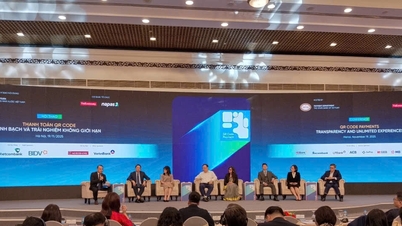
Based on that, on June 24, 2025, the Minister of Finance issued Circular No. 51/2025/TT-BTC regulating electronic transactions in the tax field for exported, imported, and transit goods, as well as vehicles entering, exiting, and transiting the country. Accordingly, the pilot implementation of electronic tax collection through intermediary payment service providers has increased convenience and provided taxpayers with more options when paying state budget taxes, contributing to the implementation of the Prime Minister's Non-Cash Payment Scheme.
The regulations in the Circular contribute to promoting the application of information technology and digital transformation in tax management activities, contributing to administrative procedure reform and creating favorable conditions for citizens, businesses, and management agencies. Specifically, for organizations providing intermediary payment services, they are allowed to prepare the necessary documents and technical infrastructure in advance, corresponding to the technical standards publicly available on the Customs website, after submitting a request for technical connection. This helps to reduce the time and cost of registration and implementation compared to the regulations in the previous Circular No. 184/2015/TT-BTC;
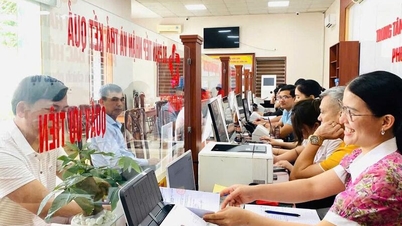
For taxpayers, electronic tax transactions can be conducted through various payment channels to suit their needs, including bank applications, applications from intermediary payment service providers, or online through the customs electronic transaction portal. This enhances convenience and improves the user experience for paying taxes and customs fees to the state budget.
Taxpayers and customs declarants can immediately complete tax payment procedures, receive notifications of arising tax obligations, and enjoy maximum convenience in paying taxes and fees anytime, anywhere, and through any internet-connected device. At any time, taxpayers and customs declarants can enter payment orders, regardless of commercial bank transaction closing times, reducing customs clearance time and costs; enabling taxpayers and customs declarants to be more proactive, increasing the convenience of customs services, and boosting state revenue.
At the same time, be prepared to expand the channels and methods of collecting state revenue from individual import and export activities due to the rapidly developing trend of using cross-border e-commerce; be more proactive in managing funds for state revenue payments.
For customs authorities, increased convenience in electronic tax payment for exported and imported goods contributes to the growth of cashless payment services and streamlines administrative procedures.
The regulation of electronic verification and adjustment is a great need for banks to coordinate collection, reduce paperwork, and shorten processing and verification time between customs authorities, coordinating collection organizations, and the State Treasury. This contributes to reducing costs for all parties and shortening the time taxpayers spend on tax payments, thereby reducing customs clearance time for goods.
Source: https://baophapluat.vn/nhieu-tien-ich-trong-nop-thue-dien-tu-doi-voi-hang-hoa-xuat-nhap-khau.html

![[Photo] Prime Minister Pham Minh Chinh holds a phone call with the CEO of Russia's Rosatom Corporation.](/_next/image?url=https%3A%2F%2Fvphoto.vietnam.vn%2Fthumb%2F1200x675%2Fvietnam%2Fresource%2FIMAGE%2F2025%2F12%2F11%2F1765464552365_dsc-5295-jpg.webp&w=3840&q=75)


![[Photo] Closing Ceremony of the 10th Session of the 15th National Assembly](/_next/image?url=https%3A%2F%2Fvphoto.vietnam.vn%2Fthumb%2F1200x675%2Fvietnam%2Fresource%2FIMAGE%2F2025%2F12%2F11%2F1765448959967_image-1437-jpg.webp&w=3840&q=75)












































![[OFFICIAL] MISA GROUP ANNOUNCES ITS PIONEERING BRAND POSITIONING IN BUILDING AGENTIC AI FOR BUSINESSES, HOUSEHOLDS, AND THE GOVERNMENT](https://vphoto.vietnam.vn/thumb/402x226/vietnam/resource/IMAGE/2025/12/11/1765444754256_agentic-ai_postfb-scaled.png)










































Comment (0)