

(NLĐO) - Astronomers have continuously discovered strange things in the constellation Ophiuchus, from promised lands of life to terrifying worlds .
The constellation Ophiuchus (the Serpent Herder) is one of the 48 constellations named by the ancient Greek scholar Claudius Ptolemaeus in the 2nd century. With modern science , we can now see the world inside this constellation more and more clearly.
But sometimes, that only makes it more mysterious.
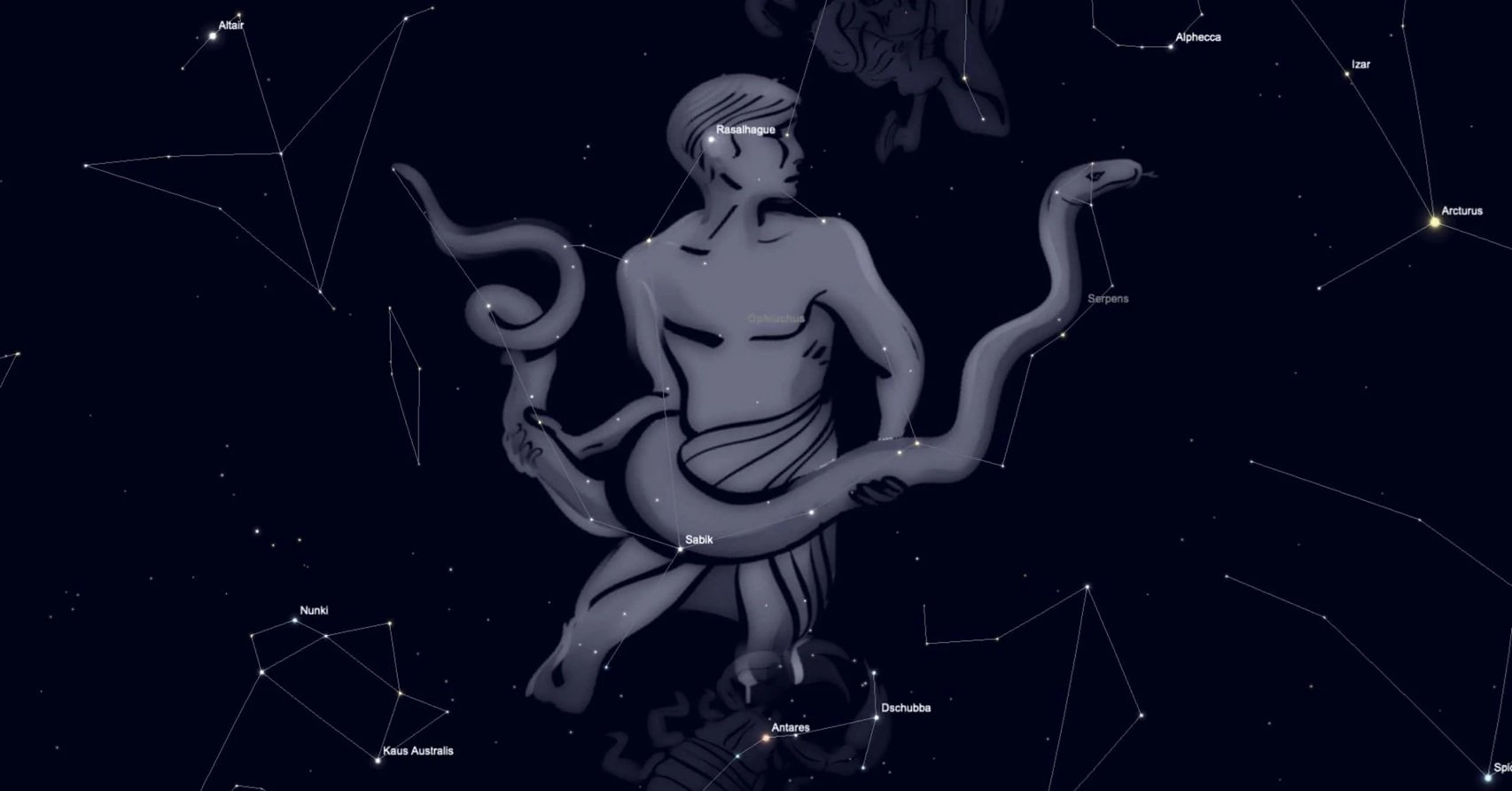
The constellation Ophiuchus, with its main stars forming the image of a man carrying a large snake - Photo: LOVE THE NIGHT SKY
1. "Parallel worlds"?
A star-forming region called the "Ophiuchus Cloud Complex" in the constellation Ophiuchus is expected by scientists from the Flatiron Institute (USA) to contain a "parallel world" of the Solar System, which is still in its early stages.
This region contains many dense protostar cores from various stages of star formation and protoplanetary disk development, representing the earliest stages in planetary system formation.
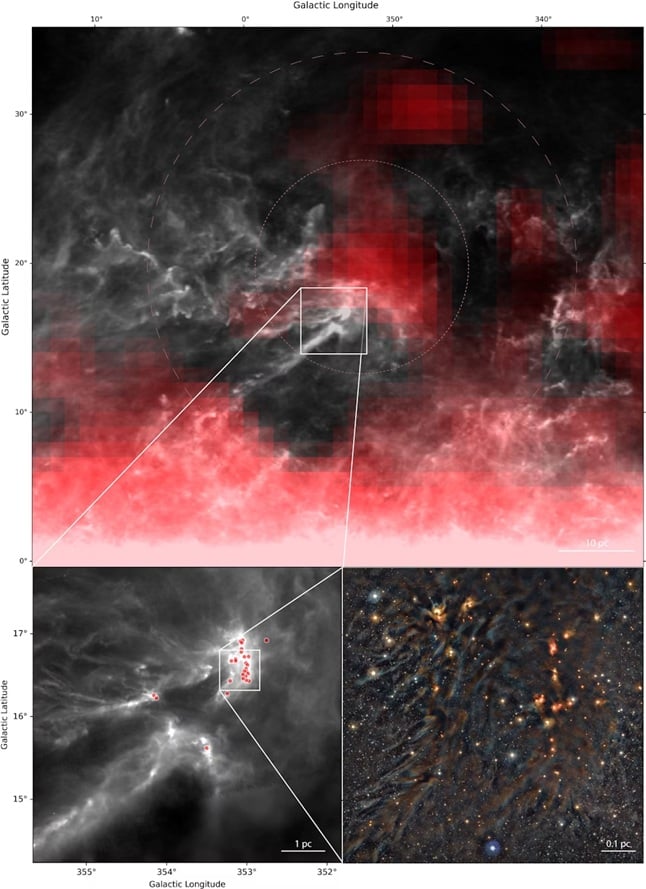
Special star-forming region in the constellation Ophiuchus - Photo: FLATIRON INSTITUTE
There, the research team identified the aluminum-26 isotope, which builds up inside stars and has a relatively short lifespan of only 100,000 years.
Aluminum-26, found in calcium-aluminum-rich structures known as CAIs, is sub-millimeter in size and provides a significant heat source during planetary formation.
CAI is released when stars die, exploding into supernovae. And that may also be how Earth was "seeded" in the solar system billions of years ago.
2. Places where life once originated or is developing.
The planet Gliese 1214b, orbiting a red dwarf star in the constellation Ophiuchus, has a diameter 2.9 times that of Earth and a mass 8 times greater. Scientists from Maryland State University (USA) have determined that it has a water-rich atmosphere.
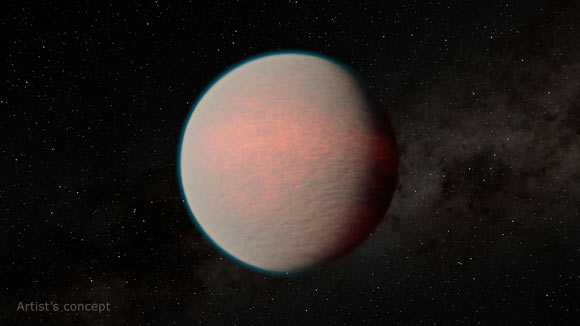
Planet Gliese 1214b - Image: ESO
Currently, it has a daytime temperature of 279 degrees Celsius and a nighttime temperature of 165 degrees Celsius, too hot for us, but still much cooler than Venus – which is thought to potentially harbor life.
Additionally, the authors suggest that this planet may have once been a "water world," where the oceans contained more water than Earth, potentially harboring ancient life, albeit now extinct.
Meanwhile, another team from Queen Mary University (UK) identified a protostar named IRAS16293-2422 B, located 450 light-years away in the constellation Ophiuchus.
Most importantly, it originated in the star-forming region containing glycolonitrile molecules, a type of primitive "building block" similar to what gave life its origin on our planet.
This molecule has the chemical formula HOCH2CN, meaning it contains carbon, oxygen, hydrogen, and nitrogen atoms. It is believed to be a precursor to the formation of adenine, a fundamental component in both DNA and RNA.
Therefore, it's possible that a "parallel Earth" is emerging there.
3. The treasure trove of brown dwarf stars
Brown dwarfs are mysterious objects that fall between the categories of stars and planets.
They are too large for a planet to qualify as a star, but too small for stars, so they cannot sustain the proper fusion reactions to be considered a star.
They appear to "emerge from nowhere," meaning they form directly from the molecular clouds that contain them, such as stars, rather than from the protoplanetary disk of a star.
Therefore, they are sometimes called "failed stars" or "planets from nowhere".
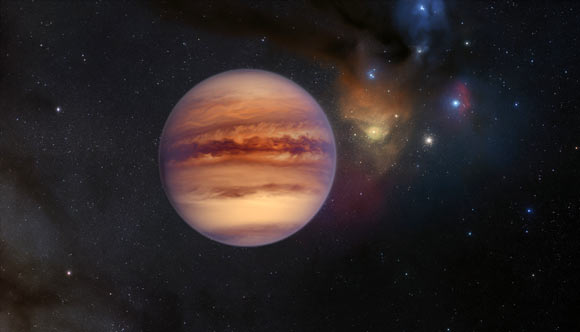
Brown dwarf star - Graphic image: ESO
While astronomers are struggling to find them in the space around us, in the constellation Ophiuchus, in another star-forming region, there are between 70 and 170 "planets from nowhere" in existence.
This suggests that our Milky Way galaxy may contain more brown dwarfs than we previously thought. And to learn more about this mysterious type of object, as well as the strange worlds mentioned above, astronomers will have to wait for more advanced observational tools.
Source: https://nld.com.vn/nhung-bi-an-cho-giai-dap-tu-the-gioi-nguoi-chan-ran-196250124102008331.htm





























































































Comment (0)