

Satellites are one of the most amazing technological achievements that humankind has ever created.
The idea of building an artificial device and putting it into orbit around Earth has always been awe-inspiring, while also requiring enormous investments in technology and cost.
Of that cost, the majority comes from the rocket launch process, as escaping Earth's gravity requires a massive amount of energy, meaning thousands of tons of fuel for each launch.
The launch vehicle itself is usually not reusable, and building satellites is extremely expensive because they incorporate many sophisticated devices and must operate reliably in the harsh environment of space, with virtually no possibility of routine maintenance or repair.
In turn, satellites play a vital role, not only for space research and the study of Earth's natural processes, but also as the foundation of global communication networks.
Below is a list of the most expensive satellites currently in operation, based on publicly available information.
International Space Station (ISS)
Generally, satellites are understood as unmanned devices without life support systems, whose sole purpose is to transmit data back to Earth.
This significantly reduces costs and allows for optimization of volume and level of protection.
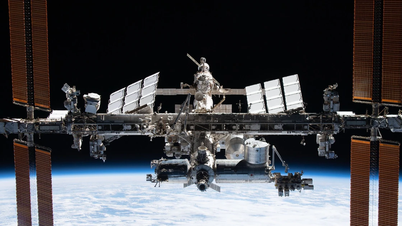
However, the International Space Station (ISS), the most ambitious space project in human history, involves unprecedented cooperation between nations with leading space industries.

International Space Station (Photo: Getty Images).
The ISS was assembled over multiple missions, with each module launched individually and then connected in orbit.
The result is a habitable space station with pressurized compartments that allow humans to work without protective clothing.
The cost of this project far exceeds that of any other satellite, as each module entails its own manufacturing and launch costs, not to mention the costs of operation, refueling, and regular resupply.
The total cost of the ISS is estimated at around $150 billion, the highest of all the other projects on the list.
The ISS possesses exceptional scientific value, facilitating experiments in a microgravity environment and research into the effects of long-duration spaceflights on the human body.
However, the ISS's journey is coming to an end, as NASA plans to launch the station from orbit in 2030.
Hubble Space Telescope
Space telescopes belonging to the satellite group are among the most expensive, with Hubble being a prime example.

Hubble Space Telescope (Photo: Shutterstock).
Launched into orbit in 1990, this instrument ushered in a new era for astronomy with iconic images and data about the universe.
The Hubble project cost billions of dollars, including the cost of manufacturing, launching, and numerous maintenance missions carried out by astronauts.
Thanks to its ability to observe in the visible and near-ultraviolet light ranges, Hubble has contributed to changing humanity's understanding of the age of the universe, the formation of galaxies, and the nature of many cosmic phenomena.
Despite having been in operation for over three decades, Hubble continues to play a vital role, alongside newer generations of telescopes.
James Webb Space Telescope (JWST)
If Hubble was already considered expensive, JWST was even more costly when it launched into space in 2021.
JWST is currently the most expensive single satellite ever deployed, with an estimated total cost of around $10 billion.

The James Webb Space Telescope (Photo: Shutterstock).
Initially, the project was estimated at only around $1 billion, but costs escalated sharply due to technical challenges in developing state-of-the-art infrared observation equipment and a system of giant, foldable mirrors.
JWST currently operates at the Lagrange L2 observatory (approximately 1.5 million km from Earth in the opposite direction of the Sun), observing the universe in the infrared range.
This telescope does not replace Hubble, but complements it, expanding humanity's ability to observe previously inaccessible regions of the universe.
NISAR satellite (NASA – ISRO)
In addition to space observation satellites, many satellites are focused on studying Earth.
Among these projects, NISAR, a collaboration between NASA and the Indian Space Research Organization (ISRO), is considered the most advanced and expensive remote sensing satellite in the group of Earth remote sensing satellites, with a total cost of approximately $1.5 billion.

NISAR satellite (Photo: Getty Images).
Costs were optimized because ISRO handled the launch and operation, a company known for its cost-effective missions.
NISAR is the first dual-frequency radar satellite, using S-band and L-band radar to periodically image the Earth's surface, enabling scientists to monitor ecological, geological, and environmental changes with unprecedented detail.
WorldView Legion satellite constellation
Instead of operating a single satellite, many current Earth observation systems deploy constellations of satellites.
WorldView Legion is considered the most powerful and expensive commercial remote sensing satellite constellation currently available, consisting of six satellites launched in two phases, combined with four previous-generation WorldView satellites to provide global coverage.

The WorldView Legion satellite constellation (Image: EUSI).
Each previous WorldView satellite cost approximately $750 million (including launch). The six Legion satellites, however, cost around $600 million to develop due to their smaller size and the possibility of a joint launch.
This system allows for the imaging of an area on Earth up to 15 times a day, serving scientific research, planning, and various other commercial purposes.
Chollian-2A and Chollian-2B (South Korea)
South Korea's space program has made significant strides, with the launch of the Chollian-2 satellite (GEO KOMPSAT-2) being a notable achievement.
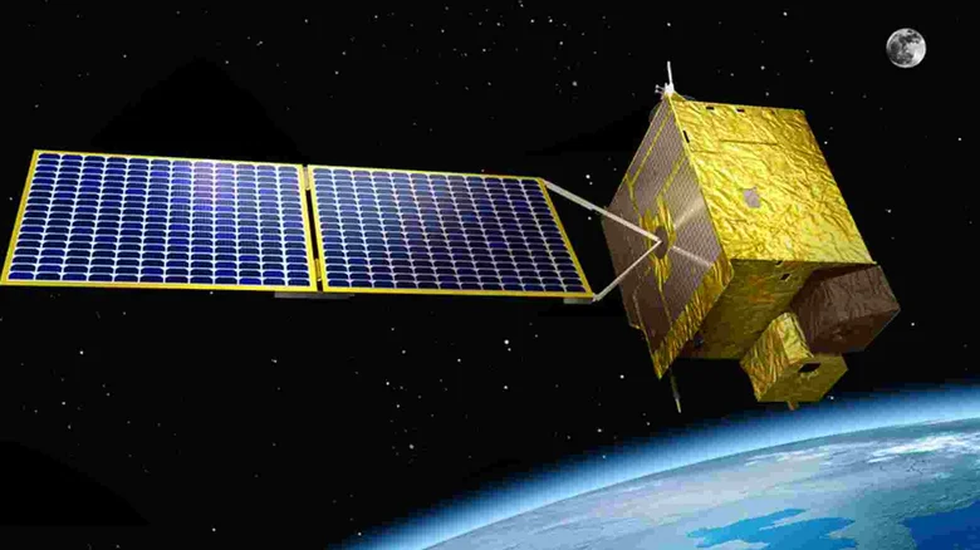
Chollian-2A and Chollian-2B satellites (Image: KMA portal/eoportal).
These two satellites are placed in geostationary orbit, focusing on monitoring the Korean Peninsula.
Chollian-2A carries advanced meteorological observation equipment, while Chollian-2B is equipped with environmental and ocean monitoring sensors, capable of tracking even fine particulate matter.
The total budget for the project is approximately $655 million, making Chollian one of the most expensive operational satellite systems.
Carbon Observation Satellite (OCO-2)
OCO-2 is a dedicated NASA satellite operating in polar orbit to monitor CO2 concentrations in the atmosphere.

Carbon Observation Satellite (Photo: Getty Images).
This satellite scans almost the entire surface of the Earth and repeats the same location every 16 days, thereby helping to build a map of carbon emissions on a global scale.
This mission cost approximately $465 million, primarily for the launch itself, following a previous failed launch.
Despite its design lifespan of only two years, OCO-2 has far exceeded expectations. However, funding for the project is being cut in 2025, and the satellite is scheduled to be brought to a controlled crash, ending this unique mission.
TerreStar-1
TerreStar-1 is a telecommunications satellite launched in 2009, designed to provide direct mobile connectivity to Canada from geostationary orbit.

TerreStar-1 telecommunications satellite (Photo: Shutterstock).
This was once the largest telecommunications satellite at the time, with total costs including manufacturing and launch estimated at over $1 billion, contributing to the bankruptcy of TerreStar.
The satellite was later acquired by Dish Network for $1.375 billion and continues to be used to provide wireless broadband services.
Intelsat 35e
Intelsat 35e is part of Intelsat's EpicNG series of high-power satellites, launched into orbit in 2017, with an estimated total manufacturing and launch cost exceeding $400 million.

Intelsat 35e satellite (Image: Intelsat).
Built by Boeing Space, this mission is capable of handling large volumes of data traffic, serving the Americas, Europe, and Africa.
However, launching this satellite presented many challenges due to its large size and difficult-to-reach geostationary orbit, but was ultimately successful with SpaceX's Falcon 9 rocket.
TDRS-13
TDRS-13 is the newest satellite in NASA's network of data relay satellites, serving to communicate with space missions. The total cost of TDRS-13, including manufacturing and launch, was approximately $421 million.

The TDRS-13 satellite (Image: NASA).
This satellite was launched into geostationary orbit to coordinate with other TDRS satellites, transmitting data and signals from spacecraft back to Earth in real time.
This was also the last TDRS satellite, as NASA gradually shifted to using commercial services with increasingly higher capabilities.
Source: https://dantri.com.vn/khoa-hoc/10-ve-tinh-dat-do-nhat-dang-hoat-dong-mo-ra-cai-nhin-chan-thuc-ve-vu-tru-20251214064847663.htm










![[INFOGRAPHIC] nubia Neo 3, a gaming smartphone that lets you climb the ranks without overheating.](https://vphoto.vietnam.vn/thumb/402x226/vietnam/resource/IMAGE/2025/12/14/1765692900281_info-nubia-02-jpg.webp)

















































































Comment (0)