

 |
| The weakening global economy is also contributing to China's gloomy outlook. (Source: CNN) |
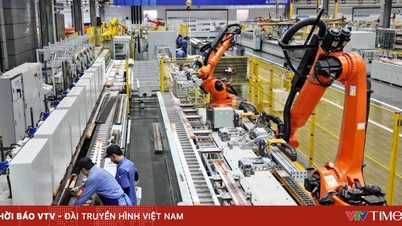
Official data released by China's National Bureau of Statistics (NBS) on May 16 showed that industrial production, retail sales, and fixed investment in the country increased at a much slower pace than expected in April 2023.
Youth unemployment rates have skyrocketed.
Specifically, industrial production in April increased 5.6% year-on-year. This increase was significantly lower than the 10.9% forecast by economists in a Bloomberg survey. Retail sales rose 18.4%, mainly due to lower figures last year. And growth in fixed asset investment slowed to 4.7% in the first four months of the year.
One major concern is the soaring youth unemployment rate, which has reached a record high of 20.4% – a sign that the post-pandemic recovery is not strong enough to attract millions of new entrants to the labor market.
Winnie Wu, equity strategist at BofA Securities, stated: "Many people, including investors, see this as a leading indicator. If young people can't find jobs, if they don't have a secure income, where is the confidence, where is the consumer recovery?"
Other economic indicators are also confirming that the recovery in the world's second-largest economy is slowing. The real estate market in China remains weak, despite initial signs of rising home sales. Meanwhile, inflation is near zero and consumers are reluctant to borrow.
Also in April 2023, real estate investment decreased by 16.2% compared to a year earlier. New home construction continued to decline.
Production of key construction materials, such as aluminum and steel, declined in April compared to the previous month.
Economists argue that more policy action is needed to sustain the recovery. Central bank actions alone will not be enough to boost consumer and business confidence.
Haibin Zhu, chief economist for China at JPMorgan Chase & Co., commented: “Policy support is an important step, but the question is which policy stimulus is most important?”
Industrial policy will likely play a more significant role, followed by fiscal stimulus, particularly consumer stimulus. Monetary policy may play an additional role, but frankly, cutting interest rates is not the most urgent response."
On May 15th, the People's Bank of China (PBOC) hinted that it would maintain its supportive policy. This led some economists to predict that the PBOC might take more aggressive action in the coming months, including lowering the reserve requirement ratio or cutting interest rates.
Michelle Lam, a mainland China economist at Societe Generale SA, noted that while consumption remains stable, the sharp rise in youth unemployment to record highs raises questions about the sustainability of that recovery.
He observed: “The latest economic data from China could open the door for further cuts to the reserve requirement ratio and interest rates, possibly in June.”
In recent years, the PBOC has refrained from aggressive interest rate cuts, instead prioritizing targeted stimulus measures.
"Headwinds" from the world
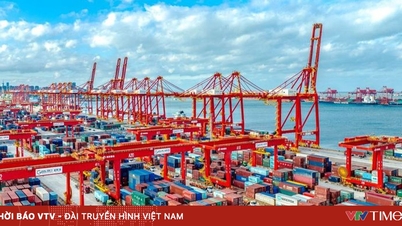
The weakening global economy is also contributing to China's gloomy outlook. High inflation and rising interest rates in the major markets of the world's second-largest economy have led to a rapid decline in consumer demand for Chinese-made goods.
Exporters at the Canton Fair – China's largest trade fair – recently reported a drop in overseas orders. At the same time, according to Bloomberg , surveys of purchasing managers also revealed weakness in the manufacturing sector.
The NBS also highlighted global and domestic risks, stating: “The global environment remains complex and domestic demand appears insufficient. Furthermore, the internal momentum of the economic recovery remains weak.”
Furthermore, in April, investment in infrastructure and manufacturing—which helps offset the decline in real estate investment—both slowed compared to the previous month. This is a sign of weaker government spending and weak business confidence.
However, some experts still have faith in the Chinese economy. For example, economists at Goldman Sachs Group Inc. have downplayed concerns about a derailed recovery, maintaining their full-year 2023 growth forecast at 6%.
These economists asserted: “We do not view the April activity data as a turning point for growth. We believe that China’s consumption-led recovery following its reopening is still on track.”
Source







































































Comment (0)