

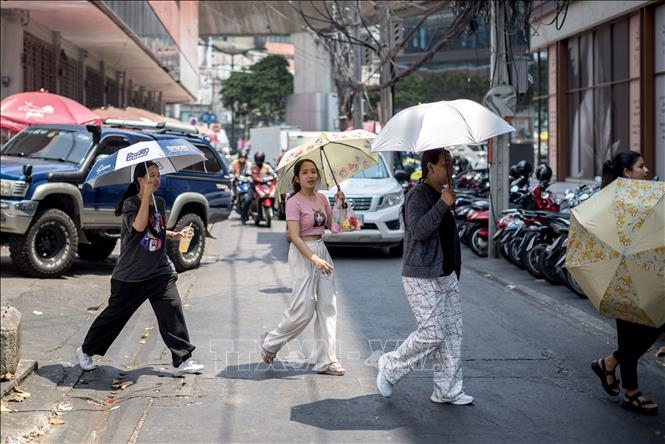
People use umbrellas to shield themselves from the sun while walking on the streets in Bangkok, Thailand.
Scorching heat sweeps across many areas.
A heatwave has gripped much of South Asia and Southeast Asia. Areas such as Chauk in Myanmar and the Philippine capital Manila have recorded record-high temperatures in recent days.
In Thailand, authorities have issued warnings about the dangers of severe heatwaves. Meanwhile, governments in Cambodia, Myanmar, Vietnam, India, and Bangladesh are all predicting temperatures exceeding 40 degrees Celsius.
The Philippines and Bangladesh have had to suspend in-person classes. Meanwhile, India is considering whether the heatwave will affect voter turnout in national elections.
Even northern Japan was affected by the heatwave. Temperatures in Sapporo, Japan, in April exceeded 25 degrees Celsius – the earliest on record.
Causes of intense heat
In the months leading up to the rainy or monsoon season, Asia typically experiences hot weather, but temperatures in 2024 at this time were significantly higher than the average in many countries.
Experts say climate change is causing more frequent, intense, and prolonged heatwaves.
According to the World Meteorological Organization, a United Nations agency, Asia is also warming faster than the global average.
Dr. Milton Speer, a meteorologist and visiting researcher at the University of Technology Sydney, said that the El Niño phenomenon played a significant role in causing the 2024 heatwave.
“The lack of clouds during El Niño means that average temperatures are likely to be higher. Sea surface temperatures in this area are currently a few degrees Celsius higher than usual, causing temperatures to rise above the inland average overnight. Therefore, daytime temperatures are also rising from higher levels,” Speer explained.
Other factors also contributed to this unusual heatwave, including deforestation which reduces shade and increases dry surface area, and the urban heat island effect, where concrete, glass, and steel structures absorb rather than reflect heat.
People who are vulnerable to heat
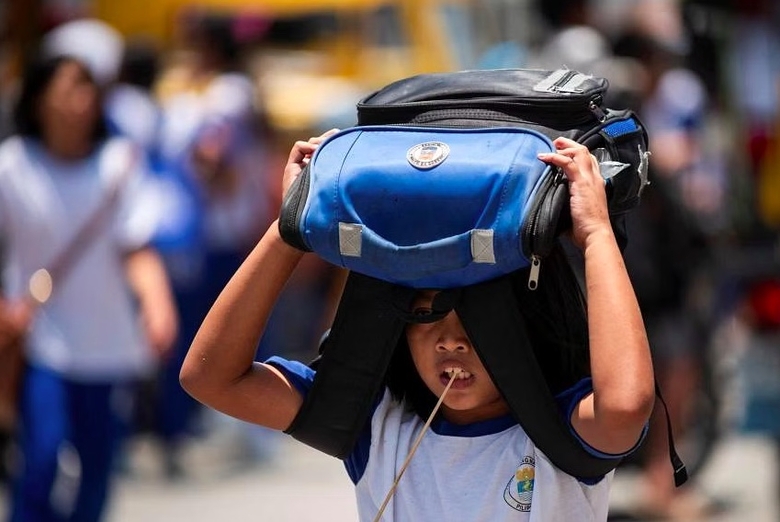
Asia is warming faster than the global average.
Record-breaking temperatures are disproportionately affecting children, the elderly, and those living in poverty.
Children, the elderly, people with underlying health conditions, or people with disabilities are all at higher risk of heatstroke.
People living in poverty also lack cooling solutions at home or are forced to work in conditions that are not adequately protected from the heat.
This month, UNICEF warned that 243 million children across the Pacific and East Asia are at risk of being affected by heatwaves.
Salwa Aleryani, a health expert at UNICEF's East Asia and Pacific Regional Office, said that children exposed to heatwaves can suffer from heatstroke.
She told AFP: "Serious problems can occur, such as cardiovascular disease, organ failure, muscle and nerve dysfunction."
Reactions from various countries

People use umbrellas to shield themselves from the heat in Bangkok, Thailand, on April 1, 2024.
Authorities in several countries have urged citizens to stay indoors. Hospitals in Nepal have been put on high alert, while Cambodian officials have instructed public schools to open all doors and windows for ventilation.
Bangladesh and the Philippines imposed even harsher measures, with schools ordered to close for several days.
The Philippine Department of Education has instructed public schools to cancel in-person classes on April 29 and 30 due to the heatwave. Benjo Basas, president of the Philippine Teachers' Dignity Alliance, stated, "We have received reports of high blood pressure, dizziness, and fainting among students and teachers in recent days."
However, Aleryani warned that many children are not even in a cooler environment at home. They may also be left unsupervised by parents who cannot afford to stay home from work, and their education is at serious risk of being disrupted.
In Singapore, the meteorological agency says temperatures in 2024 could be higher than last year. This would be the fourth hottest year since records began in 1929. Since last month, some schools have relaxed uniform regulations, allowing students to wear more comfortable athletic wear amid the persistent heat.
How long will the heat last?
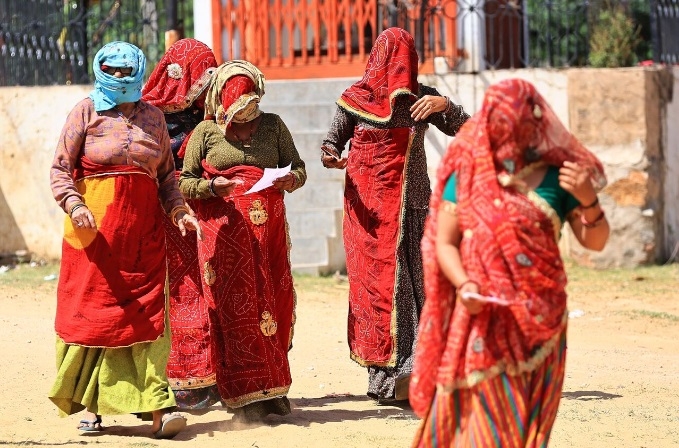
Indian voters cast their ballots in hot weather.
The heatwave in Bangladesh is not expected to subside until at least May 2nd.
Meanwhile, in Thailand, meteorologists warn that the annual rainy season could arrive in late May, several weeks later than usual.
Dr. Speer said the overall warming trend will continue even if the arrival of monsoon winds in the region helps to lower temperatures.
"Heatwaves will continue to occur more frequently as the oceans and atmosphere are gradually warming due to global warming," he said.
This, in turn, poses an increasing risk to crops and livestock, as well as to outdoor workers.
Dr. Speer argues that adaptability to heat is crucial, including providing sustainable, air-conditioned residential structures where people can come during the day and sleep at night.
Source


![[Photo] Explore the US Navy's USS Robert Smalls warship](/_next/image?url=https%3A%2F%2Fvphoto.vietnam.vn%2Fthumb%2F1200x675%2Fvietnam%2Fresource%2FIMAGE%2F2025%2F12%2F10%2F1765341533272_11212121-8303-jpg.webp&w=3840&q=75)

























![[Video] The craft of making Dong Ho folk paintings has been inscribed by UNESCO on the List of Crafts in Need of Urgent Safeguarding.](https://vphoto.vietnam.vn/thumb/402x226/vietnam/resource/IMAGE/2025/12/10/1765350246533_tranh-dong-ho-734-jpg.webp)



























































Comment (0)