

In 2024, Vietnam-China trade surpassed the $200 billion mark for the first time, marking the first time our country's trade has reached this record figure.
Economist Vu Vinh Phu had a discussion with a reporter from the Industry and Trade Newspaper about this issue.
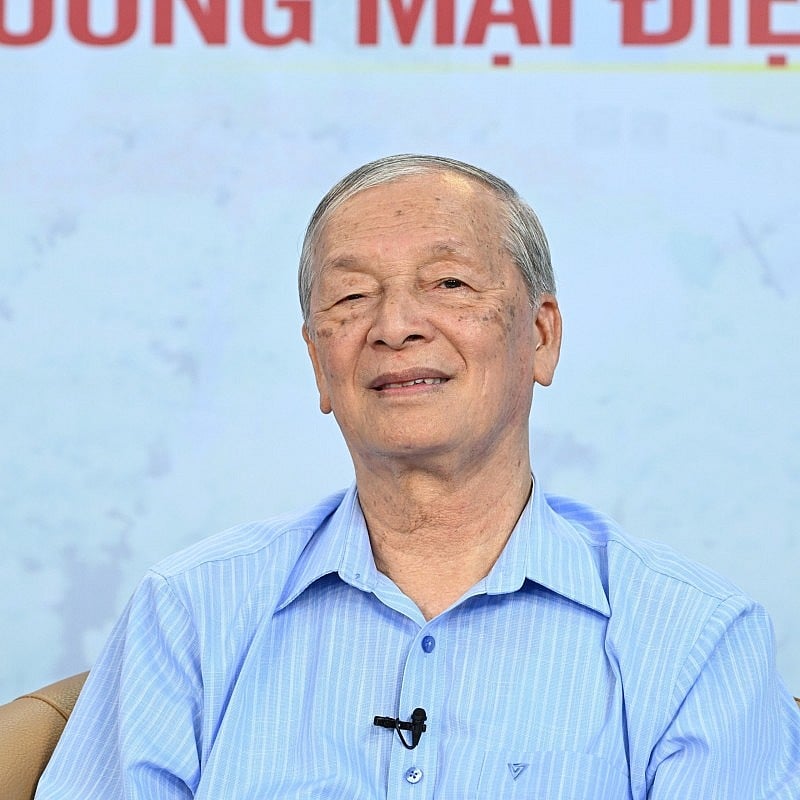 |
| Economist Vu Vinh Phu |
- Sir, in 2024, Vietnam-China trade officially surpassed the $200 billion mark, making it the first market in our country to reach this milestone. What is your assessment of the role of the Chinese market in Vietnam's import and export activities?
Expert Vu Vinh Phu: According to the General Department of Customs, the import and export turnover between Vietnam and China reached 205.2 billion USD. China is also the first trading partner with which Vietnam has established a trade turnover of 200 billion USD or more.
Not only in 2024 but in recent years, China has consistently affirmed its role as a very important trading partner for Vietnam. With a large market of 1.4 billion people and significant purchasing power, China is an attractive market not only for Vietnamese goods but also for goods from many other countries. With a high import rate for many of Vietnam's key products such as textiles, footwear, electronics, and agricultural, forestry, and aquatic products, this is a large market that Vietnam cannot afford to miss.
Furthermore, compared to other competitors, Vietnam has many advantages in exporting goods to China due to its close geographical proximity. Vietnamese goods are of good quality, competitively priced, and highly favored by the Chinese market, creating opportunities to increase export turnover to this market.
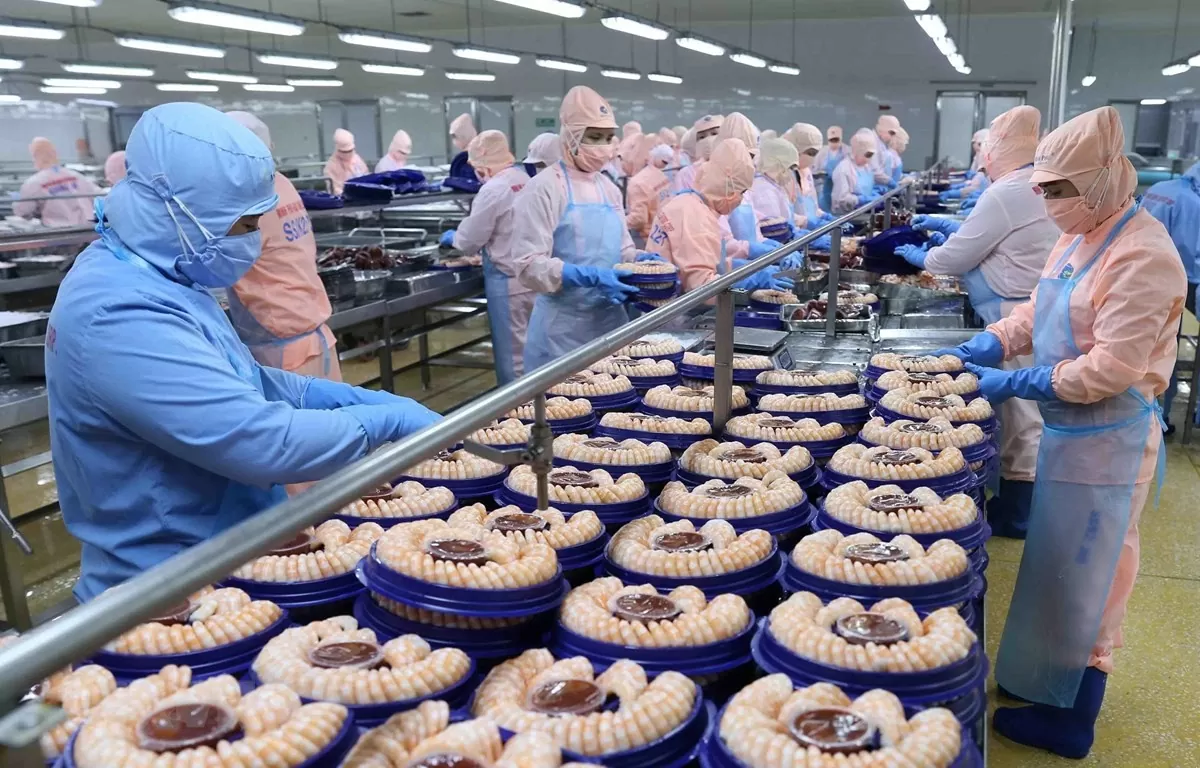 |
| Seafood is one of the main export items to China (Photo: VNA) |
- Despite achieving high bilateral trade volume, the trade deficit between Vietnam and China has also increased significantly. What is your assessment of this situation?
According to expert Vu Vinh Phu, the General Department of Customs also stated that in 2024, Vietnam's exports to China reached US$61.2 billion, a decrease of approximately US$100 million compared to 2023. Meanwhile, imports from China reached US$144 billion, an increase of US$33.35 billion compared to the previous year (equivalent to a growth rate of 30.1%).
Declining exports coupled with rising imports have widened the trade deficit with China compared to previous years. While the deficit with China was only $49.35 billion in 2023, it has risen to $82.8 billion in 2024.
The reason for this situation is that Vietnam mainly exports agricultural products to China – which are low-value items – while importing raw materials, machinery, and equipment from this market – which are generally higher-value items.
Regarding agricultural products – a key export item for Vietnam to China – China has recently erected barriers to protect its domestic consumers. This has led to a sharp decrease in informal imports and an increase in formal exports. However, many Vietnamese businesses have traditionally exported agricultural products to this market through informal channels, thus impacting export revenue.
Furthermore, China also had to issue Orders 248 and 249, requiring businesses to meet food safety standards and tightening import standards into the Chinese market. Meanwhile, due to the strong increase in export value of some Vietnamese products to China, such as durian, there have been instances of fraudulent use of planting area codes for exported durian at certain times and in certain localities. Although these incidents are not widespread, they have had a certain impact on exports to the Chinese market.
Another reason is that recently, many other markets such as Thailand, Cambodia, and Laos have also increased their exports to China, directly competing with Vietnamese products in which they have a competitive advantage, such as fruits, vegetables, rice, and agricultural products. This is also why Vietnam's export turnover to Thailand has decreased, increasing the burden of the trade deficit.
- It must be affirmed that China has been, is, and will continue to be a large and potential market for Vietnamese exports. In 2025, what suggestions do you have for boosting exports to this market?
Expert Vu Vinh Phu: China is a large market, a nearby market, and will continue to contribute significantly to Vietnam's import and export turnover in the coming time. Businesses must recognize that China is also increasingly demanding higher standards such as planting area codes, packaging codes, export standards, etc.
Furthermore, Vietnam currently imports a large amount of goods from China. Most of these are raw materials and components for production, which is not a cause for concern. However, Vietnam also imports a significant amount of agricultural products and consumer goods from China. Therefore, it is necessary to improve the competitiveness of domestic goods to increase exports to this market, thereby reducing the deficit and moving towards a balanced trade balance.
Specifically, businesses must invest in improving the standards and quality of their goods to be able to compete with products from other countries in the Chinese market.
In addition, improving transportation capacity and reducing logistics costs will enhance the competitiveness of businesses. This requires not only the Ministry of Industry and Trade but also the Ministry of Transport and localities sharing a border to participate in improving the road system and investing in the construction of warehouses near the border...
- Currently, China is building warehouses near the border to expedite the delivery of goods to markets, including Vietnam, at the most competitive prices. What are your thoughts on this trend from your side?
Expert Vu Vinh Phu: China's establishment of warehouses near the border for exporting to Vietnam is an activity they have been doing for a long time and has been very effective in helping goods sold on their e-commerce platforms enter Vietnam very quickly, at low cost, and at very cheap prices. This is a challenge for Vietnamese goods, but also a lesson we can learn.
In fact, in the past, there have been many trips by leaders of ministries and agencies to border provinces to establish warehouses there, but currently, Vietnam's implementation speed is still slow. Meanwhile, warehouses at the border play a very important role in ensuring the quality of goods and enhancing the competitiveness of goods exported to China. Therefore, I believe that Vietnam also needs to accelerate the construction of warehouses in this area to increase the competitiveness of goods exported to China. At the same time, cross-border e-commerce should be promoted to take advantage of bringing Vietnamese goods deeper into the Chinese market.
Furthermore, Vietnamese goods currently still go through intermediaries and distributors before reaching the distribution systems of other countries. Therefore, businesses need to strengthen their cooperation and trade connections with distribution systems, markets, and supermarkets in other countries to bring goods directly into these distribution channels, thereby reducing costs, enhancing competitiveness, and making brand building easier.
While a significant amount of Vietnamese goods are exported to China, the availability of branded goods in Tianjin, Beijing, Shanghai, and other major cities remains limited. Meanwhile, China is a vast market, and each province and city represents a significant potential market. Therefore, it is necessary to increase in-depth trade promotion activities targeting specific localities in China to diversify opportunities for Vietnamese goods.
Thank you, sir!
| According to preliminary statistics released by the General Department of Customs, in December 2024, Vietnam-China trade reached US$19.66 billion, with Vietnam's exports totaling US$6.17 billion and imports US$13.49 billion. Overall in 2024, the total import and export turnover between the two countries reached US$205.2 billion. This marks the first time Vietnam-China trade has surpassed the US$200 billion mark. |
Source: https://congthuong.vn/no-luc-can-bang-can-can-thuong-mai-viet-nam-trung-quoc-370028.html



![[Photo] Closing Ceremony of the 10th Session of the 15th National Assembly](/_next/image?url=https%3A%2F%2Fvphoto.vietnam.vn%2Fthumb%2F1200x675%2Fvietnam%2Fresource%2FIMAGE%2F2025%2F12%2F11%2F1765448959967_image-1437-jpg.webp&w=3840&q=75)
![[Photo] Prime Minister Pham Minh Chinh holds a phone call with the CEO of Russia's Rosatom Corporation.](/_next/image?url=https%3A%2F%2Fvphoto.vietnam.vn%2Fthumb%2F1200x675%2Fvietnam%2Fresource%2FIMAGE%2F2025%2F12%2F11%2F1765464552365_dsc-5295-jpg.webp&w=3840&q=75)




































![[OFFICIAL] MISA GROUP ANNOUNCES ITS PIONEERING BRAND POSITIONING IN BUILDING AGENTIC AI FOR BUSINESSES, HOUSEHOLDS, AND THE GOVERNMENT](https://vphoto.vietnam.vn/thumb/402x226/vietnam/resource/IMAGE/2025/12/11/1765444754256_agentic-ai_postfb-scaled.png)










































Comment (0)