

 |
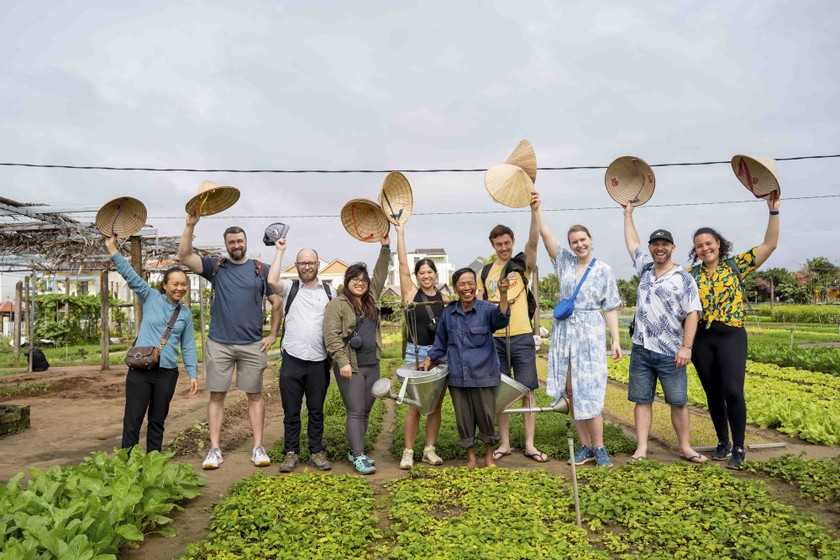
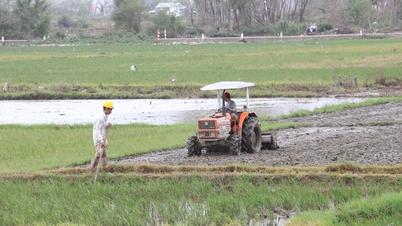
| Vietnamese villages have many advantages for tourism development. (Illustrative image. Source: Ministry of Culture, Sports and Tourism) |
(PLVN) - Currently, Vietnam has thousands of villages offering tourism opportunities throughout the country. Many of these villages possess abundant natural beauty and a rich cultural and historical heritage spanning hundreds or even thousands of years. This represents a potential tourism product that Vietnam can exploit to attract international tourists.
"Rural Charm and Beauty" makes it to the world's top rankings.
Located about 3km from Hoi An Ancient Town in Quang Nam province , surrounded by the Co Co River and Tra Que Lagoon, Tra Que vegetable village nestles peacefully. Since starting their tourism business, the people of Tra Que vegetable village never imagined their small village would be listed on the world tourism map. But on November 15th, Tra Que vegetable village in Hoi An was honored by the United Nations Tourism Organization as the "World's Best Tourist Village," becoming the only Vietnamese representative to receive this award in 2024.
Over 20 years ago, amidst the bustling tourism development of Hoi An, the authorities planned and directed Tra Que vegetable village to become a tourist destination. Houses were relocated, ponds were filled in to create neatly arranged vegetable fields, and pathways were straightened. In April 2022, the vegetable farming profession in Tra Que was recognized by the Ministry of Culture, Sports and Tourism as a National Intangible Cultural Heritage, belonging to the category of folk knowledge and traditional crafts. Visiting Tra Que vegetable village, tourists can experience planting, watering, tending, and tasting fresh green vegetables right from the garden.
Tra Que vegetable village is not the only village in Vietnam to receive international recognition. Previously, in 2023, Tan Hoa village in Quang Binh province was recognized by UN Tourism (then UNWTO - World Tourism Organization) as the "World's Best Tourist Village 2023". About a decade ago, the village was considered the "flood epicenter" of Quang Binh. At one point, the people of Tan Hoa witnessed a historic flood with water levels rising 12 meters, submerging most houses. Villagers had to evacuate to caves and cliffs for shelter.
Thanks to the efforts of the local tourism industry, the village has now become a popular destination known for its peaceful beauty, nestled against the mountains and overlooking a picturesque river. International tourists highly appreciate Tan Hoa village's eco-friendly tourism model and sustainable development approach.
In 2022, the UNWTO announced the list of the 32 best tourist villages in the world. The Thai Hai Ethnic Ecological Stilt House Village in Thai Nguyen was the only representative from Vietnam. Thai Hai covers an area of 25 hectares, featuring hills, a large lake, trees, and 30 stilt houses hundreds of years old. These stilt houses have been restored to their original form for preservation. Surrounding the stilt houses is a picturesque landscape of hills and mountains, creating a tranquil atmosphere.
Overcoming limitations and developing rural tourism.
In reality, Vietnam is an agricultural country, and the majority of its people still live in small villages and hamlets. Tourism has brought new life to many villages in rural, remote, and impoverished coastal areas. Take, for example, the Khuoi Ky stone village of the Tay ethnic group in Cao Bang. From a village with low income and many poor households, the villagers of Khuoi Ky now have a significantly improved life compared to the past.
Currently, Vietnam still has many villages blessed with breathtaking, dreamlike scenery. Examples include the fishing village of Ha Long in Quang Ninh province and the Mong ethnic community tourism village in Meo Vac (Ha Giang province). Furthermore, Vietnam boasts over 2,000 traditional craft villages, some hundreds of years old, preserving unique traditional crafts. Each village embodies the cultural beauty of the Vietnamese people and has the potential to contribute to the development of Vietnamese tourism on an international scale.
However, to evaluate and recognize a village as a world-class tourist destination, according to UN Tourism, a village needs to meet the following nine criteria: Cultural and natural resources; Promotion and preservation of cultural resources; Economic sustainability; Social sustainability; Environmental sustainability; Tourism development and value chain integration; Tourism management and priorities; Infrastructure and connectivity; Health, safety and security.
Therefore, tourism villages in Vietnam that want to reach international standards need to meet high criteria regarding infrastructure, development orientation, social welfare, environment, etc. For example, last year, Vietnam had four tourism villages submitting applications from the provinces of Quang Binh, Son La, Lai Chau, and Hoa Binh, but Tan Hoa, with its "weather-adaptive tourism village" model, was the only one selected. UN Tourism acknowledged Tan Hoa village's commitments and actions towards sustainable tourism development.
Currently, the vast majority of tourism villages in rural Vietnam still face many limitations. For example, regarding the environment, many traditional crafts in Vietnam release a significant amount of toxic waste. According to the 2020 environmental protection report of the Ministry of Agriculture and Rural Development, only 16.1% of craft villages have centralized wastewater treatment systems that meet environmental protection requirements; and only 20.9% of craft villages have industrial solid waste collection points.
The UN Tourism initiative to recognize the world's best villages was launched in 2021 to promote the role of tourism in rural areas, preserving landscapes, cultural diversity, local values, and culinary traditions. Currently, 254 villages are part of the world's largest community of rural destinations.
Source: https://baophapluat.vn/no-luc-dua-lang-du-lich-o-viet-nam-vuon-tam-quoc-te-post532574.html


![[Image] Close-up of the newly discovered "sacred road" at My Son Sanctuary](/_next/image?url=https%3A%2F%2Fvphoto.vietnam.vn%2Fthumb%2F1200x675%2Fvietnam%2Fresource%2FIMAGE%2F2025%2F12%2F13%2F1765587881240_ndo_br_ms5-jpg.webp&w=3840&q=75)
















































































Comment (0)