

Currently, the family of Ms. Phan San May, in Hamlet 4, Dak Ha Commune, Dak Glong District ( Dak Nong Province ), is actively tending to nearly 5 acres of hybrid rice for the winter-spring crop.
The rice seedlings were planted about a month ago and are now in the vigorous leaf-growing and tillering stage, so she has been thinning them evenly and preparing for the second fertilization to promote plant growth.
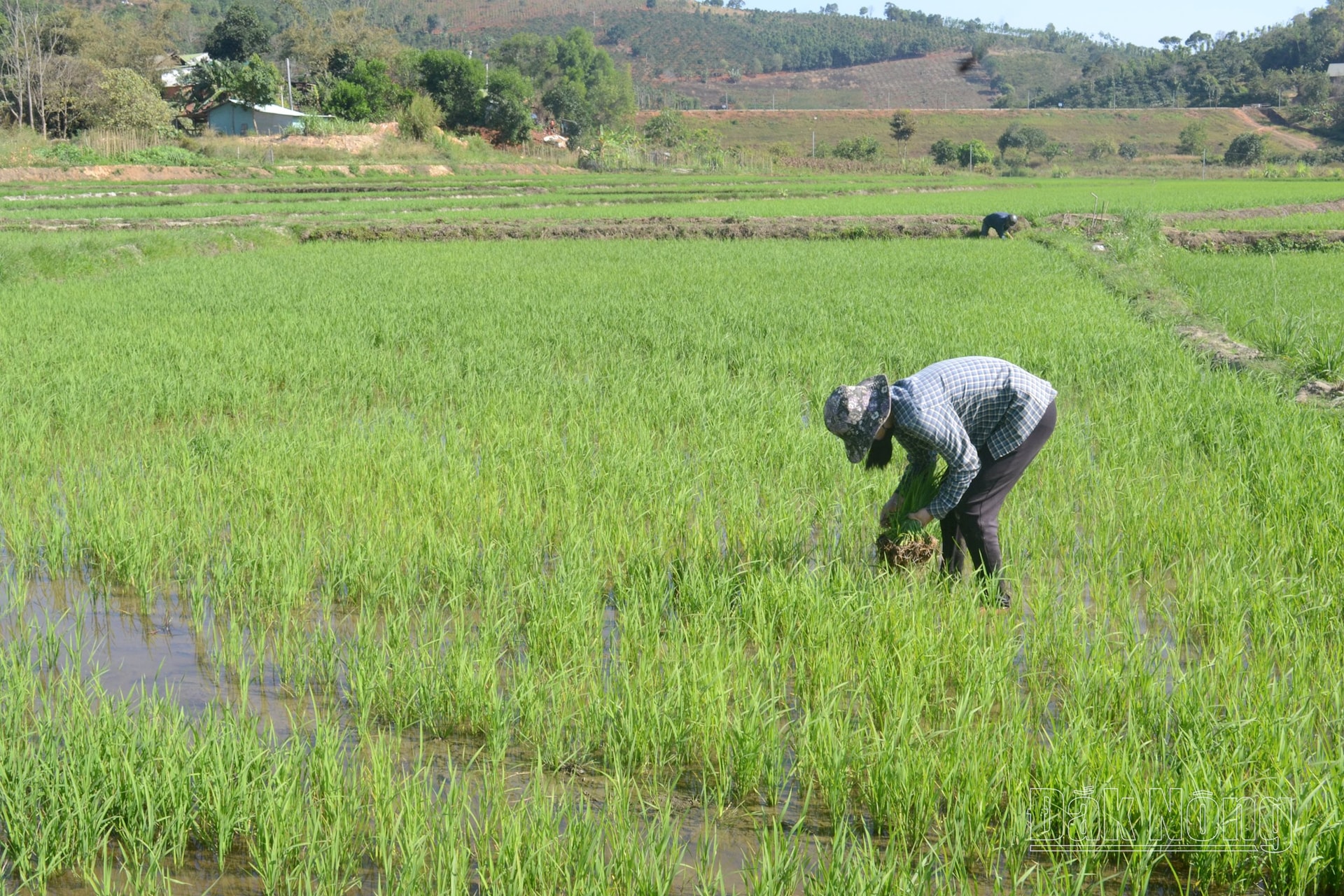
She continues to maintain water levels for the rice crop, monitoring for pests and rodents such as rats and golden apple snails. Ms. May believes that, according to forecasts, the water supply for irrigating the rice fields cultivated by her family is guaranteed this year.
However, with a mindset of preparing for the dry season, she still makes sure to use water sparingly. Her family repaired and reinforced the irrigation ditches leading to the fields, and strengthened the field embankments to ensure that water is not lost.
"During the peak of the dry season, water resources become very scarce, which can affect crops. Therefore, we need to conserve water from the beginning to prepare for potential droughts," Ms. May said.
According to the Department of Agriculture and Rural Development, the winter-spring crop is the season when farmers in the province produce rice on the largest area of the year. According to the plan for the 2025 winter-spring crop, the province plans to cultivate 5,170 hectares of wet rice, striving to achieve a yield of approximately 34,794 tons.
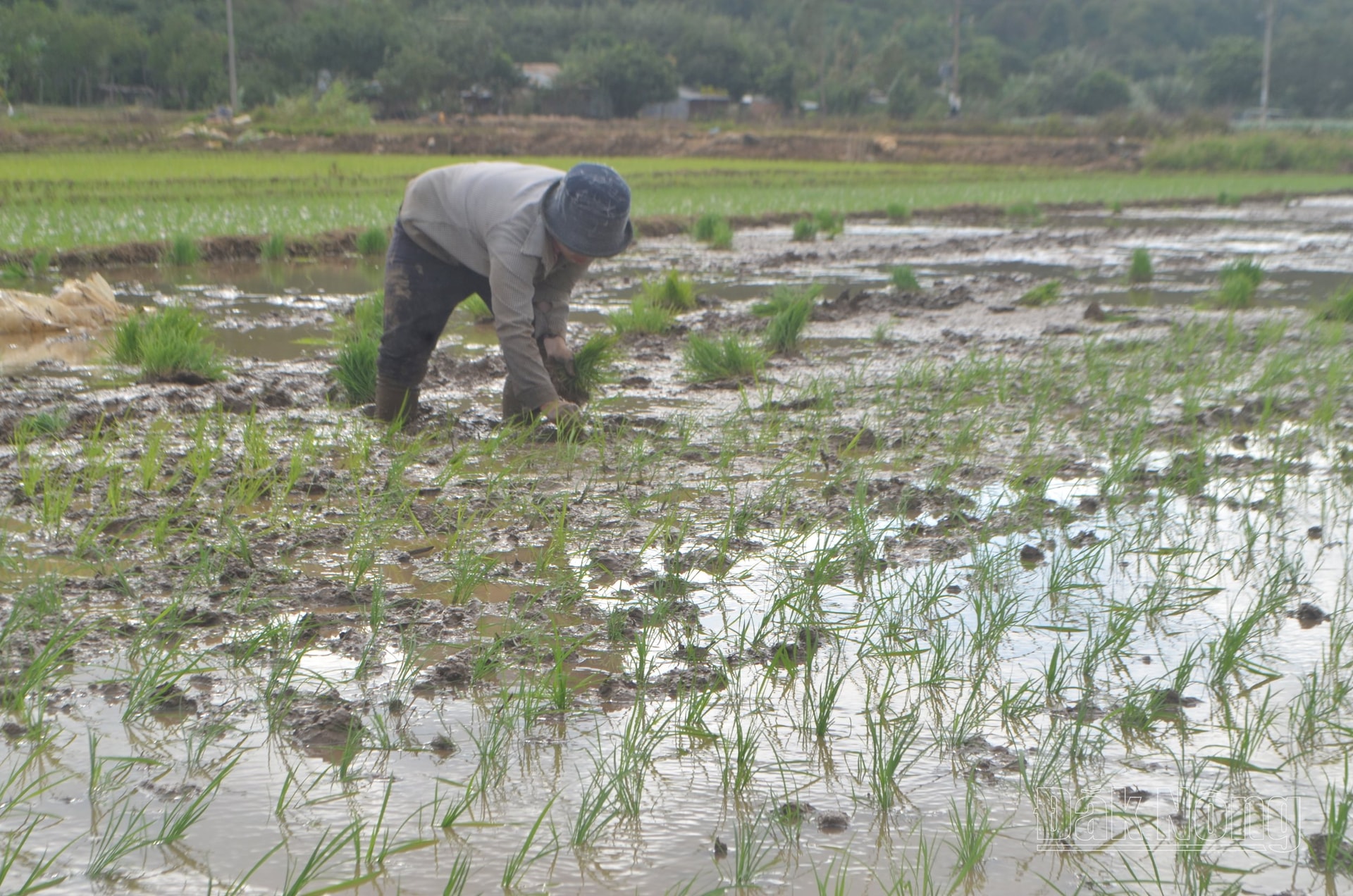
According to meteorological and hydrological forecasts, farmers will face drought during this year's winter-spring crop season. Therefore, using water economically and properly will help ensure safe production and promote plant growth.
Through monitoring and guidance, local people were able to plant rice by the end of December 2024. With thorough preparation and rapid planting, the province's people have cultivated over 1,100 hectares of rice.
The Department of Agriculture and Rural Development has issued a document guiding several solutions for using irrigation water economically and rationally, and preventing drought right from the beginning of the season.
For rice cultivation, to conserve irrigation water, it is necessary to apply the "alternating flooding and drying" water regulation method according to the growth and development stages of the rice plant.
Specifically, during the tillering stage of rice, the water level in the field should not exceed 3cm, creating favorable conditions for strong and concentrated tillering.
During the stage when rice plants finish effective tillering, the water should be drained to allow the soil to crack, thereby limiting ineffective tillering. During the heading and flowering stages, maintain a water level of 2-3 cm.
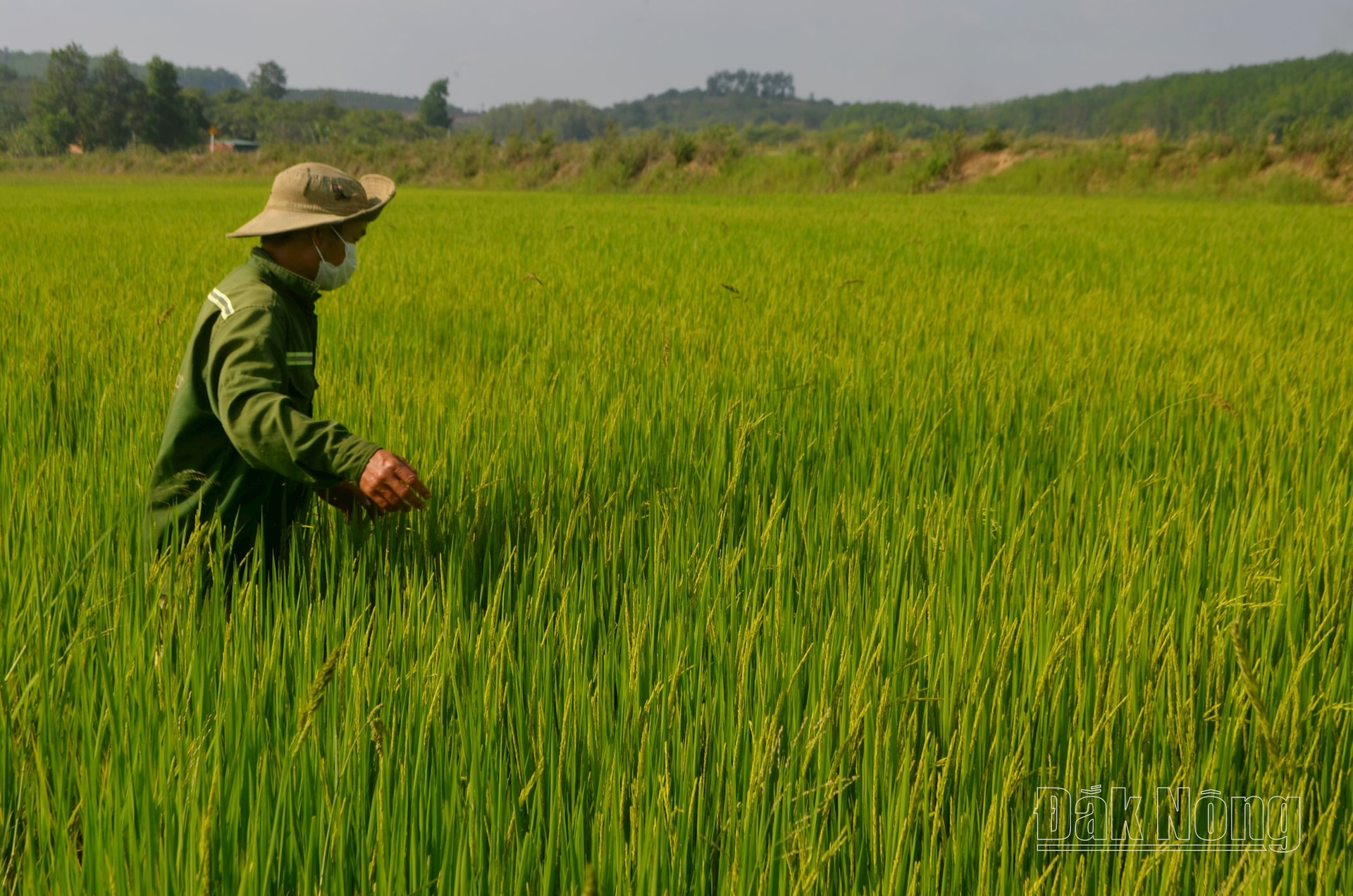
During the rice ripening stage, ensure sufficient irrigation and drain the water 7-10 days before harvest. Applying the "alternating wet and dry" irrigation method will save irrigation water and reduce water loss in the fields due to seepage and evaporation.
Keeping the rice fields dry will limit late tillering, allow the rice plants to mobilize more nutrients, increase the strength of the rice roots, prevent lodging, and reduce some rice diseases such as brown spot disease...
Upland crops require less water than rice, but both insufficient and excessive water affect their growth and development. To conserve irrigation water for upland crops, a comprehensive set of technical measures should be applied.
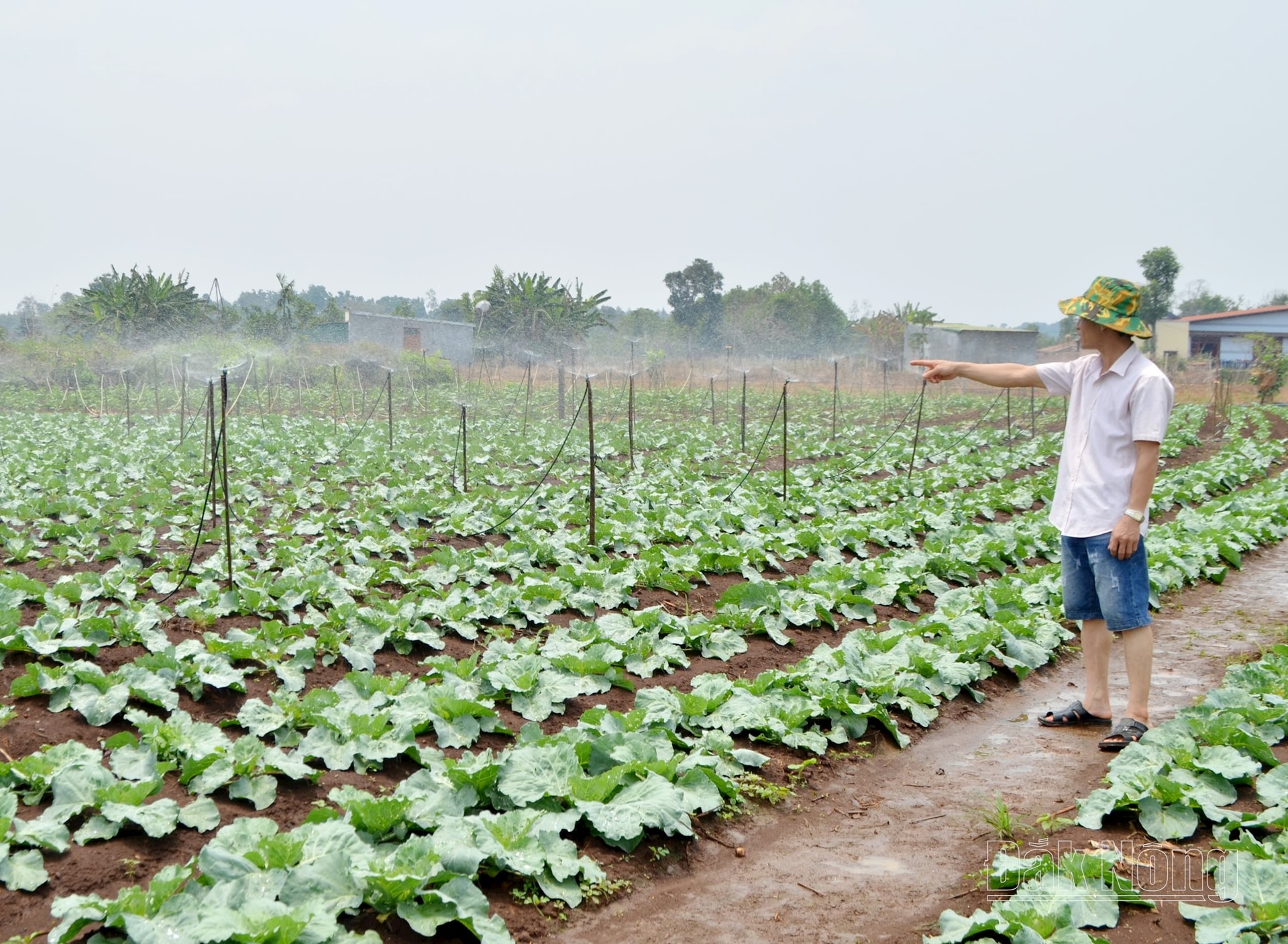
First, farmers should pay attention to thorough soil preparation, including deep plowing, thorough harrowing, leveling, and creating rows and ridges. They should increase the amount of organic fertilizer to improve the soil's moisture retention capacity and implement drip irrigation along the furrows and rows. Water should be applied according to the needs of each stage of plant growth and development.
For example, corn plants in the tasseling stage need sufficient watering. Applying these measures not only saves water but also creates favorable conditions for plant growth and development, limiting certain pests and diseases such as stem rot in corn, root rot in vegetables, and anthracnose in chili peppers…
According to the plan, for the 2024-2025 winter-spring crop season, Dak Nong province aims to plant 10,400 hectares of various short-term crops. This includes 5,170 hectares of rice; 2,151 hectares of corn; 1,978 hectares of vegetables; and 1,100 hectares of sweet potatoes... The province strives to achieve a total food production of over 50,396 tons.
Source: https://baodaknong.vn/nong-dan-dak-nong-voi-phuong-phap-tuoi-nuoc-ngap-kho-xen-ke-239159.html
![[Photo] Closing Ceremony of the 10th Session of the 15th National Assembly](/_next/image?url=https%3A%2F%2Fvphoto.vietnam.vn%2Fthumb%2F1200x675%2Fvietnam%2Fresource%2FIMAGE%2F2025%2F12%2F11%2F1765448959967_image-1437-jpg.webp&w=3840&q=75)
![[Photo] Prime Minister Pham Minh Chinh holds a phone call with the CEO of Russia's Rosatom Corporation.](/_next/image?url=https%3A%2F%2Fvphoto.vietnam.vn%2Fthumb%2F1200x675%2Fvietnam%2Fresource%2FIMAGE%2F2025%2F12%2F11%2F1765464552365_dsc-5295-jpg.webp&w=3840&q=75)





































![[OFFICIAL] MISA GROUP ANNOUNCES ITS PIONEERING BRAND POSITIONING IN BUILDING AGENTIC AI FOR BUSINESSES, HOUSEHOLDS, AND THE GOVERNMENT](https://vphoto.vietnam.vn/thumb/402x226/vietnam/resource/IMAGE/2025/12/11/1765444754256_agentic-ai_postfb-scaled.png)







































Comment (0)