

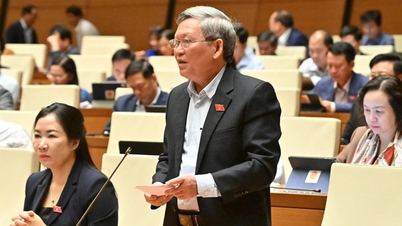
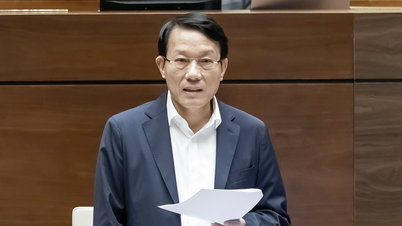
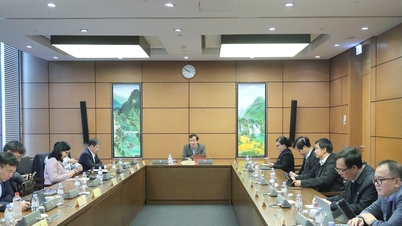
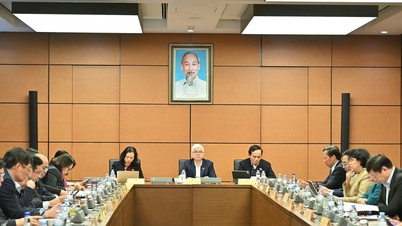
On the morning of September 23, the Ho Chi Minh City National Assembly Delegation held a conference to provide feedback on four draft laws: the Law on Civil Judgment Enforcement (amended); the Law on Criminal Judgment Enforcement (amended); the Law on Judicial Expertise (amended); and the Law on the Enforcement of Temporary Detention, Custody, and Prohibition from Leaving the Place of Residence. These drafts are expected to be submitted to the National Assembly for approval at the upcoming 10th session.
The conference was chaired by delegate Duong Ngoc Hai, former Standing Vice Chairman of the People's Committee of Ho Chi Minh City, and delegate Nguyen Thanh Sang, Deputy Head of the Internal Affairs Committee of the Ho Chi Minh City Party Committee.
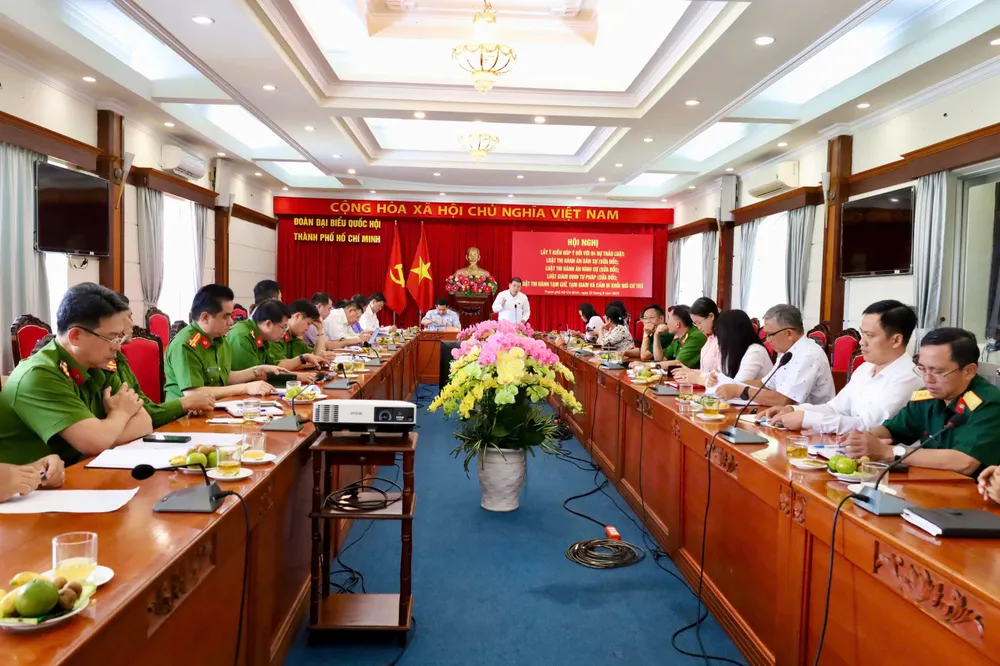
Proposal to implement GPS tracking bracelets.
Mr. Phung Van Hai, Deputy Chief Justice of the Ho Chi Minh City People's Court, assessed the draft Law on the Execution of Temporary Detention, Custody, and Prohibition from Leaving Residence as demonstrating "a strategic and progressive vision," especially in incorporating technology into management. He cited Article 15, which adds regulations on collecting highly accurate biometric data such as iris, DNA, and voice, in addition to portrait photos and fingerprints, helping to achieve near-absolute accuracy in identification, management, and tracing of subjects, while also creating a solid foundation for the application of artificial intelligence in the future.
The draft also proposes establishing a "Membership Room for Online Trials" right in the detention center, to facilitate online trials—a solution that saves time and costs and aligns with the judicial reform process.
Specifically, Clause 4, Article 17 allows homosexual and transgender individuals to be assigned separate cells upon request or when necessary. Mr. Hai believes this is a humane regulation, demonstrating respect for diversity, protecting the rights and safety of vulnerable groups, and aligning with international legal trends.
However, he also noted that regarding the management and monitoring of individuals prohibited from leaving their place of residence, Chapter 7 of the draft still heavily relies on traditional methods such as reporting, roll calls, and inspections conducted by commune-level police. In the context of large urban areas, these methods are not effective enough and are easily circumvented by offenders. Therefore, he proposed adding regulations on modern electronic monitoring (electronic wristbands with GPS tracking, dedicated mobile applications) to effectively control cases involving suspects and defendants accused of particularly serious crimes; individuals with prior convictions for serious crimes; and those with a high risk of fleeing.
Regarding the issue of electronic monitoring, a representative from Detention Center No. 1 stated that current law lacks comprehensive regulations on the application of electronic monitoring devices for individuals serving sentences outside the community, while in reality, managing these individuals in the community is proving difficult.
Therefore, electronic monitoring helps to enhance control, reduce the risk of escape, lessen the pressure of direct management on detention facilities, and allow for a "soft" monitoring approach instead of detention in many appropriate cases.
The right to donate organs and store eggs and sperm needs to be specifically codified into law.
Commenting on the draft Law on the Execution of Criminal Sentences (amended), Mr. Phung Van Hai stated that the regulation on the right of prisoners to store eggs and sperm is very humane but lacks specific guidance on procedures and funding. Otherwise, it could easily lead to inequality among prisoners. Therefore, he proposed adding a principled provision that "the State shall create conditions for prisoners to exercise their right to store eggs and sperm according to their wishes," while also entrusting the Government with the task of specifying the implementation process in detail. Funding could be sourced through social contributions or paid by the prisoners themselves, but the State would be responsible for supporting procedures and creating a coordination mechanism with medical facilities.
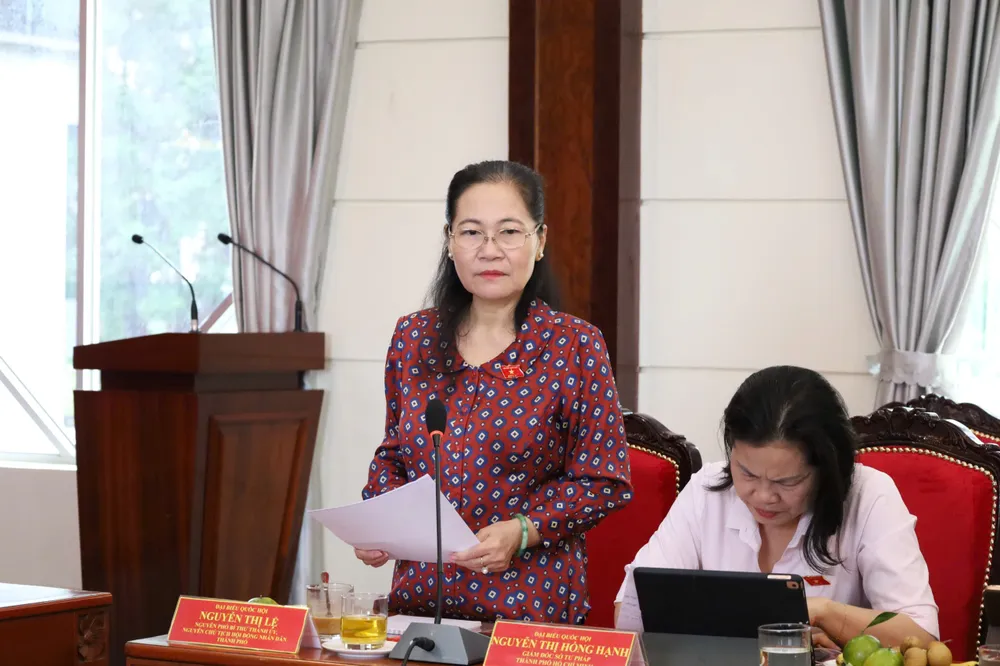
National Assembly representative Nguyen Thi Le also commented that this is a "major step forward with a strong humanitarian character," not only in accordance with the Constitution but also creating psychological motivation to help prisoners feel secure in their rehabilitation. However, for it to be feasible, the law needs to clearly define the implementation mechanism, from procedures to specific medical regimes, funding sources, and entrust the Government with the task of detailing it.
In his concluding remarks at the conference, delegate Nguyen Thanh Sang, on behalf of the Ho Chi Minh City National Assembly Delegation, acknowledged the contributions and suggestions. Mr. Nguyen Thanh Sang assessed that the opinions expressed at the conference were very practical, relevant to the expertise and experience of the agencies directly involved in law enforcement.
He emphasized that these are important draft laws that directly impact the management of detention, the execution of sentences, and the lives of the people. Therefore, opinions from the grassroots level and units that regularly interact with practical situations are of particular value, providing the Ho Chi Minh City National Assembly Delegation with more basis to contribute to the National Assembly, ensuring that the draft laws are revised to be increasingly complete and relevant to reality.
Adding video call options and providing essential gifts for inmates.
Representative Nguyen Thi Le stated that the draft Law on Execution of Criminal Sentences (amended) has made many important additions to better ensure human rights and civil rights in accordance with the spirit of the Constitution, such as changes to the regime for visits, receiving gifts, and communication with prisoners.
The new regulations on visits and communication have addressed many practical issues, such as allowing online visits during epidemics or other force majeure events, which is very flexible and humane. The addition of electronic communication methods (video calls) is also very much in line with technological trends and practical needs. Regarding the gift-giving policy, delegates noted that the initial draft tended to only allow monetary gifts, but after considering feedback, allowing essential items as well is reasonable because material gifts also carry great sentimental value.
Source: https://www.sggp.org.vn/pham-nhan-duoc-lien-lac-bang-video-call-la-phu-hop-thuc-tien-post814311.html


![[Photo] Prime Minister Pham Minh Chinh holds a phone call with the CEO of Russia's Rosatom Corporation.](/_next/image?url=https%3A%2F%2Fvphoto.vietnam.vn%2Fthumb%2F1200x675%2Fvietnam%2Fresource%2FIMAGE%2F2025%2F12%2F11%2F1765464552365_dsc-5295-jpg.webp&w=3840&q=75)



































































Comment (0)