

Over 80 years of building, fighting, winning, and maturing, our Army has forged a very glorious tradition, concisely summarized in President Ho Chi Minh 's praise: "Our Army is loyal to the Party, devoted to the people, ready to fight and sacrifice for the independence and freedom of the Fatherland, for socialism. Every task is completed, every difficulty is overcome, every enemy is defeated."
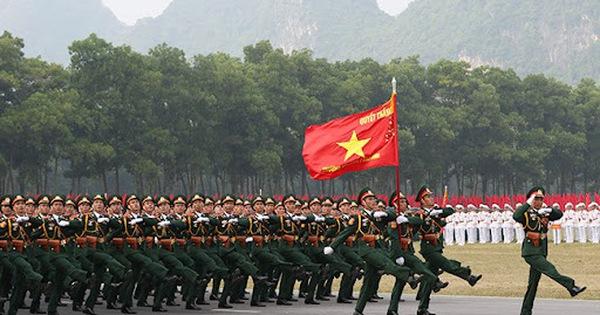
Our army is loyal to the Party, filial to the people, ready to fight and sacrifice for the independence and freedom of the Fatherland, for socialism. Photo: Archive
The Vietnam Propaganda Liberation Army - the predecessor of the Vietnam People's Army - was born.
From its very inception (February 3, 1930), in its first political program, the Party affirmed that the path to class liberation and national liberation was to use revolutionary violence to seize power and demanded the "organization of a worker-peasant army" to serve as the core for the entire people to carry out the revolutionary struggle. The Party's political thesis (October 1930) defined the essential task of the bourgeois democratic revolution, clearly stating that it was necessary to: "Establish a worker-peasant army."
During the revolutionary movement of 1930-1931, culminating in the Nghe An - Thinh Hoa Soviet, the worker-peasant self-defense force (Red Self-Defense Force) was born from the insurgent forces of workers and peasants. This was the first precursor to the revolutionary armed forces of Vietnam. Following this, a series of armed organizations were successively established, such as: the Bac Son guerrilla team (1940), guerrilla teams in Southern Vietnam (1940), the National Salvation Army (1941)...
On December 22, 1944, in the forest between the two communes of Hoang Hoa Tham and Tran Hung Dao in Nguyen Binh district, Cao Bang province (now Na Sang hamlet, Tam Kim commune, Nguyen Binh district, Cao Bang province), the Vietnam Propaganda and Liberation Army - the predecessor of the Vietnam People's Army - was established according to the directive of Leader Ho Chi Minh.
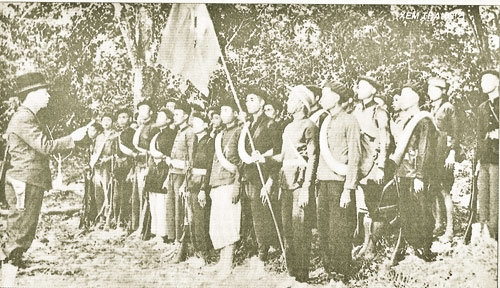
The Vietnam Propaganda and Liberation Army, the predecessor of the Vietnam People's Army, was founded on December 22, 1944, in the Tran Hung Dao forest (Cao Bang). (Archival photo)
In the Directive, he clearly stated: “The name VIETNAM LIBERATION PROPAGANDA TEAM means that politics is more important than military affairs. It is a propaganda team”; “The Vietnam Liberation Propaganda Team is the senior team, hoping that other junior teams will soon emerge. Although its scale is small at first, its future is very glorious. It is the starting point of the liberation army, and it can go from South to North, throughout the entire country of Vietnam.”
Comrade Vo Nguyen Giap was entrusted by the Central Committee of the Party and Leader Ho Chi Minh to organize, lead, and command the establishment of the Team, consisting of 34 people, organized into 3 platoots with Comrade Hoang Sam as Team Leader and Comrade Xich Thang as Political Commissar, with a Party cell providing leadership. December 22, 1944, is taken as the founding day of the Vietnam People's Army.
Immediately after its formation, at 5 PM on December 25, 1944, the Vietnam Liberation Propaganda Team cleverly, boldly, and unexpectedly infiltrated the Phai Khat outpost, and at 7 AM the following morning (December 26), they infiltrated the Na Ngan outpost (both located in Nguyen Binh district, Cao Bang province), eliminating the two outpost commanders, capturing all enemy soldiers, and seizing weapons, equipment, and supplies. The victories at Phai Khat and Na Ngan marked the beginning of the tradition of decisive battles and victories of the Vietnam People's Army.
In April 1945, the Party's Northern Revolutionary Military Conference decided to merge revolutionary armed organizations nationwide into the Vietnam Liberation Army. During the August Revolution of 1945, the Vietnam Liberation Army, together with local armed forces and the people, launched a general uprising to seize power nationwide. Following the success of the August Revolution, the Vietnam Liberation Army was renamed the National Guard, then the Vietnam National Army (1946), and from 1950 onwards, it has been called the Vietnam People's Army.
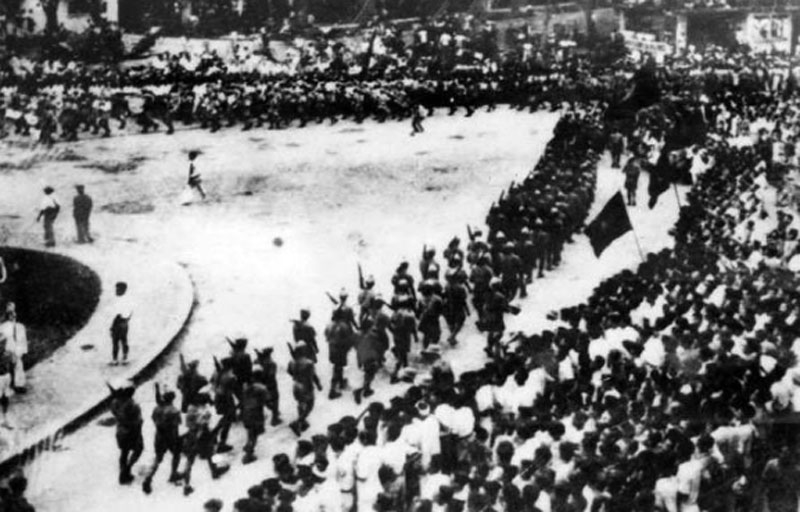
On August 28, 1945, the Liberation Army contingent from Viet Bac paraded in the square in front of the Hanoi Grand Theatre. Photo: VNA
The Vietnam People's Army during the resistance war against French colonial aggression (1945 - 1954)
When the French colonialists invaded our country for the second time, under the leadership of the Party, the armed forces developed strongly, and together with our people, we rose up in unison to fight the invaders. At the end of 1946, according to President Ho Chi Minh's decision, the whole country was divided into 12 war zones. At this time, in the South, the National Guard detachments were still organized; in the North and Central regions, there were 30 regiments and several battalions belonging to the war zones; the Party organization system within the Army was established from the Central Military Commission down to the grassroots level. On the night of December 19, 1946, the nationwide resistance war broke out. In the early days of the nationwide resistance, our army and people fought hundreds of battles, eliminating thousands of enemy soldiers and destroying much of the enemy's war equipment.
In the spring of 1947, President Ho Chi Minh, the Central Committee of the Party, and the Government moved to Viet Bac, which became the center of the nationwide resistance movement. In the autumn and winter of 1947, the French colonialists mobilized over ten thousand elite troops, supported by aircraft and warships, to launch a surprise attack on Viet Bac, aiming to destroy the resistance headquarters and our main forces. After more than two months of counter-offensive operations (October 7 - December 20, 1947), we eliminated over 7,000 enemy soldiers. This was the first large-scale counter-offensive campaign to achieve a strategically significant victory for our army and people; defeating a large-scale offensive and foiling the French colonialists' "quick strike, quick victory" strategy; preserving and developing the main forces, and protecting the national resistance headquarters and base areas.
Following the Viet Bac campaign in 1947, our army had matured, but lacked the capacity to launch large-scale operations. To defeat the enemy's pacification plans, we advocated for widespread guerrilla warfare and the implementation of "independent companies, concentrated battalions," simultaneously intensifying guerrilla warfare and learning concentrated mobile warfare tactics. These concentrated battalions were strengthened and gradually advanced to conduct larger ambushes and surprise attacks.
From early 1948 to mid-1950, our troops launched over 20 small-scale campaigns across various battlefields. Each campaign initially involved 3 to 5 battalions, gradually increasing to 2 to 3 regiments, with some campaigns utilizing both mountain artillery and heavy machine guns. In many battles, our forces annihilated entire enemy companies and battalions outside their fortifications, and destroyed enemy strongholds occupied by around one or more enemy companies.
From mid-1949, the General Staff decided to withdraw independent companies to build main regiments and divisions. On August 28, 1949, the 308th Division was established; on March 10, 1950, the 304th Division was formed. Training was intensified. Through the campaigns of "training troops to achieve merit" and "training cadres to rectify the army" in 1948, 1949, and early 1950, our armed forces continuously developed and grew stronger.
In June 1950, the Central Committee of the Party decided to launch the Border Campaign, proactively attacking the French. After nearly a month (September 16 - October 14, 1950), we eliminated more than 8,000 enemy soldiers, liberated the border area from Cao Bang to Dinh Lap (Lang Son), expanded and consolidated the Viet Bac base area, broke the encirclement, opened up communication with China and other socialist countries, and connected our revolution with the world revolution. The victory in the Border Campaign made a significant contribution to changing the course of the war: We entered the strategic phase of counter-offensive and offensive, while the French gradually shifted to a defensive strategy; at the same time, it marked a leap forward in the art of campaigning and the great maturity and strength of our army.
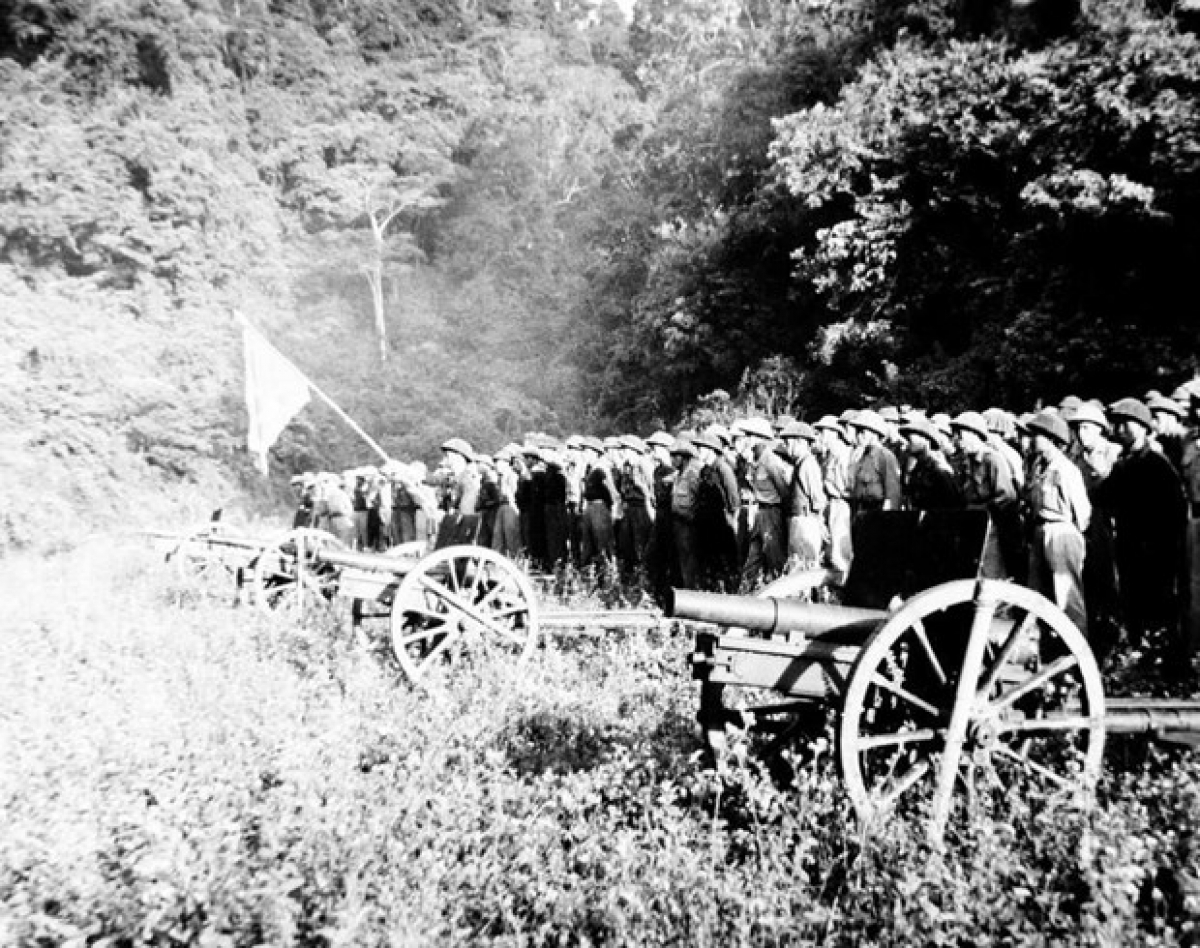
Units participating in the 1950 Border Campaign hold a departure ceremony before heading to the front lines. (Archival photo)
Following the Border Campaign, more main divisions were established: Division 312 (December 1950), Division 320 (January 1951), Artillery Division 351 (March 1951), and Division 316 (May 1951). Within six months (December 1950 - June 1951), we launched three consecutive campaigns: Tran Hung Dao, Hoang Hoa Tham, and Quang Trung. These were the first large-scale campaigns to attack the enemy's fortified defensive lines in the midland and lowland areas of Northern Vietnam. We annihilated over 10,000 enemy soldiers, nearly half of whom were mobile troops.
In November 1951, the Politburo decided to launch the Hoa Binh campaign; concentrating the main forces on the main Hoa Binh front while deploying a portion of the main forces to operate in enemy-occupied areas of the Northern Delta, intensifying guerrilla warfare in the temporarily occupied enemy territory. The campaign took place from December 10, 1951, to February 25, 1952; our army and people eliminated more than 6,000 enemy soldiers on the Hoa Binh front and more than 15,000 enemy soldiers in enemy-occupied areas. In this campaign, our troops made four new advances in tactical and technical skills, in the ability to fight continuously for extended periods, and in the coordination of operations between the three branches of the armed forces.
In early September 1952, the Politburo decided to launch the Northwest Campaign. After nearly two months of fighting (October 14 - December 10, 1952), we eliminated and captured more than 6,000 enemy soldiers, liberated a large area in a strategically important region, connected the liberated Northwest region with the Viet Bac base area and Upper Laos, maintained the initiative in the offensive, and thwarted the enemy's plan to expand its occupation.
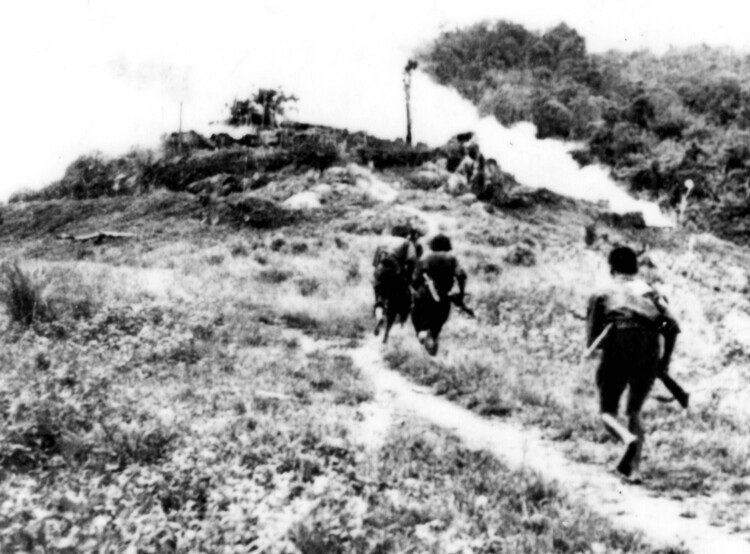
The 316th Division attacked Pho Giang Station during the Northwest Campaign. Photo courtesy
On December 5, 1952, in Binh - Tri - Thien, the 325th Division was established, contributing to increasing the fighting strength of the "revolutionary main punches". Up to this point, the main army under the General Command had 6 infantry divisions (308, 304, 312, 320, 316, 325) and 1 engineering and artillery division (351).
Faced with the changing dynamics of the war in Indochina, and based on an accurate assessment of the balance of forces between us and the enemy, in September 1953, the Politburo decided to launch the 1953-1954 Winter-Spring strategic offensive. Implementing this policy, the General Staff ordered the main units to coordinate and launch a powerful offensive across all battlefields. We formed five strategic offensives in Lai Chau, Central Laos, Lower Laos - Northeast Cambodia, the Central Highlands, and Upper Laos, inflicting heavy casualties on the enemy, liberating vast areas of land, and forcing them to spread their forces thin to counter our attacks everywhere.
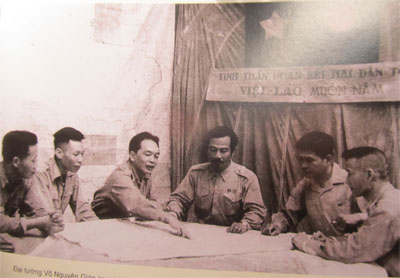
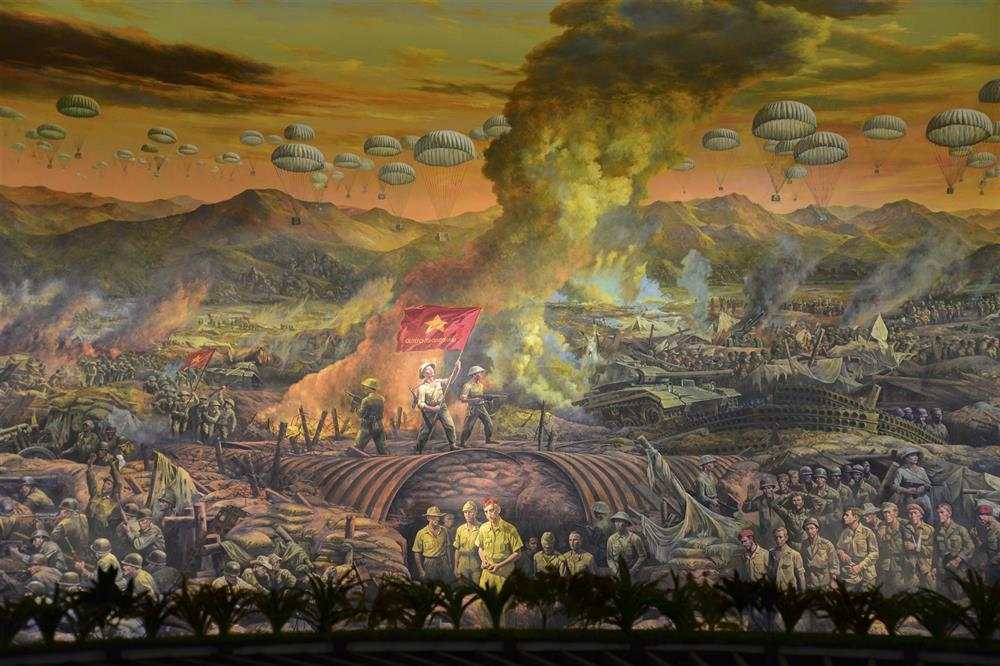
After the French colonial forces landed and occupied Dien Bien Phu, seizing the opportune moment, on December 6, 1953, the Politburo met and decided to launch the Dien Bien Phu campaign. After 56 days and nights (March 13 - May 7, 1954) of continuous fighting, our army and people completely crushed the entire Dien Bien Phu fortified complex, eliminating 16,200 enemy soldiers, shooting down and destroying 62 aircraft; and seizing all enemy weapons, warehouses, and technical infrastructure in Dien Bien Phu. The victory at Dien Bien Phu dealt a decisive blow to the French colonialists' will to invade, forcing them to sign the Geneva Accords on the cessation of hostilities in Vietnam. The Dien Bien Phu campaign is an outstanding example, the pinnacle of Vietnamese military art in the resistance war against the French. It also serves as proof of the remarkable development of our Army after 10 years of building, fighting, and glorious victories (1944 - 1954).
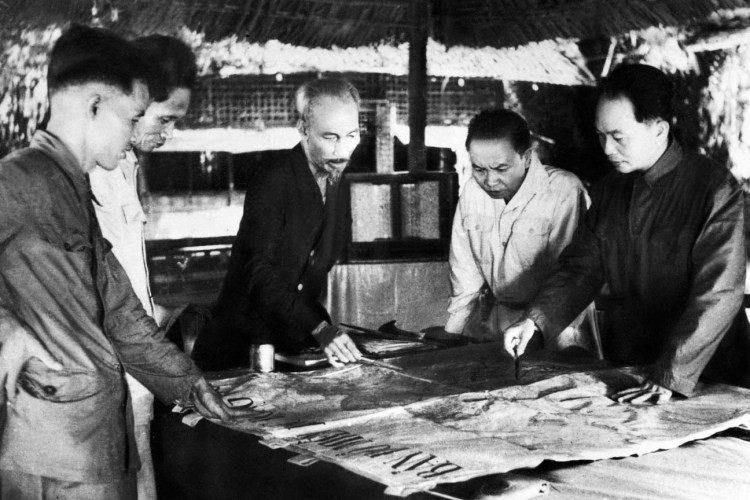
The Dien Bien Phu Campaign Command: President Ho Chi Minh, General Vo Nguyen Giap, Commander-in-Chief, and other members of the campaign command. Photo: VNA archives.
The Vietnam People's Army during the resistance war against the US, for national salvation (1954 - 1975)
The victory of the resistance war against French colonialism and American intervention opened a new stage of development for the Vietnamese revolution. The North was completely liberated and entered the transitional period to socialism. The South continued the national democratic revolution, overthrowing the domination of American imperialism and its henchmen.
To meet the requirements of the Vietnamese revolution in the new period, in March 1957, the 12th Central Conference (expanded) issued a Resolution on the issue of building the Army and strengthening national defense. The Resolution clearly stated: "Our army building motto is to actively build a strong people's army, gradually moving towards regularization and modernization" 5 . By 1960, our Army had reached a new stage of maturity, from a force mainly consisting of infantry with an ununified organization, lacking weapons and equipment, it had become a regular, increasingly modern Army, including the following forces: Army, Navy, Air Defense - Air Force. This was a very important development step, creating the foundation for building a regular, modern Army, ready to meet the new tasks of the revolution.
In the North, the Army actively participated in the takeover of cities, towns, and areas previously occupied by the French. They effectively carried out military administration duties, coordinating with police forces to quickly establish order and security, protect the lives and property of the people, and combat enemy abduction, robbery, and destruction of public property.
In the South, during the years 1954 - 1960, the US - Diem implemented a brutal terrorist policy, causing heavy losses to the Southern revolution. In that situation, the 15th Conference of the Central Executive Committee of the Party, Session II (January 1959) raised two strategic tasks of the Vietnamese revolution and clearly outlined the basic path of the Southern revolution, which was to use revolutionary violence.
In compliance with the Party's resolution, the Central Military Commission and the Ministry of National Defense decided to further accelerate the building of the Army. Preparations for our troops to fight in the South were also expedited. Accordingly, the 338th Division of Southern troops regrouped in the North received intensive training before departing for the South. On May 19, 1959, the 559th Regiment was established with the task of opening a road along the Truong Son mountain range to ensure the movement of our forces into the South for combat and to transport food, weapons, and ammunition from the North to the South. Subsequently, the 759th Regiment was also established with the task of transporting and supplying goods from the North to the South by sea. The resolution of the 15th Conference paved the way for the revolution in the South to achieve victory.
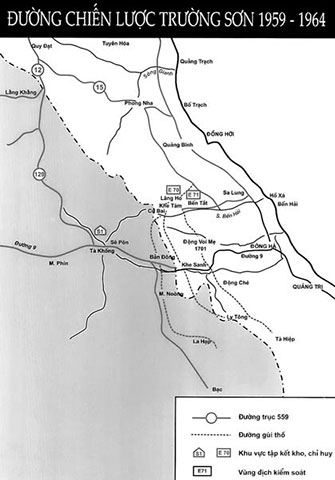
The Truong Son strategic road 1959-1964. Archival photo.
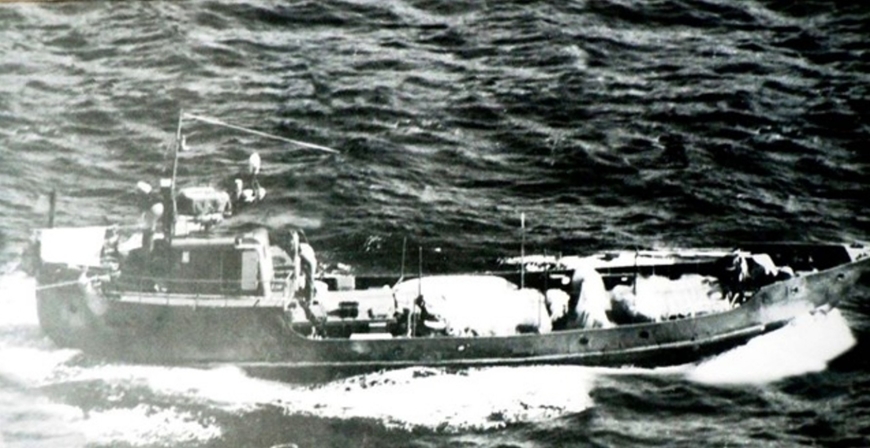
An unmarked ship transporting weapons to the South. (Archival photo)
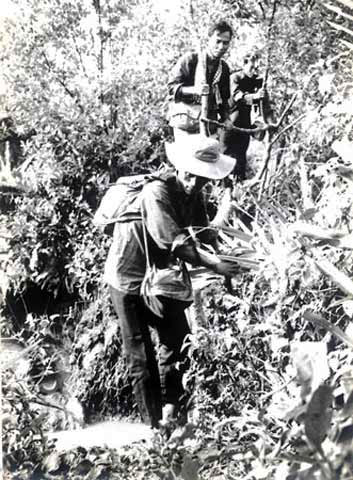
Officers and soldiers of the 559th Reconnaissance Regiment charting the route to open the Truong Son Road, 1960. (Archival photo)
To intensify the revolutionary movement of the people, the National Liberation Front of South Vietnam was established on December 20, 1960. On February 15, 1961, the Liberation Army of South Vietnam was formed on the basis of unifying the people's armed forces in the South; this was a component of the Vietnam People's Army that directly operated on the battlefield in the South.
Since 1961, the US imperialists have carried out the “Special War” strategy. Commanded by US advisors and relying on US firepower, the Saigon puppet army has continuously launched operations to attack liberated areas, gathering people to establish “strategic hamlets”. Our army and people have continuously fought, maintained and expanded liberated areas. In particular, the typical victory of Ap Bac (January 1963) marked the failure of the “helicopter transport” and “armored vehicle transport” tactics of the Saigon puppet army; at the same time, it opened the movement “Emulating Ap Bac, killing enemies and making achievements” throughout the South.
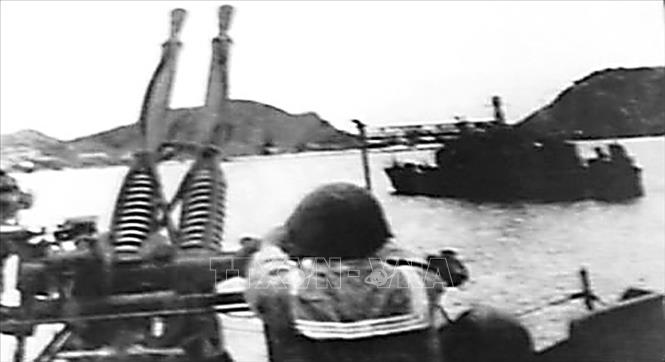
On August 5, 1964, after fabricating the "Gulf of Tonkin incident," falsely accusing the Vietnam People's Navy of deliberately attacking a US destroyer in international waters to deceive public opinion, the US government launched a surprise air attack codenamed "Operation Pierce Arrow," targeting most of our naval bases along the northern coast. Thanks to prior preparation, naval, air defense, and militia units promptly detected the attack, fought bravely and strategically, shooting down 8 aircraft, damaging 2 others, and capturing 1 pilot. This initial victory against the US air force boosted the determination of the entire nation's armed forces and people to defeat the invading American enemy.
Building on the victories of 1963 and early 1964, in October 1964, the Central Military Commission instructed the armed forces in South Vietnam to launch the 1964-1965 Winter-Spring campaign, destroying a significant portion of the puppet regime's main forces and expanding the liberated areas. Following our victories in the Binh Gia, Ba Gia, and Dong Xoai campaigns, the US imperialists' "Special War" strategy was completely thwarted.
From mid-1965, the US imperialists shifted to a "limited war" strategy, massively deploying US and allied combat troops and large quantities of war materials to South Vietnam, while simultaneously consolidating and strengthening the puppet army. The entire strategic objective of the US imperialists during this period was to "find and destroy" the main forces of the Liberation Army and the revolutionary leadership in South Vietnam, "pacify" the South, intimidate the Vietnamese people's resistance spirit, and force the Government of the Democratic Republic of Vietnam to sit at the negotiating table under conditions imposed by the US.
Faced with that situation, from September to December 1965, the Ministry of National Defense decided to establish in the Southern battlefield 5 infantry divisions (9, 3, 2, 5, 1) and an artillery unit equivalent to the division level, codenamed Artillery Group 69. While building and fighting, our troops on the Southern battlefields organized attacks, broke many large-scale operations of the US - puppet, and launched the movement of "finding the US to fight", "finding the puppet to destroy".
During the 1965-1966 dry season, the US imperialists launched their first strategic counteroffensive in the South. After six months of arduous and fierce fighting, the army and people of South Vietnam defeated the enemy's counteroffensive, eliminating tens of thousands of enemy soldiers. In October 1966, the US imperialists decided to launch a second strategic counteroffensive aimed at destroying the main forces and headquarters of the revolution in South Vietnam.
Based on the highly developed people's war strategy, our local armed forces held their ground, launched widespread attacks, creating favorable conditions for the main units of the Liberation Army to launch offensives, inflicting heavy losses on the enemy in terms of manpower and war equipment, forcing the US to end its second strategic counteroffensive in the 1966-1967 dry season.
Following the significant victories of the revolution in South Vietnam, in January 1968, the 14th Central Committee Conference adopted a Politburo resolution (December 1967) deciding to launch the Tet Offensive and Uprising of 1968. In a short time, our army and people attacked numerous targets deep within urban areas throughout South Vietnam, inflicting heavy losses on the enemy and disrupting the strategic position of the US imperialists.
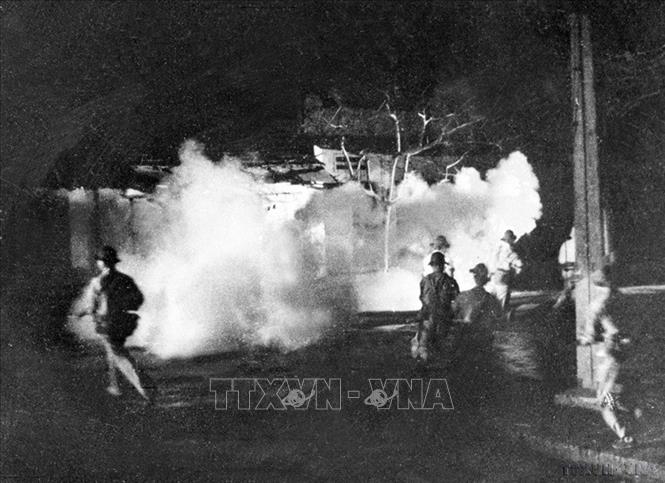
The victory of the Tet Offensive and Uprising of 1968 dealt a decisive blow to the aggressive will of the American ruling class, bankrupting the "Limited War" strategy, forcing the US to de-escalate the war, gradually withdraw troops, and accept negotiations with us at the Paris Conference.
With their stubborn and belligerent nature, the US imperialists were unwilling to accept defeat. From 1969 onwards, they shifted to implementing the "Nixon Doctrine" and the "Vietnamization of the War" strategy. During the years 1969-1972, the US imperialists used their military might to the maximum, combined with extremely cunning political and diplomatic tactics, in an attempt to isolate and stifle the resistance of our people.
In that situation, our army and people closely coordinated with the fighting of the fraternal Lao and Cambodian people, achieving great victories, notably the Route 9 - Southern Laos campaign and the Northeast Cambodia campaign; at the same time, launching a strategic offensive across the entire Southern battlefield with combined arms offensives in Tri-Thien, Northern Central Highlands, and the Southeastern region, as well as comprehensive offensives in the Mekong Delta and Central Vietnam.
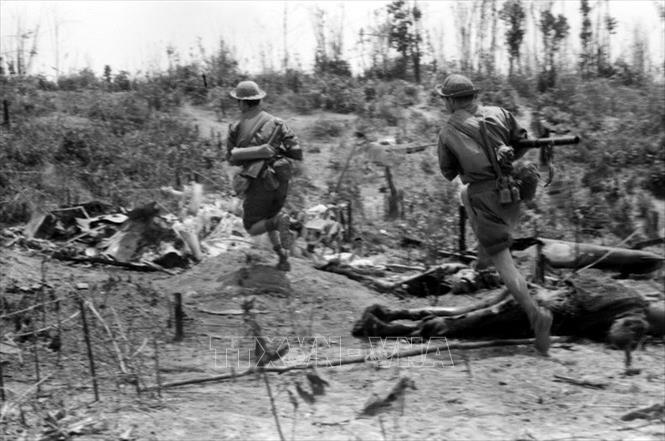
Facing the risk of failure of the “Vietnamization of the war” strategy, on April 6, 1972, the US imperialists mobilized a large air force and navy to launch the second war to attack the North (Operation Linebacker I) on a larger scale and more fiercely than the previous time. With a brave spirit and clever and creative fighting style, after 7 months of fierce fighting, the army and people of the North shot down 654 planes, sank and burned 125 US warships.
Faced with heavy defeats, on the night of December 18, 1972, the US imperialists recklessly launched the largest-scale strategic air raid called “Operation Linebacker II” to attack the North, focusing heavily on Hanoi and Hai Phong. Once again, the army and people of the North fought bravely, defeating the enemy’s strategic raid; shooting down 81 planes, including 34 B-52s and 5 F-111s.
Having suffered heavy losses and failed to achieve its objectives, the US imperialists were forced to declare a halt to the bombing of North Vietnam north of the 20th parallel and resume negotiations in Paris. World opinion called this the "Dien Bien Phu in the air" battle.
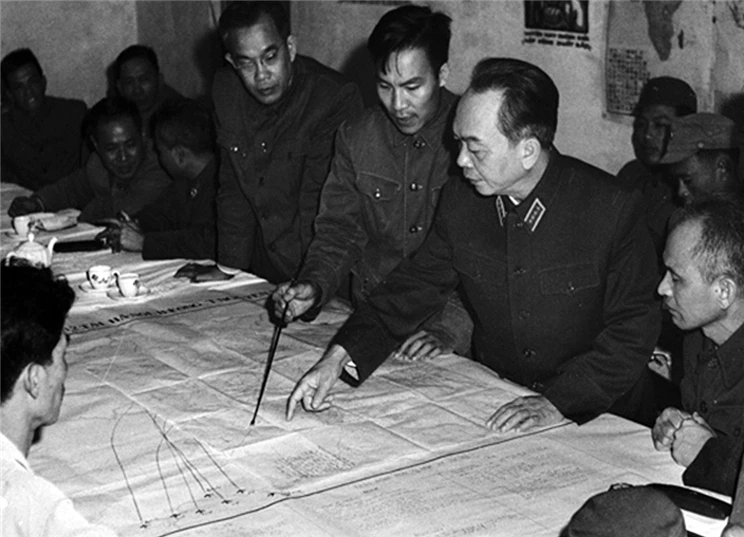
General Vo Nguyen Giap and leaders of the Air Defense - Air Force prepared a plan to attack B-52s in 1972. Photo courtesy
The great victories of our army and people on the Southern battlefield, along with the "Hanoi - Dien Bien Phu in the Air" victory, forced the US imperialists to sign the Paris Agreement on ending the war and restoring peace in Vietnam (January 27, 1973), and withdraw their troops. However, the Saigon puppet regime brazenly violated the Agreement, relentlessly implementing its "territorial inundation" plan and intensifying its encroachment on our liberated areas.
To bring the war to a swift end, at the suggestion of the Central Military Commission and the Ministry of National Defense, from late 1973 to early 1975, the Politburo approved the establishment of the following corps: Corps 1 (October 1973), Corps 2 (May 1974), Corps 4 (July 1974), Corps 3 (March 1975), and Regiment 232 (equivalent to a corps, February 1975). The establishment of these main corps marked a new stage of development for the Vietnam People's Army. In the two years of 1973-1974, our army and people continuously achieved important victories, further shifting the battlefield situation in our favor.
The Politburo meetings in October 1974 and early 1975 clearly indicated the emergence of a historical opportunity and stated the strategic determination to liberate the South. Implementing the Politburo's directive, on March 4, 1975, our troops launched the Central Highlands campaign, marking the beginning of the Spring 1975 General Offensive and Uprising.
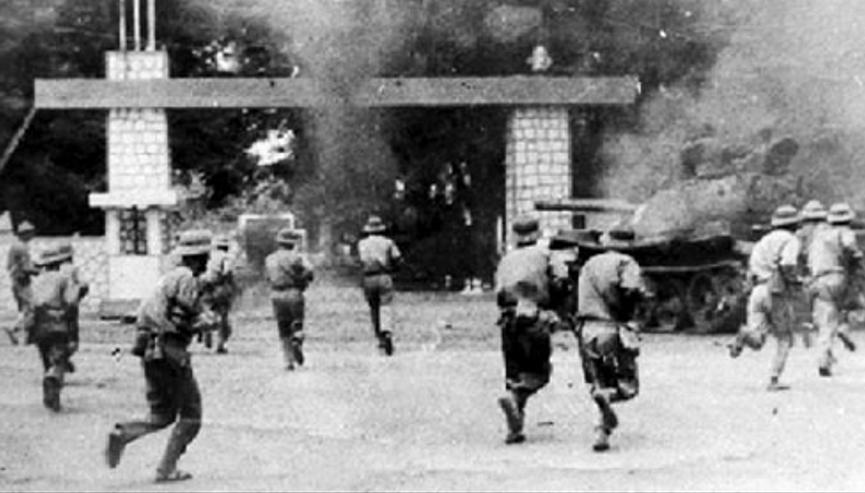
After several strategic battles and feints during the campaign, on March 10th and 11th, 1975, our troops attacked and liberated Buon Ma Thuot town. Following this, we completely liberated Kon Tum and Gia Lai provinces and the entire Central Highlands. One day after the Central Highlands campaign began, on March 5th, 1975, our troops launched the Tri Thien-Hue campaign, liberating Quang Tri province, Hue city, and Thua Thien province. Building on this victory, from March 26th to 29th, 1975, our troops launched the Da Nang campaign, completely liberating Da Nang, Son Tra peninsula, and Hoi An town. In coordination with local armed forces and the people, our troops attacked and liberated Binh Dinh and Phu Yen provinces (April 1st), Khanh Hoa (April 3rd), and other provinces...
Following these victories, the Politburo decided to liberate Saigon and the entire South. The campaign to liberate Saigon was named the "Ho Chi Minh Campaign". Implementing the guiding principle: "Speed, boldness, surprise, and certain victory," on April 26, our forces formed a siege of Saigon from five directions, led by the 1st, 2nd, 3rd, and 4th Corps, the 232nd Regiment, and the 8th Division (Military Region 8). At 5 PM on April 26, the campaign began.
After many fierce battles to capture the outer perimeter and achieve victory, on the morning of April 30th, our troops launched a general offensive into the inner city of Saigon, quickly penetrating deep to seize key targets; at 10:45 AM, the penetrating force of the 2nd Army Corps captured the Independence Palace, arresting the entire cabinet of the Saigon government and forcing President Duong Van Minh to declare unconditional surrender. At 11:30 AM the same day, the flag of the Liberation Army was planted on the roof of the Independence Palace, marking the complete victory of the historic Ho Chi Minh Campaign.
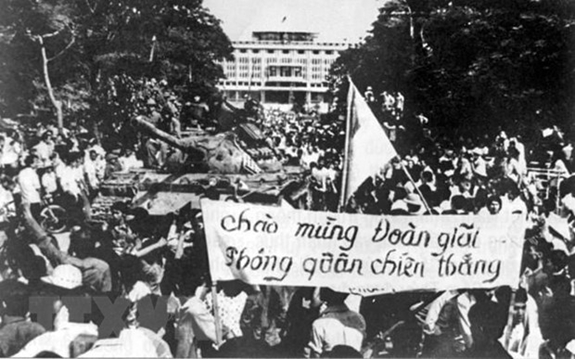
Parallel to the successful land offensives, following the directives of the Central Military Commission and the General Staff, the Navy promptly prepared its forces, seized opportunities, and, with ingenuity, boldness, and surprise, successively liberated the islands of the Spratly Archipelago: Song Tu Tay (April 14), Son Ca (April 25), Nam Yet (April 27), Sinh Ton (April 28), and Truong Sa (April 29). This was a strategically significant victory, contributing to the safeguarding of national sovereignty in the Spratly Archipelago.
The Ho Chi Minh Campaign was the largest-scale, most successful combined-arms campaign, marking a significant leap forward in the maturity of our Army in terms of both organizational structure and the level of command and control in combined-arms operations; it was the pinnacle of Vietnamese military art, contributing decisively to the end of the resistance war against the US and for national liberation.
The Vietnam People's Army in the cause of building and defending the Fatherland (1975 - 2024)
Immediately after the victorious conclusion of the resistance war against the US, the Army units stationed in the newly liberated areas coordinated with the Military Governing Committees at all levels to urgently build and consolidate the revolutionary government at the grassroots level, build local political and armed forces; organize the re-education of police officers from the old government apparatus, suppress reactionary elements and organizations, etc. At the same time, the units actively participated in labor and production, economic development, and the construction of many key projects throughout the country.
Following the great victory of Spring 1975, our army had to wage a just war to defend the southwestern border of the Fatherland and, together with the Cambodian people and army, overthrow the Pol Pot genocidal regime. In response to the Pol Pot invasion and the urgent appeal of the Cambodian National United Front for National Salvation, the Vietnamese Volunteer Army, together with the Cambodian revolutionary armed forces, launched a powerful counterattack, overthrowing the Pol Pot genocidal regime and liberating Phnom Penh on January 7, 1979, leading to the liberation of the entire country of Cambodia. For ten years (1979-1989), the Vietnamese Volunteer Army and experts demonstrated a pure spirit of internationalism, working alongside the Cambodian people and army to hunt down the remnants of Pol Pot's forces, consolidate the revolutionary government, build up the armed forces, and revive the country.
Also in early 1979, our army and people had to fight to defend the northern border of the Fatherland. The fighting lasted for a short time (February 17 - March 6, 1979), but in reality, the tense situation on the northern border lasted until the end of the 1980s. In this battle, our army and people fought bravely, firmly defending the sovereignty of the border and territory of the Fatherland.
The victories of our army and people in the war to defend the southwestern border and the battle to defend the northern border of the Fatherland have immense historical significance, firmly protecting the independence, sovereignty, unity, and territorial integrity of the Fatherland, and creating a peaceful environment for national development.
During the years 1980-1986, the Vietnamese Army intensified training, combat readiness, education, and the establishment of a regular and disciplined force; actively participating in economic and social development. The entire army organized hundreds of large-scale joint military exercises involving various branches of the armed forces, utilizing modern weaponry and technology in strategic areas. This contributed to training and improving the organizational and command capabilities of officers and the combat readiness of troops. Since the 6th National Congress of the Party (December 1986), the Army, together with the entire nation, has been carrying out the national renovation process, building and defending the socialist Vietnamese Fatherland.
For nearly 40 years since the implementation of the Doi Moi (Renovation) policy, the Army has consistently performed its functions as a fighting force, a working force, and a productive labor force, making a worthy contribution to the overall achievements of the country.
Key achievements include: The military consistently grasps and accurately predicts the situation, proactively advising the Party and State on appropriate countermeasures, handling situations flexibly and successfully, preventing strategic passivity and surprise, averting the risk of war, maintaining independence, sovereignty, unity, and territorial integrity, ensuring political stability, and creating a favorable environment for socio-economic development. It has advised on the issuance of the Central Committee's Resolution on "The Strategy for National Defense in the New Situation," as well as strategies, draft laws, and projects on military and national defense. It has effectively played a core role, proactively coordinating with ministries, departments, and localities in building a strong national defense system, a national defense posture, a "people's support" strategy, and solid defense zones.
The Central Military Commission and the Ministry of National Defense have issued numerous resolutions and directives to lead and guide the improvement of combat training quality, with the overarching guiding principle: "Training is a central and ongoing political task in peacetime." Based on this, the entire army has consistently innovated and improved the quality of training and exercises; adhering to the motto "Basic - Practical - Solid," emphasizing comprehensive and in-depth training, in a modern direction, enhancing the combat mobility of troops, and responding to new forms of warfare. The Ministry of National Defense has successfully directed and organized many large-scale joint combat exercises involving different branches of the armed forces, affirming the strength, readiness, and combat capabilities of the Army, which have been recognized and highly appreciated by the Party and the State.
The entire armed forces consistently maintain strict discipline and combat readiness, accurately assessing and forecasting the situation, especially in the air, at sea, along the borders, domestically, internationally, and in cyberspace, promptly responding to any situation to avoid being caught off guard or unprepared. They proactively and resolutely combat "peaceful evolution" and subversive riots, promptly detecting, preventing, and thwarting all subversive plots and actions of hostile forces. They coordinate with other forces to ensure the absolute safety of important political events of the country.
The Central Military Commission and the Ministry of National Defense have led and directed the entire army to implement many practical solutions to build a politically strong army, serving as the basis for improving the overall quality and combat strength of the army; building a clean, strong, and exemplary Party Committee within the army and at all levels of Party organizations throughout the army, in conjunction with building exemplary and comprehensively strong agencies and units. They have effectively implemented the policy of building a lean, efficient, and strong army; and successfully carried out logistics, technical, and other work. In particular, the defense industry has developed in a modern, dual-use direction; research has been conducted to master the technology for manufacturing and producing a number of new, modern weapons and technical equipment bearing the Vietnamese brand. International integration and defense diplomacy have achieved many outstanding results on both bilateral and multilateral levels. Actively participating in United Nations peacekeeping operations, humanitarian assistance, search and rescue, disaster relief, and post-war recovery efforts, it has been highly appreciated by the international community.
In fulfilling its function as a working army, the military has made significant contributions to mass mobilization work; actively propagating and mobilizing the people to successfully implement the Party's guidelines and policies, the State's laws and regulations, patriotic emulation movements, revolutionary campaigns, and local political tasks; participating in building a strong grassroots political system, strengthening national defense and security, developing the economy, culture, and society; and actively helping the people to eradicate hunger and poverty and build new rural areas. In particular, military officers and soldiers have not shied away from hardship and sacrifice, spearheading disaster prevention and control, epidemic control, rescue, and relief efforts to protect the lives and property of the people; many officers and soldiers have fallen in the line of duty in carrying out this noble task. The image of army officers and soldiers always being present in critical and dangerous places to help the people cope with natural disasters and epidemics has further illuminated the noble nature of "Uncle Ho's soldiers," earning the trust and high regard of the Party, the State, and the people.
In fulfilling its function as a productive labor force, the Army has advised and proposed to the Party and State the issuance of mechanisms and policies consistent with the economic and social development strategy linked to strengthening national defense and security in the new period; building and effectively utilizing economic-defense zones to participate in economic and social development while ensuring national defense and security in strategic, particularly difficult, remote, border, and island areas. Military enterprises have been organized and restructured to suit the requirements of innovation in each period, both serving military and national defense tasks well and contributing to economic and social development. Units have participated in the construction of many key national projects and infrastructure projects serving the people, making significant contributions to national income and ensuring social security; and have effectively participated in the implementation of national target programs linked to military and national defense tasks. The entire army has focused on increasing production, contributing to improving the lives of the soldiers.
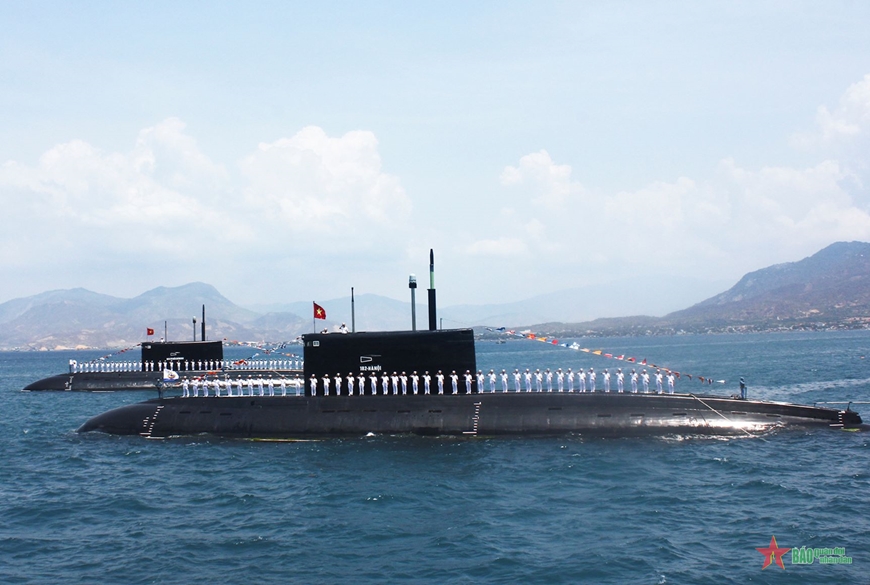
Submarines 182-Hanoi and 183-Ho Chi Minh City at Cam Ranh Naval Port (Khanh Hoa).
Photo: Pham Quang Tien/People's Army Newspaper
Over 80 years of building, fighting, winning, and maturing, our Army has built a very glorious tradition, concisely summarized in President Ho Chi Minh's praise: "Our Army is loyal to the Party, devoted to the people, ready to fight and sacrifice for the independence and freedom of the Fatherland, for socialism. Every task is completed, every difficulty is overcome, every enemy is defeated."
That tradition is demonstrated as follows:
- Unwavering loyalty to the Socialist Republic of Vietnam, to the Party, the State, and the People.
- Be determined to fight, be determined to win, know how to fight and know how to win.
- A blood-and-flesh bond with the people, the army and the people sharing a common will.
- Internal unity; officers and soldiers are equal in rights and obligations, love and help each other, and are of one mind and action, with unity of will and action.
- Self-discipline and strict adherence to rules.
- Independence, self-reliance, self-strength, diligence, and frugality in building the army and the country, respecting and protecting public property.
- A clean, healthy, cultured, honest, humble, simple, and optimistic lifestyle.
- Always uphold the spirit of eagerness to learn, a desire for progress, and maintain proper and refined conduct.
- International solidarity that is pure, loyal, righteous, and sincere.
(CENTRAL PROPAGANDA DEPARTMENT - GENERAL POLITICAL DEPARTMENT OF THE VIETNAMESE PEOPLE'S ARMY)
Source: https://baothanhhoa.vn/quan-doi-nhan-dan-viet-nam-80-nam-xay-dung-chien-dau-chien-thang-va-truong-thanh-22-12-1989-22-12-2024-234350.htm



![[Photo] Prime Minister Pham Minh Chinh holds a phone call with the CEO of Russia's Rosatom Corporation.](/_next/image?url=https%3A%2F%2Fvphoto.vietnam.vn%2Fthumb%2F1200x675%2Fvietnam%2Fresource%2FIMAGE%2F2025%2F12%2F11%2F1765464552365_dsc-5295-jpg.webp&w=3840&q=75)
![[Photo] Closing Ceremony of the 10th Session of the 15th National Assembly](/_next/image?url=https%3A%2F%2Fvphoto.vietnam.vn%2Fthumb%2F1200x675%2Fvietnam%2Fresource%2FIMAGE%2F2025%2F12%2F11%2F1765448959967_image-1437-jpg.webp&w=3840&q=75)


































![[OFFICIAL] MISA GROUP ANNOUNCES ITS PIONEERING BRAND POSITIONING IN BUILDING AGENTIC AI FOR BUSINESSES, HOUSEHOLDS, AND THE GOVERNMENT](https://vphoto.vietnam.vn/thumb/402x226/vietnam/resource/IMAGE/2025/12/11/1765444754256_agentic-ai_postfb-scaled.png)






























Comment (0)