

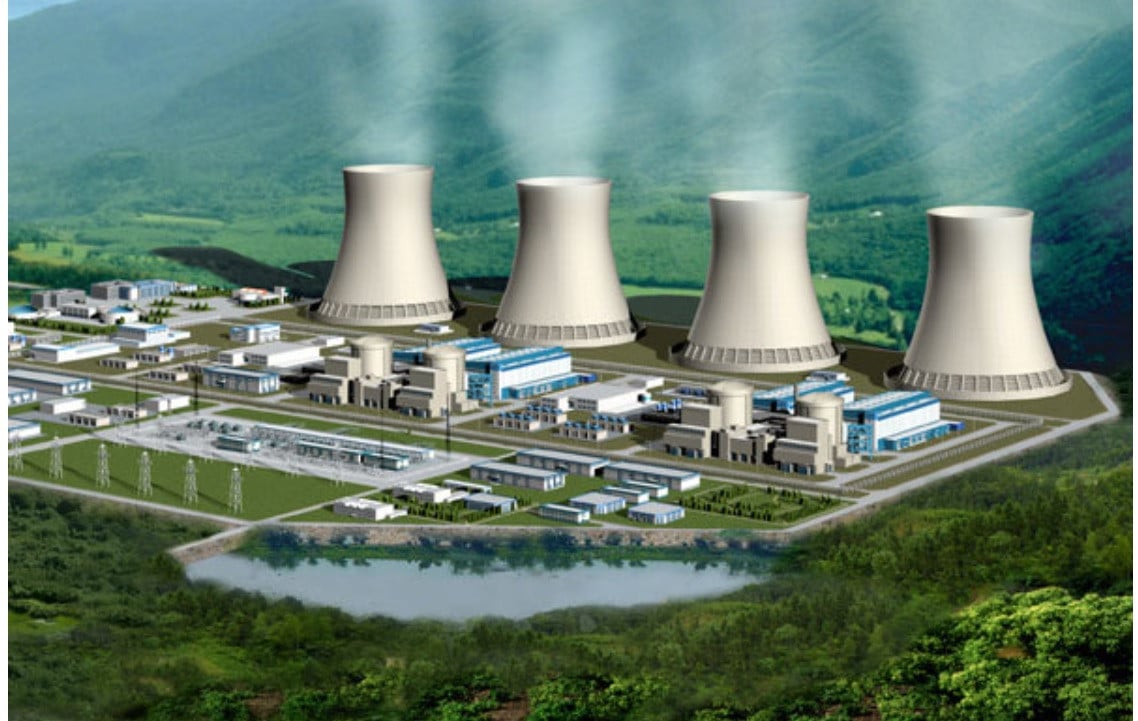
The Decree comprises 9 chapters and 74 articles, detailing some provisions and implementation measures of the 2025 Atomic Energy Law regarding safety and security requirements for nuclear power plants and research reactors; location, design, investment decisions, construction, operation, and decommissioning of nuclear power plants…
This Decree provides guidance on the implementation measures of the 2025 Atomic Energy Law to ensure radiation safety, nuclear safety, and nuclear security throughout the lifecycle of nuclear power plants and research reactors; it applies to domestic organizations and individuals, Vietnamese citizens residing abroad, foreign organizations and individuals, and international organizations conducting activities related to nuclear power plants and research reactors in Vietnam.
Design of nuclear power plants and research nuclear reactors.
Regarding the design of nuclear power plants and research nuclear reactors, the Decree stipulates the following general requirements:
Ensuring the performance of basic safety functions includes: controlling the nuclear chain reaction; transferring heat from the reactor core and spent nuclear fuel storage areas, and preventing the release of radiation;
Applying a systematic approach to identify critical safety items and intrinsic safety characteristics that perform or influence the fundamental safety function for all states of nuclear power plants and research reactors;
Ensuring the ability to perform basic safety functions with high reliability, guaranteeing stable operation throughout the entire design lifespan;
For nuclear power plants, it is necessary to rely on the results of deterministic and probabilistic safety analyses to prevent accidents and minimize their consequences if they occur;
For research nuclear reactors, the results of deterministic safety analysis and probabilistic safety analysis (if any) must be based on a tiered approach;
Ensuring control of radioactive emissions into the environment; the amount of radioactive waste generated directly from the operation of nuclear power plants and research nuclear reactors does not exceed the prescribed limits;
Taking into account the experience gained from the design, construction, and operation of nuclear power plants, other nuclear research reactors, as well as the results of related research programs;
Consider the possibility of decommissioning, including: plans for dismantling, handling radioactive waste and environmental remediation; minimizing the amount of radioactive waste generated from the dismantling process;
Facilitating nuclear inspection activities.
Principles of radiation safety and nuclear safety design:
Apply the principle of protection in depth;
Combining passive and active safety features;
Applying principles of independence, redundancy, diversity, self-protection, the ability to restore operations after incidents, and limiting failures caused by the same factors.
Ensuring ease of calibration, testing, maintenance, repair, replacement, inspection, monitoring of functional capability, and maintenance of integrity of safety-critical components;
Considering the potential hazards inside and outside the nuclear power plant, the research nuclear reactor, including the potential for hazards caused directly or indirectly by humans.
The decree also stipulates the design principles for nuclear security, specifically:
The design of a physical protection system must take into account measures for access control, detection, delay, and timely response to acts of intrusion, sabotage, or theft of nuclear materials, ensuring the application of the principle of protection in depth;
The design of a physical security system must take into account measures to protect information systems, control systems, and digital equipment from cyberattacks and unauthorized access.
The design of a physical security system must be based on threat assessment, while also applying a hierarchical approach and risk evaluation.
Integrate the development and implementation of measures to ensure radiation safety, nuclear safety, and nuclear security, ensuring that these measures are independent and do not adversely affect each other.
The procedures for preparing, appraising, and approving the design for the construction of nuclear power plants are governed by construction laws applicable to nationally important projects.
The Minister of Science and Technology shall specify in detail the safety requirements for the design of nuclear power plants and research nuclear reactors; and the requirements for physical protection systems.
Furthermore, the Decree stipulates specific principles for monitoring radiation safety, nuclear safety, and nuclear security: Compliance with legal regulations; ensuring independence, objectivity, and transparency; preventing, early detection, and timely handling of safety risks; archiving monitoring results; and avoiding disruption to the normal operation of nuclear power plants and research reactors. Monitoring must employ a hierarchical approach to determine the appropriate level, frequency, scope, and method of monitoring for each item, system, and activity based on the level of risk associated with radiation safety, nuclear safety, and nuclear security.
Monitoring methods include on-site monitoring; review of records and documents; and online monitoring. The National Radiation and Nuclear Safety Authority is responsible for: establishing monitoring offices during the construction, commissioning, operation, and decommissioning phases; and developing a detailed monitoring program.
This Decree comes into force from January 1, 2026.
Source: https://baotintuc.vn/thoi-su/quy-dinh-ve-nguyen-tac-thiet-design-nha-may-dien-hat-nhan-va-giam-sat-an-toan-hat-nhan-20251210201521136.htm




![[Photo] Closing Ceremony of the 10th Session of the 15th National Assembly](/_next/image?url=https%3A%2F%2Fvphoto.vietnam.vn%2Fthumb%2F1200x675%2Fvietnam%2Fresource%2FIMAGE%2F2025%2F12%2F11%2F1765448959967_image-1437-jpg.webp&w=3840&q=75)




































![[OFFICIAL] MISA GROUP ANNOUNCES ITS PIONEERING BRAND POSITIONING IN BUILDING AGENTIC AI FOR BUSINESSES, HOUSEHOLDS, AND THE GOVERNMENT](https://vphoto.vietnam.vn/thumb/402x226/vietnam/resource/IMAGE/2025/12/11/1765444754256_agentic-ai_postfb-scaled.png)


































Comment (0)