

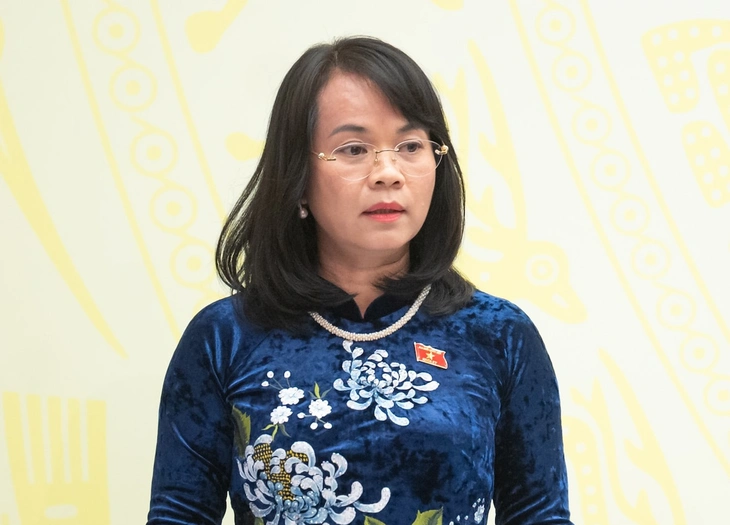
Ms. Pham Thi Hong Yen - Photo: GIA HAN
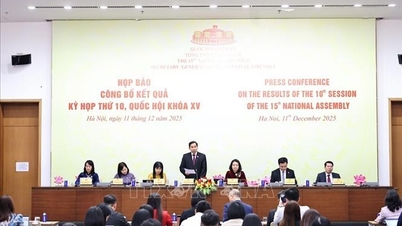
On the afternoon of December 11th, at the closing press conference of the 10th session of the 15th National Assembly, Representative Pham Thi Hong Yen, a full-time member of the Economic and Finance Committee, stated that the amended Personal Income Tax Law, which was passed by the National Assembly, has incorporated feedback and adjustments to ensure flexibility in implementation.
Raising the tax-exempt revenue threshold to 500 million VND will reduce the tax burden on household businesses.
Accordingly, the law has adjusted the annual revenue threshold for individuals and household businesses exempt from personal income tax, from the initially proposed 200 million VND to 500 million VND per year.
At the same time, the regulations stipulate that the Government shall submit to the Standing Committee of the National Assembly proposals to adjust the revenue threshold exempt from personal income tax to suit the socio-economic situation of each period.
Ms. Pham Thi Hong Yen affirmed that the law has been designed to be extremely flexible, allowing for the deduction of this 500 million VND/year amount before having to pay tax based on a percentage of revenue.
This adjustment coincides with an adjustment to the corresponding value-added tax (VAT) taxable revenue threshold of 500 million VND.
"This regulation helps reduce the tax burden on individual business owners and small businesses, while ensuring very simple and transparent implementation," Ms. Yen emphasized.
Another new feature is allowing business households and individual business owners with annual revenue ranging from over 500 million to 3 billion VND per year to choose their tax payment method.
The first method is to calculate based on income tax (subtracting expenses from revenue and then multiplying by a tax rate of 15%).
"This form creates a fair and equitable legal framework, suitable for the business conditions of household businesses and individual entrepreneurs."
"This helps individuals feel secure in their production and business activities, stabilize their lives, and develop production, while also creating favorable conditions for these households to transform into enterprises (if they choose the revenue minus expenses model)," Ms. Yen stated.
The second method is taxing based on revenue. Revenue-based tax is entirely dependent on the specific industry or sector, and the tax rates vary accordingly.
For example: the tax rate for goods distribution and supply is 0.5%; for construction services without material procurement, it is 2%; for other business activities, it is 1%; and for manufacturing, transportation, services related to goods, and construction with material procurement, it is 1.5%.
Representatives from the Economic and Financial Committee argued that such varying tax rates are appropriate for different industries and sectors, ensuring a harmonious, fair, and easily implementable tax policy, and granting more rights to taxpayers.
Reasons why the government is not given the flexibility to adjust the personal allowance deduction.
Explaining why the government is not given the flexibility to adjust the personal allowance, Ms. Pham Thi Hong Yen said that the personal allowance must still be specifically stipulated in the law, because the personal allowance is an amount directly related to determining an individual's tax obligations to the State.
According to the Constitution, state budget revenues and expenditures must be projected and regulated by law. Therefore, the prescribed amount of personal allowance deductions needs to be stipulated in the law.
However, similar to the previous Personal Income Tax Law, the new law still stipulates that, based on fluctuations in prices and income, the Government will submit to the Standing Committee of the National Assembly regulations on the appropriate level of personal deductions in accordance with the socio-economic situation in each period.
If, during the course of events, fluctuations related to prices and income directly affect the lives of the people, the Government still has the responsibility to assess the situation and report to the Standing Committee of the National Assembly to request adjustments to the regulations.
Source: https://tuoitre.vn/nhung-diem-moi-can-luu-y-ve-nguong-cach-tinh-thue-thu-nhap-ca-nhan-voi-ho-kinh-doanh-20251211175443712.htm


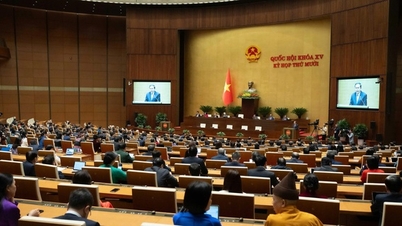
![[Photo] Closing Ceremony of the 10th Session of the 15th National Assembly](/_next/image?url=https%3A%2F%2Fvphoto.vietnam.vn%2Fthumb%2F1200x675%2Fvietnam%2Fresource%2FIMAGE%2F2025%2F12%2F11%2F1765448959967_image-1437-jpg.webp&w=3840&q=75)




































![[OFFICIAL] MISA GROUP ANNOUNCES ITS PIONEERING BRAND POSITIONING IN BUILDING AGENTIC AI FOR BUSINESSES, HOUSEHOLDS, AND THE GOVERNMENT](https://vphoto.vietnam.vn/thumb/402x226/vietnam/resource/IMAGE/2025/12/11/1765444754256_agentic-ai_postfb-scaled.png)







































Comment (0)