

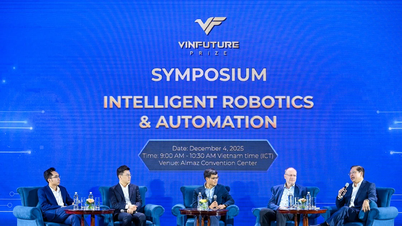
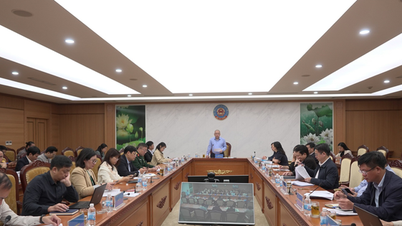
Within the framework of VinFuture 2025 Science and Technology Week, on the morning of December 4, a seminar on " Robots and intelligent automation " was held.
The seminar focused on many prominent aspects of the robotics field such as humanoid robots with social interaction capabilities, collaborative robots in service and medicine , and rehabilitation robotic systems...
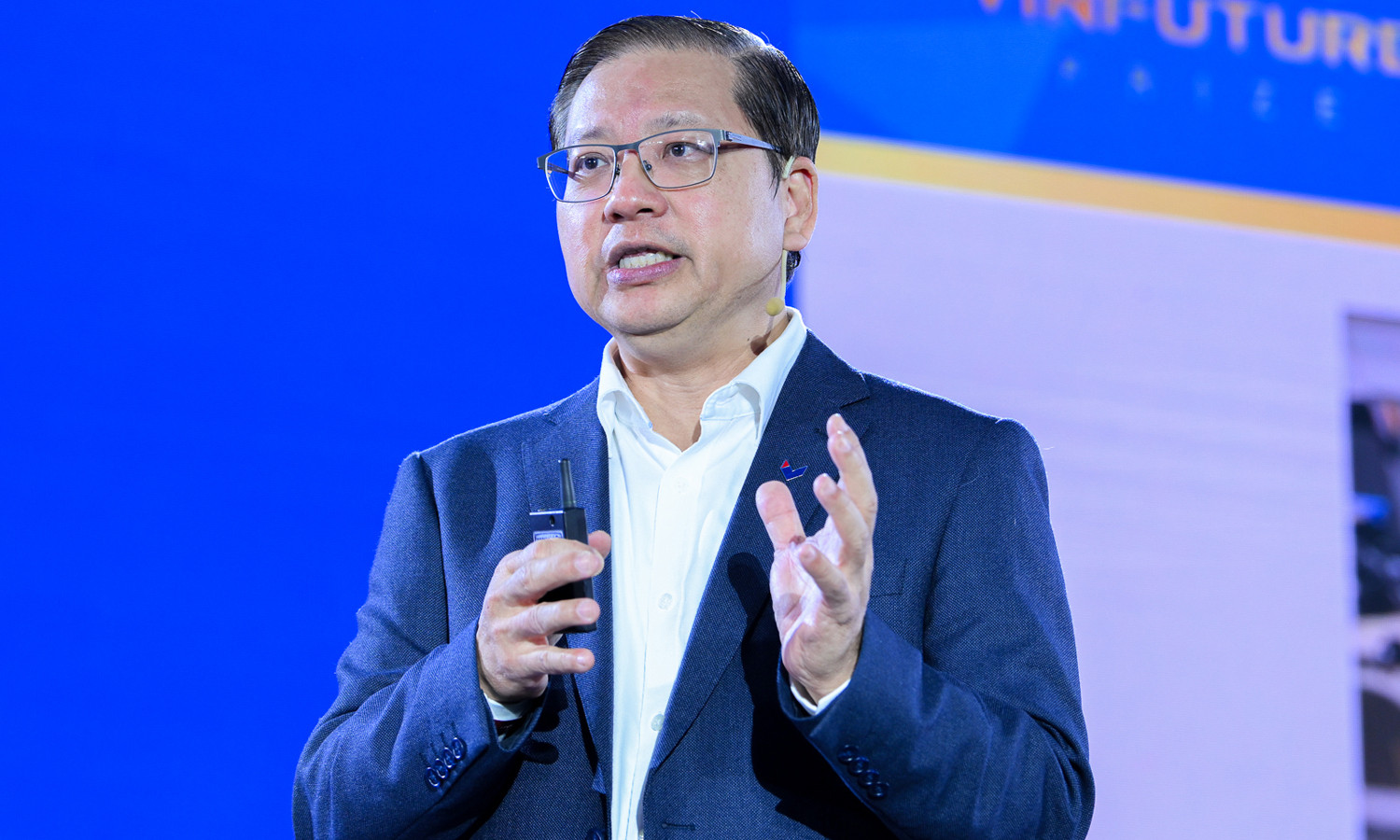
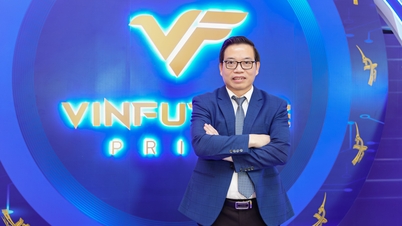
Professor Tan Yap Peng - Principal of VinUni.
Sharing at the seminar, Professor Tan Yap Peng - Principal of VinUni, commented that robots are no longer a science fiction concept.
" Robots are already being used in manufacturing processes, for example Amazon uses millions of robots in their manufacturing and shipping processes ," said Mr. Tan Yap Peng, citing predictions that by 2050, there will be about 1 billion humanoid robots living alongside humans.
From there, the important question is how can humans and robots coexist safely? According to Professor Tan Yap Peng, future robots will no longer stop at single operations as they are today.
“ Robots must understand what we say, then see and translate our instructions into actions. This requires robots to understand images, instructional videos and natural language to be able to perform tasks ,” the Professor said.
However, to achieve that, Professor Tan Yap Peng said, the robot must be highly refined, trained with images and have good memory to perform repetitive tasks without "thinking step by step".
" We build fast memory, encode the operation stages into commands, from which the robot will retrieve each step of that stage. In the future, robots not only need to save energy, operate for a long time, but also need the ability to self-diagnose errors, gradually become more skillful, " said Mr. Tan Yap Peng.
One issue that has attracted attention is the ability of robots to help prolong human life. Professor Tan Yap Peng commented: " Robots can replace humans to perform dangerous or complicated operations, but 'life extension' is a question that needs more time to prove ."
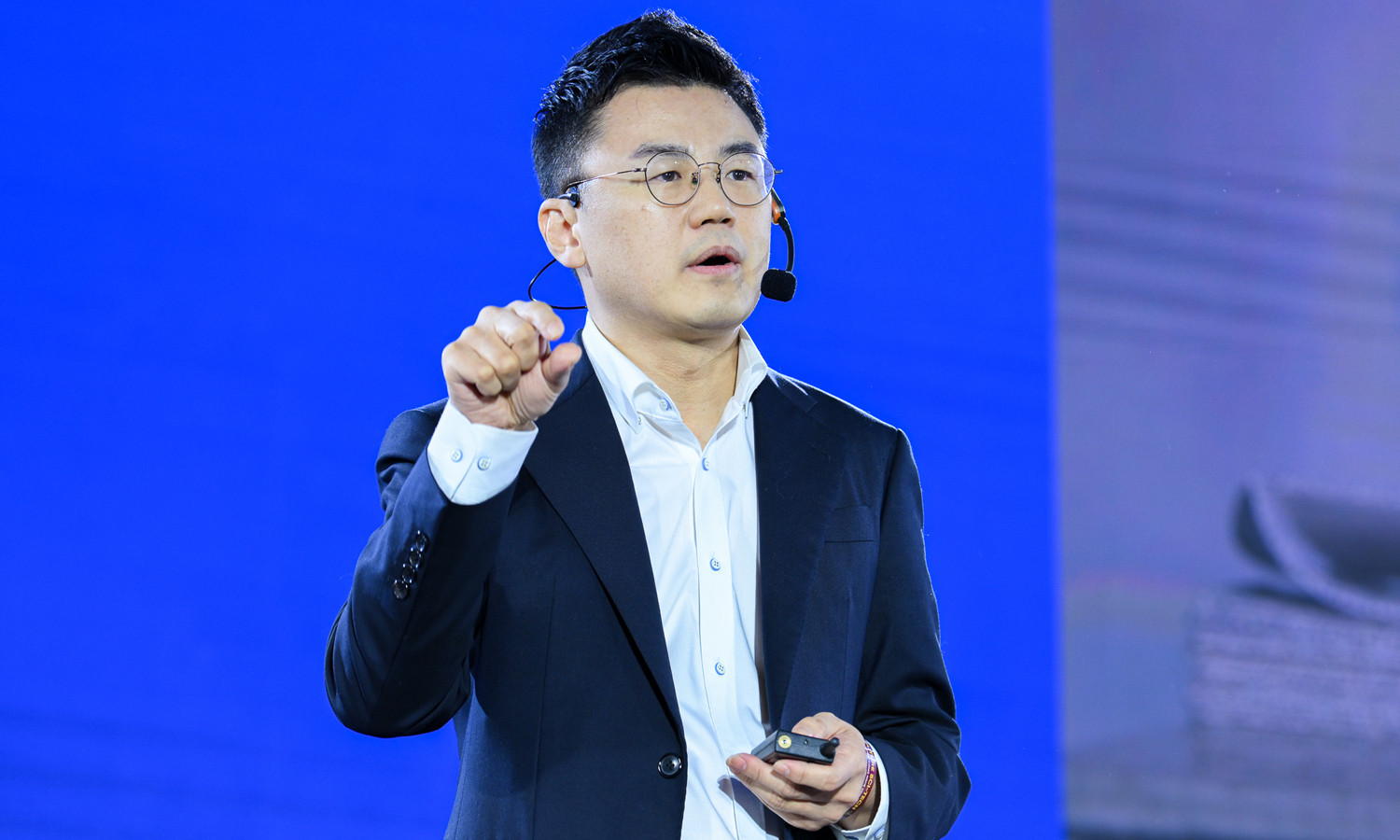
Professor Ho Young Kim - Seoul National University (Korea).
Also concerned about this issue, Professor Ho Young Kim - Seoul National University (Korea), said that robotic prosthetics can help disabled people recover their mobility.
" Many studies are also aimed at developing artificial hearts and robotic organs to replace failing organs. These devices can help restore body function in cases of severe damage ," said Ho Young Kim.
In addition, micro-nano robots can be introduced into the body to find and destroy cancer cells without using drugs. They can treat tumors, cancer, or deal with blockages in blood vessels. When operating inside the body, these robots can create a revolution in future medicine.
In addition, according to Professor Ho Young Kim, robots for elderly care are considered a strategic solution to the problem of population aging in many Asian countries.
" Robots can assist with movement, monitor health, and provide emotional companionship, helping to reduce the pressure of a shortage of young workers ," said Professor Ho Young Kim.
Source: https://vtcnews.vn/robot-co-the-giup-con-nguoi-tang-tuoi-tho-hay-khong-ar991016.html

![[Photo] Cat Ba - Green island paradise](/_next/image?url=https%3A%2F%2Fvphoto.vietnam.vn%2Fthumb%2F1200x675%2Fvietnam%2Fresource%2FIMAGE%2F2025%2F12%2F04%2F1764821844074_ndo_br_1-dcbthienduongxanh638-jpg.webp&w=3840&q=75)







































![[VIMC 40 days of lightning speed] Da Nang Port: Unity - Lightning speed - Breakthrough to the finish line](https://vphoto.vietnam.vn/thumb/402x226/vietnam/resource/IMAGE/2025/12/04/1764833540882_cdn_4-12-25.jpeg)


































Comment (0)