

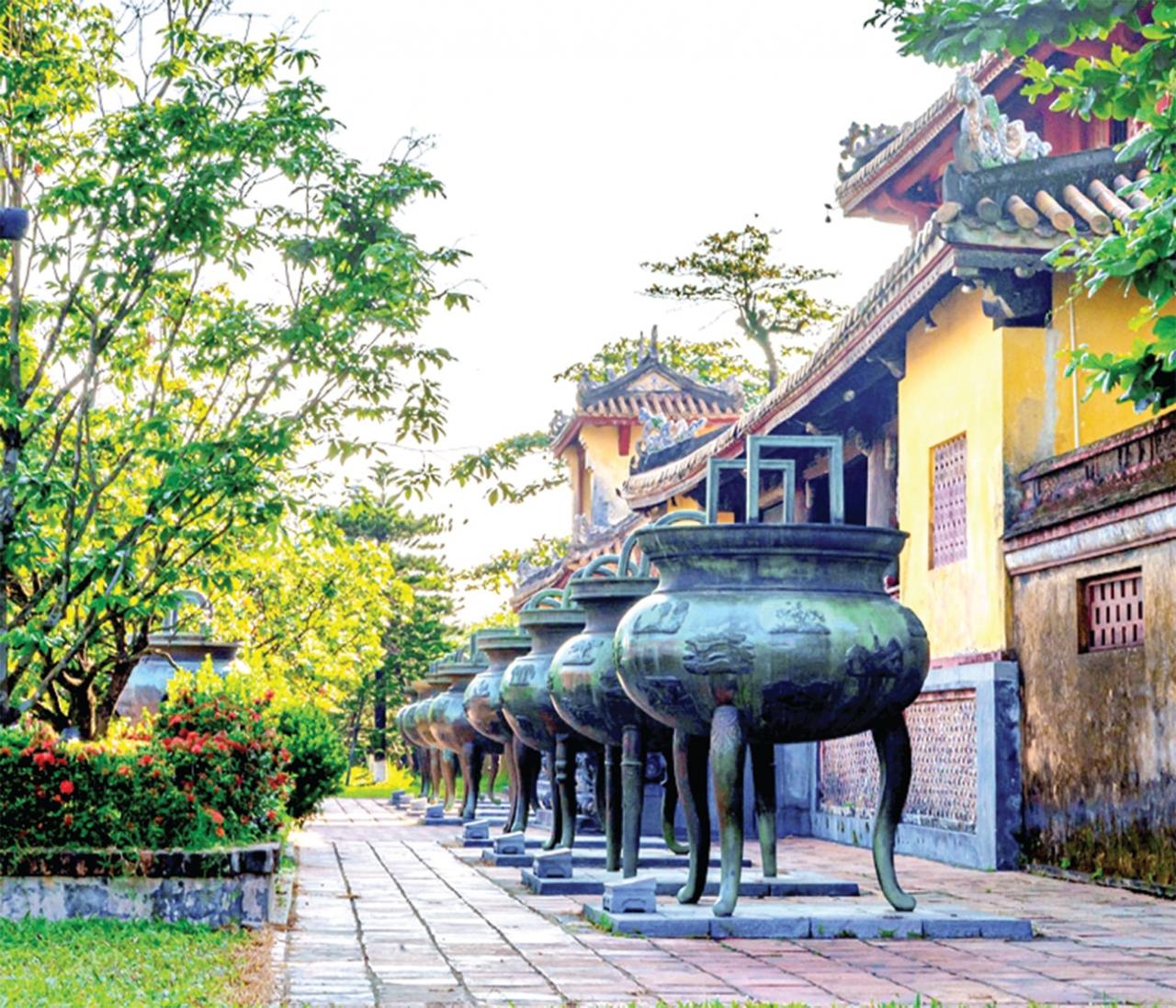
The Nine Bronze Tripods of the Nguyen Dynasty are nine bronze tripods, each with a unique name corresponding to the posthumous title of a Nguyen Dynasty emperor, placed in front of the The Mieu courtyard ( Hue Imperial Citadel).
Abundant produce
Many geographical documents from the Nguyen Dynasty, such as "Dai Nam Nhat Thong Chi," "Gia Dinh Thanh Thong Chi," and "Dong Khanh Dia Du Chi," recorded the abundance of Quang Nam 's products.
These included, most notably, agricultural and forestry products, such as rice (both regular and glutinous), cinnamon, agarwood, mangoes, granulated sugar, tobacco, mung bean cakes, agarwood tea (agarwood tea, bitter tea), salt, Ophiopogon japonicus, bird's nest, various types of wood (pine, acacia, rosewood, ironwood, and ebony), beeswax, honey, rattan, various types of birds, fish, and crabs…
Forest products from Quang Nam have become a leading export commodity. Le Quy Don's book "Phu Bien Tap Luc" records the trade and exchange of goods at the international trading port of Hoi An:
“Ships from Son Nam (Northern Vietnam) could only buy one thing: brown tubers; ships from Thuan Hoa could only buy one thing: pepper; but ships from Quang Nam could bring everything imaginable, unmatched by any neighboring country. All goods produced in the prefectures of Thang Hoa, Dien Ban, Quang Ngai, Quy Nhon, and Binh Khang (which belonged to Quang Nam province)... were transported by water, land, boat, and horse, all converging in Hoi An town. Therefore, visitors from the North would gather here to buy goods to take back to their country. In the past, there were so many goods that even a hundred large ships carrying goods at the same time couldn't possibly hold them all.”
The painting of Dai Nam
Historical records state that in the winter of 1835, Emperor Minh Mạng issued a decree to cast the Nine Tripods. They were completed two years later. Emperor Minh Mạng held the inauguration ceremony for the Nine Tripods on the day of Quy Mão (March 1, 1837).
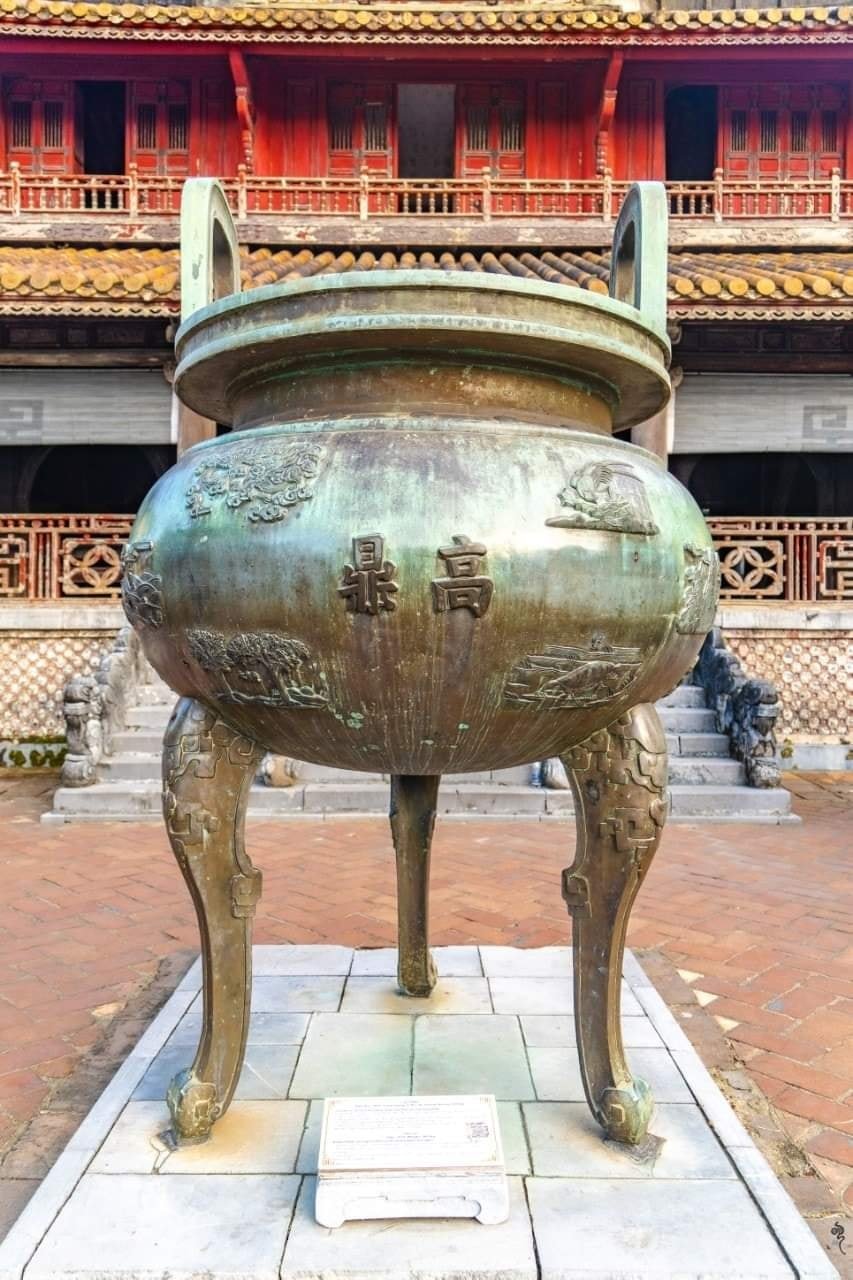
The Nine Tripods system includes: Cao Tripod, Nhân Tripod, Chương Tripod, Anh Tripod, Nghị Tripod, Thuần Tripod, Tuyên Tripod, Dụ Tripod, and Huyền Tripod. Each tripod is carved with 17 motifs and 1 calligraphic inscription, encompassing themes of the universe, mountains and rivers, animals, products, boats, vehicles, weapons, etc., forming a panoramic picture of the Đại Nam nation.
The images and motifs on the Nine Tripods represent a comprehensive picture of the country at that time. Therefore, many images depict very common products such as rice grains, chickens, jackfruit, etc.
However, these images also contain many characteristic and representative images of a region or a specific area. King Minh Mạng issued a decree: "Now, when casting bronze cauldrons and carving images of rivers, mountains, and all things, it is not necessary to carve everything; only the name, title, and place must be clearly carved for easy identification."
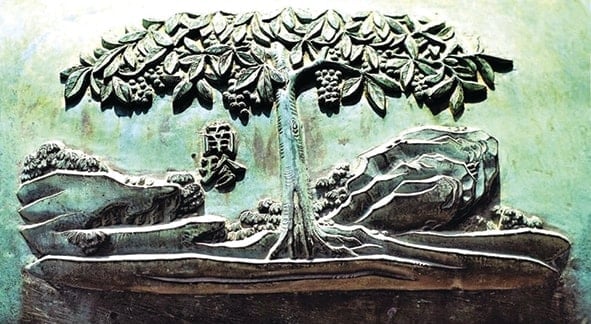
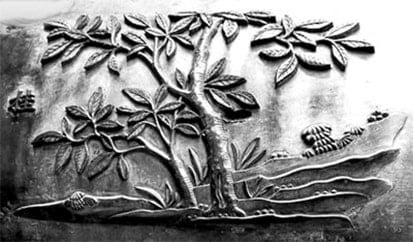
Accordingly, images of mountains and rivers, and typical products of Quang Nam were cast and engraved on the Nine Dynastic Urns, including agarwood on the Cao Urn; agarwood fruit and ky nam tree on the Nhan Urn; cinnamon tree and sandalwood tree on the Nghi Urn; bird's nest on the Tuyen Urn; and the Hai Van Pass gate and Vinh Dien River on the Du Urn. Among these, agarwood fruit, cinnamon, and bird's nest are particularly famous.
Enduring produce
Nam Tran is a beautiful name given by Emperor Minh Mang. The book "Dai Nam Nhat Thong Chi" records: "Commonly called lon bon fruit, at the beginning of the Minh Mang reign it was given the name Nam Tran. It grows in both the O Da and Thu Bon springs. In August and September, the fruit ripens, is white in color, has a thin skin, is sweet and fragrant, and is traditionally offered as a sacrifice. In the 17th year of Minh Mang's reign, its image was carved into the Nhan Dinh cauldron."
Nam trân is a precious fruit from the South, a valuable gift that helped Lord Nguyễn Ánh overcome famine and establish his kingdom. The regulations for offering Nam trân as tribute are detailed in the book "Khâm định Đại Nam hội điển sự lệ".
The book "Dong Khanh Geographical Gazetteer" records that cinnamon bark from the Thu Bon River source in Que Son district, Thang Binh prefecture, was of the highest quality; the Tien Giang commune in Ha Dong district, Thang Binh prefecture, had a large cinnamon plantation. Judge Nguyen Van Mai meticulously documented the cultivation and consumption of cinnamon in Quang Nam in his "Lo Giang Biography". Quang Nam cinnamon was not only a commodity for trade but also an international gift.
Regarding bird's nest products, the book "Dai Nam Nhat Thong Chi" states that "bird's nests are produced on Dai Chiem Island (Cu Lao Cham), and there are bird's nest harvesting households, who must pay 80 taels (approximately 37.5 grams) annually." The harvesting of bird's nests was strictly regulated by the Ministry of Finance during the Minh Mang dynasty, from the selection of household heads and the number of harvesters to the methods of collecting and submitting the products, and even prohibitions. Bird's nest products are also inscribed on stone steles in historical texts related to the bird's nest harvesting industry.
Throughout nearly 200 years of history, the Nine Dynastic Urns have remained in their original positions, intact to this day. And the products of Quang Nam have also endured as a result.
Source: https://baoquangnam.vn/san-vat-quang-nam-truong-cuu-cung-cuu-dinh-3148102.html


![[Photo] Prime Minister Pham Minh Chinh holds a phone call with the CEO of Russia's Rosatom Corporation.](/_next/image?url=https%3A%2F%2Fvphoto.vietnam.vn%2Fthumb%2F1200x675%2Fvietnam%2Fresource%2FIMAGE%2F2025%2F12%2F11%2F1765464552365_dsc-5295-jpg.webp&w=3840&q=75)







































































Comment (0)