

Integration does not dilute policy or narrow the scope of support.
Regarding the policy of integrating 3 programs into 1 program, besides the majority of National Assembly delegates expressing agreement, there are still concerns that the merger may reduce policies and investment resources for ethnic minority and mountainous areas.
Minister Tran Duc Thang emphasized that the policy of merging the three programs demonstrates the Government 's determination to realize the Party and State's goal of making people have a prosperous and happy life, especially in ethnic minority and mountainous areas. To realize this goal, the Government's proposal clearly stated: in addition to the general goals, it will focus on prioritizing the construction of new rural areas, sustainable poverty reduction and socio-economic development in ethnic minority and mountainous areas.
Along with that, improve implementation efficiency, avoid overlapping and duplication of decentralization policies, thoroughly decentralize to localities; extend the support period to 2035 instead of 2030 as in the current program to concentrate long-term resources more synchronously and effectively. "The integration does not reduce policies, does not narrow the scope of support but creates conditions for more concentration and priority for ethnic minority and mountainous areas, which are currently the core of poverty in the country," the Minister affirmed.
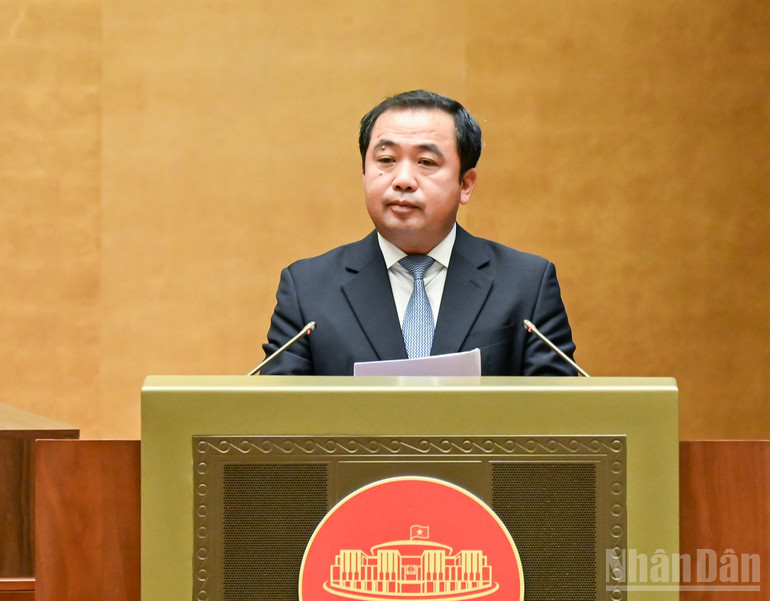
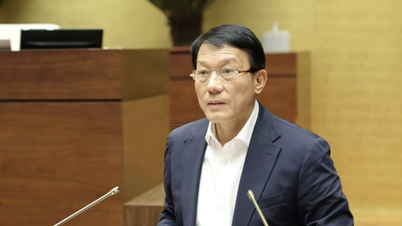
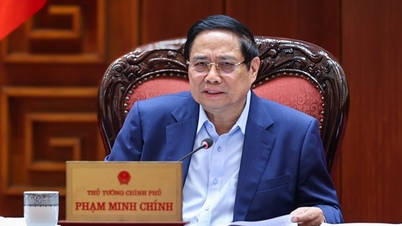
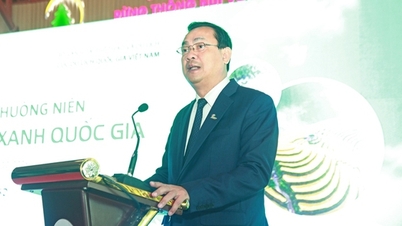
Minister of Agriculture and Environment Tran Duc Thang explained and clarified the contents raised by National Assembly deputies. (Photo: DUY LINH)
Explaining the target of maintaining a reduction of the multidimensional poverty rate from 1 to 1.5% per year and 100% of poor communes escaping poverty, Minister Tran Duc Thang said that the target of reducing the multidimensional poverty rate was affirmed in the Resolution of the 13th National Congress of the Party and Directive No. 05 of the 13th Party Central Committee Secretariat on strengthening the Party's leadership in sustainable poverty reduction by 2030.
In reality, by the end of 2025, the multidimensional poverty rate will be about 0.9 to 1%, with an average decrease of over 1% per year in the 2021-2025 period; the multidimensional poverty rate is expected to be about 9.6% in the 2026-2030 period, equivalent to the 2022-2025 period. Thus, the above target is consistent with the Party's policy, practical results and feasible in the socio-economic conditions of our country in the 2026-2030 period.
Will continue to balance the central budget to report additional information in accordance with actual conditions.
Regarding investment capital for the program, some delegates were concerned that the allocation of 100 trillion VND from the central budget for the program was low, while the policies and goals were high, and the ability to mobilize resources in ethnic minority and mountainous areas was difficult.
Agreeing with the opinions of the delegates, Minister Tran Duc Thang said that the program has a scope and scale covering the whole country, almost covering all the contents and tasks of socio-economic development in rural areas, in which priority is given to ethnic minority and mountainous areas. Therefore, the initial allocation of 100 trillion VND from the central budget is limited.
However, in the 2026-2030 period, in addition to this program, there are 4 other national target programs being implemented in the area, these programs have similar goals with a capital source of about 360 trillion VND. Along with that, the program for sustainable development of the Mekong Delta region, the program for stabilizing population in mountainous areas and difficult areas have been included in the draft Resolution of the 14th National Congress, expected to focus on investment in the 2026-2030 period.
"To achieve the goals and tasks of the program, during the operation process, the Government will continue to balance the central budget to report to the National Assembly to prioritize additional allocations in accordance with actual conditions," said the Minister.
Regarding local counterpart capital , some delegates said that the figure of 400 trillion VND is too large, beyond the balancing capacity of localities, especially disadvantaged localities.
Clarifying this content, Minister Tran Duc Thang informed that the local budget capital for implementation is the total local budget capital at 2 levels of 34 provinces and cities allocated for the program, including 7 self-balancing localities and 27 localities receiving support from the central budget. This is one of the main sources of capital, reflecting the proactive role and responsibility of local Party committees and authorities in implementing the program's objectives in the locality.
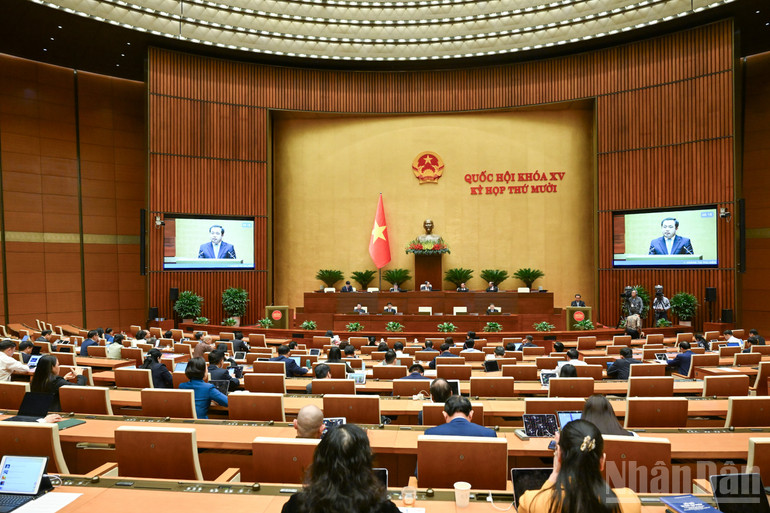
Minister of Agriculture and Environment Tran Duc Thang explained and clarified the contents raised by National Assembly deputies. (Photo: DUY LINH)
In the 2021-2025 period, of the total of nearly 300 trillion VND of local capital allocated to implement 3 national target programs, the capital of 16 provinces and cities that balance their own budgets accounts for about 65%. For the remaining 47 provinces, the proportion of counterpart capital of localities is regulated in accordance with the proportion of support received from the central budget and the actual conditions of the locality. In particular, the proportion of counterpart capital of disadvantaged localities is only about 5% compared to the capital supported by the central budget.
Taking into account the opinions of the National Assembly Standing Committee, the review opinions of the Ethnic Council and the opinions of National Assembly deputies, the Government will continue to review and balance to determine the most appropriate budget capital level for localities.
Ensure no duplicate investment, no omission of poor communes or particularly difficult areas
Regarding the delegates' concerns about the duplication of policy content, the Minister of Agriculture and Environment emphasized that in the process of building the program, the Government has directed the principle of consolidation to be inheritance, stability, no interruption, no abolition of effective policies, only review and rearrange in the direction of focus, clear location, objects and responsibilities.
Accordingly, the program is designed with two clear components, a general component to be implemented nationwide and a specific component for ethnic minority and mountainous areas. Each specific task is only arranged in one component based on the principle of clear content, clear resources, and clear beneficiaries. At the same time, review with other national target programs to avoid duplication of investment and to not miss poor communes and especially difficult areas.
In addition, to overcome the limitations of issuing many documents and late issuance of guidance documents, the Government will assign the Ministry of Agriculture and Environment to preside over and coordinate with the Ministry of Ethnic Minorities and Religions and relevant ministries and branches to unify the issuance of documents guiding the implementation of the program to ensure consistency and clarity in content immediately after the National Assembly approves the program's investment policy. It is expected that by January 2026 at the latest, all documents guiding the organization will be issued for localities to deploy and organize implementation.
Regarding the proposal to strengthen decentralization and delegation of power to localities in conjunction with goals and accountability, Minister Tran Duc Thang said that the program is designed in the spirit of maximum decentralization to localities along with resource allocation based on the principle of "locality decides, locality acts, locality takes responsibility". The central government unifies management and issues mechanisms to strengthen inspection and supervision.
The Government allocates the total capital, and localities, based on actual conditions, proactively decide on the allocation plan and integrate resources to achieve the assigned common goals. At the same time, establish a monitoring mechanism at the three levels of central, provincial and communal levels; promote the role of the people as the subject in monitoring, ensure publicity, transparency and enhance accountability of authorities at all levels.
Source: https://nhandan.vn/se-tiep-tuc-ra-soat-can-doi-de-dac-dinh-muc-von-doi-ung-dia-phuong-cho-phu-hop-nhat-post928217.html


![[Photo] Cat Ba - Green island paradise](/_next/image?url=https%3A%2F%2Fvphoto.vietnam.vn%2Fthumb%2F1200x675%2Fvietnam%2Fresource%2FIMAGE%2F2025%2F12%2F04%2F1764821844074_ndo_br_1-dcbthienduongxanh638-jpg.webp&w=3840&q=75)
![[Photo] 60th Anniversary of the Founding of the Vietnam Association of Photographic Artists](/_next/image?url=https%3A%2F%2Fvphoto.vietnam.vn%2Fthumb%2F1200x675%2Fvietnam%2Fresource%2FIMAGE%2F2025%2F12%2F05%2F1764935864512_a1-bnd-0841-9740-jpg.webp&w=3840&q=75)


































































Comment (0)