

The competition recorded 50 teams with about 200 contestants participating from many universities in Hanoi such as the Diplomatic Academy, Hanoi Law University, Hanoi University, Foreign Trade University, etc. The activity is within the framework of the DynaGen Initiative Student Development Initiative Course 6, implemented by the For Vietnamese Stature Fund (VSF) in coordination with the Diplomatic Academy, with the support of TH Group, Bac A Commercial Joint Stock Bank ( BAC A BANK ) and Education & Times Newspaper. The competition was directly organized by the Southeast Asia Club (Diplomatic Academy).
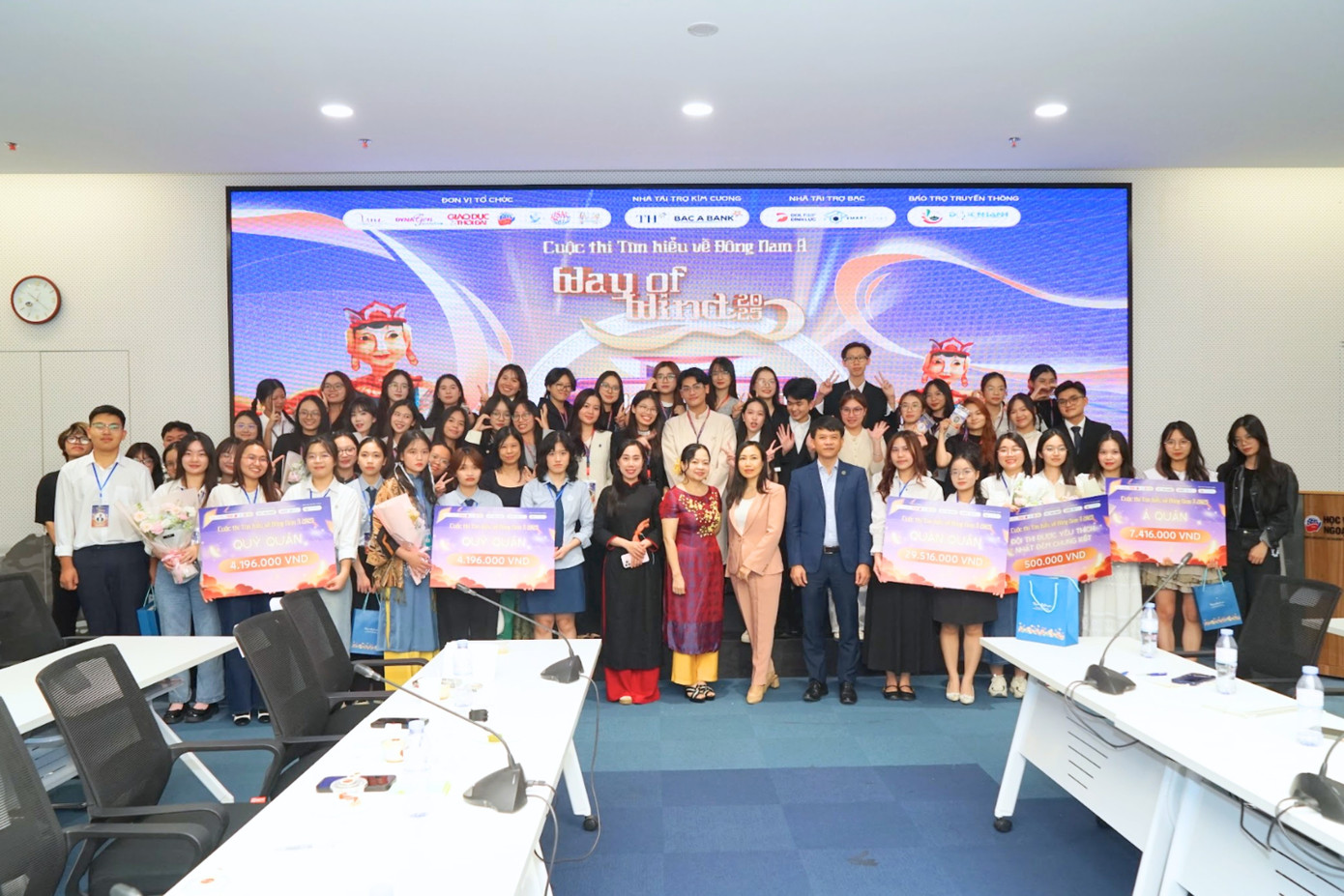
Students learn to “read” ASEAN through heritage
Launched in September 2025, the Way of Wind 2025 Southeast Asian Cultural Competition will take students through a series of challenges revolving around Southeast Asian cultural research, from analyzing documents, designing infographics to proposing solutions to promote a folk art form. Each round not only tests the ability to collect information and recreate folk art forms, but also encourages young people to interpret cultural values from a modern perspective: how heritage can be understood, retold, and spread in the digital age.
It is this change in approach that makes Way of Wind a place for young people to practice intercultural thinking, an increasingly important skill in the context of ASEAN countries having to find common ground for dialogue, despite differences in language, institutions or religion.
Commenting on the importance of culture in regional connectivity, Ms. Dinh Thao, Deputy Director of the Center for Promotion of Intangible Cultural Heritage of Vietnam, said that culture has long been a “soft door” that opens up more open and sustainable dialogues between countries. According to her, students’ proactive access to heritage not only helps supplement knowledge but also creates a foundation for mutual understanding – an important factor for ASEAN to maintain its cohesion.
Regional culture in the eyes of young people
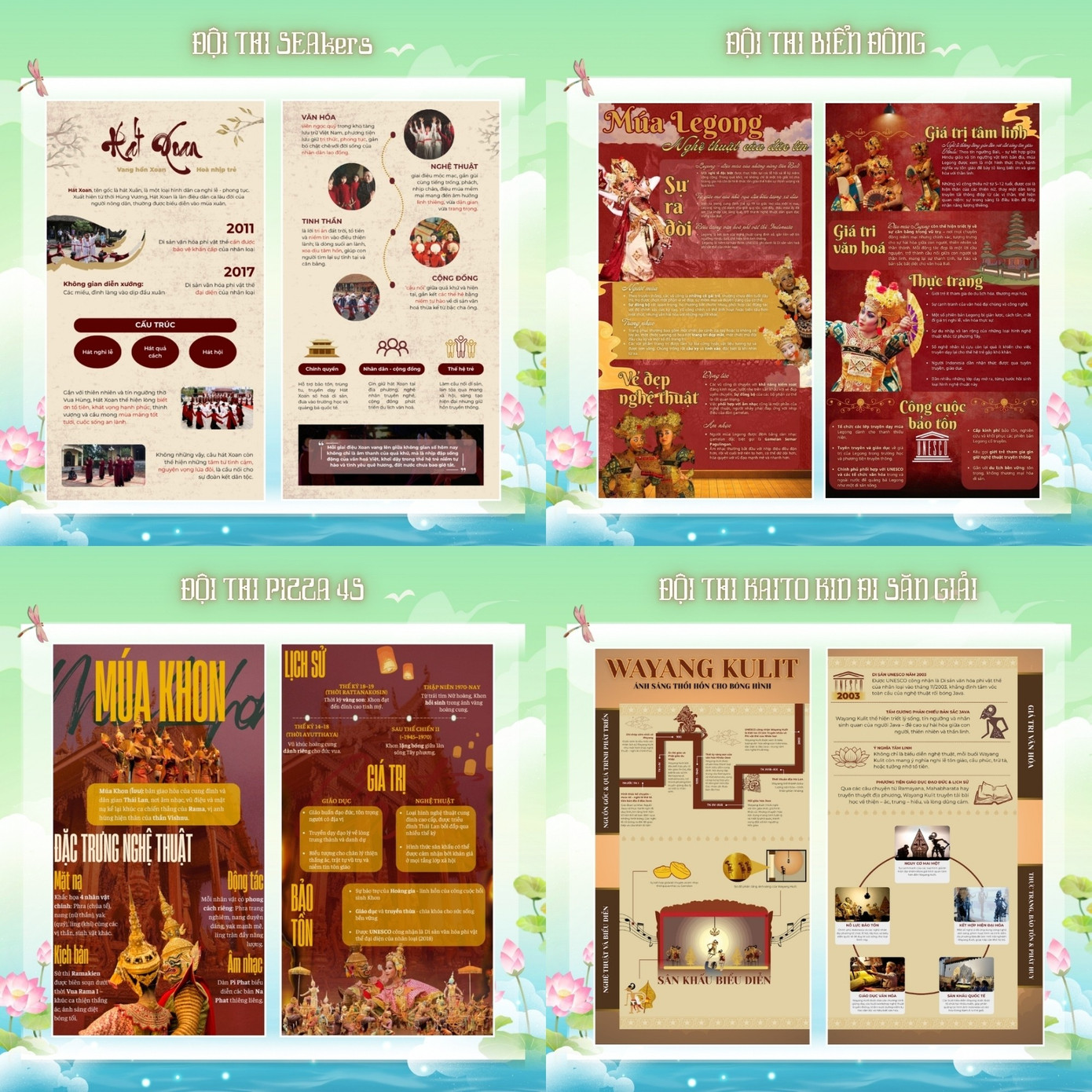
In the final round, the four best teams presented their projects to promote the chosen art form, combined with a round-robin discussion. The teams did not simply describe the cultural forms, but actively raised the question: What is the significance of heritage in modern life? How can traditional values become a source of inspiration for young people?
Four cultural forms appeared in the Final round: Xoan singing (Vietnam), Legong dance (Indonesia), Khon dance (Thailand) and Wayang Kulit dance (Indonesia).
Despite choosing very different approaches, the meeting point between the competing teams lies in not seeing heritage as separate "specimens", but as a living part of the community's spiritual life, capable of continuing to be retold, renewed and spread.
“We realized that Indonesian shadow dance is not only a visual performance, but also a space for storytelling, connecting the community and reflecting the religious beliefs of Indonesians,” shared Hoang Khanh Linh, Faculty of International Politics & Diplomacy, Diplomatic Academy, member of the Kaito Kid award-winning team.
The team chose Wayang Kulit, an Indonesian shadow dance, simply because of the wealth of material available. But the more they researched it in preparation for the Finals, the more impressed they became with the cultural depth of the form.
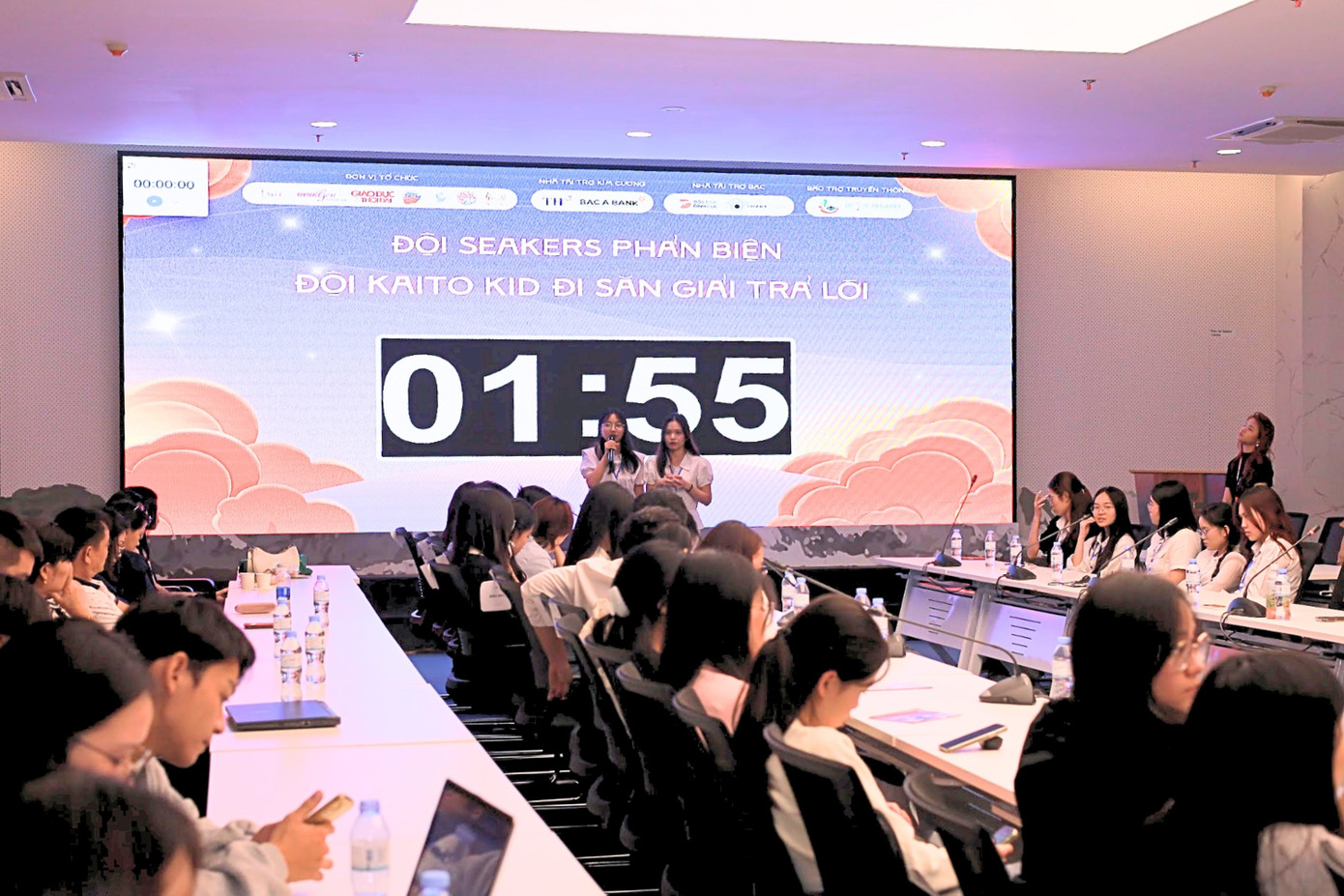
Khanh Linh said the competition gave the team the opportunity to “read” Southeast Asia through a new lens, where traditional art reflects the spiritual life and hopes of its communities. And when looking back at traditional Vietnamese art forms, the members also recognized those similarities.
With the winning project, the Pizza 4S team wanted to put young people at the center of the story, to find the answer to the question of what needs to be done to make a traditional art form closer to the Gen Z generation, who are used to a fast-paced life and a digital approach.
“We want to emphasize that today’s youth not only learn and receive culture, but are also becoming ‘adapters’ of those cultural values through new storytelling methods,” said Dinh Thu Huyen, a student of the Asia-Pacific Department at the Diplomatic Academy, representing the Pizza 4S group. “Therefore, the group wants to spread the image of a responsible young generation of Vietnam, proactive in preserving and receiving the quintessence of regional culture to enrich their own identity.”
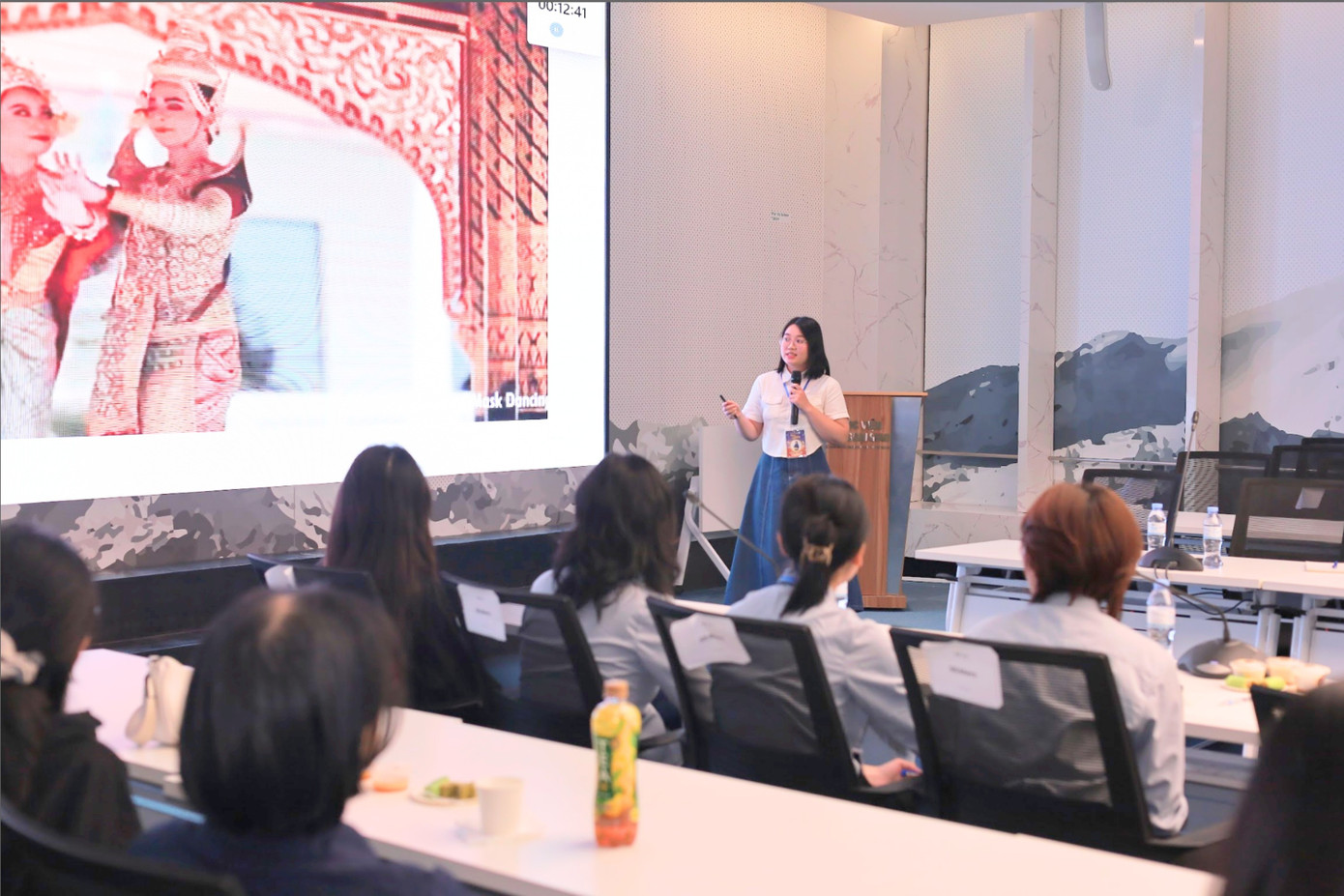
From that orientation, the group built student-oriented activities including experiential workshops and application of performance technology to bring Thai Khon art out of the scope of religious rituals and become closer to the young community.
Evaluating the approach of the teams, Dr. Nguyen Phu Tan Huong, former Deputy Head of the Department of International Politics and Diplomacy, Diplomatic Academy, one of the judges of the contest, commented: "Studying ASEAN culture is not only about expanding knowledge, it is also a bridge to help young people understand more deeply about Vietnamese culture in relation to the region."
Dr. Tan Huong added that when students demonstrate their ability to approach seriously, they are not only learning knowledge but also laying the foundation for future integration thinking, emphasizing that competitions like Way of Wind are opportunities for students to practice their ability to observe, compare and respect cultural differences. These are core competencies that the younger generation needs if they want to contribute to people-to-people exchanges and cultural diplomacy in Vietnam.
Overall, the Way of Wind 2025 Final is not just a presentation and debate playground. The competition shows a generation of students learning to step out of national borders, seeking the meeting point of ASEAN with cultural understanding. In an ASEAN with diverse languages, beliefs and identities, culture, with its flexibility and ability to connect, is becoming the “common language” of young people. And through Way of Wind 2025, it can be seen that the generation of Vietnamese youth is starting to speak that language more confidently and courageously than ever before.
DynaGen Initiative is a student development initiative implemented by the For Vietnamese Stature Fund and Education & Times Newspaper (Ministry of Education and Training) since 2019, with the support of Bac A Commercial Joint Stock Bank and TH Group. The program aims to realize the vision and mission of the units, contribute to developing the talents of the young generation and support students in establishing their careers. Previously, in the 2024-2025 school year, DynaGen Initiative Course 5 left a strong impression with 17 learning, training and connecting activities, attracting nearly 1,800 students to participate. For more information, visit: website http://dynagen.vn or fanpage: https://www.facebook.com/dynagen.official.
Source: https://tienphong.vn/sinh-vien-kham-pha-ngon-ngu-van-hoa-asean-voi-cuoc-thi-tim-hieu-van-hoa-dong-nam-a-way-of-wind-2025-post1801743.tpo


![[Photo] National Assembly Chairman Tran Thanh Man attends the VinFuture 2025 Award Ceremony](/_next/image?url=https%3A%2F%2Fvphoto.vietnam.vn%2Fthumb%2F1200x675%2Fvietnam%2Fresource%2FIMAGE%2F2025%2F12%2F05%2F1764951162416_2628509768338816493-6995-jpg.webp&w=3840&q=75)
![[Photo] 60th Anniversary of the Founding of the Vietnam Association of Photographic Artists](/_next/image?url=https%3A%2F%2Fvphoto.vietnam.vn%2Fthumb%2F1200x675%2Fvietnam%2Fresource%2FIMAGE%2F2025%2F12%2F05%2F1764935864512_a1-bnd-0841-9740-jpg.webp&w=3840&q=75)































































Comment (0)