

Two years ago, the patient was diagnosed with bladder cancer, underwent a total cystectomy, and had two percutaneous ureteral stents placed. After surgery, a JJ stent was inserted from the renal pelvis down the ureter to drain urine while the ureter healed. The JJ stent needed to be removed within three months, but the patient did not return for a follow-up visit, believing their health was normal, despite repeated reminders from doctors and family. Approximately two weeks prior to admission, the patient developed a fever and discovered a fractured piece of the JJ stent had been expelled from the colostomy bag.
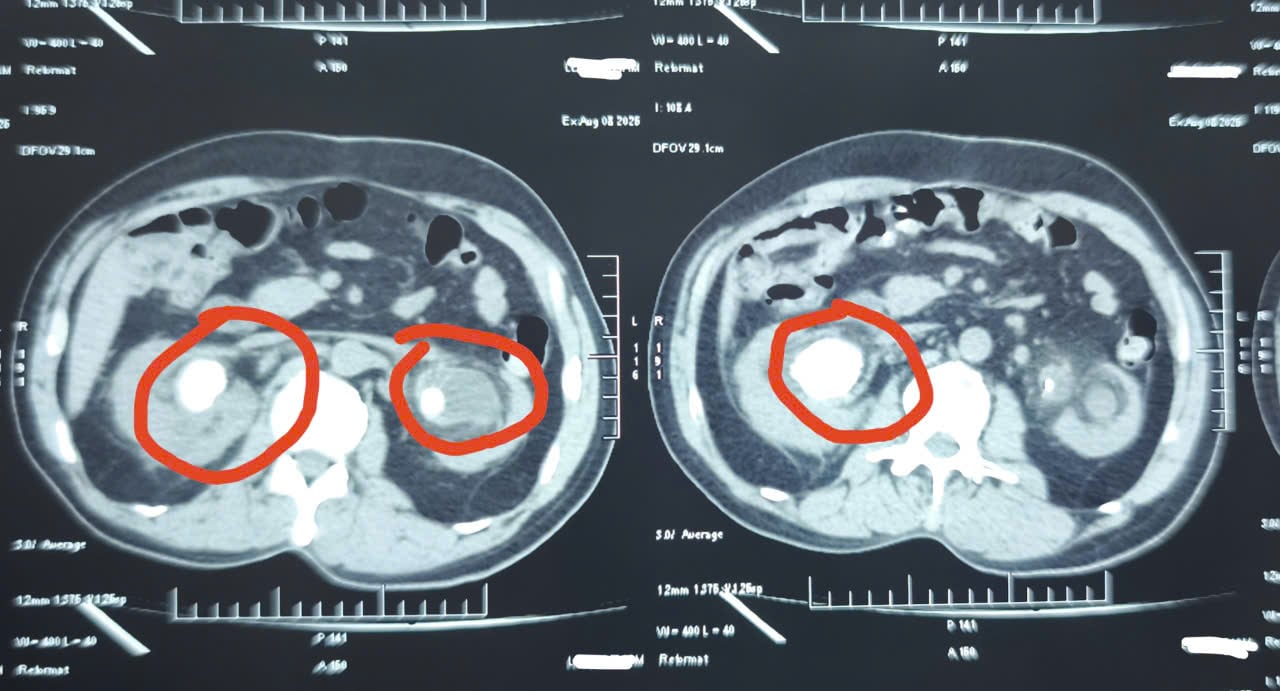
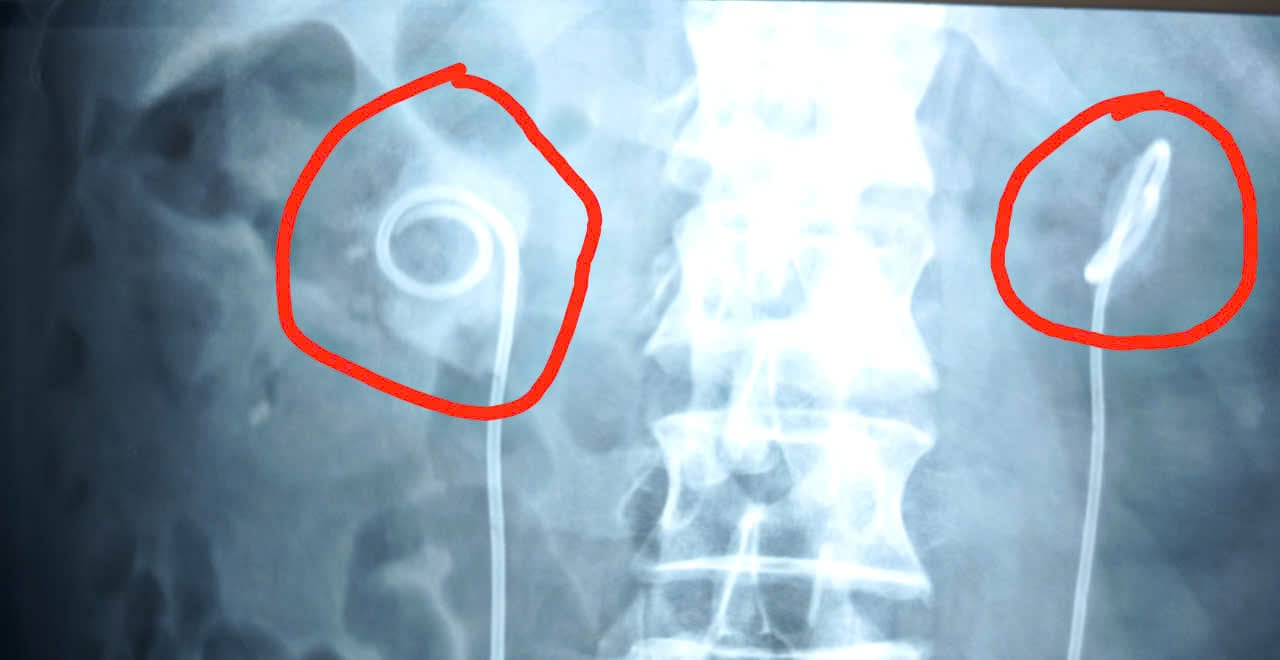
The JJ stent remained in the patient's body for over two years, causing kidney stones to form around it.
PHOTO: THANH DANG
At the Central Hospital for Tropical Diseases, CT scan results showed stones surrounding the JJ stent, occupying almost the entire area of both renal pelvises. The right kidney had a large stone measuring 34 x 29 mm, while the left kidney had a 20 x 13 mm stone along with many smaller stones scattered throughout. The stones in the kidneys caused grade 3 hydronephrosis. Worryingly, the patient's blood potassium level was as high as 6.9 mmol/L (normal blood potassium is 3.5 - 5.0 mmol/L), posing a risk of cardiac arrest at any moment. "Therefore, the patient was immediately taken for emergency hemodialysis," said Dr. Tran Duy Hien, Department of General Surgery, Urology and Andrology, Central Hospital for Tropical Diseases.
After dialysis brought potassium levels back to normal, the patient was given antibiotics to control infection. Following this, the patient underwent percutaneous nephrolithotomy (PCNL) on both kidneys. PCNL effectively removed stones with minimal invasiveness, resulting in excellent recovery, no need for further dialysis, significant improvement in kidney function, and stable health after 5 days of treatment.
Dr. Tran Duy Hien advises that patients who have undergone lithotripsy for urinary tract, ureteral, or kidney stones are often fitted with a temporary JJ stent. Removing the JJ stent on schedule is crucial. Patients must adhere to their doctor's appointment schedule for stent removal. In case of any abnormalities after stent placement or if the patient has not had the stent removed on time, they should immediately contact the medical facility to avoid leaving the stent in for too long.
Source: https://thanhnien.vn/soi-bam-day-ong-thong-jj-sau-2-nam-quen-trong-nieu-quan-185250908182057369.htm


![[Photo] Closing Ceremony of the 10th Session of the 15th National Assembly](/_next/image?url=https%3A%2F%2Fvphoto.vietnam.vn%2Fthumb%2F1200x675%2Fvietnam%2Fresource%2FIMAGE%2F2025%2F12%2F11%2F1765448959967_image-1437-jpg.webp&w=3840&q=75)

















































![[OFFICIAL] MISA GROUP ANNOUNCES ITS PIONEERING BRAND POSITIONING IN BUILDING AGENTIC AI FOR BUSINESSES, HOUSEHOLDS, AND THE GOVERNMENT](https://vphoto.vietnam.vn/thumb/402x226/vietnam/resource/IMAGE/2025/12/11/1765444754256_agentic-ai_postfb-scaled.png)
















































Comment (0)