

Still hesitant
Chu Ward is a specialized fruit-growing area with a large area and diverse varieties such as lychee, pomelo, orange, and star apple… Therefore, there is a high demand for using agricultural land for commercial and service purposes, especially for building warehouses to store and preserve agricultural products after harvest in order to improve consumption efficiency and product quality. For example, An Phat Production, Trade and Service Cooperative, established in 2018, currently cultivates more than 10 hectares of fruit trees and supplies plant seedlings. Each year, this cooperative purchases and distributes thousands of tons of agricultural products.
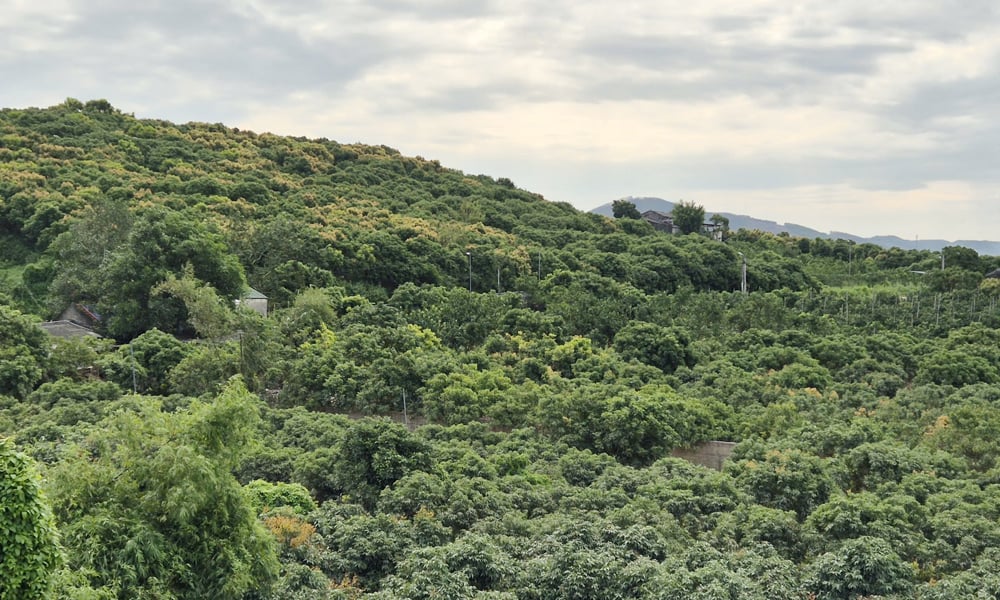 |
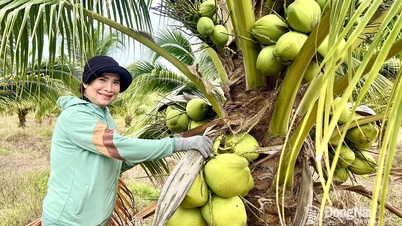
With a large area of fruit trees, the people of Chu ward have a need to build warehouses for storing and preserving agricultural products. |
According to Ms. Le Thi Huong, Director of the Cooperative, with such a large production volume, building a storage facility is essential to maintain the quality of agricultural products and expand the consumer market. The Cooperative hopes to receive specific guidance from the authorities regarding multi-purpose agricultural land to operate more effectively.
| According to the head of the Department of Agriculture and Environment, users of agricultural land are permitted to construct buildings in accordance with Clause 3, Article 178 of the Land Law and Clause 1, Article 9 of Government Decree No. 112/2024/ND-CP. |
According to representatives from the Chũ ward leadership, not only the An Phát Cooperative but also many other cooperatives and agricultural households in the area are in need of constructing agricultural product storage facilities on their land to support production. However, the implementation process in the locality is facing many difficulties. The main reason is that the detailed zoning plan of the ward currently has very few areas designated for commercial and service land. This makes it difficult for households and individuals to convert land use from agricultural to commercial.
The 2024 Land Law has opened a new direction by allowing the combined use of agricultural land for commercial and service purposes without requiring a land-use conversion procedure. Specifically, Article 218 of the Law clearly stipulates the multi-purpose combined use of land. Agricultural land can be used simultaneously for activities such as commerce, services, livestock farming, medicinal plant cultivation, etc., provided that it does not change the land classification according to the law, does not affect national defense, security, ecosystems, environmental landscapes, and the land use rights of adjacent plots. Land users must also fulfill all financial obligations and comply with relevant legal regulations.
According to Mr. Mac Anh Tuan, Vice Chairman of the People's Committee of Chu Ward, based on the regulations of the 2024 Land Law, households and individuals can use agricultural land for combined purposes such as commerce, services, livestock farming, or medicinal plant cultivation. However, there are currently no specific guidelines on the scale and structure of permitted constructions, nor on whether construction permits are required. This makes it difficult for the locality to appraise and approve eligible applications. "The People's Committee of Chu Ward has sent a document requesting the Department of Agriculture and Environment to consider, research, and issue specific guidelines so that the locality has a basis to implement the law correctly," Mr. Mac Anh Tuan stated.
Timely resolution of obstacles
Besides Chu Ward, many localities in the province are also facing difficulties in implementing construction projects to serve production on agricultural land. In Kien Lao commune, Mr. Nguyen Anh Sac currently owns more than 8,000 m² of agricultural land and wishes to build a livestock farm of approximately 4,000 m². According to specialized agencies, with this scale, the project falls under the category of concentrated livestock farming according to the Livestock Law, requiring the preparation of a land use plan and an environmental protection plan. Currently, relevant agencies are guiding people to fully comply with related regulations.
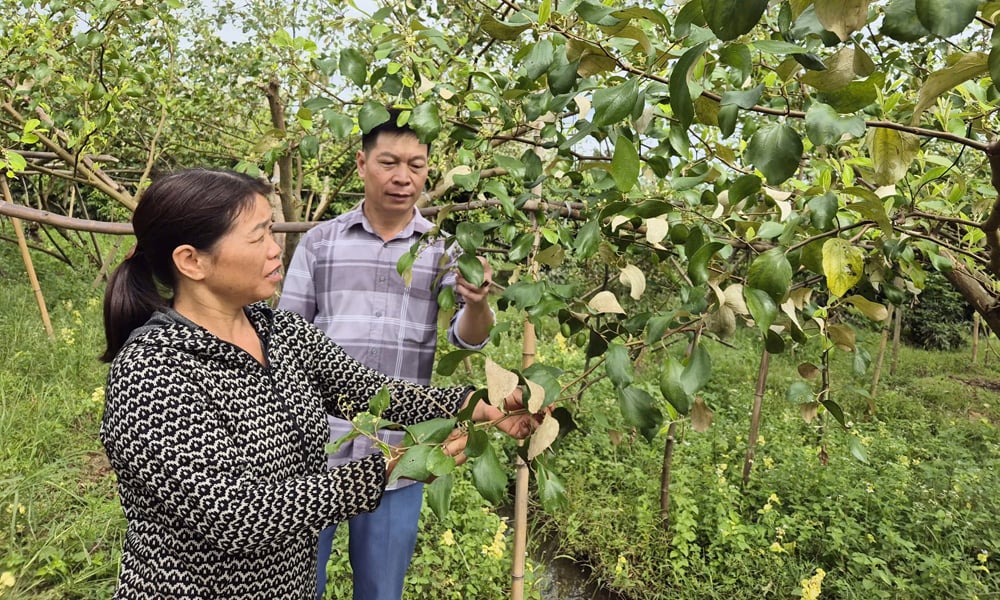 |
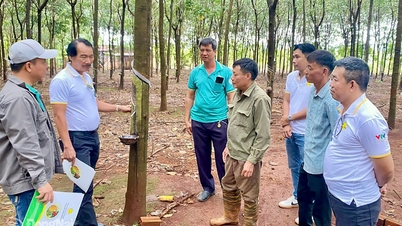
Agricultural experts in Luc Ngan commune guide local people on how to care for apple trees. |
The issuance of new regulations on the multi-purpose use of agricultural land is considered a significant step in land policy reform, contributing to optimizing land resources and improving economic efficiency for the people. To ensure compliance with regulations and prevent the misuse of land use policies, on November 29, 2024, the Provincial People's Committee issued detailed regulations on the construction of facilities directly serving agricultural production in the province. According to the leaders of the Department of Agriculture and Environment, users of agricultural land are permitted to construct facilities as stipulated in Clause 3, Article 178 of the Land Law and Clause 1, Article 9 of Government Decree No. 112/2024/ND-CP.
Specifically, for concentrated rice-growing land of 50 hectares or more, people are allowed to use a maximum of 0.1% of the area (not exceeding 1,000 m²) to construct facilities such as storage warehouses, processing areas, and product display areas, provided that these do not affect irrigation works, dikes, and internal field transportation. For other types of land such as land for perennial crops, aquaculture land, land for annual crops, and other agricultural land, people can construct level IV facilities if the land area reaches 0.5-1 hectare.
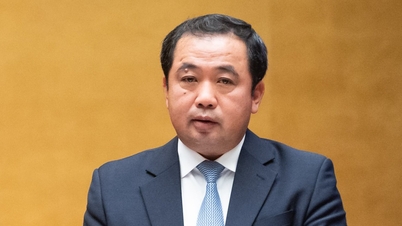
Bac Ninh is a key agricultural province with a large land use scale. Removing obstacles in the process of using agricultural land for multiple purposes is one of the important factors in promoting agricultural economic development. During a recent survey of several fruit-growing and processing areas, Mr. Pham Van Thinh, Member of the Provincial Party Standing Committee, Vice Chairman of the Provincial People's Committee, and Head of the Provincial National Assembly Delegation, affirmed that the construction of facilities on agricultural land to serve local production and exploit land for multiple purposes is a legitimate need, reflecting the trend of developing agriculture linked to modern commerce. Therefore, relevant agencies need to carefully study guiding documents to ensure efficient exploitation of agricultural land, bringing practical benefits to the people.
Source: https://baobacninhtv.vn/su-dung-dat-nong-nghiep-da-muc-dich-huong-dan-cu-the-khai-thac-hieu-qua-tiem-nang-dat-dai-postid426245.bbg


![[Image] Close-up of the newly discovered "sacred road" at My Son Sanctuary](/_next/image?url=https%3A%2F%2Fvphoto.vietnam.vn%2Fthumb%2F1200x675%2Fvietnam%2Fresource%2FIMAGE%2F2025%2F12%2F13%2F1765587881240_ndo_br_ms5-jpg.webp&w=3840&q=75)



































































Comment (0)