

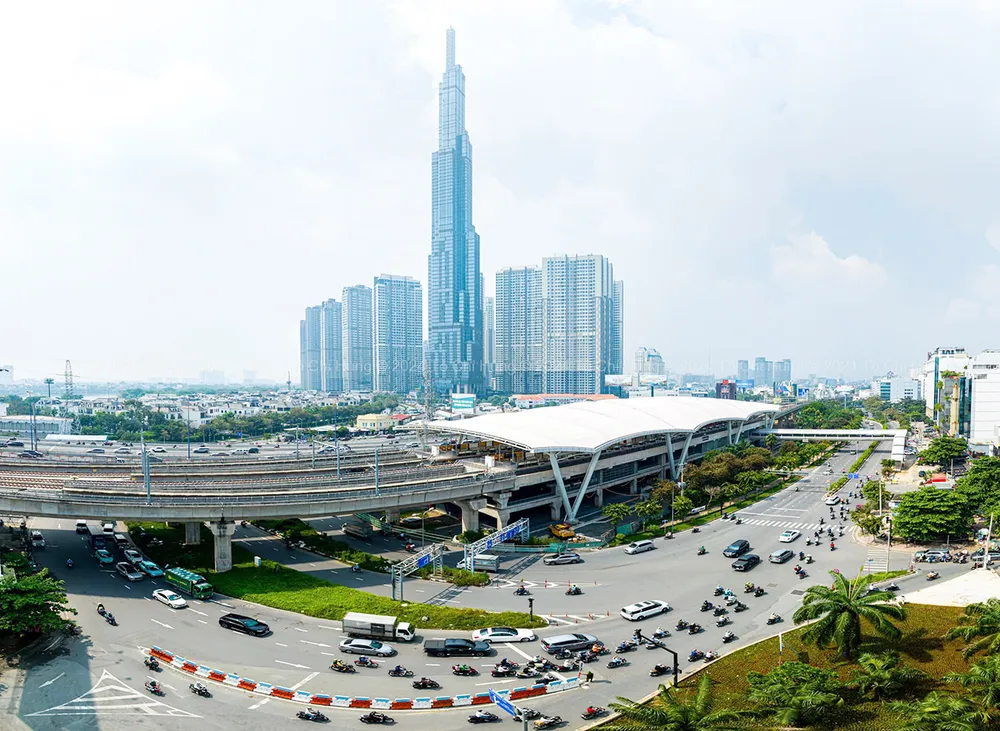
Metro development resources await new mechanism
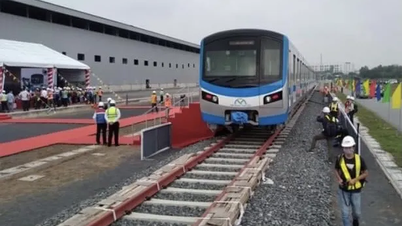
Along the Ben Thanh - Tham Luong metro line (metro line 2), there are 11 stations, designed to pass through many densely populated areas of Ho Chi Minh City. However, the related zoning plans were established before 2015, when the locations of the stations were not fully determined. To be suitable when implementing the TOD model, it is necessary to locally adjust the zoning plan to increase construction density and organize mixed spaces around the stations. That is, establishing TOD boundaries along the entire line; integrating the bus - metro - road traffic connection system within walking distance.
According to the Department of Construction of Ho Chi Minh City, the authority to locally adjust planning belongs to the People's Committee of the ward. However, if there is no consensus, it will easily lead to the risk of "each ward having its own style", so Ho Chi Minh City has proposed that the Central Government give the People's Committee of Ho Chi Minh City the authority to approve planning adjustments to implement TOD projects.
The Department of Construction also identified that along metro line 2 there are many large-scale public lands with clear legal status, such as block 1/82a (26.65 ha), Bay Hien Exhibition - Sports Center (5.1 ha), area C30 (40.9 ha) and Tham Luong depot. These are prime locations with great potential for TOD development; however, to exploit this land fund, Ho Chi Minh City is allowed to collect the increased land value created by the metro - this content has not been mentioned in Resolution 98.
In addition, according to the Department of Construction, there are 3 new revenue sources that need attention. These are revenue from increased floor area when adjusting the land use coefficient (FAR); revenue from increased land value created by TOD planning and metro investment; and infrastructure improvement fees from commercial activities benefiting from the station area. Many countries have applied these tools to offset the cost of infrastructure development investment; however, current regulations, including Resolution 98, do not mention the recovery of increased land value (Land Value Capture), so Ho Chi Minh City has no basis for implementation.
Meanwhile, according to the analysis of Dr. Ngo Viet Nam Son, the metro investment increases the land price around the station by 20%-50%. If there is no mechanism for the state to recover that added value, TOD will not create a sustainable source of capital for public transport development.
Expanding authority to implement TOD projects
One of the most important requirements of TOD is to increase population density and economic activities within a 10-15 minute walking distance of a metro station. However, the standards on building density, height, green tree index, etc. in current regulations are still binding, leading to procedures having to go through many levels and taking a long time.
Head of the HCMC Urban Railway Management Board Phan Cong Bang said TOD is only effective when the entire public transport network operates as a unified system. There, people can comfortably walk to the station, use a card or application to use the metro - bus - public bicycle.
However, because authority is decentralized and each metro line or each transport unit can choose a different technology, it makes it difficult to implement TOD. Therefore, Ho Chi Minh City proposed to decide on its own technology standards, electronic ticket standards and connection infrastructure standards for the entire network.
To solve the problem of traffic congestion, Ho Chi Minh City aims to complete 232km of urban railway by 2030, with a total preliminary investment of about 19.67 billion USD. According to calculations, the central government's capital and the city's budget currently only meet about 66% of the demand.
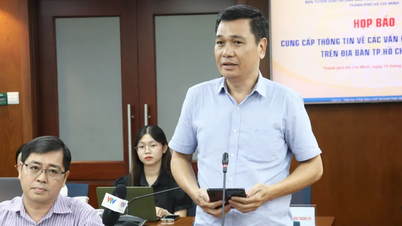
According to Mr. Tran Quang Lam, Director of the Ho Chi Minh City Department of Construction, the city is urgently developing a project to mobilize additional resources, focusing on exploiting land funds according to the TOD model and expanding public-private partnership (PPP) mechanisms, especially build-transfer (BT) contracts to create more capital for key infrastructure projects.
The draft Resolution of the National Assembly amends and supplements a number of articles of Resolution 98, proposing to expand the authority of Ho Chi Minh City in implementing TOD projects. The new breakthrough point is that Ho Chi Minh City is allowed to use the budget to compensate, clear land, and create clean land funds in the vicinity of railway stations and intersections along Ring Road 3 to auction land use rights.
Revenue from exploiting that land fund is retained to implement urban development, trade, service projects or pay investors for railway projects under BT contracts... According to experts, with those proposals, Ho Chi Minh City will have more resources to accelerate in planning, investing and exploiting urban areas associated with metro, soon forming modern TOD centers, increasing the attractiveness of public transport and improving the quality of life of the people.
Source: https://www.sggp.org.vn/sua-doi-bo-sung-mot-so-dieu-nghi-quyet-98-mo-rong-quyen-de-tai-cau-truc-khong-gian-do-thi-post827170.html



![[Photo] National Assembly Chairman Tran Thanh Man attends the VinFuture 2025 Award Ceremony](/_next/image?url=https%3A%2F%2Fvphoto.vietnam.vn%2Fthumb%2F1200x675%2Fvietnam%2Fresource%2FIMAGE%2F2025%2F12%2F05%2F1764951162416_2628509768338816493-6995-jpg.webp&w=3840&q=75)

![[Photo] 60th Anniversary of the Founding of the Vietnam Association of Photographic Artists](/_next/image?url=https%3A%2F%2Fvphoto.vietnam.vn%2Fthumb%2F1200x675%2Fvietnam%2Fresource%2FIMAGE%2F2025%2F12%2F05%2F1764935864512_a1-bnd-0841-9740-jpg.webp&w=3840&q=75)













































































Comment (0)