

A team of doctors at the Ho Chi Minh City Oncology Hospital used skin from the forearm or thigh to reconstruct the tongue, helping cancer patients restore 60-90% of this part of their body.
Over a year ago, Mr. Le Thanh Minh (73 years old, Phu Giao district, Binh Duong province) experienced pain in the right side of his mouth. Thinking it was just a normal toothache, he bought Western medicine. He thought the pain would go away when it subsided, but after a while, his mouth and tongue swelled up, accompanied by intense pain, which he described as "unbearable." Part of his tongue became ulcerated, making eating and drinking very difficult; he could only drink water and milk. In July, his family took him to the Ho Chi Minh City Oncology Hospital (Thu Duc City branch) for examination. Doctors diagnosed him with tongue cancer, requiring surgery to remove part of the tongue and use reconstructive techniques to restore its function.
Following surgery a week ago, Mr. Minh can now talk to his relatives, and the pain has significantly decreased. Although speaking is more difficult than before, he says he will practice to get used to it. "Up until now, I feel my tongue has recovered 60-70%," he said.
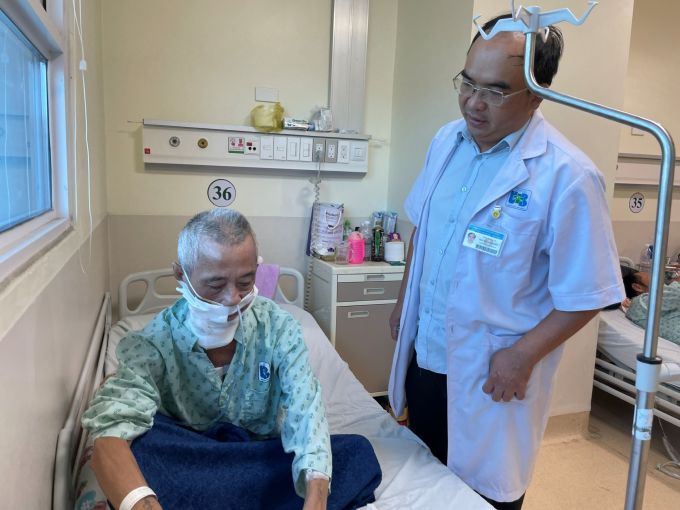
Doctor Nguyen Anh Khoi checks on patient Le Thanh Minh's health after surgery, morning of September 13. Photo: Ha An.
Mr. Minh is one of more than 300 patients who have successfully undergone tongue reconstruction surgery at the Ho Chi Minh City Oncology Hospital in the past three years. According to Dr. Nguyen Anh Khoi, Head of the Department of Head, Neck and Maxillofacial Surgery, tongue cancer is one of the 20 most common types of cancer. The causes include excessive alcohol and tobacco use, poor oral hygiene, and trauma caused by sharp teeth rubbing against the skin inside the mouth.
Currently, for early-stage tongue cancer when the tumor is small, doctors can choose surgery or radiation therapy depending on the patient's condition and needs. However, surgery remains the primary treatment method.
Dr. Khoi explained that during surgery, depending on the severity of the disease, doctors remove part or all of the tongue and lymph nodes to prevent metastasis. If less than one-third of the tongue is removed, the patient will not need reconstructive surgery because the tongue's function is still relatively good. If more than one-third is removed, reconstructive surgery is necessary to restore function, aiming to closely resemble the natural tongue, making swallowing and speaking easier for the patient.
To reconstruct the tongue, the surgeon will take a piece of skin from parts of the patient's body such as the forearm, thigh, or abdomen. Depending on the location and aesthetic requirements, a suitable area of skin will be selected for reconstruction. The surgery lasts 8-12 hours, during which the team simultaneously harvests skin from the patient's body and removes the cancerous portion of the tongue. The harvested skin is then grafted onto the missing area.
According to Dr. Khoi, the entire surgical team was quite nervous when they first started working on the first patients. "Once we gained experience, the blood vessel anastomosis process was shortened from 2 hours to 40 minutes, which helped reduce the pressure on the doctors," Dr. Khoi said.
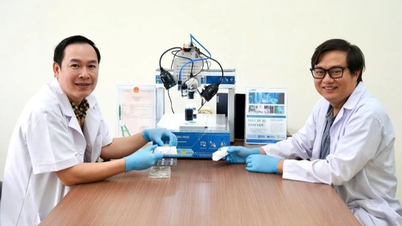
The research team stated that for tongue damage affecting less than 50%, patients can achieve near-complete tongue function recovery within two years, with a success rate of over 90%. For more severe damage affecting two-thirds or the entire tongue, patients may recover approximately 60% of tongue function and will only be able to consume liquid foods such as milk and porridge for the rest of their lives.
In the team's study, the recurrence rate of fatal tongue cancer in the late stages was approximately 60%. Before this technique, the recurrence rate was 100%. Furthermore, this technique helps patients reduce pain, eliminate bad breath, and partially restore speech and swallowing functions.
Currently, the cost of a tongue reconstruction surgery is around 18 million VND, which is many times cheaper than treatment abroad. The research team said that they will soon develop 3D imaging technology to visualize the tongue before surgery, making the simulated tongue as realistic as possible, replacing the current manual measurement method.
According to the research team, the trend of tongue cancer is increasingly affecting younger people. Previously, the disease mainly occurred in people over 60 years old. However, nowadays, people aged 20-30 are more susceptible to the disease, with a higher risk of recurrence than before. Most patients are complacent and seek treatment at a late stage, making treatment more difficult. Globally , a study in Nordic countries showed that the trend of tongue cancer affecting younger people has increased sixfold in 30 years. Therefore, this technique offers hope to many tongue cancer patients.
The team's project was awarded first prize in the healthcare field at the 27th Ho Chi Minh City Science and Technology Innovation Award on September 26th.
Ha An
Source link
![[Photo] General Secretary and President To Lam presides over a meeting with the Central Organizing Committee.](https://vphoto.vietnam.vn/thumb/1200x675/vietnam/resource/IMAGE/2026/06/03/1780482764658_a1-bnd-4741-3342-jpg.webp)
![[Photo] Secretary of the National Assembly Party Committee, Chairman of the National Assembly presides over the meeting of the Standing Committee and Executive Committee of the National Assembly Party Committee.](https://vphoto.vietnam.vn/thumb/1200x675/vietnam/resource/IMAGE/2026/06/03/1780480353201_ndo_br_bnd-2585-jpg.webp)
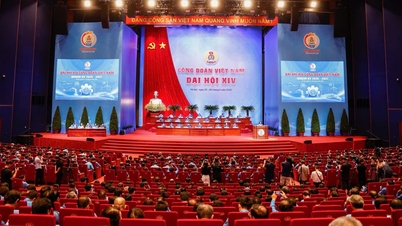
![[Photo] First session of the 14th Congress of the Vietnam Trade Union](https://vphoto.vietnam.vn/thumb/1200x675/vietnam/resource/IMAGE/2026/06/03/1780465947883_ndo_br_img-3852-jpg.webp)








































![[Video] Sunset at Lap An Lagoon – Where the sun sets over the fishing nets](https://vphoto.vietnam.vn/thumb/1200x675/vietnam/resource/IMAGE/2026/05/31/1780192137701_beach-landscape-sea-water-nature-grass-745871-pxhere-com.jpeg)



























Comment (0)