


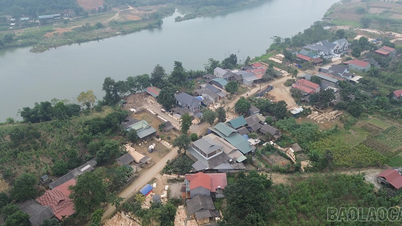
Na Hoi Commune (Bac Ha District) has about 700 small-scale livestock farming households. Mr. Nguyen Van Thanh, a veterinarian of the commune, said that as a mountainous commune, in addition to residential areas, there are still many households living separately. In some villages, each household lives on a remote hill, so vaccination time causes many difficulties for veterinarians. Many times, officials come to vaccinate but the homeowners are working in the fields and are not at home, so they can only contact by phone and vaccinate the animals under the witness of the village chief or a family representative.
Previously, veterinary officers only received vaccine supplies from higher levels and administered vaccinations at households twice a year. However, since 2023, following instructions from the Provincial Department of Animal Husbandry and Veterinary Medicine, veterinary officers have required livestock farmers to register in advance before receiving vaccines for administration. This has led to stricter management of vaccine quantities and vaccination practices at the local level.

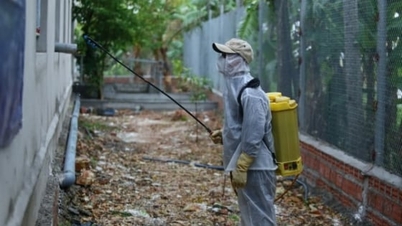
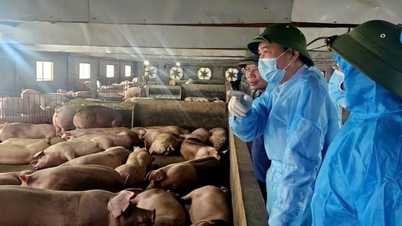
Xuan Quang commune (Bao Thang district) currently has 52 farms and 250 family farms engaged in regular livestock breeding. Mr. Tran Duc Khai, Vice Chairman of the Xuan Quang Commune People's Committee, stated that the commune is a key and important livestock breeding area in the district. Livestock farming contributes significantly to the economic development of the area, therefore disease prevention and control are always prioritized, especially disinfection in livestock farming, which is closely monitored by the commune to ensure a disease-free zone. Regarding vaccination, after each injection, the commune requires veterinary staff to return the empty vials and packaging for inspection and monitoring.

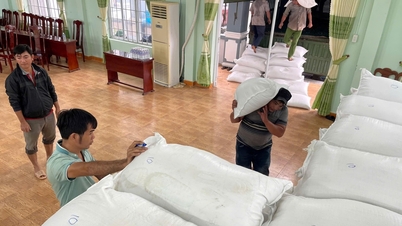
While some localities have been closely involved in management, during the process of receiving, distributing, and using chemicals and vaccines, some localities still have shortcomings identified after agricultural inspections. These include the continuous distribution of vaccines from the second phase of the previous year to the first phase of the following year, which is not clearly reflected in the settlement records; veterinary officers at the commune level failing to record the quantity of supplies, chemicals, and vaccines received from veterinary stations; and village heads lacking logbooks to track vaccination activities in their areas…
The provincial agricultural inspectorate has requested the Department of Animal Husbandry and Veterinary Medicine to direct veterinary departments and stations to strengthen inspection and supervision of the distribution and use of chemicals and vaccines at facilities; to promote training for veterinary officers in districts and communes on record keeping and the preparation of settlement documents in accordance with regulations; and to request the Department of Animal Husbandry and Veterinary Medicine to review and learn from existing shortcomings.


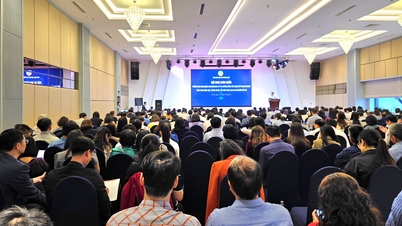
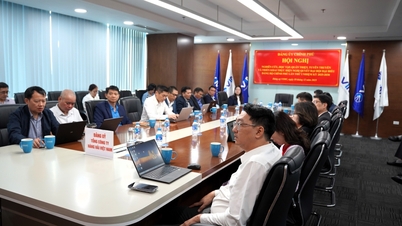
On June 26th, the Provincial Department of Livestock and Veterinary Medicine held a meeting to review, learn from experience, and enhance the sense of responsibility of officials in inspecting, supervising, and guiding grassroots levels to rectify shortcomings in the performance of their duties.
Mr. Pham Ba Uyen, Head of the Department of Animal Husbandry and Veterinary Medicine, said that the department has seriously reviewed and learned from experience with staff in each area of shortcomings.
In the coming time, the Department of Animal Husbandry and Veterinary Medicine will strengthen the work of urging, inspecting and supervising facilities, doing a good job of receiving, distributing and using chemicals and vaccines to contribute to the work of disease prevention and control in the province.
Source



















![[Video] The craft of making Dong Ho folk paintings has been inscribed by UNESCO on the List of Crafts in Need of Urgent Safeguarding.](https://vphoto.vietnam.vn/thumb/402x226/vietnam/resource/IMAGE/2025/12/10/1765350246533_tranh-dong-ho-734-jpg.webp)




















































Comment (0)