

One of the solutions for developing the supporting industries that has been mentioned recently is to strengthen the linkages between the FDI sector and domestic businesses.
According to Ms. Nguyen Thi Xuan Thuy, an expert in Industrial Development Policy at the University of Economics (Vietnam National University, Hanoi), supporting industries are one of the key areas for Vietnam to attract foreign direct investment (FDI), creating a solid foundation for sustainable economic development and enhancing competitiveness.
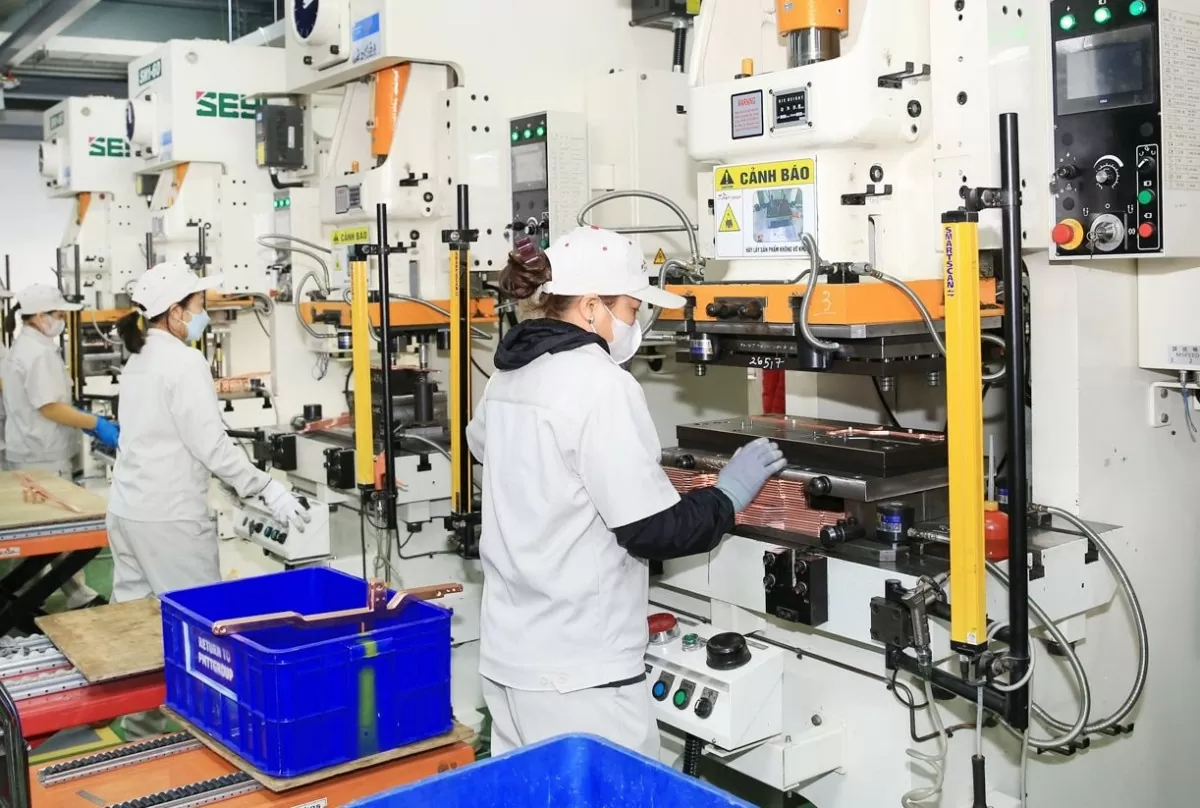 |
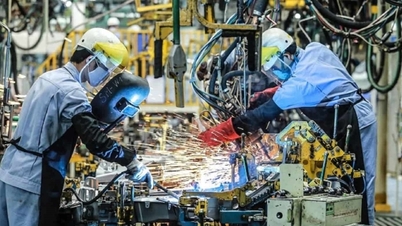
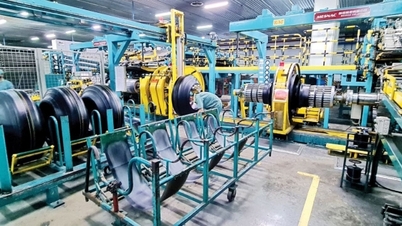
| Only about 10% of domestic private businesses have participated in the supply chains of foreign-invested companies operating in Vietnam. (Photo: Quang Thai) |
However, in reality, Vietnam's supporting industries are still considered to be underdeveloped. According to statistics from the Vietnam Association of Supporting Industries (VASI), there are currently about 1,800 enterprises producing spare parts and components nationwide, of which about 300 are Tier 1 suppliers, mainly concentrated in Hanoi and Ho Chi Minh City, with 85% of these enterprises being small and medium-sized.
Citing data from the Vietnam Chamber of Commerce and Industry (VCCI), Associate Professor, Doctor of Science Nguyen Mai - Chairman of the Association of Foreign-Invested Enterprises, stated that only about 10% of domestic private enterprises have participated in the supply chains of foreign-invested companies operating in Vietnam, and only about 26.6% of input value is purchased in Vietnam, including FDI companies operating in Vietnam.
The "shortage" of supporting industries has made Vietnam's investment environment less attractive to international investors. At the same time, it has resulted in the spillover effects of FDI on the domestic economy not being fully appreciated.
In the context of increasingly fierce competition to attract FDI in the coming period, driven by geopolitical risks, economic risks, technological risks, climate risks, and rising global fragmentation.
Specifically, according to Associate Professor Dr. Nguyen Anh Thu - Vice Rector of the University of Economics - Vietnam National University, Hanoi: In the context of globalization, geopolitics has become a crucial factor in assessing global economic and political stability. The Geopolitical Risk Index (GPR) surged from 2023 to early 2024, placing geopolitical issues at the center of the risks that countries and FDI enterprises need to consider when making foreign investment decisions.
Furthermore, the slowdown in the Chinese economy, facing prolonged slow growth due to challenges such as an aging population, high debt levels, a real estate crisis, and delays in reforms, is impacting the prospects for global FDI growth. In this context, developing supporting industries is a crucial solution to attract FDI.
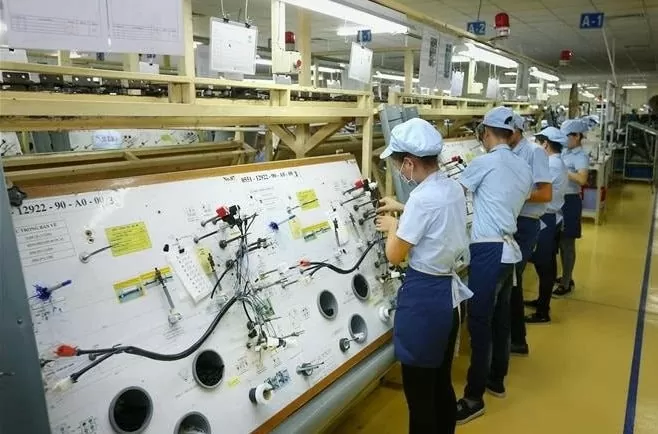 |
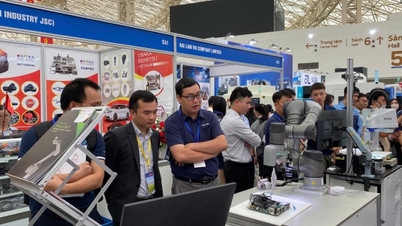
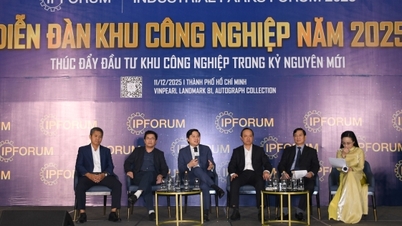
| To create opportunities to attract FDI, developing supporting industries is one of the important solutions. (Photo: Danh Lam) |
Strengthening regional linkages between FDI and domestic businesses.
According to Associate Professor, Doctor of Science Nguyen Mai, one of the important goals of attracting foreign direct investment is to increase the relationship between FDI enterprises and domestic enterprises along the global supply chain, rapidly increasing the number, scale, quality and socio-economic efficiency of state-owned, collective and private enterprises in order to build an independent, self-reliant economy that effectively integrates with the world economy.
In particular, increasing linkages between the FDI sector and the domestic business sector is also one of the solutions for Vietnam to develop its supporting industries, aiming to achieve the goal of attracting high-quality FDI as set out by the Politburo in Resolution 50/NQ-BCT on the orientation for perfecting institutions and policies, and improving the quality and effectiveness of foreign investment cooperation by 2030.
The linkage between the FDI sector and the domestic business sector will bring significant opportunities for both FDI and domestic enterprises. Specifically, the foreign-invested sector will increase the localization rate in Vietnam, which is more advantageous than importing components and parts from abroad to meet production needs. For Vietnamese businesses, this will provide opportunities to participate in global value chains, access foreign technology, and improve their production capabilities.
However, one of the reasons why Vietnamese businesses have not yet been able to connect with FDI businesses is that the "level" of Vietnamese businesses is still far behind that of FDI businesses. This is a barrier that makes cooperation difficult. In addition, Vietnam still lacks regulations mandating that foreign-invested businesses increase connectivity and technology transfer with domestic businesses. This leads some FDI businesses to invest in Vietnam simply to take advantage of cheap labor and preferential investment policies.
To promote linkages between FDI enterprises and the domestic business sector, experts suggest that Vietnam needs to narrow the gap in skill and technology, which is becoming an invisible barrier hindering collaboration between FDI and domestic businesses. Furthermore, Vietnam needs to create mechanisms to promote the development of the domestic private sector, enhance its competitiveness, and thus close the gap with foreign businesses. To achieve this, in addition to supportive policies from the Government and relevant agencies, domestic businesses themselves need to proactively upgrade their capabilities, invest in technology, and improve the quality of their human resources to meet the requirements of foreign partners.
Source: https://congthuong.vn/tang-lien-ket-giua-fdi-va-doanh-nghiep-noi-dia-de-phat-trien-cong-nghiep-ho-tro-359286.html


![[Photo] Prime Minister Pham Minh Chinh holds a phone call with the CEO of Russia's Rosatom Corporation.](/_next/image?url=https%3A%2F%2Fvphoto.vietnam.vn%2Fthumb%2F1200x675%2Fvietnam%2Fresource%2FIMAGE%2F2025%2F12%2F11%2F1765464552365_dsc-5295-jpg.webp&w=3840&q=75)


![[Photo] Closing Ceremony of the 10th Session of the 15th National Assembly](/_next/image?url=https%3A%2F%2Fvphoto.vietnam.vn%2Fthumb%2F1200x675%2Fvietnam%2Fresource%2FIMAGE%2F2025%2F12%2F11%2F1765448959967_image-1437-jpg.webp&w=3840&q=75)

































![[OFFICIAL] MISA GROUP ANNOUNCES ITS PIONEERING BRAND POSITIONING IN BUILDING AGENTIC AI FOR BUSINESSES, HOUSEHOLDS, AND THE GOVERNMENT](https://vphoto.vietnam.vn/thumb/402x226/vietnam/resource/IMAGE/2025/12/11/1765444754256_agentic-ai_postfb-scaled.png)














































Comment (0)