

Improve technological capacity, management and human resource quality
In the industrial development chain, supporting industry is always considered the “backbone” to increase production value, reduce import dependence and form sustainable competitiveness. However, this sector is also facing many challenges.
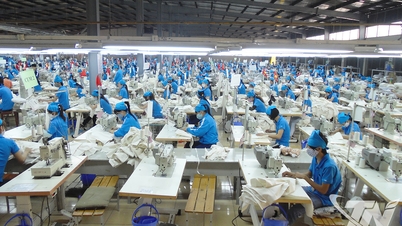
According to the Ministry of Industry and Trade , Vietnam's localization rate is currently only about 35%, much lower than the target of 45-50% by 2030. In fields such as electronics, auto parts, and precision mechanics, domestic enterprises mainly participate in low-level stages such as the production of simple components, and have not yet reached the design, materials, or complete product clusters.
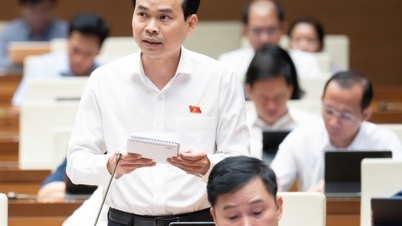
According to Mr. Pham Hai Phong, Vice President of the Vietnam Association of Supporting Industries (VASI), the revenue value of domestic enterprises in the electronics industry accounts for only 0.8%, while the remaining 99.2% belongs to enterprises with foreign direct investment (FDI). In the automobile and motorbike sector, although Vietnam has a fairly clear ecosystem, the structure is still strongly skewed towards FDI enterprises playing the leading role.
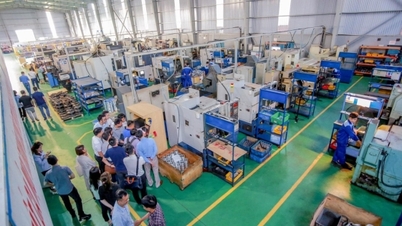
“In order for domestic enterprises to become stronger, the core is to improve technological capacity, management and human resource quality,” VASI Vice President Pham Hai Phong emphasized. In fact, more than 400 VASI members are currently supplying components to many industries, from mechanics, plastics, rubber to electronics, automobiles, energy... but mainly in the intermediate stage. Vietnamese enterprises have started to produce electric wires, PCB circuit boards, even charging station systems and automation solutions, but the domestic value-added rate is still low.
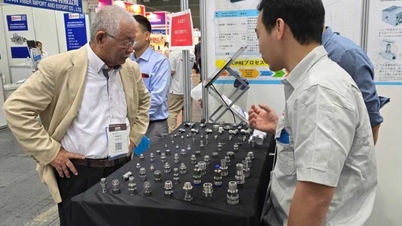
International experts assess that Vietnam is in the “golden” stage for developing supporting industries. According to a survey by the Japan External Trade Organization (JETRO) in 2024, more than 60% of Japanese enterprises in Vietnam want to increase the rate of purchasing domestic components if Vietnamese enterprises meet quality standards and competitive prices. Similarly, many international trade promotion organizations identify Vietnam as a new manufacturing hub in the region, especially when production costs in China are increasing and the trend of developing additional supply chains to minimize risks is spreading. “If Vietnam has a strong supporting industrial ecosystem, we will invest more deeply, not only in assembly but also in on-site research and development,” affirmed Mr. Erick Contreras, Vice President of the European Chamber of Commerce in Vietnam (EuroCham).
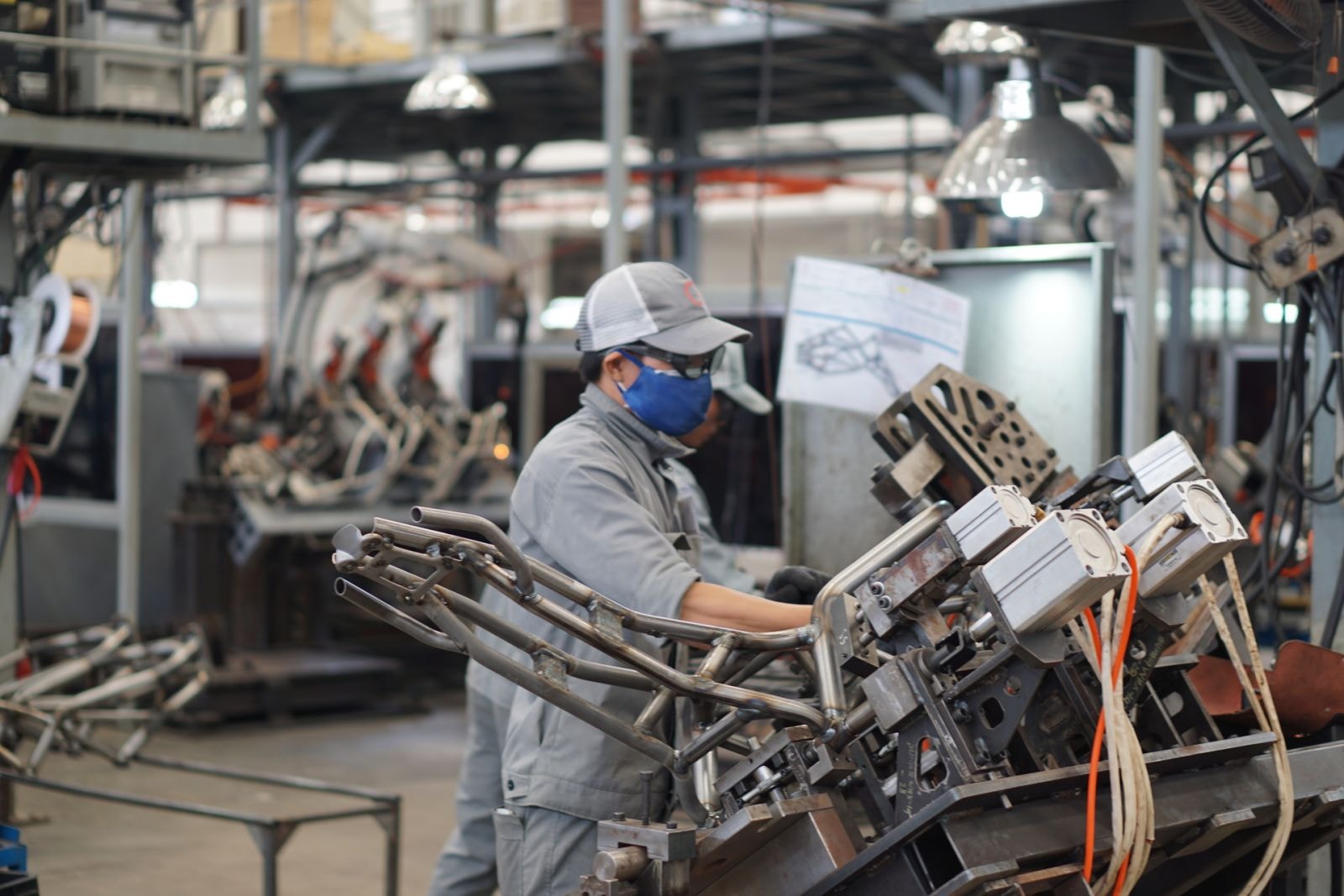
Need a "tractor" strong enough to pull the whole chain
Mr. Nguyen Quoc Khanh, Chairman of the Handicraft and Wood Processing Association of Ho Chi Minh City (HAWA), shared that developing supporting industries and internal capacity is a prerequisite for Vietnamese enterprises to expand international markets. Vietnamese enterprises already have the capacity and production capacity, what they need is a stronger incentive mechanism to invest in technology and human resources. Currently, there are three difficulties that many enterprises encounter: lack of capital for technology investment, difficulty in accessing credit, and lack of guarantee mechanisms when investing abroad. The regulation requiring enterprises to prove net accumulated capital when implementing foreign investment projects is considered inappropriate, because the capital of enterprises is always revolving for production activities. Therefore, it is necessary to allow bank guarantees or existing assets instead of proving capital.
A key point emphasized by VASI and many industry associations is the policy of selecting leading enterprises. When large corporations such as VinFast , Stavian, Toan Phat, etc. invest abroad, Vietnamese supporting industry enterprises can completely follow, exporting not only components but also technical solutions and automation systems. This “going with the locomotive” model has helped South Korea and Taiwan (China) form an effective international supply chain over the past three decades.
From that experience, Vietnam needs to form at least 2-3 large-scale supporting industrial enterprises capable of pulling the whole chain, and at the same time develop a network of satellite enterprises specializing in each field such as precision mechanics, technical materials, technical plastics, batteries and energy. This will be the foundation to help develop a true supporting industry, not only exporting goods but also exporting production capacity.
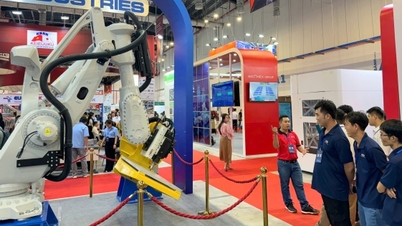
The Trade Promotion Agency (Ministry of Industry and Trade) said it is developing a program called “Go Global”. In particular, the supporting industry group is identified as a strategic spearhead, prioritizing export credit, technology promotion, international mergers and acquisitions, and training of high-tech human resources.
The government is also considering expanding the Supporting Industry Development Fund, allowing businesses to borrow preferential loans to invest in machinery, automation lines, and digital transformation. Some localities such as Ho Chi Minh City, Bac Ninh, Dong Nai, and Hai Phong have issued supporting industry development programs for the 2025-2030 period, focusing on clusters of mechanical, electrical, electronic, and industrial materials industries.
Source: https://daibieunhandan.vn/cong-nghiep-ho-tro-nen-tang-chien-luoc-de-tu-chu-va-hoi-nhap-10399446.html


![[Photo] National Assembly Chairman Tran Thanh Man attends the VinFuture 2025 Award Ceremony](/_next/image?url=https%3A%2F%2Fvphoto.vietnam.vn%2Fthumb%2F1200x675%2Fvietnam%2Fresource%2FIMAGE%2F2025%2F12%2F05%2F1764951162416_2628509768338816493-6995-jpg.webp&w=3840&q=75)
![[Photo] 60th Anniversary of the Founding of the Vietnam Association of Photographic Artists](/_next/image?url=https%3A%2F%2Fvphoto.vietnam.vn%2Fthumb%2F1200x675%2Fvietnam%2Fresource%2FIMAGE%2F2025%2F12%2F05%2F1764935864512_a1-bnd-0841-9740-jpg.webp&w=3840&q=75)















































































Comment (0)