

Improve people's actual level of enjoyment
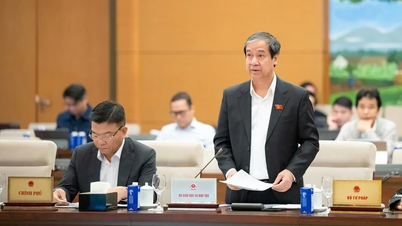
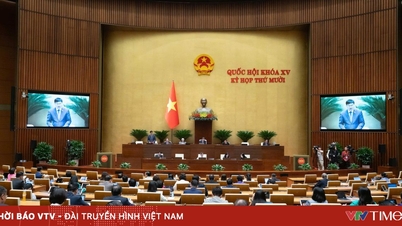
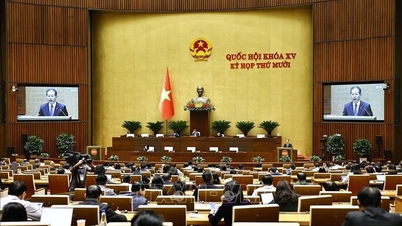
On the morning of December 2, the National Assembly discussed in the hall the Draft Resolution of the National Assembly on a number of breakthrough mechanisms and policies for the work of protecting, caring for and improving people's health and the Investment Policy for the National Target Program on health care, population and development for the period 2026-2035.
Commenting on the Draft Resolution on Investment Policy for the National Target Program on Health Care, Population and Development for the 2026-2035 period, National Assembly Deputy Tran Thi Nhi Ha said that all National Target Programs must be built on the basis of evidence, science and reference to international standards and recommendations. Therefore, the ultimate goal of the program must be to improve the level of actual enjoyment of the people so that each policy, when put into practice, creates a clear, sustainable and meaningful change.
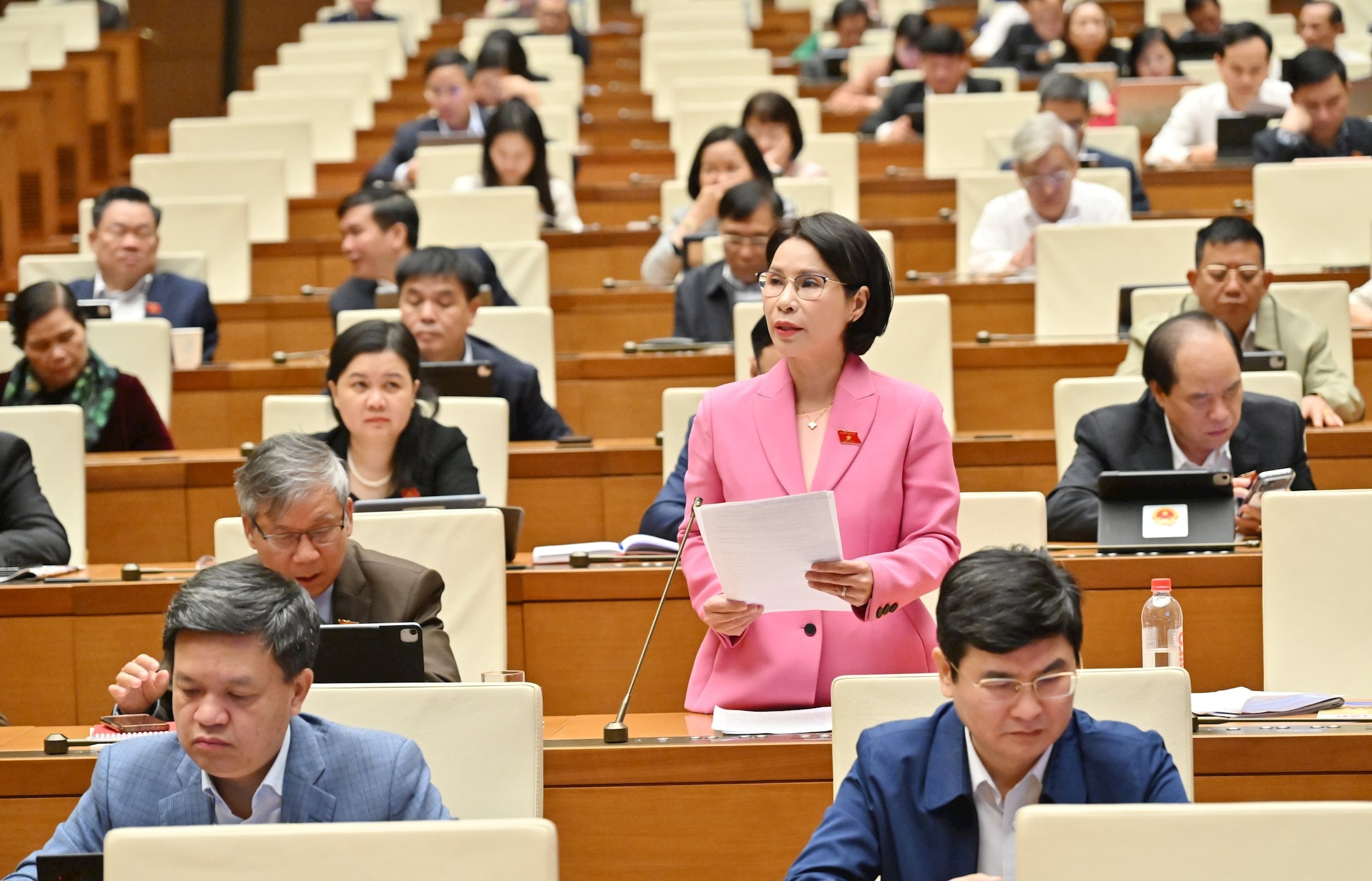
Regarding the target of "90% of communes, wards and special zones meeting the National Criteria on Commune Health by 2030 and 95% by 2035", delegates said that this target clearly demonstrates the determination to strengthen grassroots health care in accordance with the spirit of Resolution 72. However, the current Criteria were issued in 2023 according to the old commune and ward organization model, while from July 1, 2025, the commune-level administrative structure will operate according to a new model with many fundamental changes.
"Up to now, the Ministry of Health has not yet issued a new set of appropriate criteria. So what is the basis for us to set the above target rate, when the assessment criteria have not been updated and standardized? This is an issue that needs to be clarified to ensure the feasibility and authenticity of the target," National Assembly Deputy Tran Thi Nhi Ha asked.
On the other hand, the current National Criteria for Commune Health is only applicable until 2030, while the Target Program lasts until 2035. According to the delegate, what criteria will we use for evaluation in the 2030-2035 period? If this target is adopted without a suitable evaluation basis, it is no different than having to adjust the criteria and the evaluation scale after promulgation just to "fit" the proposed number. Moreover, the Ministry of Health has just issued Circular 43, according to which from now until 2030, there will be two models of Commune Health Stations with very different methods of organization and operation. This means that the future criteria must be flexible enough to suit each model.
Delegate Tran Thi Nhi Ha said that when the basic criteria have not yet been determined, setting a high standard rate as in the draft needs to be carefully considered to ensure the feasibility and honesty of the goal. "Before the National Assembly passes the Resolution, the Ministry of Health needs to issue a new set of national criteria on commune health, suitable for the two-level government model; at the same time, there should be solutions to apply information technology so that the assessment of criteria is carried out in a public, transparent, and non-emotional manner," the delegate suggested.
Regarding the goal of "The rate of commune, ward and special zone health stations nationwide implementing prevention, management and treatment of a number of non-communicable diseases in full accordance with the procedures guided by the Ministry of Health by 2030 will reach 100% and be maintained until 2035", delegates assessed that the goal stated in the Draft is not really clear. If the goal is that 100% of commune health stations can manage a number of non-communicable diseases, we have basically achieved it for many years.
According to the delegate, what is more important is to achieve a percentage of patients managed and treated at the primary health care level. WHO recommendations also clearly state that in developed countries, about 80%-90% of patients with non-communicable diseases are cared for at the primary health care level - this is the real measure of the capacity of the health system and also the goal we need to aim for.
"I propose adjusting the target to have the rate of patients with non-communicable diseases managed at primary health care facilities reach 80% by 2030 and 90% by 2035. To realize this target, it is necessary to develop a scientific, rigorous and in-depth implementation plan; at the same time, it requires the drastic and synchronous participation of local authorities at all levels," said National Assembly Deputy Tran Thi Nhi Ha.
Breakthrough policies are needed to attract and retain qualified doctors.
Regarding the Draft Resolution of the National Assembly on a number of breakthrough mechanisms and policies for the protection, care and improvement of people's health, related to the expansion of health care benefits and reduction of medical costs for people (Article 2), delegate Tran Thi Nhi Ha assessed that many provisions in the Draft are actually contents that have been and are being implemented, but have not created the expected changes; at the same time, the current health system still focuses on examination and treatment with high costs, and has not invested properly in prevention and early screening.
Delegates recommended that additional policies should be added to implement basic screening service packages linked to the national health management system. The Ministry of Health should develop an annual basic screening package that is suitable for the budget and the Health Insurance Fund; at the same time, clearly stipulate the integration of examination and treatment results at medical examination and treatment facilities into electronic health records, avoiding duplication and overlap when performing screening.
The ultimate goal is to create a continuous, complete and accurate flow of medical information for each individual, helping to monitor, evaluate and detect diseases early in the most effective way.
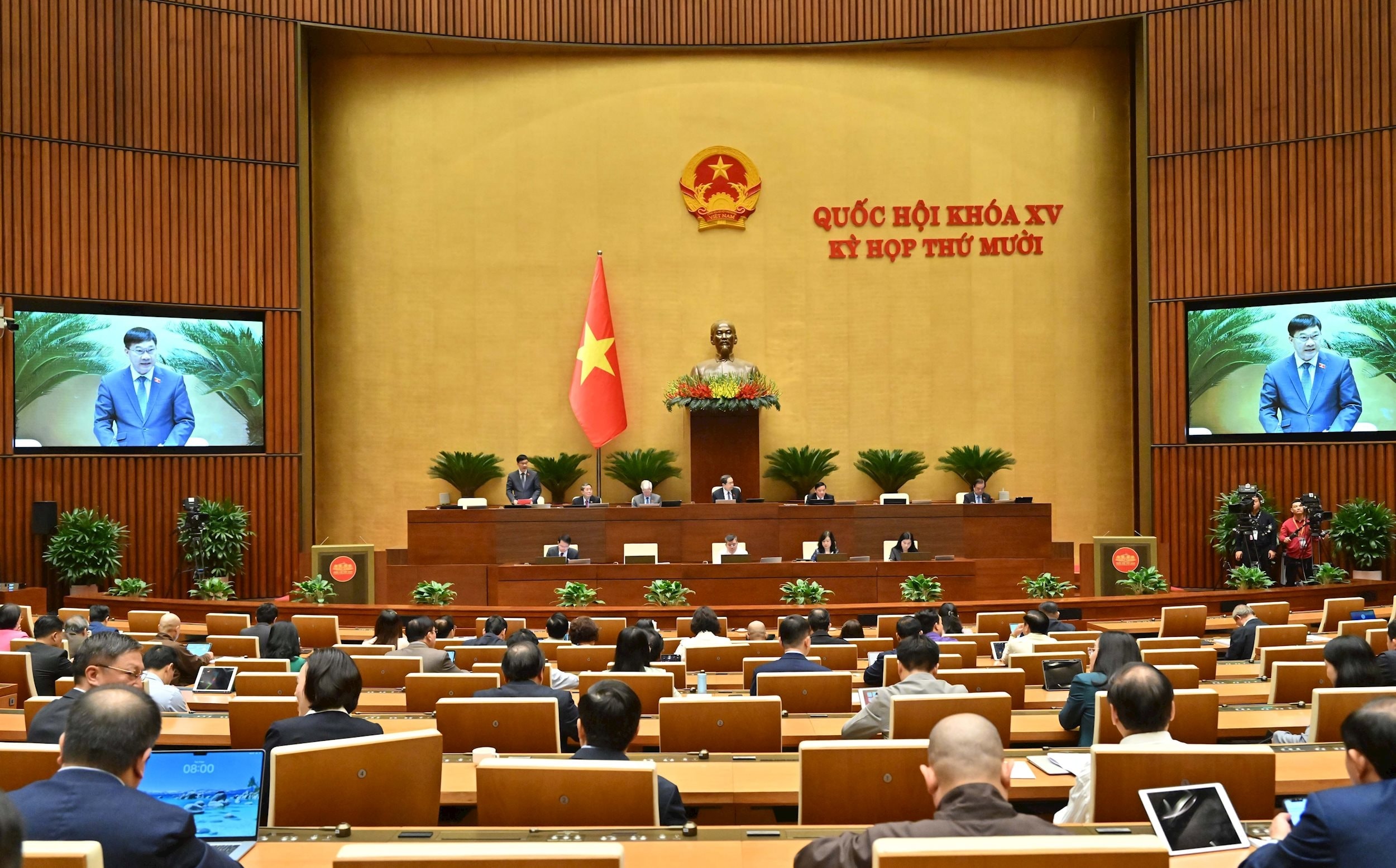
Regarding the regime, policies, and salaries for medical staff (Article 3), delegates recognized that the policies stated in the draft are not really a breakthrough in attracting and retaining qualified doctors. Reality shows that there is a serious shortage of doctors at the grassroots level, but the policies we are applying, such as sending young doctors to the grassroots level or seconding them for 2 to 3 years, are only temporary. The psychology of doctors when transferred under a short-term model is often unstable, making it difficult to concentrate for a long time. Without a stronger, more sustainable mechanism for income, working conditions, and career development roadmap, it will be very difficult for the grassroots level to have a sufficient number of human resources and strong quality as expected.
To overcome the above problems, delegates proposed adding two specific solutions. First, for doctors from the non-state sector who are attracted to work at the grassroots health care level, seniority should be calculated and their salary should be equivalent to that of doctors working in the state sector. On the other hand, doctors should be considered for special recruitment as civil servants at health stations (without having to go through an exam) if they have a certificate or practice license. Second, regarding preferential allowances for professions, it is proposed to apply 100% for doctors who directly work at commune health stations and preventive health facilities; for other medical professional positions, they should receive at least 70%.
Regarding the financial issue (Article 6), the delegate said that the draft allows establishments to autonomously decide on the level of additional income for civil servants, public employees, and workers from legal sources outside the state budget, however, this policy does not have much incentive in practice. According to the delegate's analysis, currently, the reserve establishments and commune health stations are moving towards 100% operating under the model of public service units and belong to the group where the state guarantees a part of regular expenses.
"According to the requirement to increase the annual level of autonomy, these establishments must use revenue sources to pay for regular expenses according to the autonomy requirement, so the units have difficulty in ensuring the difference between revenue and expenditure to pay for the increase," emphasized National Assembly Deputy Tran Thi Nhi Ha.
Regarding this content, the delegate recommended that for health stations and preventive health facilities, the State shall guarantee 100% of regular and investment expenditures. Legal sources of revenue other than the state budget, facilities can use all of them to set up additional income funds, career development funds, welfare and reward funds of the unit.
Source: https://daibieunhandan.vn/tao-chinh-sach-dot-pha-trong-cham-soc-nang-cao-suc-khoe-nhan-dan-10397868.html


![[Photo] Cat Ba - Green island paradise](/_next/image?url=https%3A%2F%2Fvphoto.vietnam.vn%2Fthumb%2F1200x675%2Fvietnam%2Fresource%2FIMAGE%2F2025%2F12%2F04%2F1764821844074_ndo_br_1-dcbthienduongxanh638-jpg.webp&w=3840&q=75)













































![[VIMC 40 days of lightning speed] Da Nang Port: Unity - Lightning speed - Breakthrough to the finish line](https://vphoto.vietnam.vn/thumb/402x226/vietnam/resource/IMAGE/2025/12/04/1764833540882_cdn_4-12-25.jpeg)







































Comment (0)