

The current third generation consists of Mr. Tran Van Ngan (44 years old) and Mrs. Tran Thi Loc (42 years old), who are living in Bai Lang village, Tan Hiep commune (Cu Lao Cham island).
According to Mr. Ngan, his grandfather has been making banh it la gai (a type of Vietnamese rice cake wrapped in thorny leaves) in Cu Lao Cham since his grandfather's time. He is the third generation to continue this craft.
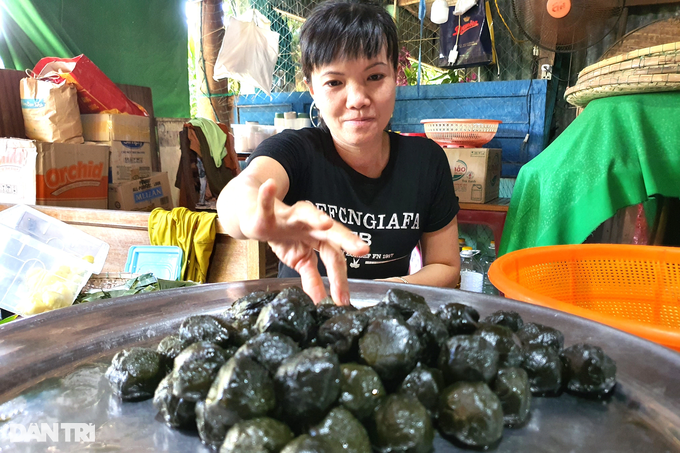
With nimble hands, owner Tran Thi Loc wraps each cake in just over 10 seconds.
Making bánh ít (a type of Vietnamese rice cake) doesn't require much physical strength or strenuous effort, but it is time-consuming. In Cù Lao Chàm, there are currently a few establishments making bánh ít lá gai, but the establishment run by Mr. and Mrs. Ngân is the largest and most well-known on the island, even though it doesn't have its own sign or brand.
According to Ms. Tran Thi Loc, after buying or picking the thorny leaves, wash them thoroughly, then boil them for 7 hours. Let them cool, squeeze out the water, put them in a mortar and grind them with sugar water, then add glutinous rice flour and mix well until a sticky dough is formed.
A three-generation-old bánh ít lá gai (a type of Vietnamese rice cake wrapped in thorny leaves) bakery on Cu Lao Cham Island is bustling with tourists during the summer months ( Video : Cong Binh).
After the dough turns dark green, it is divided into small pieces and filled with mung bean paste. The final step is to wrap it in banana leaves to create a pyramid shape; the finished cake is then ready.
After finishing the cake, the owner arranges it in layers and steams it in a pot for 45 minutes to an hour before taking it out and delivering it to the customer.
The sticky rice cake shop run by Mr. Ngan's family consists only of him and his wife, along with two other family members. During the summer months, they can produce up to 2,000 cakes a day. The cakes are mainly sold to tourists at surprisingly low wholesale prices, just 2,000 VND per cake.
According to Ms. Loc, whenever tourists visit Cu Lao Cham, her kitchen is always bustling with activity. During the rainy season, when there are no tourists on the island, she switches to sewing.
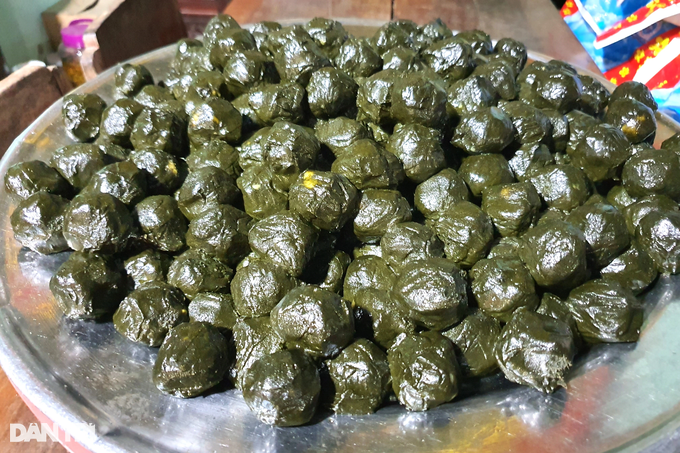
Ingredients for making the thorny leaf rice cake. It has a dark green exterior and a filling made from mung beans inside.
"We only work for 5-6 months each summer; during the other months, the sea is rough, and tourists don't come to visit, so we take a break," Ms. Loc said while wrapping the rice cakes. In just over 10 seconds, she had finished wrapping a rice cake wrapped in thorny leaves.
Mr. Tran Van Ngan is both the owner of the bakery, the baker, and a guide for tourists to experience making banh it (Vietnamese sticky rice cakes) at the bakery. He also doubles as a delivery driver. If a customer orders dozens of cakes anywhere on Cu Lao Cham island, he will drive his motorbike to deliver them personally.
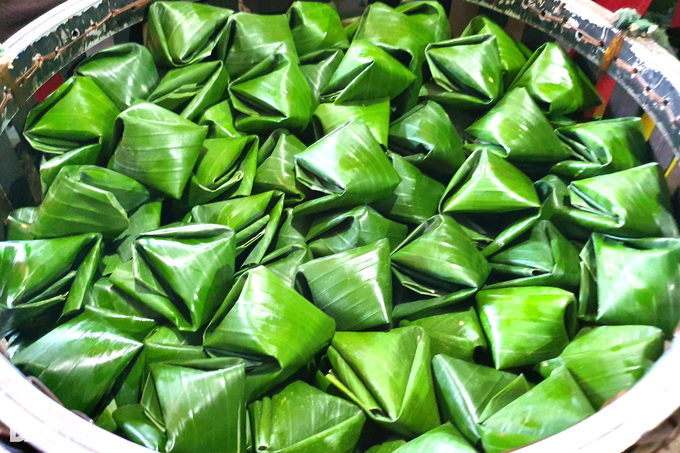
The glutinous rice cakes wrapped in thorny leaves have been wrapped and arranged in a pot, ready to be steamed.
According to Mr. Ngan, 1kg of thorny leaves costs 20,000 VND, and when mixed with powdered sugar, it makes 170-180 sticky rice cakes. The family earns a living through their labor and also preserves their family's traditional craft, which has been passed down for decades.
Mr. Ngan asserts that the flavor of the thorn leaf rice cake in Cu Lao Cham is different from that of the thorn leaf rice cake on the mainland. His bakery also doesn't buy thorn leaves from the mainland but only uses leaves harvested in Cu Lao Cham.
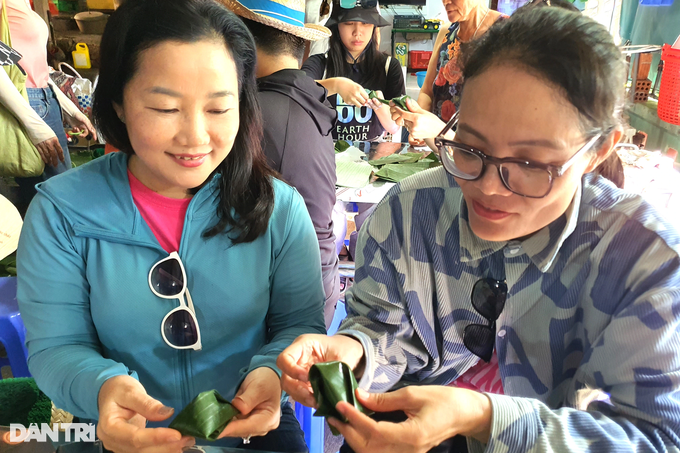
Tourists experience wrapping bánh ít lá gai (a type of Vietnamese rice cake) in leaves.
He shared: "Our workshop doesn't buy nettle leaves from the mainland. Nettle leaves from the mainland are very ordinary, but nettle leaves from Cu Lao Cham grow in a special area, breathing fresh natural air and seawater, so their medicinal properties are 10 times higher than those from the mainland."
Mr. Ngan also shared that this job doesn't require much physical strength, but it involves staying up late and waking up early to wrap cakes for tourists. Sometimes he doesn't get a break until 11 PM, and then has to wake up early the next morning to steam the cakes in time to deliver them to customers before the speedboat departs for the mainland.
Source link






















![[Photo] Prime Minister Pham Minh Chinh holds a phone call with the CEO of Russia's Rosatom Corporation.](/_next/image?url=https%3A%2F%2Fvphoto.vietnam.vn%2Fthumb%2F1200x675%2Fvietnam%2Fresource%2FIMAGE%2F2025%2F12%2F11%2F1765464552365_dsc-5295-jpg.webp&w=3840&q=75)














































Comment (0)