

On the morning of July 19th, the Standing Committee of the Government held an online conference on digital transformation with ministers, heads of agencies, and chairpersons of provincial and centrally-administered city People's Committees. Comrade Pham Minh Chinh, Member of the Political Bureau, Prime Minister - Chairman of the National Committee on Digital Transformation, chaired the conference.

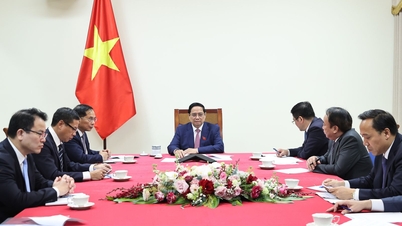
Prime Minister Pham Minh Chinh , Chairman of the National Committee on Digital Transformation, presided over the Government's Standing Committee meeting on digital transformation with ministers, heads of agencies, and chairmen of provincial and centrally-administered city People's Committees. Photo: Duong Giang - VNA

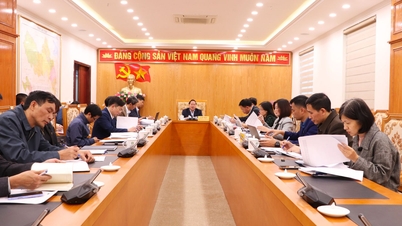
Comrade Mai Xuan Liem, Member of the Standing Committee of the Provincial Party Committee, Vice Chairman of the Provincial People's Committee, and Deputy Head of the Standing Committee of the Provincial Steering Committee for Digital Transformation in Thanh Hoa province, along with other delegates, attended the conference at the Thanh Hoa provincial branch.
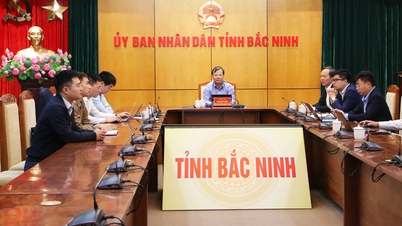
Attending the conference at the Thanh Hoa Provincial People's Committee headquarters were Comrade Mai Xuan Liem, Member of the Provincial Party Standing Committee, Vice Chairman of the Provincial People's Committee, and Deputy Head of the Standing Committee of the Provincial Steering Committee for Digital Transformation, along with representatives from various departments and functional agencies.


Delegates attending the conference at Thanh Hoa province bridge.
According to a report by the Ministry of Information and Communications (MIC), in order to promote and create a legal framework for digital transformation activities, the MIC, other ministries, sectors, and localities have made efforts and shown determination, focusing on leadership and direction to perfect the institutional framework to create a legal basis and foster development in a new space (digital space).
During the implementation of digital transformation, many new issues and contents that did not exist before have been jointly addressed by ministries, sectors, and localities, perfecting the legal environment for implementation, such as: full-process online public services; handling administrative procedures electronically; connecting and sharing data within state agencies; online bidding; electronic identification and authentication; electronic archiving, etc.

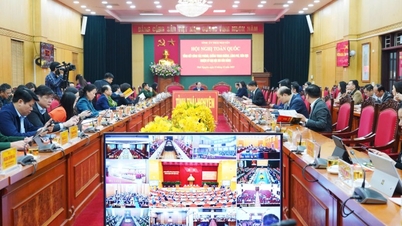
Conference locations (screenshot).
Regarding data connectivity and sharing, in 2020, the total number of data connection and sharing transactions was 11.5 million through the national data integration and sharing platform. By 2024, the national data integration and sharing platform will have recorded 95 connection points from agencies and units. The total number of transactions as of July 16, 2024 is 533 million (equivalent to 85% of the total number of transactions in 2023); the cumulative total is 2.3 billion transactions.
Regarding digital economic development, Vietnam is considered to have the fastest digital economic growth rate in Southeast Asia for two consecutive years (28% in 2022 and 19% in 2023), which is 3.5 times higher than the GDP growth rate.
Regarding the development of the digital society, the report from the Ministry of Information and Communications clearly states: The digital society situation in the period 2022-2024 has seen positive changes, including an increase in the percentage of adults with digital or electronic signatures from 3% to 13.5% (almost four times higher); the percentage of the population aged 15 and above with payment transaction accounts at banks or other authorized organizations reached 87.08% (an increase of 20% compared to 2020).

Overview of the conference at the Thanh Hoa province venue.
Regarding the development of digital citizenship, by December 2023, the Ministry of Public Security had issued over 84.7 million chip-embedded citizen identity cards. 45.4 million identity verification accounts had been activated (reaching 67.5% of the total number of applications received). 34 localities had completed the issuance of electronic identity verification accounts and had the highest activation rates nationwide. The VNeID application has been integrated with additional utilities such as: electronic health records; driver's licenses; e-wallets; tax declaration, registration, and payment; social insurance information; and many other utilities...
Besides the achievements, the report also highlights some shortcomings and limitations in the implementation of digital transformation related to the full-process online public service activities at both ministerial and local levels; the development of the digital economy; and the construction of shared databases and platforms...
At the conference, delegates also heard a brief report from representatives of the Ministry of Public Security on the results and "bottlenecks" in the implementation of Project 06 on the development of data applications on population, identification and electronic authentication to serve the national digital transformation in the period 2022 - 2025, with a vision to 2030.
During the meeting, representatives from ministries, sectors, and localities analyzed and clarified the advantages, difficulties, and challenges facing digital transformation. They also shared experiences, pointed out new and urgent issues, and proposed solutions that ministries, sectors, and localities need to implement in the coming period.
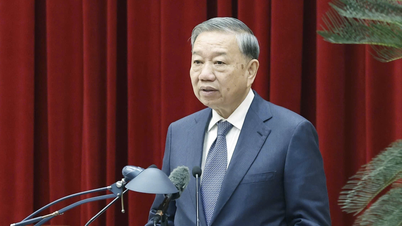
Speaking at the conference, Prime Minister Pham Minh Chinh commended and appreciated the decisive involvement and direction of ministries, sectors, and localities, as well as the support of the business community and the people in implementing the digital transformation policy in the past period.

Prime Minister Pham Minh Chinh, Chairman of the National Committee on Digital Transformation, speaks at the conference. Photo: Duong Giang - VNA.
The Prime Minister emphasized that digital transformation has become an inevitable and irreversible trend at the international, regional, and national levels. Digital transformation has reached "every street, every house, every person," and the digital economy has permeated all production, business, and consumption activities, fundamentally and profoundly changing socio-economic activities. Therefore, ministries, sectors, and localities need to unify their thinking, methodology, and approach to act together, raise awareness, identify correct, relevant, and feasible goals, perspectives, tasks, and solutions, and organize implementation effectively, saving time and costs while achieving the highest efficiency, strongly promoting the national digital transformation process, building a digital government, a digital society, digital citizens, and developing the digital economy.
The Prime Minister stated: The important tasks now are to promote economic growth, stabilize the macroeconomy, control inflation, ensure the major balances of the economy, restructure the economy, and strive to achieve the goals set for the entire term. These tasks are all closely related to digital transformation.
In light of these requirements and implications, along with the existing shortcomings, limitations, and their causes that have been identified, Prime Minister Pham Minh Chinh requested that Ministers, heads of agencies, and chairmen of People's Committees of provinces and centrally-administered cities take the lead and set an example in promoting digital transformation with the highest determination to effectively implement the following tasks: Developing digital human resources, digital citizens, digital skills, and digital talents; prioritizing resources for digital transformation, for the development of the digital economy, digital society, digital citizens, and digital government; developing comprehensive, appropriate, economical, and efficient digital infrastructure; digitizing management and administration; and urgently completing mechanisms, policies, and institutions for digital transformation in the direction of strengthening decentralization and delegation of power, and promoting the creativity and initiative of all levels and sectors.
The Prime Minister requested that ministries, sectors, and localities implement assigned tasks in the spirit of "5 accelerations," "5 guarantees," and "5 no's" - No saying no, no saying it's difficult; no saying it's difficult without doing it; no backtracking, only talking about doing; no one left behind in the national digital transformation process; no cash, aiming for all transactions through electronic methods to prevent and combat corruption and harassment; no paper documents, aiming for digitalization; and no time, effort, or cost wasted for citizens and businesses.
The Prime Minister emphasized several key tasks and solutions that need to be focused on in the coming period and assigned responsibility to each ministry, sector, and locality for improving the effectiveness of digital transformation in the future. He also requested that the Ministers, heads of departments, and Chairmen of the People's Committees of provinces and centrally-administered cities continue to strive together to successfully fulfill their assigned tasks, ensuring a harmonious balance of interests between the State, the people, and businesses.
Phong Sac
Source: https://baothanhhoa.vn/thuc-hien-dong-bo-quyet-liet-cac-giai-phap-thuc-day-chuyen-doi-so-tao-dong-luc-cho-tang-truong-kinh-te-219965.htm
![[Photo] Prime Minister Pham Minh Chinh holds a phone call with the CEO of Russia's Rosatom Corporation.](/_next/image?url=https%3A%2F%2Fvphoto.vietnam.vn%2Fthumb%2F1200x675%2Fvietnam%2Fresource%2FIMAGE%2F2025%2F12%2F11%2F1765464552365_dsc-5295-jpg.webp&w=3840&q=75)
![[Photo] Closing Ceremony of the 10th Session of the 15th National Assembly](/_next/image?url=https%3A%2F%2Fvphoto.vietnam.vn%2Fthumb%2F1200x675%2Fvietnam%2Fresource%2FIMAGE%2F2025%2F12%2F11%2F1765448959967_image-1437-jpg.webp&w=3840&q=75)








































![[OFFICIAL] MISA GROUP ANNOUNCES ITS PIONEERING BRAND POSITIONING IN BUILDING AGENTIC AI FOR BUSINESSES, HOUSEHOLDS, AND THE GOVERNMENT](https://vphoto.vietnam.vn/thumb/402x226/vietnam/resource/IMAGE/2025/12/11/1765444754256_agentic-ai_postfb-scaled.png)












































Comment (0)