

The People's Committee of Ho Chi Minh City has just reported on the implementation of Resolution 57/2024 of the Politburo and Resolution 71/2025 of the Government.
Identifying low-level economic development as one of the key contents in the 2025-2030 period, with a vision to 2045, Ho Chi Minh City will test application services and exploit unmanned aerial vehicles.
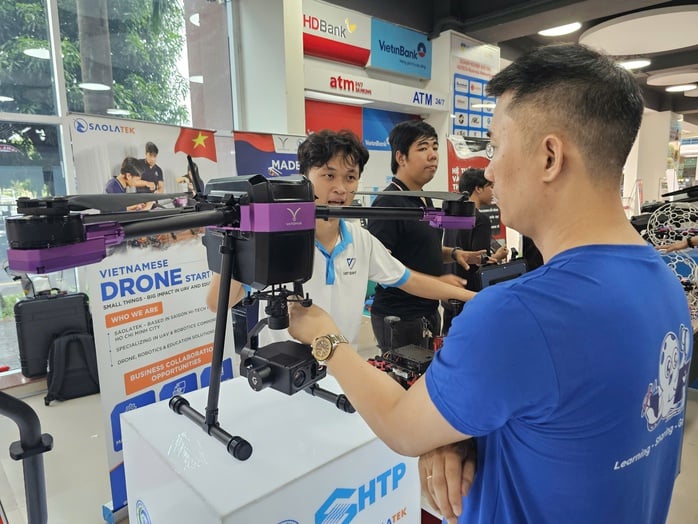
Ho Chi Minh City will test application services and exploit unmanned aerial vehicles, flying cars, and flying motorcycles.
A representative of a business in the UAV field commented that Ho Chi Minh City has many conditions to develop UAV services. This technology has proven effective in many fields and can be expanded to higher value models.
However, according to this company, the deployment of UAV services is facing many obstacles due to the limited legal framework. UAVs on the market are mainly allowed to operate in the agricultural sector such as spraying pesticides, surveying planting areas. If UAVs are applied to delivery or passenger transport, a more complex management system will be required. Currently, the urban flight management mechanism - from route monitoring, data connection to security - is still incomplete.
"Only when the legal framework and UAV management mechanism are completed, can more complex applications such as UAV delivery, or further, flying cars, be deployed. Only then will businesses have enough basis to consider plans to penetrate this field" - the business representative expressed.
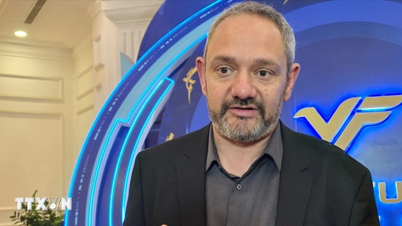
Mr. Pham Thanh Toan, CEO of MiSmart Smart Technology Joint Stock Company, said the biggest problem at present is that the network of flight zones and no-fly zones in Ho Chi Minh City is too close together, increasing the risk of UAVs entering restricted areas.
In addition, the legal framework for many application models is still unclear. Many initiatives such as autonomous robots and automatic delivery have failed due to lack of economic calculations and suitable testing environments.
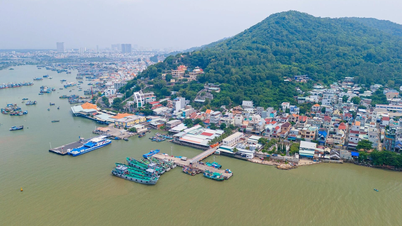
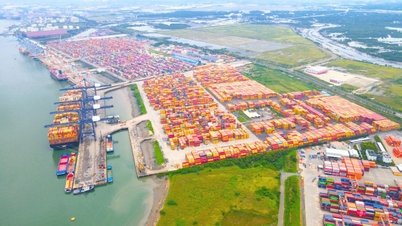
Mr. Toan proposed that Ho Chi Minh City pilot UAVs at seaports such as Cat Lai or Cai Mep - Thi Vai. These are places with few obstacles, high actual transportation needs (delivering medicine, food, supplies between shore and ship) and low risk of community impact.
This model has been successfully deployed in Singapore. In the island nation, UAVs are used to deliver goods from shore to ship, providing necessities and medicine to the crew.
"UAV services are only effective if they come from real needs and have clear economic value. We are implementing some sandboxes in the old Binh Thuan province to test the service" - Mr. Toan informed.
According to the CEO of MiSmart, currently, the management agency has a mechanism to track flying vehicles but does not have a synchronous system for comprehensive monitoring. Therefore, it is necessary to build a centralized management system similar to road traffic management, in which each UAV has a license plate to identify the owner, operator and legal responsibility when causing an accident.
Source: https://nld.com.vn/tphcm-se-thu-nghiem-o-to-bay-uav-giao-hang-doanh-nghiep-lo-vuong-phap-ly-vung-cam-bay-196251202143952082.htm
























![[Photo] Worshiping the Tuyet Son statue - a nearly 400-year-old treasure at Keo Pagoda](/_next/image?url=https%3A%2F%2Fvphoto.vietnam.vn%2Fthumb%2F1200x675%2Fvietnam%2Fresource%2FIMAGE%2F2025%2F12%2F02%2F1764679323086_ndo_br_tempimageomw0hi-4884-jpg.webp&w=3840&q=75)
![[Photo] Parade to celebrate the 50th anniversary of Laos' National Day](/_next/image?url=https%3A%2F%2Fvphoto.vietnam.vn%2Fthumb%2F1200x675%2Fvietnam%2Fresource%2FIMAGE%2F2025%2F12%2F02%2F1764691918289_ndo_br_0-jpg.webp&w=3840&q=75)


















































Comment (0)