

On December 7th, the State Council of the People's Republic of China (the Chinese government ) announced an expansion of its "protecting the blue sky" plan, which includes a ban on the construction of new steel mills to reduce carbon emissions and improve air quality.
Previously, China had taken strong action to ban the construction of new steel projects in certain areas nationwide. The bans aim to reduce the concentration of particulate matter (PM2.5) in major cities by 10% by 2025 compared to 2020 levels. According to Xinhua News Agency, last year more than 25% of cities in China failed to meet the PM2.5 standard of 40 micrograms/m³.
According to researchers from the Chinese Academy of Sciences , emissions from the steel industry have increased in recent years, accounting for 15-18% of China's total carbon emissions in 2020.
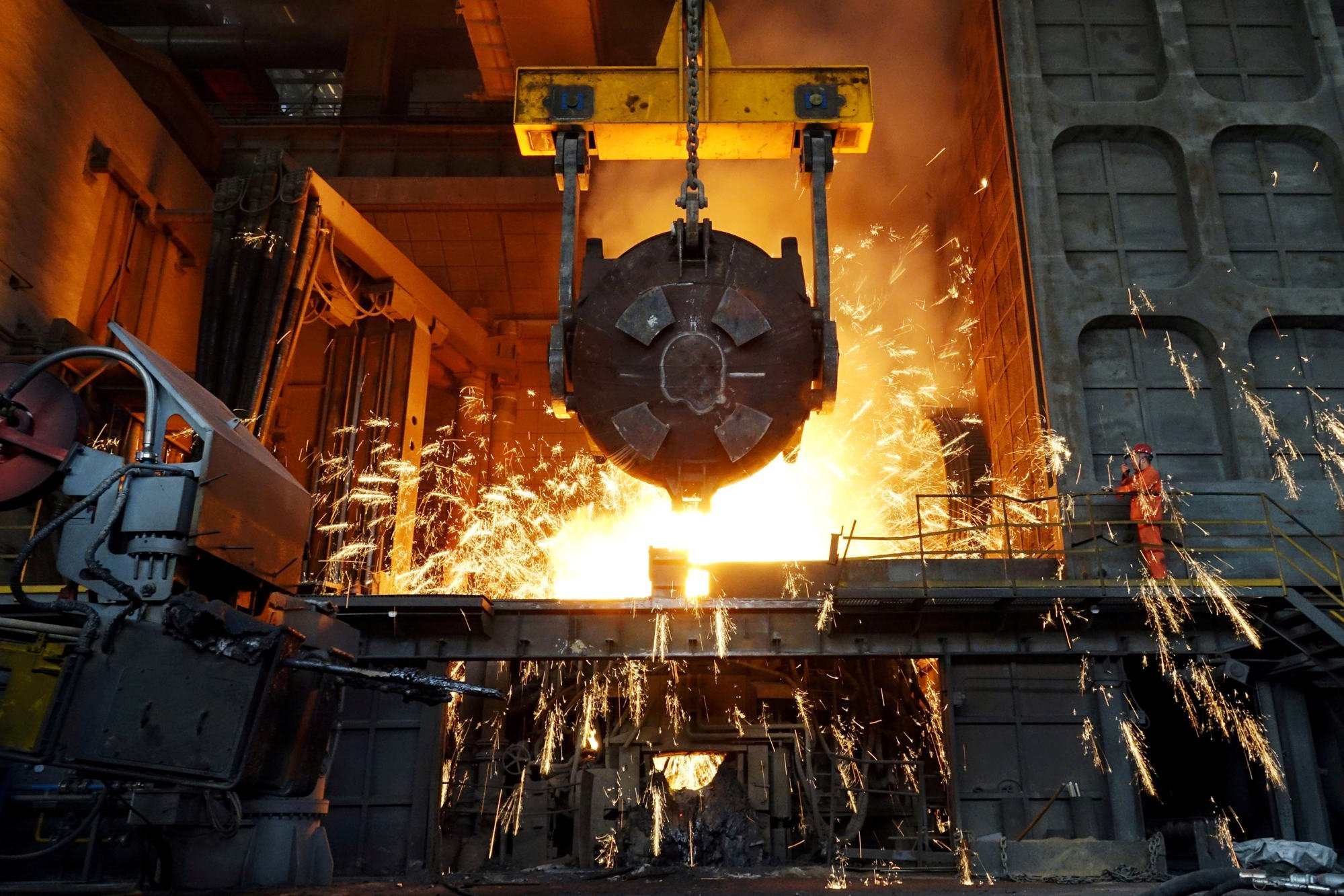
The State Council's plan aims to reduce the amount of steel produced from blast furnaces. Photo: Reuters.
According to the action plan, by 2025, more than 80% of China's steel production capacity will "complete the tasks of transitioning to ultra-low emissions."
In Hebei, China's leading steel-producing province, the number of iron and steel companies has been cut by nearly 70% to meet local targets, according to Xinhua News Agency. This has significantly reduced PM2.5 concentrations from 104 micrograms/m3 in 2013 to 38.9 this year.
In addition to the ban on building more steel plants, the plan also proposes several other measures to improve air quality, including phasing out outdated production equipment in high-emission industries and promoting the development of green industries.
Under this plan, China aims to restrict high-energy consumption and high-emission projects, while requiring alternative projects. These expansion or replacement projects will need to undergo environmental assessments and energy conservation evaluations.
Other targets for 2025 include a 10% reduction in emissions of volatile organic compounds and nitrogen oxides compared to 2020 levels.
The plan also sets out specific policies for key areas such as the megacities north of Beijing and Tianjin, as well as areas surrounding Hebei province, Shanghai, and the Yangtze River Delta. Both of these regions will have to cut coal consumption by 10% and 5%, respectively.
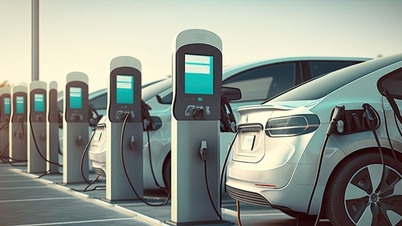
Meanwhile, the number of public transport vehicles using new energy and the coverage of fast-charging stations must reach 80% in key areas, while non-fossil fuel energy must account for 20% of total energy consumption.
The plan also calls for increased natural gas production to reduce the need for coal-fired heating in households.
Other measures include strengthening oversight of industries, enhancing environmental policies while still considering economic goals, and improving international cooperation on issues such as air pollution.
Hoai Phuong (according to Xinhua News Agency, SCMP)
Source
![[Photo] Closing Ceremony of the 10th Session of the 15th National Assembly](/_next/image?url=https%3A%2F%2Fvphoto.vietnam.vn%2Fthumb%2F1200x675%2Fvietnam%2Fresource%2FIMAGE%2F2025%2F12%2F11%2F1765448959967_image-1437-jpg.webp&w=3840&q=75)
![[Photo] Prime Minister Pham Minh Chinh holds a phone call with the CEO of Russia's Rosatom Corporation.](/_next/image?url=https%3A%2F%2Fvphoto.vietnam.vn%2Fthumb%2F1200x675%2Fvietnam%2Fresource%2FIMAGE%2F2025%2F12%2F11%2F1765464552365_dsc-5295-jpg.webp&w=3840&q=75)


































































Comment (0)