

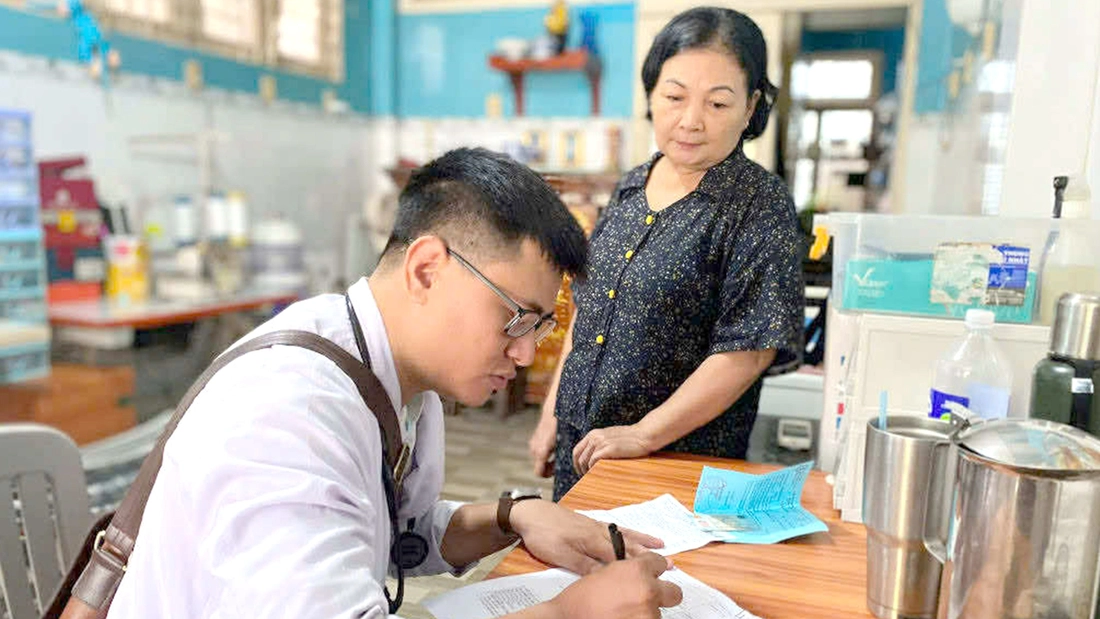
Doctors at a health station in Ho Chi Minh City examine and record health information for elderly people at their homes - Photo: TIEN QUOC
The draft resolution of the Politburo on breakthroughs in people's healthcare, meeting the requirements of national development in the new era, sets a goal that from 2026, every citizen will receive a free periodic health check-up at least once a year or a free screening examination as required by professional standards at least once a year.
What approach can be taken to achieve this?
Specific regulations are needed regarding routine health checkups.
Speaking to Tuoi Tre newspaper, delegate Tran Khanh Thu ( Hung Yen ), who was invited to contribute her opinions on the draft resolution, emphasized that the goal of ensuring every citizen receives a regular health check-up once a year starting in 2026 is a very humane and necessary policy.
This ensures public health and aims to provide better healthcare for the community.
According to Ms. Thu, General Secretary To Lam has emphasized this objective in many meetings.
However, Representative Thu argued that the draft's addition of "or free professional screening at least once a year" is unclear and inadvertently diminishes the humanitarian and urgent nature of regular health check-ups for the people, as the conjunction "or" implies only one of the two options.
"Regular health check-ups enable people to proactively assess their current health status, prevent, screen, and diagnose potential diseases early. This helps local health authorities determine the disease patterns in their area, thereby enabling them to develop better strategies for the health sector and healthcare for the people..."
Therefore, I propose that the target should be to have each citizen undergo a routine health check-up once a year," Ms. Thu stated.
Ms. Thu also pointed out that in order to effectively achieve this goal, the Ministry of Health needs to have regulations on periodic health check-ups with specific paraclinical tests that must be performed.
For high-risk individuals, basic tests can provide early diagnosis, helping to prevent the progression of serious diseases such as cardiovascular disease and diabetes.
Even some genetic diseases can be prevented from a very early age, such as thalassemia...
By providing such a detailed list of examinations, it is possible to determine the amount of money that needs to be paid for each examination and multiply it by the total number of people undergoing the examination, thereby helping to assess the financial impact of implementing this policy.
It is crucial to strengthen the capacity of primary healthcare facilities in terms of infrastructure, equipment, and human resources to ensure they are capable and qualified to conduct health check-ups.
This includes the need for policies to attract and train high-quality human resources for the healthcare sector to supplement the workforce at the grassroots level, especially in remote, disadvantaged areas.
This should be accompanied by policies on salaries and truly favorable allowances for healthcare workers to retain them in performing their duties at the grassroots level.
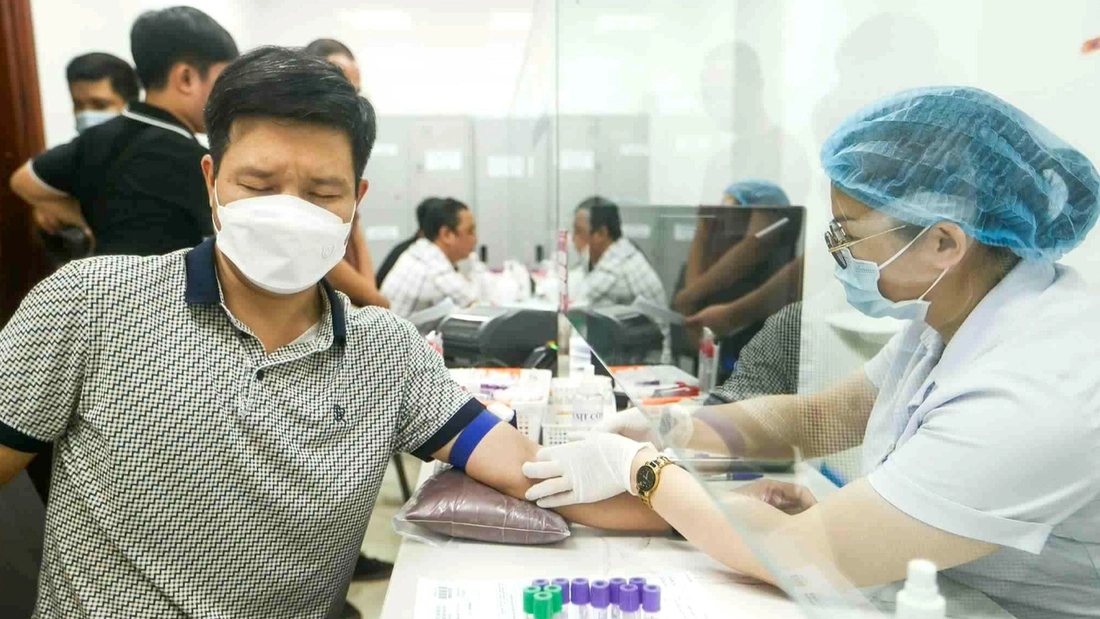
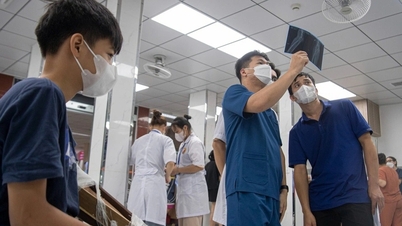
People undergoing health checkups at Bach Mai Hospital (Hanoi) - Photo: NGUYEN KHANH
Enter your health data into your electronic health record.
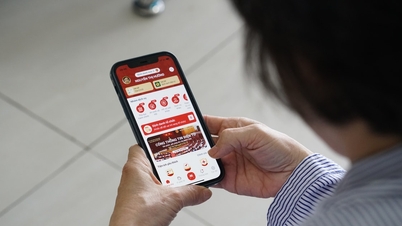
Representative Thu added that, according to the Government's Project 06 plan, when 100% of the population has level 2 identification, VNeID will already contain information from the electronic health record, so it needs to be activated and integrated with the data on people's health status.
Therefore, for routine health checkups to be effective, it is necessary to update the data on the examination results from the medical facility to the electronic health record on VNeID.
In addition, this data will be licensed by the police agency managing VNeID to local health authorities for access, management, analysis, evaluation, and classification into disease groups and the number of people affected.
For example, in one locality, there are many people suffering from cardiovascular diseases, diabetes, digestive disorders, etc., while in another locality, there are many people suffering from high blood pressure, chronic and acute diseases with unusually high rates...
This helps in screening, providing guidance for health authorities to easily monitor, plan, and manage, supervise, and provide timely healthcare for the population.
At the same time, this also helps identify high-risk groups of people for diseases so that health authorities can recommend regular health check-ups for them, even every six months.
The female delegate also emphasized that people's reluctance to have regular health check-ups in recent times stems from many reasons, including a lack of habit, even a lack of trust in local healthcare facilities, or fear of the cost...
Therefore, in achieving this goal, strong public awareness campaigns are needed to help people understand its humanitarian and social welfare significance.
At the same time, Ms. Thu suggested that the specific task of providing regular health check-ups for residents should be assigned to the People's Committees at the commune level. This is because the commune level is closest to the people, has a thorough understanding of the list of residents in its area, and is responsible for disseminating information and implementing support for regular health check-ups for the people.
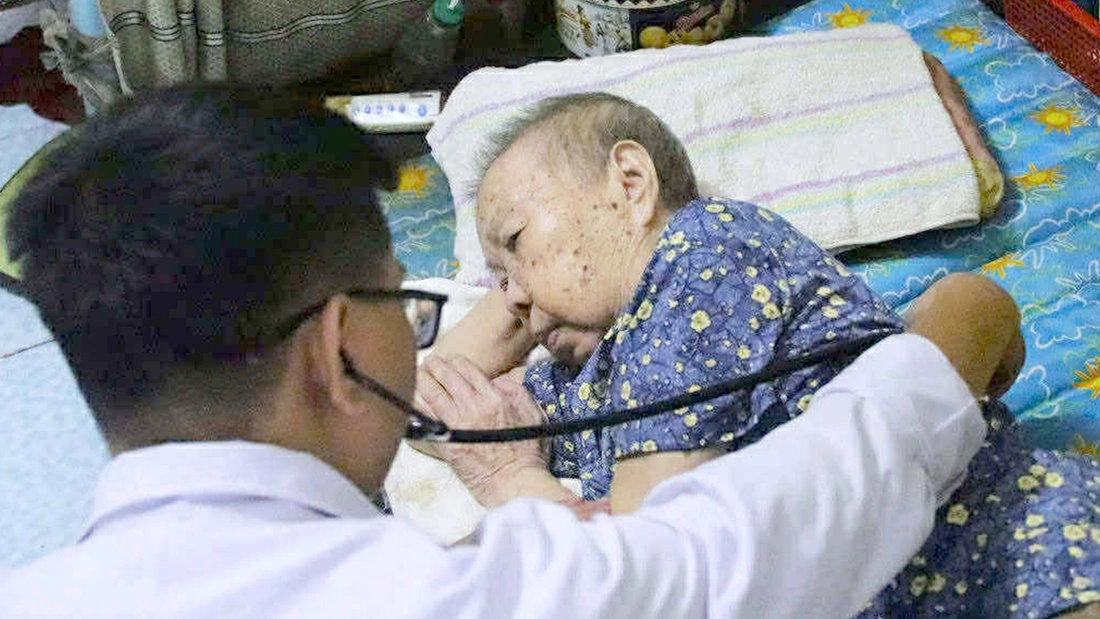
Elderly people in Ho Chi Minh City receive healthcare services from doctors who come to their homes - Photo: TIEN QUOC
The Ministry of Health will develop a list of specific examination scopes.
Sharing her views on this policy, Ms. Tran Thi Trang, Head of the Health Insurance Department (Ministry of Health), affirmed that this is a goal in social security policy, in which health insurance should be the foundation.
Regarding the policy of free periodic health check-ups, it is expected to be implemented starting in 2026.
According to Ms. Trang's estimate, the average cost for a single examination is 300,000 VND, including basic biochemical tests, blood count, chest X-ray, and possibly ultrasound.
The Ministry of Health will review and develop a specific list of the scope of routine health check-ups and examination targets to ensure they meet professional requirements, are appropriate for the target groups, and maintain the balance of the health insurance fund and the state budget.
In particular, this policy includes screening and early diagnosis of diseases, helping to detect illnesses in their early stages at the primary healthcare level, reducing treatment costs later on. Citizens will have lifelong health records created for them, from the time they are in their mother's womb until old age.
Mr. Dao Xuan Co, director of Bach Mai Hospital, also emphasized that to achieve the goal, good preparation in training and human resources is necessary. Accordingly, a training strategy and a mechanism for recruiting local people are needed, training them and then sending them back to serve their own hometowns.
Training programs for primary healthcare also need adjustment. Doctors at the primary level must be comprehensively competent, capable of assisting in childbirth, providing emergency care for fractured femurs and myocardial infarction, administering vaccinations, providing basic dental care, and treating common illnesses.
Although not requiring the same level of expertise as at the central level, proficiency in many areas is necessary to meet the initial needs of the people.
Secondly, there must be appropriate policies regarding compensation and working conditions. There must be suitable policies to ensure doctors feel secure working at the facility. Working conditions, essential equipment, and medications must also be guaranteed.
Finally, there is the application of digital transformation, building electronic health records and electronic medical records that are interconnected from the ward/commune level to the provincial/city level and the central government.
This allows higher-level hospitals to conduct consultations, provide guidance to lower-level facilities, and instruct on treatment remotely, reducing the burden on these facilities and enabling people to receive better services right in their local area.
Ms. Tran Thi Trang also stated that in addition to ensuring the capacity of the healthcare system in terms of human resources, it is necessary to improve the quality of services, especially for primary healthcare and preventive medicine, in order to ensure that people can enjoy the most convenient services right where they live and work.
"For a commune health station to conduct routine health checkups and provide basic general medical care, it must receive at least the same level of investment as a general clinic; it must be invested in and strengthened in terms of personnel and equipment. The state budget must ensure these activities."
In addition, the commune health station must have a doctor to perform biochemical tests, order paraclinical services, screen for some basic diseases early, and provide general primary healthcare to the people.
Therefore, there should be at least 3-5 general practitioners at each commune health station. At the same time, there must be a network of family doctors to participate directly at the grassroots level," Ms. Trang stated.
Bring 1,000 doctors to the health station.
At the Politburo's draft resolution meeting on July 8th, Deputy Minister of Health Nguyen Thi Lien Huong stated that the draft also sets a goal of increasing the number of doctors working on a temporary basis at grassroots healthcare facilities by at least 1,000 each year over the five-year period from 2025 to 2030.
The proportion of direct out-of-pocket spending by households on healthcare has decreased to 30%, and electronic health records have been established to manage health throughout the lifecycle...
The vision for 2045 is defined as achieving health indicators for the population, with coverage of essential health services comparable to developed countries; an average life expectancy of over 80 years, with an increase in the number of years lived in good health; and the stature, physical fitness, and average height of young people comparable to countries at a similar level of development.
What can I do to reduce out-of-pocket healthcare expenses?
Achieving the goal of universal free healthcare requires enormous resources. According to estimates by the Ministry of Health, just providing routine health checkups for approximately 84 million people would require an additional 25,000 billion VND per year.
Not to mention disease screening packages and basic services at the commune level; expanding health insurance support for students, the elderly, people with disabilities, and the near-poor...
"These resources will come from three pillars: the health insurance fund, the state budget, and a portion of the people's contributions."
At the same time, the Ministry of Health proposed a mechanism to allocate a portion of the excise tax on alcohol, beer, tobacco, and soft drinks to supplement the healthcare fund – a model that has been applied in many countries.
Another issue is that the value of health insurance cards in Vietnam is still low, currently at 4.5% of the basic salary, while the law allows up to 6%. The proposed increase in health insurance contributions will be implemented gradually, aiming to ensure the expansion of benefits and coverage," Ms. Trang stated.
In addition, one of the resolution's objectives is to reduce the proportion of out-of-pocket spending on healthcare for the people. Regarding this issue, Ms. Trang suggested that health insurance should expand its coverage, increasing the reimbursement rate for medicines, medical supplies, and advanced medical techniques.
First, this will focus on critically ill patients with life-threatening illnesses and high treatment costs. At the same time, the Ministry of Health aims to gradually reduce the co-payment rate, which is currently quite high compared to international standards.
In Vietnam, the common co-payment rate is 20% or 5% (depending on the group), while in Thailand it is only 12%, and in Singapore 24.7%.
For children aged 7-16, health insurance coverage is currently subject to certain conditions. In the future, this group will have expanded benefits. In addition, the Ministry of Health will add more vaccines to be administered free of charge in the national expanded immunization program.
All these policies aim to completely waive basic medical expenses and reduce out-of-pocket spending to the lowest possible level. This is the approach to free hospital care.
Chairman of the Central Committee of the Vietnam Fatherland Front, DO VAN CHIEN:
Public health care from a new perspective.
Regarding social welfare, in addition to the program to eliminate temporary and dilapidated houses, the Politburo and the Secretariat have decided to direct the complete exemption of tuition fees for students from preschool to high school and to pilot the use of budget funds to provide lunch for students in areas with the capacity to do so.
Most recently, the Politburo and General Secretary To Lam decided to allocate budget to focus investment on building boarding and semi-boarding schools in border communes, so that children of ethnic minorities have the opportunity to study.
We invest in education and healthcare for the people with a very new perspective, not focusing on how many health insurance cards, central and local hospitals, or doctors are available to the population.
That's important, but more important is how people get their health check-ups and examinations throughout the year.
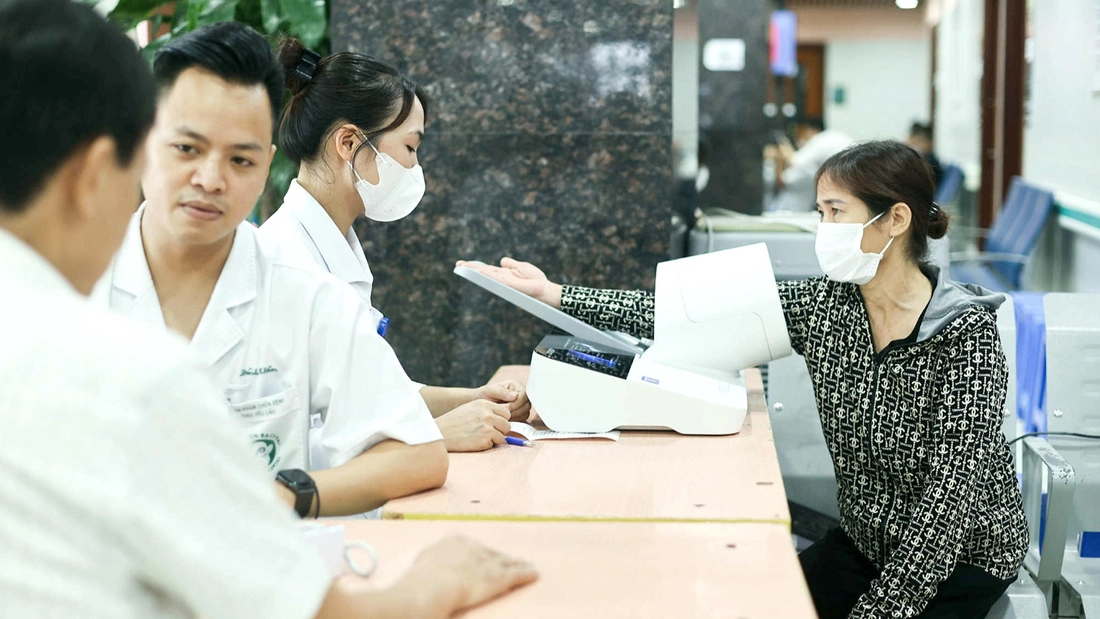
To ensure that citizens can receive free regular health check-ups starting in 2026, thorough preparations are needed now - Photo: NGUYEN KHANH
Representative NGUYEN QUANG HUAN (Ho Chi Minh City):
Enhancing the capacity of primary healthcare.
Regular health checkups help people detect diseases early, especially chronic diseases, thereby enabling timely treatment and improving and prolonging a healthy life.
To effectively implement this, the most important thing is to strengthen the capacity of primary healthcare, especially health stations and clinics located in newly established communes.
In addition to upgrading infrastructure and supplementing equipment and machinery, specific policies are needed to train and recruit high-quality medical personnel to ensure that the requirements at the facility are met.
For rural and remote areas, specific policies are needed to support and develop primary healthcare, both in terms of infrastructure and human resources.
Furthermore, in many places, especially in disadvantaged areas, people are still hesitant to go for regular check-ups. They are afraid of the cost, and some even believe that if a check-up reveals a disease, the treatment will be expensive.
Therefore, it is necessary to raise awareness among the public that this regular check-up is a very good initiative and that they should fully participate in order to detect diseases early and receive timely treatment.
In addition, it is necessary to strengthen public awareness campaigns and implement supportive policies to increase the rate of universal health insurance coverage.
Increasing health insurance coverage will lead to simpler policies that allow people diagnosed with illnesses to move from routine health checkups to medical facilities for timely treatment, and people will also worry less about treatment costs as insurance will cover a large portion of the expenses.
Source: https://tuoitre.vn/tu-2026-nguoi-dan-duoc-kham-suc-khoe-dinh-ky-mien-phi-20250709224641976.htm

















































































Comment (0)