


While many ethnic groups impress with their vibrant and colorful costumes, Muong women opt for harmony and elegance. Black, dark blue, white, and soft shades are subtly combined to highlight their graceful and modest appearance. The headscarf is always white, symbolizing purity and serving as the starting point for the entire outfit.


From the villages of Hoa Binh (formerly), Thanh Hoa, Son La, and Phu Tho, the image of women sitting by the loom has become a shared memory. It is from this tradition that brocade fabrics, linen cloth, and soft, flowing black dresses are created, carrying with them the indigenous knowledge and cosmology of the Muong people. Cotton and linen threads are meticulously processed by hand; dyes are derived from forest plants; geometric patterns are carefully woven stitch by stitch—all combining to create a unique "visual language."


The most striking feature of Muong women's traditional clothing is the waistband. Considered the "soul" of the garment, it features intricately woven motifs that are both precise and rich in meaning. The patterns depict mountains, forests, springs, the cycle of life, or symbols of fertility, all expressed through a tight composition that reflects a deep aesthetic sensibility. Each region has its own variations: waistbands in Hoa Binh tend towards simplicity but are sharp and detailed; while those in Thanh Hoa are more vibrant and elaborate, with many hand-embroidered borders.
Besides skirts and blouses, Muong women also wear short, waist-length blouses in subtle colors, creating a gentle contrast with their traditional attire. For important occasions, long, flowing robes are chosen, enhancing the wearer's graceful appearance.

Silver jewelry also plays a special role. The jingling of pendants worn on the hips, necklaces, bracelets, or strings of silver beads, crafted in a simple yet sophisticated style, reflects the status and refinement of women in the community.
In contrast to the elaborate attire of the women, the Muong men's clothing is quite simple: a round-necked shirt with a trim, and wide-legged trousers made of coarse brown, indigo, or white fabric. This contrast helps to highlight the gracefulness of the Muong women's clothing and maintain the characteristic balance of the local culture.

The exquisite white scarves, blouses, robes, and skirt waistbands, crafted by the silent hands of generations, have helped shape the cultural identity of the country's fourth-largest population.
Despite the many changes in modern society, Muong traditional clothing remains present in daily life in many localities. Many women still choose to wear the "áo pắn" (a type of blouse) and black skirt when going to work, receiving guests, or participating in community activities. Especially in traditional festivals, Muong traditional clothing continues to play a central role, serving as a means of connecting the younger generation with the heritage of their ancestors.
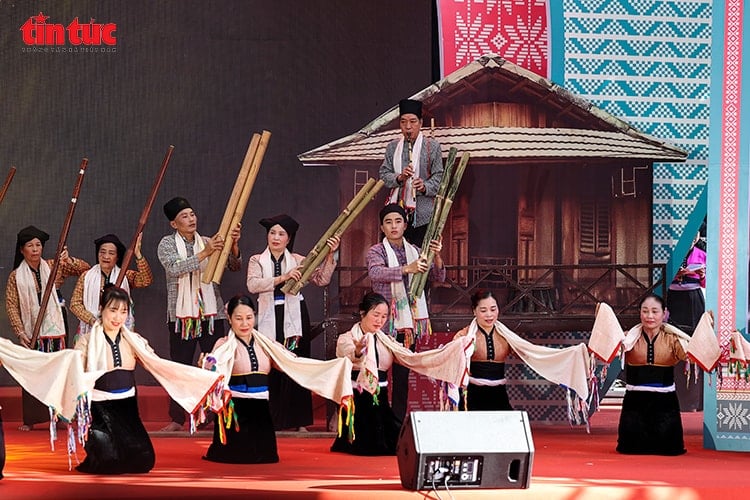
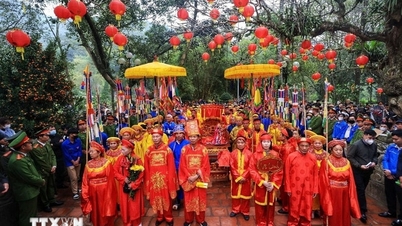
At the 2nd Muong Ethnic Culture Festival recently held at the Vietnam Ethnic Culture and Tourism Village (Hanoi), images of Muong women showcasing traditional costumes, weaving, and reenacting traditional rituals attracted a large number of visitors. Costume competitions, brocade exhibitions, and cultural activities demonstrated the community's efforts in preserving and transmitting their heritage.


More than just clothing, Muong traditional attire tells a story of history, the universe, and the inner beauty of women. Each weave, each pattern, each color bears the mark of labor, cultural memory, and profound national pride. Amidst a changing world, preserving and honoring traditional attire not only contributes to safeguarding Muong identity but also enriches the diverse cultural landscape of Vietnam.
Source: https://baohaiphong.vn/ve-dep-phu-nu-muong-qua-nhung-hoa-van-det-truyen-thong-529349.html











![[Photo] Prime Minister Pham Minh Chinh holds a phone call with the CEO of Russia's Rosatom Corporation.](/_next/image?url=https%3A%2F%2Fvphoto.vietnam.vn%2Fthumb%2F1200x675%2Fvietnam%2Fresource%2FIMAGE%2F2025%2F12%2F11%2F1765464552365_dsc-5295-jpg.webp&w=3840&q=75)








































Comment (0)