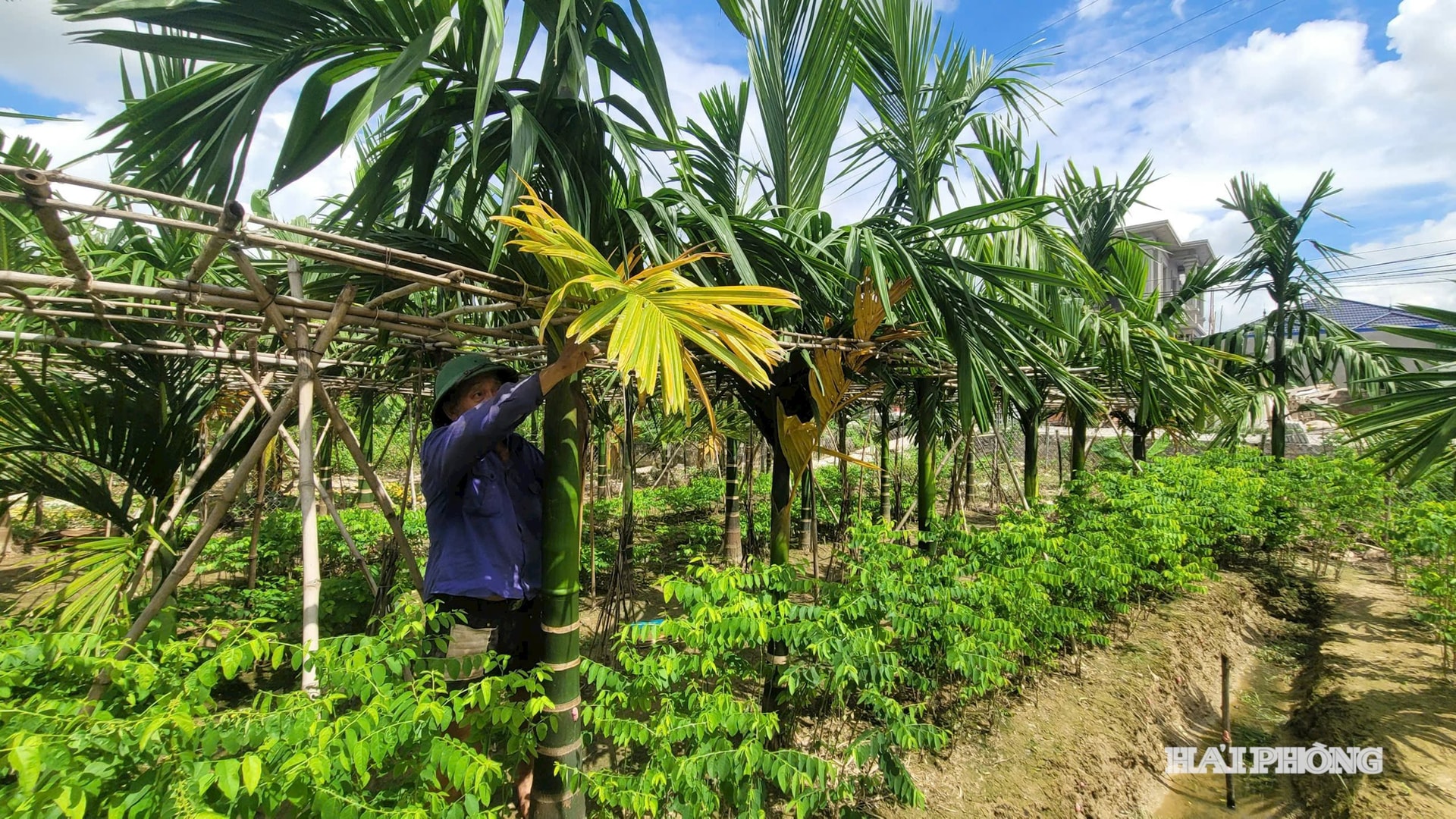
The former Cao Nhan commune, now Le Ich Moc ward, Hai Phong city, is known as the 'capital' of Lien Phong betel nuts.
Getting rich by growing betel nuts.
For generations, the former Cao Nhan commune, now Le Ich Moc ward, Hai Phong city, has been known as the "capital" of betel nut trees. Locals often proudly mention the distinctive Lien Phong betel nut variety, with its large fruit, bright skin, fragrant and slightly astringent taste, which is highly sought after in the market.
Mrs. Hoang Thi Nga, nearly 80 years old, has spent more than half her life cultivating betel nut trees. She recounts that in the past, almost every household planted betel nut trees. Some had a few dozen, others had thousands. The trees grew in dense forests, covering houses, fields, and meadows, creating a unique landscape that many people call the area the "betel nut orchard region of Northern Vietnam."
"Cau Cao Nhan was previously mainly used as a dowry in weddings and engagement ceremonies… so many people often call my hometown the village of happiness trees," Mrs. Nga proudly said.
Not only did the people of Cao Nhan cultivate betel nuts, but they also quickly developed a betel nut processing industry. In 2007, the former Cao Nhan commune was recognized by the Hai Phong City People's Committee as a betel nut cultivation and processing village.
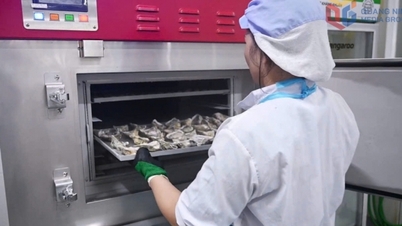
From fresh betel nuts, the locals boil them, then dry them for export, mainly to China. People often jokingly say, "The Cao Nhan people carry their charcoal stoves all over Southeast Asia," because there are large traders who not only buy and process betel nuts locally but also source them from central and southern Vietnam, and even from Thailand and Myanmar...



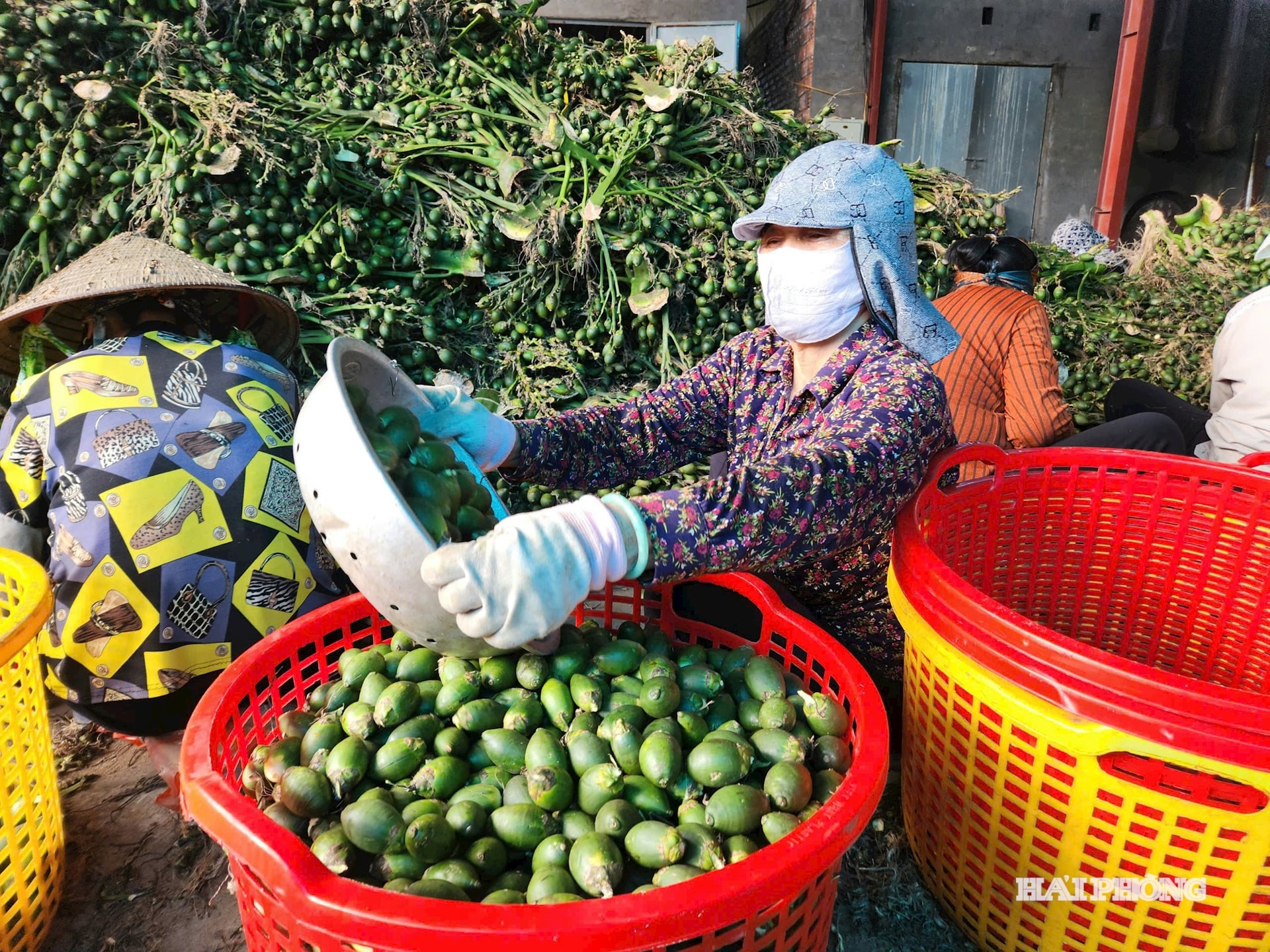
During its heyday, Cao Nhan commune had more than 30 betel nut drying kilns operating day and night. Each kiln had an average capacity of 3-9 tons of dried betel nuts per day. Mr. Nguyen Van Vinh, a resident of Nhan Ly betel nut village, now residential group No. 9, Le Ich Moc ward, said that at this time last year, the price of fresh betel nuts was high, sometimes reaching over 80,000 VND/kg. In the betel nut processing factories, workers busily picked, sorted, and classified betel nuts… The betel nut drying kilns burned brightly day and night. Many traders and Chinese businesses were stationed in the area to promptly purchase dried betel nuts from the local people.
Thanks to the betel nut tree, many families have become wealthy, building large, beautiful houses, buying cars, and providing their children with education. Betel nut processing factories provide stable jobs for hundreds of local workers, especially during the peak betel nut season from the 8th lunar month of the previous year until the end of the Qingming Festival of the following year. At that time, the average income for each worker was between 5 and 10 million VND per month.
The concern about market volatility remains.
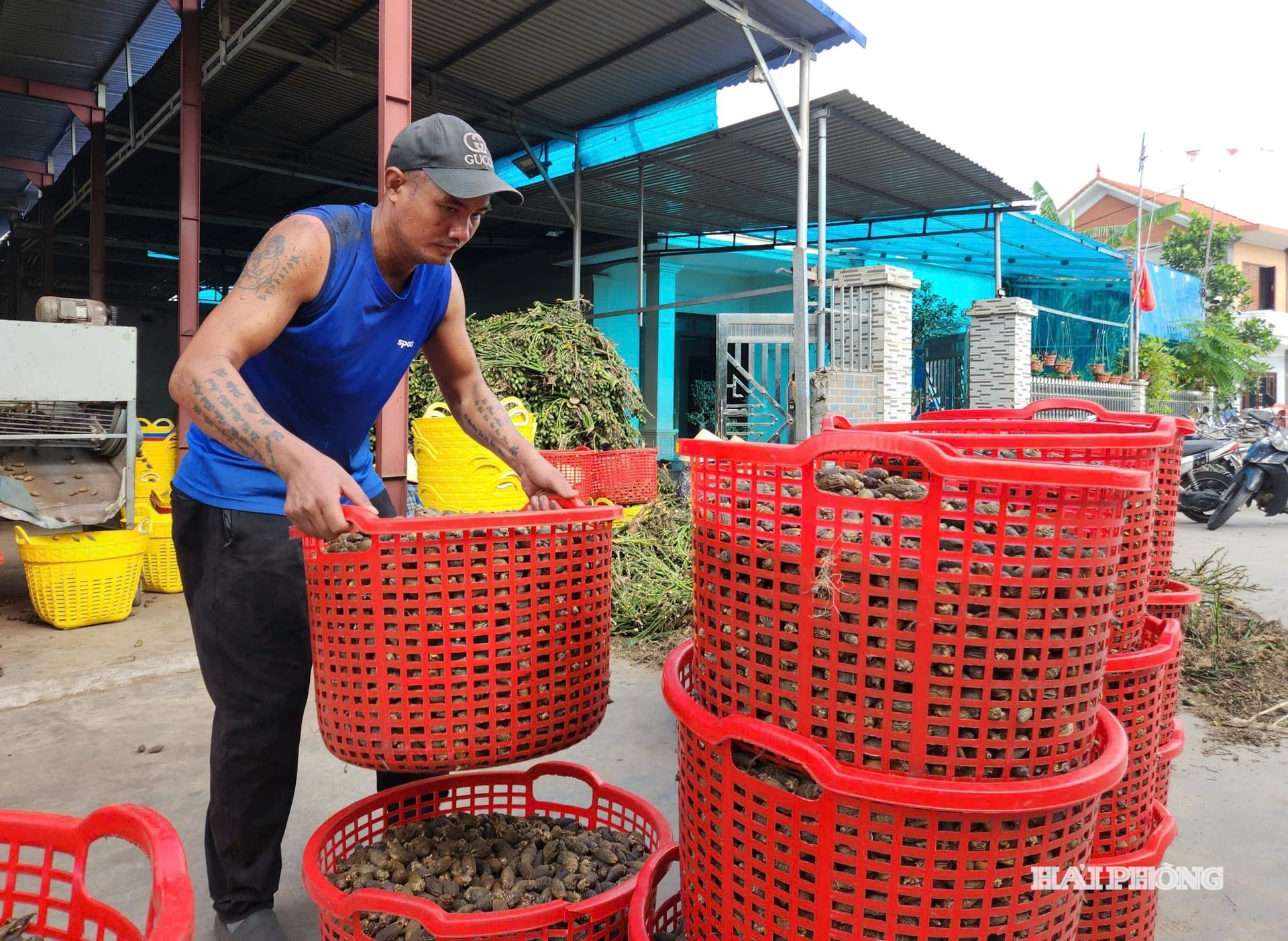
Although betel nut cultivation and processing provides the local people with a livelihood, they are still burdened with worries because the market for betel nuts remains unstable and heavily dependent on the Chinese market.
Mr. Pham Van Hung, owner of a large betel nut processing factory in Le Ich Moc ward, is concerned that the betel nut cultivation and processing industry in Cao Nhan is heavily dependent on the Chinese market. When partners stop buying, the entire industry is shaken. Fresh betel nuts can be sold domestically, but the price is too low to cover costs. Dried betel nuts are left unused in cold storage, waiting to be sold to China. Currently, Chinese traders have stopped buying betel nuts, so factories are operating at a reduced capacity. Some factories are buying moderate quantities for processing because the price of fresh betel nuts is currently low.
To break free from this vicious cycle, the people and local authorities are eager for guidance and advice on long-term solutions. First, it is necessary to build a brand for betel nuts associated with geographical indications, expanding the market to Southeast Asian and South Asian countries. Research should be conducted on deep processing and diversification of betel nut products, such as betel nut essential oil, betel nut-derived pharmaceuticals, and betel nut husk handicrafts, so as not to rely solely on the export of dried betel nuts.



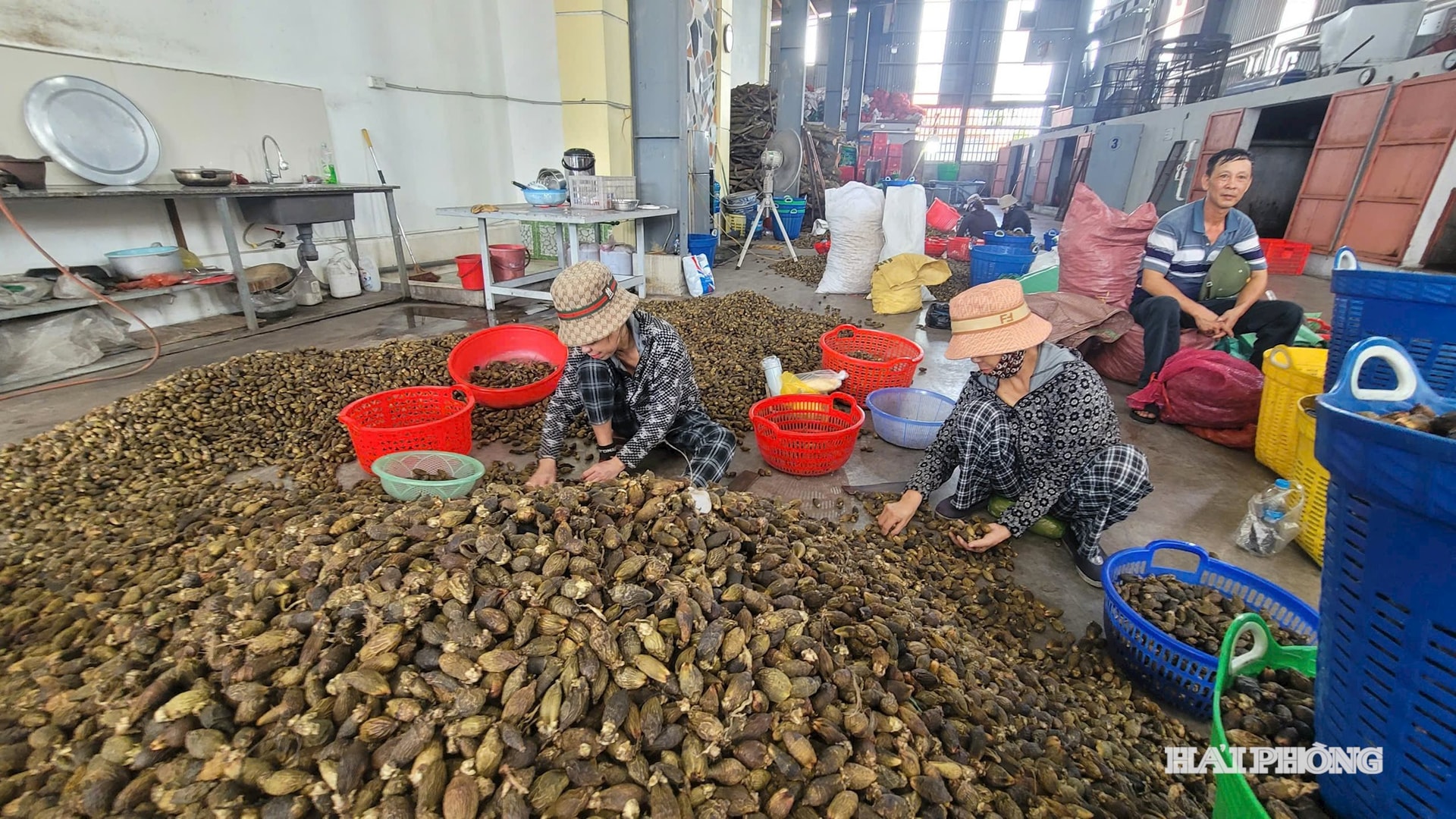
Furthermore, betel nut growing villages need support from specialized agencies in market forecasting and providing timely information so that growers and traders can adjust their production plans. The formation of cooperatives and production groups should be encouraged to link farmers, traders, and businesses, avoiding a situation where everyone acts independently. Support in terms of loans, industrial promotion, and industry development is also necessary.
BAO ANHSource: https://baohaiphong.vn/ve-noi-xuat-khau-qua-hanh-phuc-522467.html





![[Image] National conference summarizing one year of operation of the overall organizational model of the political system, the three-tiered government model.](https://vphoto.vietnam.vn/thumb/1200x675/vietnam/resource/IMAGE/2026/07/01/1782882811691_ndo_br_1-jpg.webp)