

On the afternoon of December 10th, continuing the program of the 10th Session, the National Assembly passed the Law on Public Employees (amended) with a majority of National Assembly deputies voting in favor. The law consists of 6 chapters and 43 articles, and will take effect from July 1st, 2026.
Recruitment and appointment of civil servants are based on job positions.
According to the law, a public employee is a Vietnamese citizen recruited for a specific job position, working at a public service unit under an employment contract, and receiving a salary from the public service unit's salary fund and other legitimate sources of revenue as prescribed by law.
The law transforms the method of managing civil servants based on job positions, using job positions as the main basis for recruitment, placement, evaluation, planning, appointment, training, professional development, and the implementation of policies and regulations for civil servants.
The rights and obligations of public employees in their professional activities outside of public service units are specifically regulated in the law, ensuring strict enforcement.
The State has policies to build and develop a workforce of civil servants with professional ethics, qualifications, and expertise suitable for each sector and field; policies to facilitate the interconnection of human resources between the public and private sectors; and policies on salaries and income for civil servants that ensure fairness, competitiveness, and are linked to job positions and work performance.
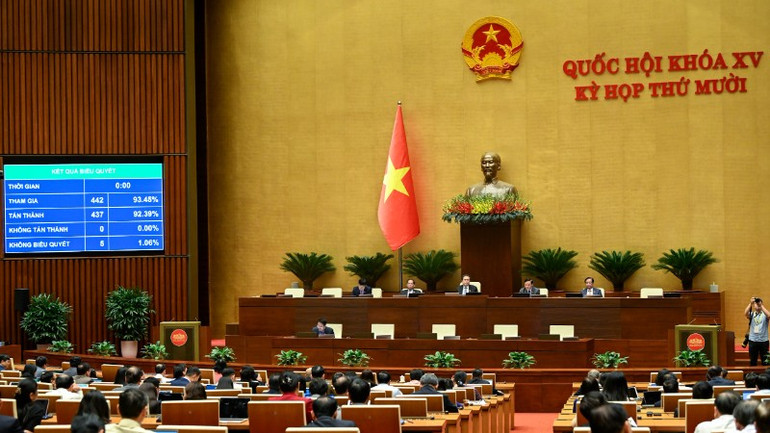
Officials are allowed to invest in and manage businesses.
The law stipulates that civil servants may sign labor contracts or service contracts with other agencies, organizations, or units if the laws governing their respective sectors and fields do not prohibit it, ensuring there is no conflict of interest as stipulated by the law on preventing and combating corruption, not contradicting the agreement in the employment contract, and not violating professional ethics.
If there is no agreement in the employment contract, written consent from the head of the public service unit is required; for the head of the public service unit, written consent from the directly supervising authority is required.
Notably, the Law stipulates that civil servants may practice their profession as individuals if the laws governing their sector or field do not prohibit it, ensuring there is no conflict of interest as stipulated by the law on preventing and combating corruption and not violating professional ethics; they may contribute capital, participate in the management and operation of non-public enterprises, cooperatives, hospitals, educational institutions, and scientific research organizations, except where the law on preventing and combating corruption, the law on enterprises, or the law governing their sector or field provides otherwise.
Public employees working in public service units in the field of science and technology, and public higher education institutions are entitled to exercise the rights stipulated in this Article, as well as other rights as prescribed by the law on science, technology and innovation, the law on enterprises, and other relevant laws.
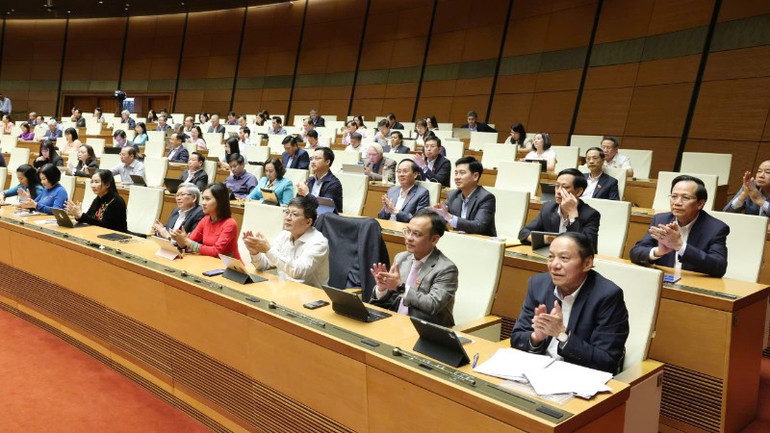
Another new feature of the Law on Public Employees stipulates the principles, authority, and content of evaluating and classifying the quality of public employees based on the results of task performance; attitude towards serving the people and businesses; capacity for innovation, creativity, willingness to think outside the box, take action, and accept responsibility for the common good…
The government will provide guidance on developing a framework of evaluation criteria for civil servants in public service units across various sectors and fields.
Based on the monitoring and evaluation results, civil servants are classified annually according to the following performance levels: Excellent performance; Good performance; Satisfactory performance; Unsatisfactory performance.
The results of periodic or annual quality assessments and rankings serve as the basis for competent authorities to decide on training, professional development, planning, transfer, appointment, and reappointment of civil servants; as well as implementing salary, reward, or termination policies for civil servants who fail to complete their tasks or do not meet job requirements.
Source: https://nhandan.vn/vien-chuc-duoc-gop-von-quan-ly-doanh-nghiep-tu-172026-post929246.html


![[Photo] Explore the US Navy's USS Robert Smalls warship](/_next/image?url=https%3A%2F%2Fvphoto.vietnam.vn%2Fthumb%2F1200x675%2Fvietnam%2Fresource%2FIMAGE%2F2025%2F12%2F10%2F1765341533272_11212121-8303-jpg.webp&w=3840&q=75)
![[Photo] The captivating scenery of the fragrant maple forest in Quang Tri](/_next/image?url=https%3A%2F%2Fvphoto.vietnam.vn%2Fthumb%2F1200x675%2Fvietnam%2Fresource%2FIMAGE%2F2025%2F12%2F10%2F1765353233198_lan09046-jpg.webp&w=3840&q=75)




















![[Video] The craft of making Dong Ho folk paintings has been inscribed by UNESCO on the List of Crafts in Need of Urgent Safeguarding.](https://vphoto.vietnam.vn/thumb/402x226/vietnam/resource/IMAGE/2025/12/10/1765350246533_tranh-dong-ho-734-jpg.webp)








































































Comment (0)