

 |
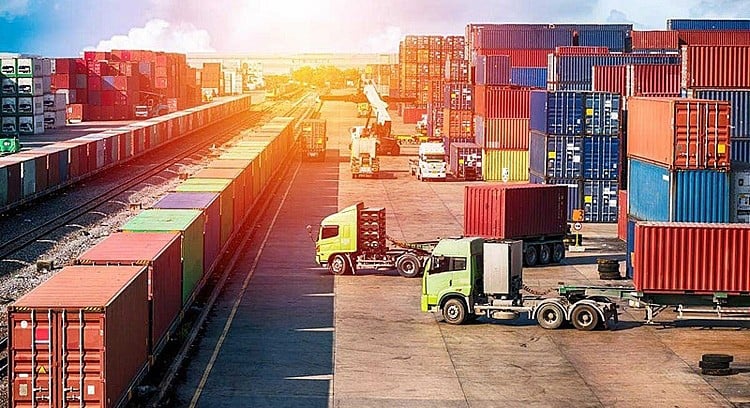
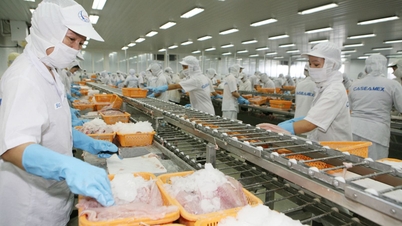
| Vietnam is increasingly asserting its important position in the global supply chain. (Source: VnEconomy) |
Seize the opportunity for transformation.
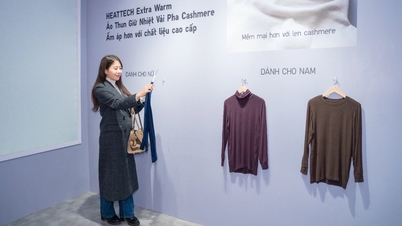
A few days ago, Mr. Noriaki Koyama, Vice President of Fast Retailing, a leading Japanese retail group, visited Vietnam. During a meeting with Deputy Prime Minister Tran Luu Quang, Mr. Koyama stated that since starting its business in Vietnam in December 2019, Fast Retailing has been committed to expanding its nationwide retail network, increasing domestic production, and developing human resources in Vietnam.
After nearly four years, Fast Retailing has consistently strived to fulfill that commitment. Currently, Fast Retailing has opened and operates 18 UNIQLO stores in the Vietnamese market. More importantly, according to Mr. Noriaki Koyama, UNIQLO has become a purchasing partner for 45 garment factories in Vietnam to supply the Vietnamese and global markets. “Vietnam has become the Group’s second largest production base,” Mr. Noriaki Koyama stated.
Thus, Vietnam is gradually becoming more deeply involved in UNIQLO's global supply chain. And this is not only happening in the textile and garment sector – which has long been a strength of Vietnam – but also in many other sectors, especially electronics and mobile phones.
Samsung and LG have successively invested billions of dollars in Vietnam, transforming it into a global manufacturing hub and an indispensable link in their global supply chains. At the end of June 2023, LG increased its investment by an additional $1 billion in the LG Innotek factory, which specializes in manufacturing electronic components for the automotive, mobile, and phone camera module industries.
Meanwhile, after investing billions of dollars in factories in Bac Ninh and Bac Giang provinces to shift production to Vietnam, Foxconn has received investment registration certificates to establish two factories specializing in the production of electronic components, chargers, and electric vehicle charging controllers in Quang Ninh province. The total investment for the two projects amounts to nearly $250 million, bringing Foxconn's total investment in the province to $300 million.
Besides Quang Ninh, Foxconn is planning to invest in a large-scale project in Thanh Hoa. Meanwhile, Compal and Quanta Computer (Taiwan) have received investment certificates for projects worth hundreds of millions of dollars to manufacture electronic devices, including products for Apple, in Vietnam, aiming to diversify their supply chains outside of China.
Runergy, a prominent Chinese company, has also recently invested in a factory in Nghe An province, through a subsidiary in Thailand, to produce silicon wafers and semiconductor wafers. The project has a total investment of up to $293 million. Minister of Planning and Investment Nguyen Chi Dung personally presented the investment certificate to Runergy during his recent visit accompanying Prime Minister Pham Minh Chinh to China.
Semiconductor components are an attractive investment sector, and an increasing number of foreign investors are shifting their focus to Vietnam. Samsung is a prime example. By the end of this year, Amkor, a major player in the semiconductor industry, will officially begin operations at its multi-billion dollar factory in Bac Ninh.
"Vietnam is becoming a crucial link in the supply chain as investors decide to pivot and shift production to other countries amid increasing geopolitical competition," the Financial Times recently stated in an article.
Becoming a hub in the global production chain.
“Vietnam is producing more than 50% of Samsung’s global phone output,” shared Choi Joo Ho, General Director of Samsung Vietnam. This information isn’t entirely new, but in the current challenging market environment, where many foreign investors are scaling back production, it’s a significant affirmation, demonstrating that Vietnam has become and continues to be a center of the global production chain, albeit in certain sectors.
Although foreign investment is slowing down, both domestic and international economic experts believe that Vietnam will benefit as multinational companies diversify their production and supply chains due to concerns about geopolitical tensions and supply chain disruptions.
In a recently published report, Savills Vietnam stated that, after three years of disruption caused by the pandemic, global supply chains are showing positive changes and gradually returning to a stable state. In this context, the Asia-Pacific region, with China remaining the "world's factory," continues to be a positive development.
However, according to Jack Harkness, Director of Logistics and Industrial Real Estate Services at Savills Asia Pacific, cost remains a strong driver in investment location decisions. Rising labor costs in China may not necessarily cause companies already based there to withdraw, but it could slow down the establishment of new facilities.
Many companies based in China are looking to expand, rather than replace, existing factories. For example, Apple has announced plans to diversify away from China. Siemens has also indicated it is considering other locations in Southeast Asia,” said Jack Harkness, adding that this presents an opportunity for Vietnam, as many companies are beginning to look for alternative manufacturing hubs in the Asian region.
“Vietnam is attracting a large number of foreign investors,” said John Campbell, Deputy Director of Industrial Real Estate Services at Savills Vietnam. According to him, the North, as in previous years, is seeing high demand in the electronics industry. In the South, demand is diverse, ranging from logistics, fast-moving consumer goods, pharmaceuticals, food, and beverages.
The fact that large-scale projects have been granted investment registration certificates since the beginning of the year demonstrates this. Although the trend is still downward, which, according to John Campbell, is due to "a lot of stagnation in signing new lease agreements," "many foreign companies have been considering Vietnam this year and they are still looking to enter the market."
John Campbell expects that by the end of the year, the Vietnamese economy will experience a spectacular turnaround, and that will bring more promising signs for manufacturers, investors, and logistics companies.
Perhaps it's no coincidence that investors have recently poured so much capital into the industrial real estate sector. VSIP will invest further in Nghe An, Can Tho, etc. Sumitomo is expanding Thang Long II Industrial Park (phase III) and plans to continue investing in phase IV expansion. Meanwhile, Deputy Prime Minister Le Minh Khai recently approved the investment policy for the construction and operation of infrastructure in Long Duc 3 Industrial Park (Dong Nai)...
All of this is aimed at anticipating the shift in investment flows as Vietnam becomes a hub of global production and supply chains.
Source





















![[Image] Close-up of the newly discovered "sacred road" at My Son Sanctuary](/_next/image?url=https%3A%2F%2Fvphoto.vietnam.vn%2Fthumb%2F1200x675%2Fvietnam%2Fresource%2FIMAGE%2F2025%2F12%2F13%2F1765587881240_ndo_br_ms5-jpg.webp&w=3840&q=75)




















































Comment (0)