

A newly released report by Savills indicates that Vietnam's industrial real estate market is witnessing strong growth.
The exchange rate between the VND and USD remains stable compared to other countries in the region, and corporate income tax (CIT) incentives are giving Vietnam an advantage over competitors such as Malaysia and Indonesia. The Vietnamese government is continuously introducing new CIT incentive policies to maintain this advantage.
Vietnam is located in a favorable position for manufacturing development activities.
According to the General Statistics Office, in 2023, Vietnam recorded an impressive GDP growth rate of approximately 5.1%, higher than the 2.87% and 2.55% growth rates of 2020 and 2021, ranking second highest in the region, equivalent to Indonesia, and only behind the Philippines.
According to data from the Asian Development Bank in 2024, Vietnam's workforce has an average age of over 32, indicating potential for future growth.
At the same time, the wages received by manufacturing workers in Vietnam are lower than in most other countries in Southeast Asia, except for Indonesia. This is advantageous for Vietnam in attracting foreign investors, especially those businesses seeking low production costs to maximize profits.
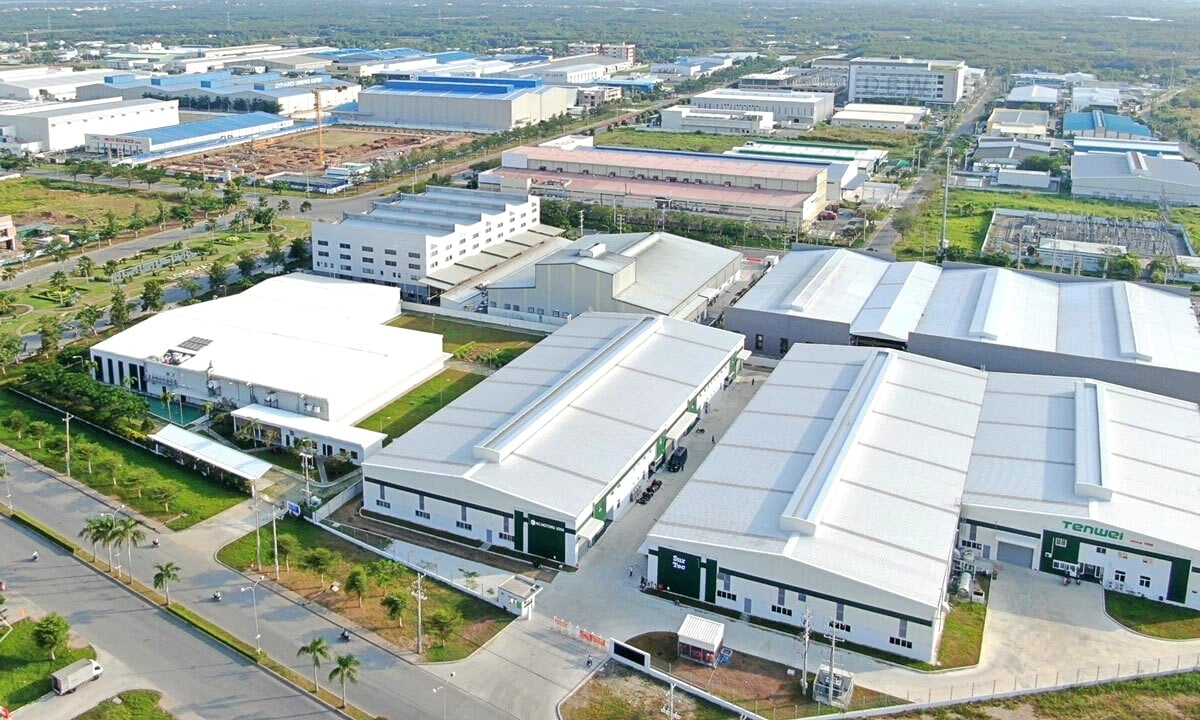
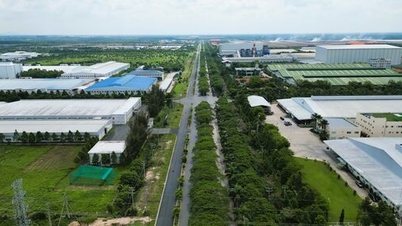
Vietnam possesses many advantages that attract investment in industrial real estate.
Nevertheless, Savills believes that Vietnam has shifted its focus from low value-added industries to attracting high value-added manufacturing industries, thereby consolidating its position as an emerging market in the region.
Vietnam is consistently demonstrating its competitiveness by shifting its economic orientation from an agricultural economy to one focused on exports, particularly in the electronics and processing sectors.
Free trade agreements (FTAs) play a crucial role in attracting foreign direct investment (FDI) to Vietnam.
Since joining the World Trade Organization (WTO) in 1995, Vietnam has signed and implemented a series of trade agreements, among which the Vietnam-EU Free Trade Agreement (EVFTA) in 2019 has created a boom in foreign investment.
According to a report from the Ministry of Planning and Investment, the total registered foreign direct investment (FDI) in Vietnam in recent years shows that the manufacturing and processing sector accounts for more than 70% of the total FDI, reflecting investors' preference for this sector.
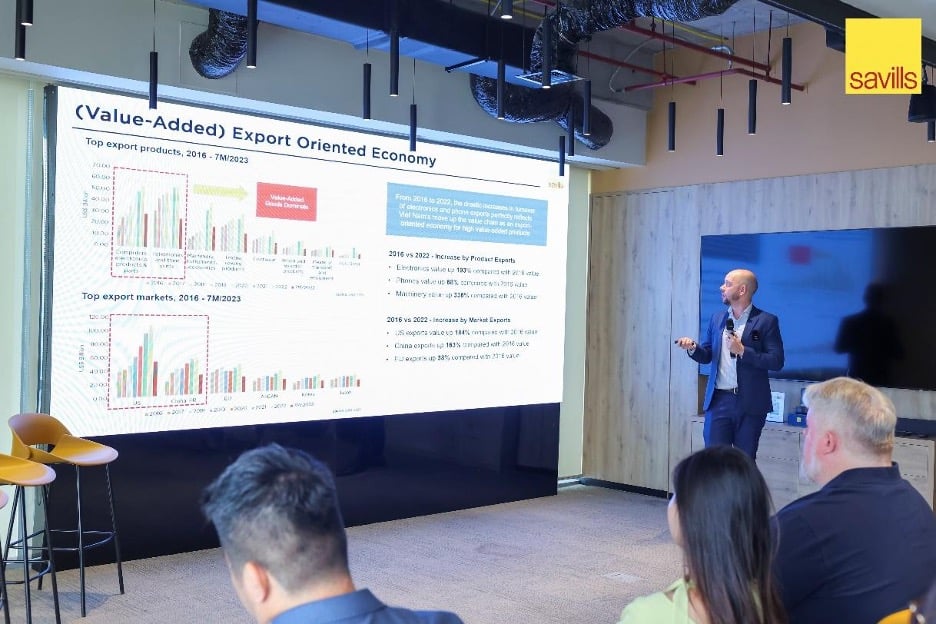
Mr. Thomas Rooney - Senior Manager, Industrial Real Estate Department, Savills Hanoi, shared his insights at the event "Industrial Development Landscape in Hanoi and Northern Vietnam".
Mr. Thomas Rooney - Senior Manager, Industrial Real Estate Department, Savills Hanoi, assessed: "The concentration of FDI in the manufacturing and processing sector not only brings direct economic benefits but also creates a spillover effect, promoting the development of supporting industries and related services."
The expert stated that major technology corporations such as Samsung, LG, Intel, and Foxconn have played a crucial role in making Vietnam a regional electronics manufacturing hub.
Recently, Foxconn's total investment in Vietnam has increased to $1.5 billion with a factory project in Bac Giang province serving the assembly and manufacturing of mobile phone components. This also reflects the trend of investing in high value-added industries in the northern region, while Vietnam is strategically located for manufacturing development.
"Vietnam's geographical location in the heart of the Asia-Pacific region makes it an ideal destination for import and export activities."
"The shift of manufacturing from China to Vietnam is also increasing significantly, not only from Chinese businesses but also from American and European businesses that have long been present in China and are looking to diversify or withdraw completely from China," Thomas Rooney analyzed.
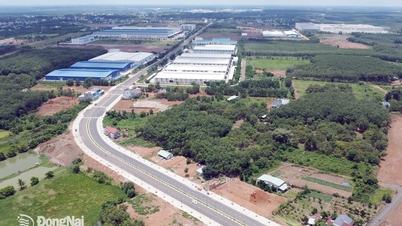
Northern Vietnam is a bright spot in the industrial real estate market.
In the northern region, key provinces such as Bac Ninh, Hai Phong, and Thai Nguyen are becoming leading destinations for FDI projects in the manufacturing sector.
Bac Ninh, with its proximity to Hanoi and developed infrastructure, has attracted many large-scale projects from multinational corporations.
In the South, Binh Duong has also emerged as an important industrial center, with the participation of many FDI enterprises in the manufacturing and processing sectors.
However, the North still surpasses other regions in terms of the number and scale of new projects thanks to advantages in cost and improved transportation infrastructure.
Industrial land prices in the North are a major advantage, averaging around $138/m2, which is 20% lower than in the South.
Specifically, in the South, to rent strategic locations in first-tier areas, such as Binh Duong or Ho Chi Minh City, land prices can reach up to 300 USD/m2.
Meanwhile, the market in the North has an average price of only $180/m2 for first-tier areas like Bac Ninh.
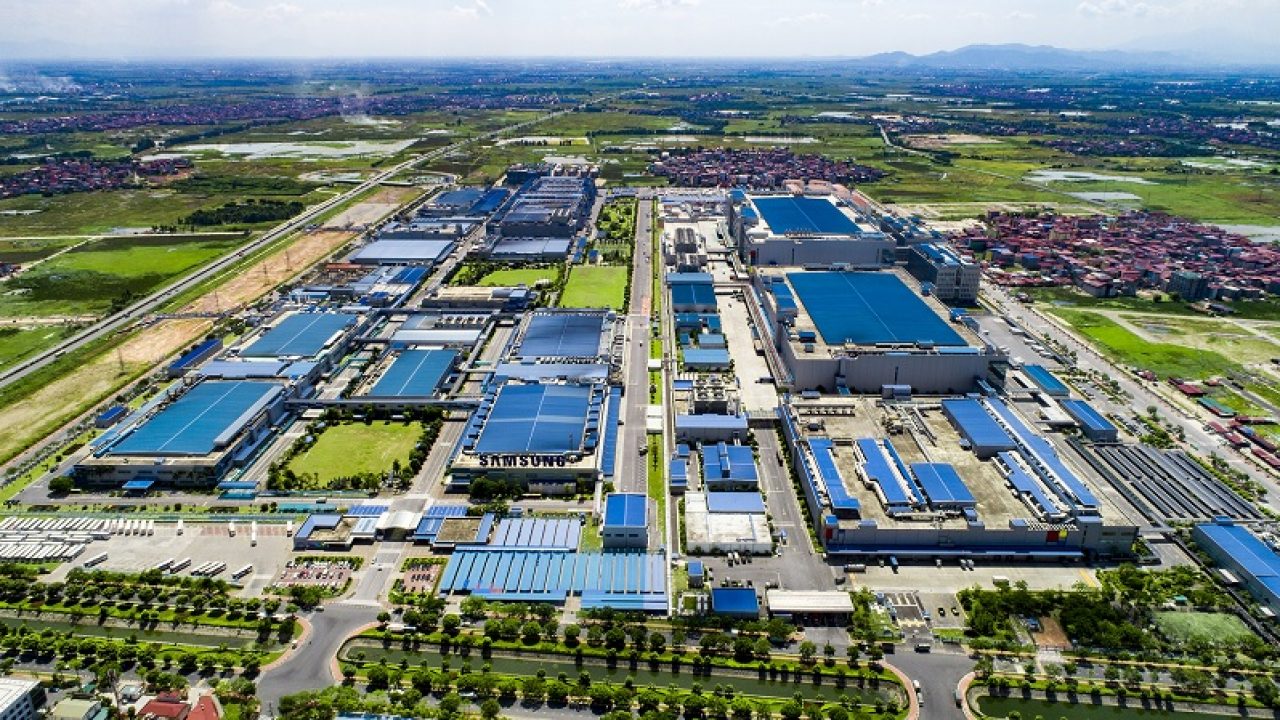
The North is a bright spot in the industrial real estate market.
Infrastructure in the North is considered to be well-developed, with 10 completed expressways and 4 others under construction. Meanwhile, the South has approximately 7 expressways.
At the recent "Industrial Development Context of Hanoi and Northern Vietnam" event in Hanoi, Ms. Pham Thi Thu Trang - Senior Manager, Industrial Business Development Department at Core5 – Indochina Kajima, shared that in Vietnam, road transport remains the primary mode of transportation, therefore, the ability to move conveniently from production areas to consumer markets helps businesses optimize logistics costs.
In particular, the expressways connecting industrial zones with Hanoi and the Chinese border further enhance the attractiveness of the North to foreign investors.
Compared to the South, the North has more economic zones according to government planning, most notably the new coastal economic zone in Hai Phong with a scale of over 20,000 hectares.
The North also attracts investment due to its competitive labor force, with the average salary in the South currently the highest in the country, recorded at 9.3 million VND.

Ms. Pham Thi Thu Trang - Senior Manager, Industrial Business Development Department at Core5 - Indochina Kajima.
Although Vietnam's industrial real estate market has great potential, one of the main challenges remains the shortage of skilled labor.
Mr. Thomas stated that this is particularly important as Vietnam aims to increase added value in its manufacturing sectors.
"Although the workforce is abundant, especially in the North, the majority are still low-skilled. To address this issue, reforms in education and training aimed at improving the workforce's skills are necessary," the expert stated.
In addition, Mr. Thomas emphasized that infrastructure development is also a crucial factor in enhancing Vietnam's competitiveness.
Currently, infrastructure projects are mainly concentrated in a few areas, but there is a need for nationwide expansion and synchronized development.
In particular, improving the transportation network connecting industrial zones and consumer markets will help optimize logistics costs, creating favorable conditions for businesses.
Strong infrastructure will not only support the movement and transportation of goods but also enhance Vietnam's ability to attract foreign investment.
Source: https://www.nguoiduatin.vn/savills-viet-nam-nam-giu-nhieu-loi-the-thu-hut-dau-tu-vao-bds-cong-nghiep-204240827171046065.htm




















![[Photo] Prime Minister Pham Minh Chinh holds a phone call with the CEO of Russia's Rosatom Corporation.](/_next/image?url=https%3A%2F%2Fvphoto.vietnam.vn%2Fthumb%2F1200x675%2Fvietnam%2Fresource%2FIMAGE%2F2025%2F12%2F11%2F1765464552365_dsc-5295-jpg.webp&w=3840&q=75)















































Comment (0)