

The future of the Internet in Vietnam promises many breakthroughs as technology is changing rapidly and the demand for digital transformation is growing stronger.
On the morning of November 27, the Internet Day 2024 Conference and Exhibition took place in Hanoi with the theme "New step forward for Vietnam Internet (Breakthrough with DC, Cloud, 5G & AI)". This is an annual event organized by the Vietnam Internet Association (VIA) in coordination with the Vietnam Internet Center (VNNIC, Ministry of Information and Communications ), with the sponsorship of the Ministry of Information and Communications.
According to Mr. Vu Hoang Lien, Chairman of the Vietnam Internet Association, in 2008, Vietnam reached 20 million Internet users, accounting for approximately 24% of the population. By 2014, more than 40% of Vietnam's population used the Internet.
The number of Internet users in Vietnam is forecast to continue to increase during the period 2024-2029. It is estimated that Vietnam will have more than 100 million Internet users by 2029.
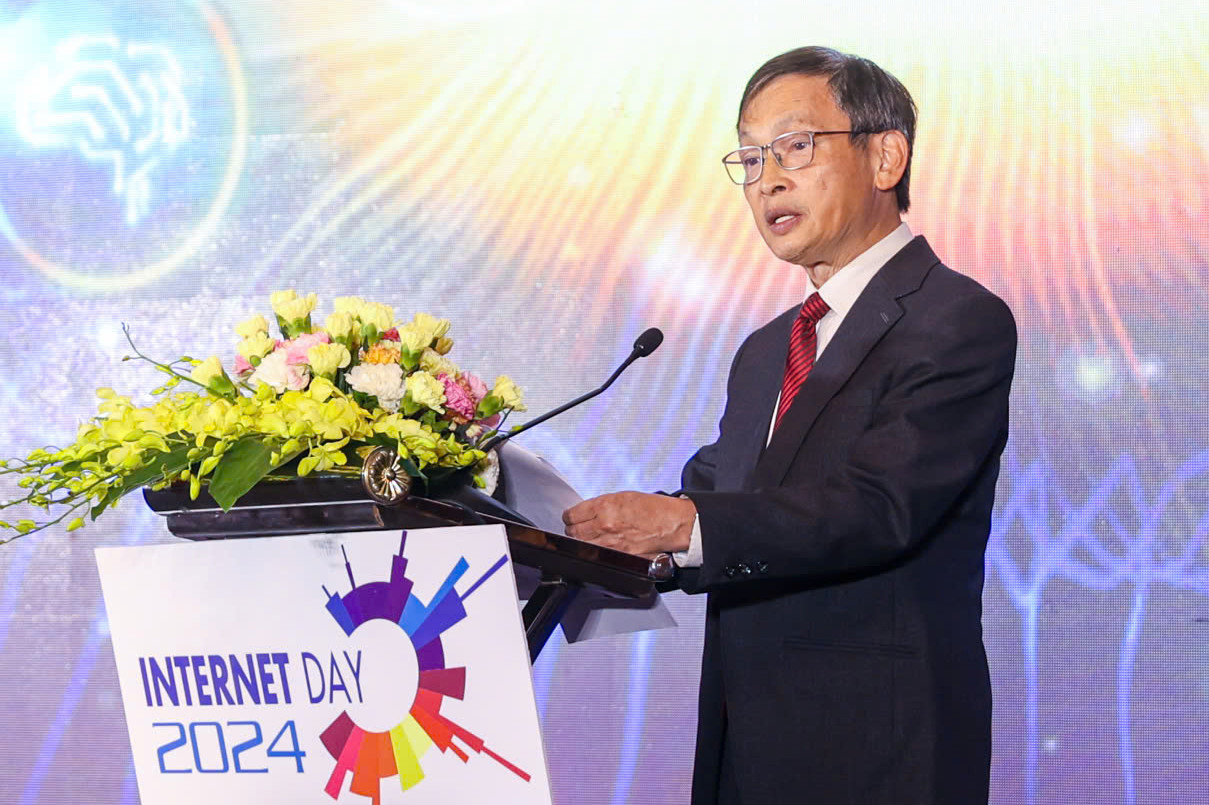
The Chairman of the Vietnam Internet Association stated that each stage of development marks a change not only in technology but also in the culture of Internet usage in Vietnam. The future of the Internet in Vietnam promises many breakthroughs as technology is changing rapidly and the need for digital transformation is increasingly strong.
“ The opportunities for Vietnamese digital technology enterprises are huge. The question is how Vietnamese digital technology enterprises can meet the consumption needs of the market with the number of Internet users estimated to reach more than 100 million by 2029 ,” the Chairman of the Vietnam Internet Association asked.
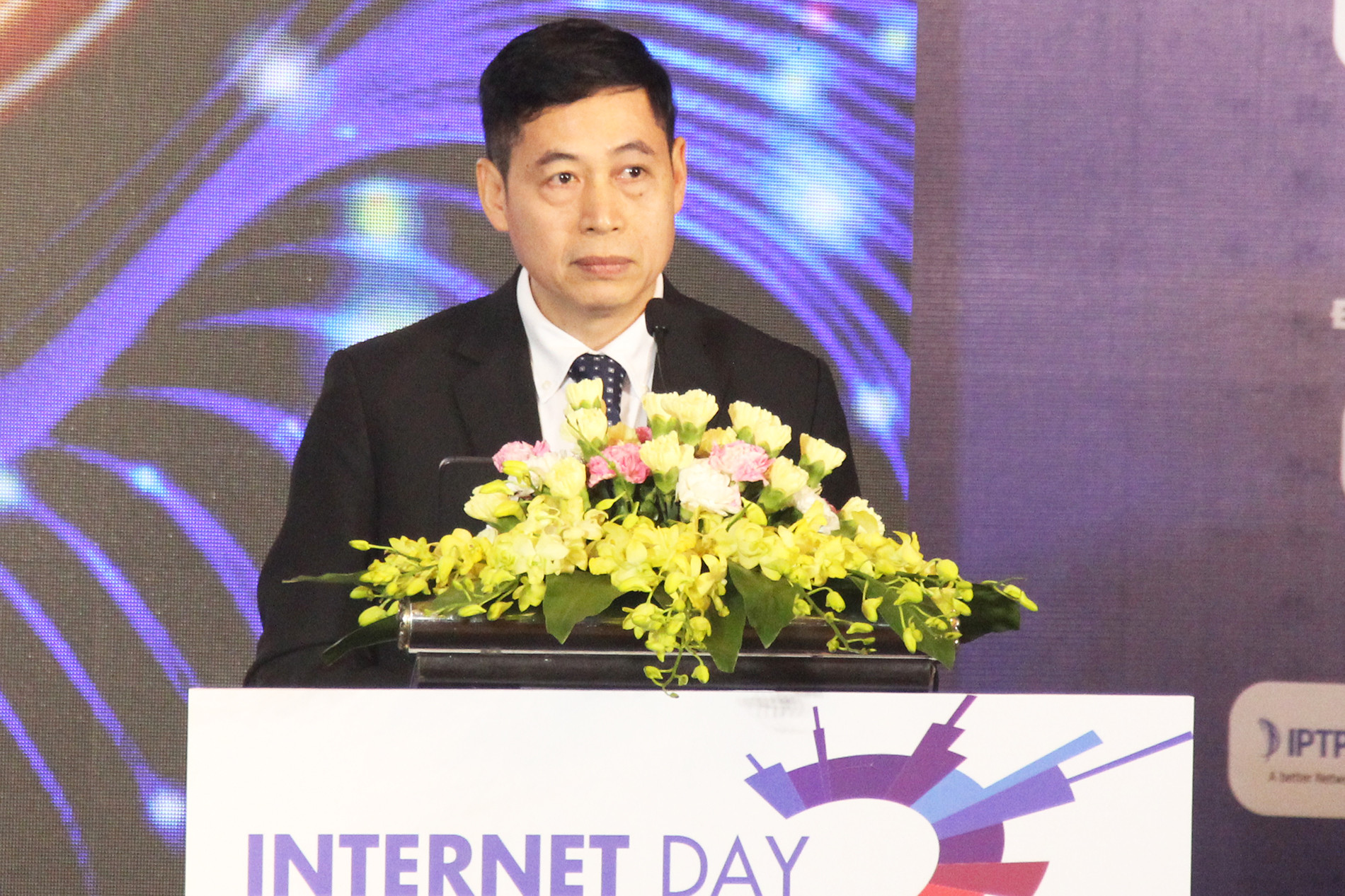
Speaking at Internet Day 2024, Mr. Nguyen Thanh Phuc, Director of the Telecommunications Department (Ministry of Information and Communications), stated that digital infrastructure has become a strategic infrastructure for socio -economic development. Digital infrastructure is as important as transportation and electricity infrastructure and needs to be invested in first, with the potential for future expansion.
Digital infrastructure provides a solid foundation for economic growth and social progress, opening up new opportunities and development spaces for technology and telecommunications businesses.
This transformation is strongly promoted by advanced digital technologies such as data centers, cloud computing, 5G and AI. This not only contributes to innovation in Vietnam, solving Vietnamese problems, but also contributes to Vietnam's breakthrough development in the digital age.
Recognizing this, the Ministry of Information and Communications has issued the Digital Infrastructure Development Framework, establishing a clear framework for businesses to identify new development spaces. The Digital Infrastructure Development Framework includes four main components: telecommunications and Internet infrastructure, data infrastructure, digital physical infrastructure, and digital utility and technology infrastructure.

Vietnam's digital infrastructure strategy has identified several major directions, including: extending fiber optic access to households, achieving widespread 5G coverage, and ensuring global communication and data exchange.
Elaborating further, the Director of the Telecommunications Department stated that high-speed internet plays a crucial role in the connected world. The Ministry of Information and Communications encourages investment in expanding fiber optic networks and ensuring internet access for all Vietnamese households.
2024 marks an important milestone in 5G deployment in Vietnam with the successful auction of B1 (2,500 - 2,600 MHz), C2 (3,700 - 3,800 MHz) and C3 (3,800 - 3,900 MHz) bands to network operators.
“ Viettel, VNPT and MobiFone have quickly commercialized and officially provided 5G services. Some businesses have planned to increase the number of their 5G stations by 2025 to 50% of the number of 4G stations ,” shared the Director of the Telecommunications Department.
To ensure global communication and data exchange, Vietnam will put at least two new submarine fiber optic cables into operation in 2025. Vietnam also plans to add at least eight more submarine fiber optic cables by 2030, increasing the total designed capacity to meet the minimum "1+2" redundancy requirement.
This ensures the sustainability and security of international telecommunications infrastructure, guarantees uninterrupted connectivity, and enhances international bandwidth capacity.
The Director of the Telecommunications Department also outlined some strategic directions of the Ministry of Information and Communications. Accordingly, Vietnam encourages technology companies to invest in building large-scale data centers, forming data centers for artificial intelligence (AI Data Center).
The Ministry of Information and Communications also encourages the development of platforms that provide digital technology such as IoT, AI, big data, blockchain, and cybersecurity as services. These platforms will act as essential soft infrastructure, facilitating businesses and people to exploit technology and minimizing initial investment costs.
The Ministry of Information and Communications aims for an average of four IoT connections per Vietnamese citizen by 2030, representing a significant step forward in connecting devices, collecting data, and deploying smart automation across various sectors.

Source: https://vietnamnet.vn/viet-nam-se-som-can-moc-100-trieu-nguoi-dung-internet-2346071.html



































![[Video] The craft of making Dong Ho folk paintings has been inscribed by UNESCO on the List of Crafts in Need of Urgent Safeguarding.](https://vphoto.vietnam.vn/thumb/402x226/vietnam/resource/IMAGE/2025/12/10/1765350246533_tranh-dong-ho-734-jpg.webp)



























































Comment (0)