

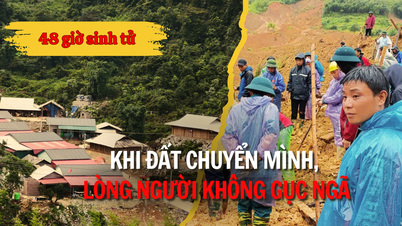
Typhoon Yagi – a historic storm that hit Vietnam in September 2024 – was warned about in advance, but the aftermath exceeded human imagination. The most tragic consequence of Typhoon Yagi was the disaster that occurred in Nu village, Phuc Khanh commune, Bao Yen district, Lao Cai province.
However, transcending that profound suffering was an unprecedented display of solidarity, a symbol of the indomitable will of the Vietnamese people to overcome adversity, as the entire nation turned its attention to Nu village.
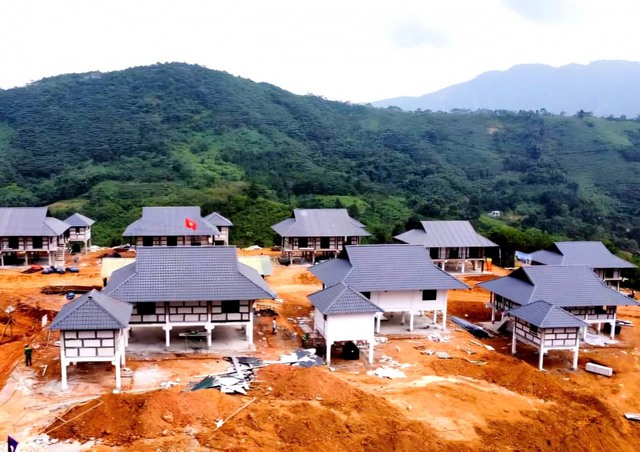
Nu Village "revived" after Typhoon Yagi
Photo: VTV
According to director Vu Thanh Huyen, the film's title, " Mua Ban ," means "Returning to the Village" in the Tay language. The title summarizes the film's content: a journey of the entire nation joining hands to revive Nu village after the Yagi natural disaster. " Mua Ban " is not only a documentary documenting the process of rebuilding Nu village, with filming spanning four months from the tragic event to the emergence of a new village on new land, but it also tells the true story of the pain of an unfortunate man who lost his entire family, three households completely wiped out, and the unending grief of families who have yet to find all the remains of their loved ones.
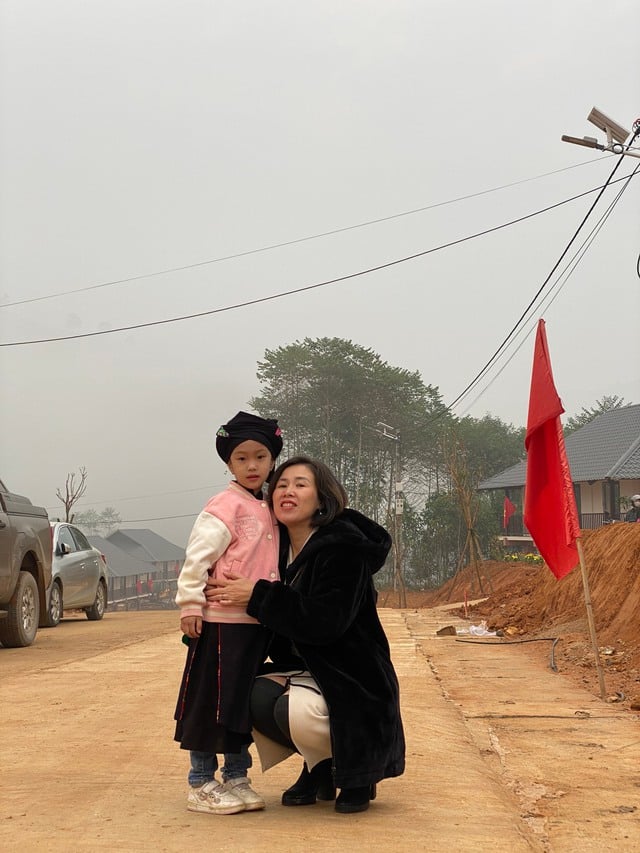
Director Vu Thanh Huyen with a young child in Nu village.
PHOTO: PROVIDED BY THE SUBJECT
The story of the heroes who rebuilt Nu village.
Director Vu Thanh Huyen said she felt both proud and under considerable pressure while making the film. Her initial idea was to create a non-linear film structure with two parallel storylines. One side would tell the story of how the people of Nu village recovered after the disaster, and the other would tell the story of the heroes on the construction site rebuilding the new Nu village for the villagers.
"But more importantly, I considered making a film without narration because, in my opinion, no words can fully describe the pain that the people of Nu village suffered in this tragic natural disaster as well as the characters' own stories," director Vu Thanh Huyen shared.
Filming began in October and concluded when the villagers celebrated their first Lunar New Year in their new village. The journey lasted four months, involving continuous trips back and forth between Hanoi and Lao Cai.
According to director Vu Thanh Huyen, this film was not scripted in advance because the crew couldn't have known what was going to happen before filming. While living with the locals, the film crew gathered information about what the people were preparing to do and listened to their stories.
Through her research, the female director learned that, besides Hoang Van Thoi, who was very popular online at the time because the news of his loss of his entire family—wife and children—had evoked great sympathy from people nationwide, she discovered upon arriving at the scene that Thoi was not the only man who had lost his wife and children. Seven other men from Nu village had also lost their wives and children in the disaster. Even Thoi's older brother, Hoang Van Thao, had lost his wife and two children because they had gone to escape the storm with Thoi's wife and children, as well as his younger sister.
In this storyline, the female director was most impressed with the two characters Hoang Van Voi and Nguyen Van Vinh. While Voi represents a character who endures much pain and loss, Vinh's will to overcome adversity evokes strong emotions in Ms. Huyen, due to his remorse and regret for the things he left unfinished for his loved ones.
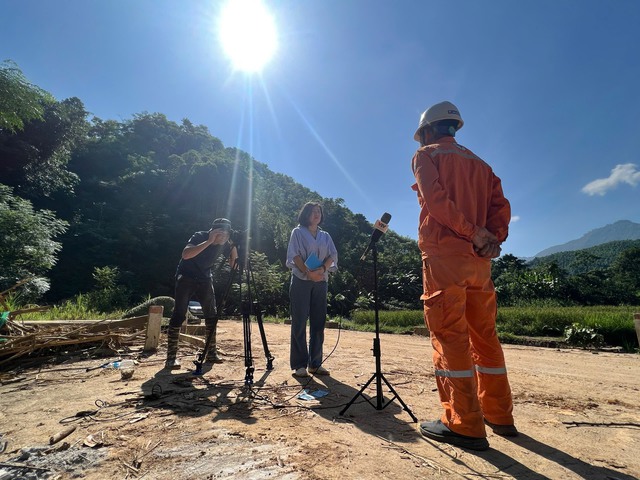
The film crew during the making of Mứa Bản
PHOTO: PROVIDED BY THE SUBJECT
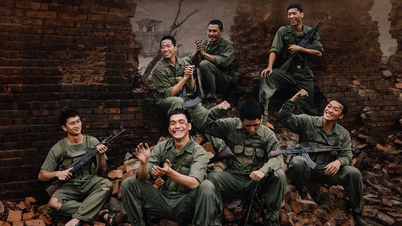
The film doesn't have any special effects scenes because the main focus is on the dramatic sequences that required a great deal of effort from the film crew, and the spectacular timelapse and flycam shots to convey the heroism and fervent spirit of the soldiers of the 12th Army Corps working on the construction site to meet the deadline for handing over houses to the people before the Lunar New Year of 2025.
Furthermore, in the film "Mứa Bản ," alongside two parallel narrative threads—one depicting the daily life of the people of Nủ village and the other portraying the bustling construction activity on the reconstruction site—there are also scenes cleverly interwoven with other content such as architecture, construction techniques, or expert perspectives on the geology of Nủ village, creating an engaging and captivating experience that keeps viewers glued to the screen.
Source: https://thanhnien.vn/vtv-dac-biet-mua-ban-khuc-trang-ca-cua-su-hoi-sinh-lang-nu-185250306153847565.htm




















































































Comment (0)