

According to the China Passenger Car Association (CPCA), China's automobile exports in 2023 increased by 62% to a record 3.83 million vehicles. Meanwhile, Japanese customs data shows that passenger car exports reached 3.5 million units in the first 11 months of the year, excluding used vehicles.
According to the CPCA report, China's total car exports are estimated to have reached 5.26 million units last year, with a total value of approximately $102 billion, while Japan's exports for the whole year are projected to reach around 4.3 million units.
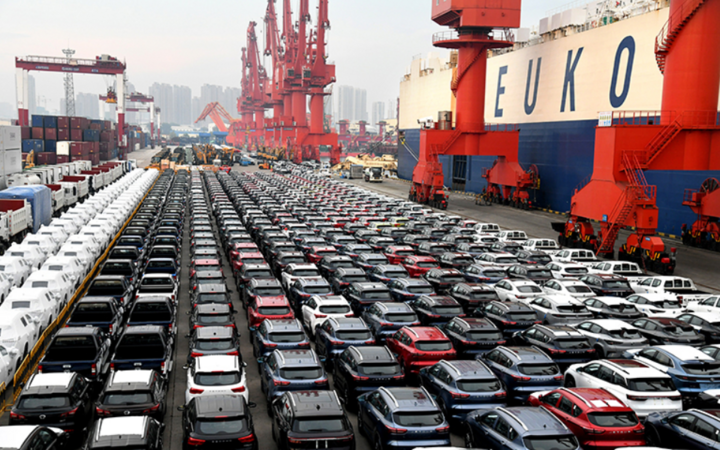
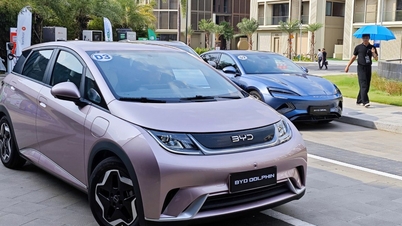
China's automotive industry continues to grow rapidly, surpassing Japan in terms of car exports. (Image: Brandcom)
These figures indicate that China – the world's largest automotive market – will become the leading automotive exporter for the first time in 2023. This achievement is largely due to the potential and acumen of domestic electric vehicle manufacturers.
Chinese electric vehicle manufacturer BYD surpassed Tesla to become the world's top electric vehicle seller in the fourth quarter, although this success was largely driven by domestic sales.
However, China's growing influence abroad has led many governments to worry about the development of their domestic automotive industry.
In September, the European Commission (EC) launched an investigation into Chinese electric vehicles related to government subsidies. The Chinese government accused the EC investigation of being "protectionist."
The administration of US President Joe Biden is reportedly also discussing options to increase tariffs on certain Chinese goods, including electric vehicles.
Tesla has also contributed to the boom in China's electric vehicle exports, with the export of 344,078 domestically produced electric vehicles.
The market is becoming increasingly competitive.
The Chinese domestic automotive market also recorded strong growth in 2023, with sales increasing by 5.3% to 21.93 million units. This also marked the third consecutive year of growth amidst an increasingly fierce price war in China, as automakers strive to attract consumers amid a slowdown in the economic recovery.
Sales of all-electric vehicles in China increased by 20.8% last year, after a 74.2% increase in 2022. Meanwhile, sales of hybrid vehicles (vehicles using a combination of an internal combustion engine and an electric motor) increased by 82.5%, down from a record 160.5% a year earlier.
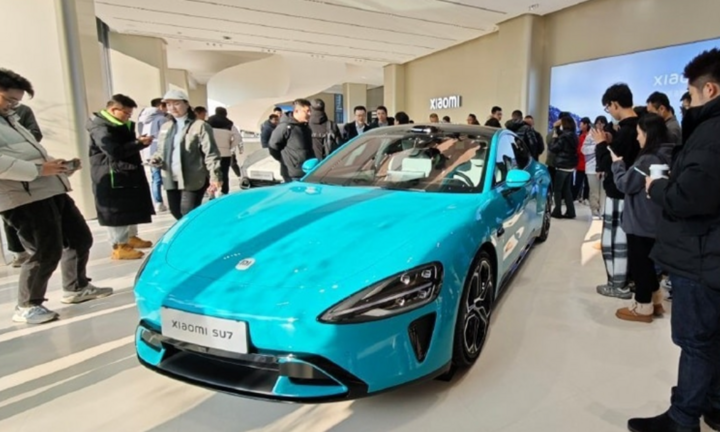
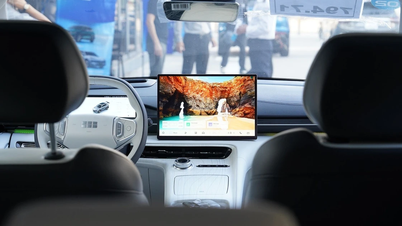
Xiaomi also officially entered the electric vehicle market with the SU7 model, launched at the end of December 2023. (Image: CarNewsChina)
UBS analyst Paul Gong predicts that the market share of domestic brands in total car sales in China is expected to increase from 56% last year to 63% in 2024, mainly due to the increasingly strong recognition of domestic electric vehicle brands and the rapid electrification of the industry.
BYD, a company 7.98% owned by billionaire Warren Buffett's Berkshire Hathaway, has expanded aggressively in Southeast Asia and Europe, although the majority of its delivery vehicles remain in China, where the company boosts sales with generous incentive programs for dealers.
However, Tesla performed better in China, selling more cars per dealership than BYD.
According to data from the first 11 months of 2023, French car brands lost the most market share in China this year, with sales down 41%. Japanese car sales decreased by 10.7%, while American car sales fell by 1.4%. Conversely, German car sales increased by 2.5% and Chinese car sales increased by 15.7%.
The electric vehicle market in China is set to become even more competitive, as the renowned Chinese smartphone manufacturer Xiaomi launched its first electric vehicle last month and declared its goal of becoming one of the world's top five automakers.
Flower Dance (Source: Reuters)
Source
















































































Comment (0)