

Japan’s market share in Southeast Asia is slowing sharply, especially in Thailand and Indonesia, as Chinese manufacturers ramp up local production and attack with competitively priced electric vehicles. The development raises concerns about a knock-on shock to the regional supply chain, where more than 2,700 Japanese parts companies operate.
In Thailand, the combined market share of nine Japanese automakers in the first 10 months of this year reached 69.8%, down 6.6% year-on-year. After maintaining 85-90% in the 2010s, this rate fell to 77.8% in 2023 and faces the risk of falling below 70% for the entire year of 2025. In Indonesia – the region’s largest market – the market share of Japanese cars has fallen below 90% since 2024 and continued to decline to 82.9% in the first 10 months of this year.
| Region/Market | Main indicator | Developments |
|---|---|---|
| Thailand | Market share of 9 Japanese brands (first 10 months of this year) | 69.8% (down 6.6% yoy); 2010s: 85–90%; 2023: 77.8% |
| Indonesia | Japanese car market share | 2024 lost 90% mark; 82.9% in the first 10 months of this year |
| Thailand | Chinese car market share | Over 20% |
| Southeast Asia | Japanese component business | 2,792 companies; nearly half in Thailand |
Pressure from China's electric vehicle wave
Since 2022, Chinese companies such as BYD have been expanding their presence in Thailand and Indonesia, combining deep discounts on electric vehicles with investments in factories for local production. In Thailand, Chinese car market share has exceeded 20%, showing rapid penetration into the mass market. This trend has led to direct competition in price, technology and product launch speed, weakening the dominant position of Japanese cars in the region.
Japanese factories downsize, risks spread to suppliers
Under market pressure, Japanese companies have begun restructuring their capacity in Thailand. Honda will merge two factories into one after 2026. Mitsubishi Motors plans to stop production at one of its three factories in 2027. According to MarkLines, Southeast Asia currently has 2,792 Japanese auto parts companies, nearly half of which are concentrated in Thailand, which serves as a hub for exports to neighboring countries.
A Japanese bank representative said that the decline in assembly plant operating rates would lead to a drop in orders, making it difficult for subcontractors to maintain local production facilities. If the decline persists, the impact could be concentrated on tier 2 and tier 3 links that depend heavily on stable output from assemblers.
New generation Hilux and the message of protecting the supply chain
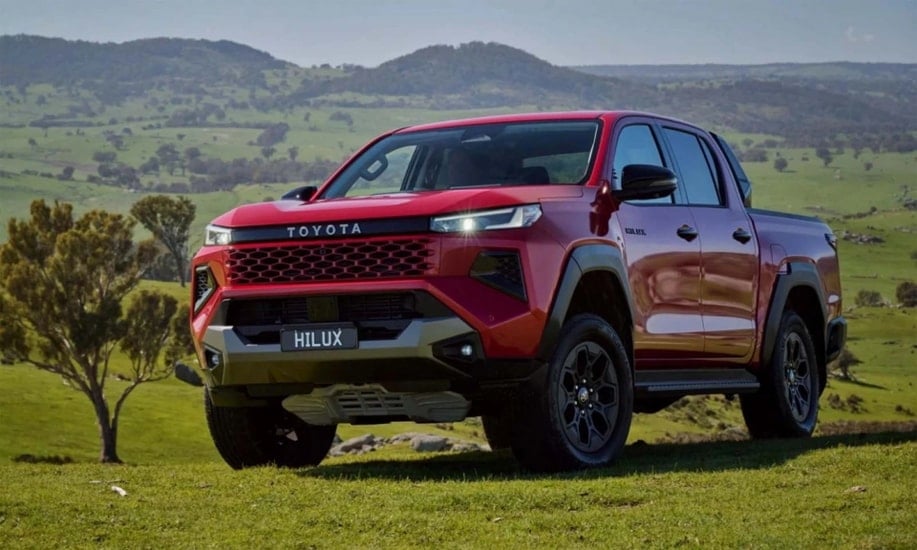
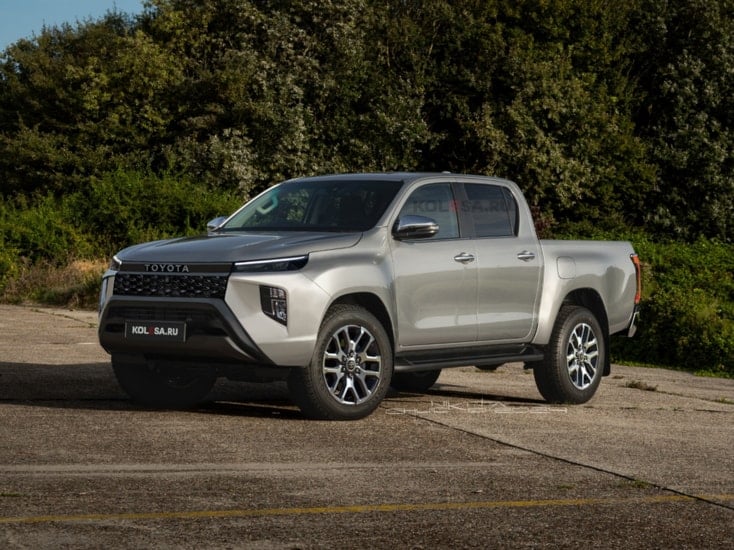
At the Thai International Motor Expo 2025, which opened on November 29 in Bangkok, Toyota unveiled the first new generation Hilux in 10 years, improving fuel economy for the diesel engine and adding a fully electric version, and has started taking orders. In Thailand, where pickup trucks are considered the “national car” and the Hilux is the flagship product, the launch is strategic in the new competitive landscape.
“We want to increase sales to protect the supply chain,” said Toyota Thailand President Noriaki Yamashita, reflecting the priority of stabilizing the supplier network as market share fluctuations have had a broader impact on the capacity of the entire ecosystem.
Response efforts: promoting hybrid vehicles, retaining core customers
Japanese automakers are adding hybrids – a traditional strength – to their portfolios to improve fuel efficiency and maintain appeal to pragmatic buyers. But if the wave of EVs from China continues to expand, price pressure and the pace of new product launches could erode that advantage.
Short-term impacts and monitoring scenarios
- Market share in Thailand and Indonesia is a sensitive gauge of the effectiveness of the Japanese company's stimulus measures over the next 12 months.
- The progress of Honda and Mitsubishi Motors' capacity restructuring in Thailand will directly affect orders from local suppliers.
- The EV penetration level of Chinese companies in Thailand (already over 20%) is the variable that determines the pace of price and technology competition.
In the short term, maintaining stable production – through flagship models such as the Hilux and hybrid variants – is seen as key to cushioning the supply chain. However, if the Chinese car offensive continues, the negative impact on thousands of parts and accessories businesses will be inevitable.
Source: https://baonghean.vn/xe-nhat-mat-thi-phan-o-dong-nam-a-chuoi-cung-ung-chao-dao-10313790.html


![[Photo] Cat Ba - Green island paradise](/_next/image?url=https%3A%2F%2Fvphoto.vietnam.vn%2Fthumb%2F1200x675%2Fvietnam%2Fresource%2FIMAGE%2F2025%2F12%2F04%2F1764821844074_ndo_br_1-dcbthienduongxanh638-jpg.webp&w=3840&q=75)










































![[VIMC 40 days of lightning speed] Da Nang Port: Unity - Lightning speed - Breakthrough to the finish line](https://vphoto.vietnam.vn/thumb/402x226/vietnam/resource/IMAGE/2025/12/04/1764833540882_cdn_4-12-25.jpeg)





































Comment (0)