

Nam Dinh pho, Quang noodles, and Hanoi pho have been included in the list of National Intangible Cultural Heritage by the Ministry of Culture, Sports and Tourism, according to Decisions 2326, 2327, and 2328/QD-BVHTTDL, respectively.
Thus, these dishes are included in the National List of Intangible Cultural Heritage under the category of folk knowledge, fully meeting the criteria: They are representative, reflecting the identity of the community and locality; they reflect cultural diversity and human creativity, passed down through many generations; they have the potential for restoration and long-term survival; and they are nominated and protected with the consensus and voluntary commitment of the community.
Based on expert opinions and news reports, Hanoi beef pho and Nam Dinh beef pho share some similarities and differences as follows:
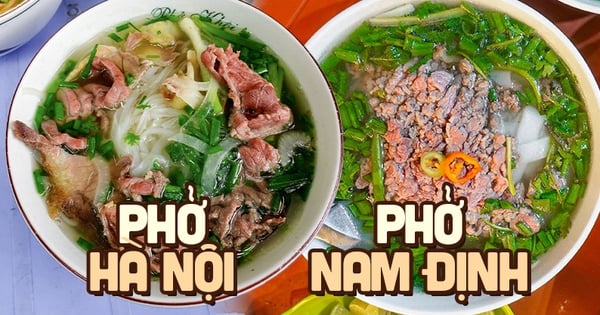
Similarities
- Basic ingredients: Both Hanoi beef pho and Nam Dinh beef pho use basic ingredients such as rice noodles, beef (usually rare, well-done, or brisket), scallions, and various herbs.
- Broth: The broth in both types of pho is made from beef bones, combined with spices such as cinnamon, star anise, cardamom, and roasted shallots and ginger.
- Serving suggestion: Both types of pho are served with vinegar, chili peppers, and garlic pickled in vinegar.
The difference
Regarding the flavor of the broth:
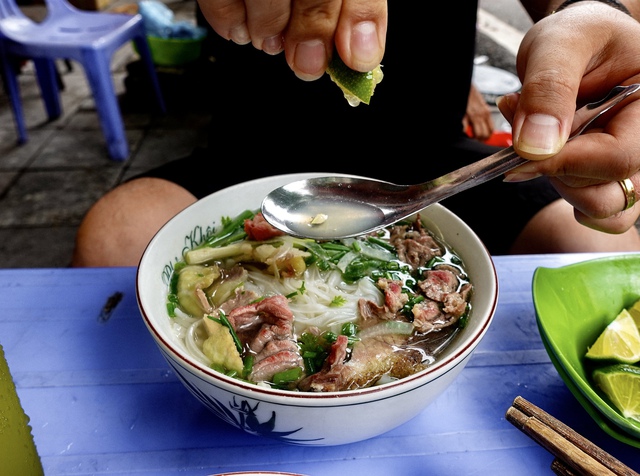
Hanoi Pho
- Hanoi Pho: The characteristic of Hanoi pho is its clear, light broth, seasoned with cinnamon, star anise, cardamom, and ginger depending on the restaurant's recipe. Some places also add sea worms for sweetness. The first batch of broth from boiling the bones is usually discarded to avoid any unpleasant odor. The ends of the leg bones are crushed so that the marrow can easily infuse into the broth during simmering.
Therefore, the broth of Hanoi pho is usually clear, light, and delicate. The sweetness of the broth comes from beef bones, pork bones (some even add bones from old black ducks during the simmering process...) and spices, making it not too strong, easy to eat, and easy to appreciate.
- Nam Dinh Pho: The broth of Nam Dinh pho always contains fish sauce, plenty of ginger, less cinnamon and star anise, a layer of rich fat on top, and a strong flavor. The broth is mainly simmered from beef bones for 15-18 hours.
Therefore, the broth of Nam Dinh pho is usually richer in flavor. The broth has a golden brown color because during the preparation process, a larger quantity of beef bones are used, which are roasted until golden brown, along with the addition of spices such as fish sauce. The flavor is also stronger, suitable for those who like strong-flavored pho.
Regarding the beef and rice noodles:
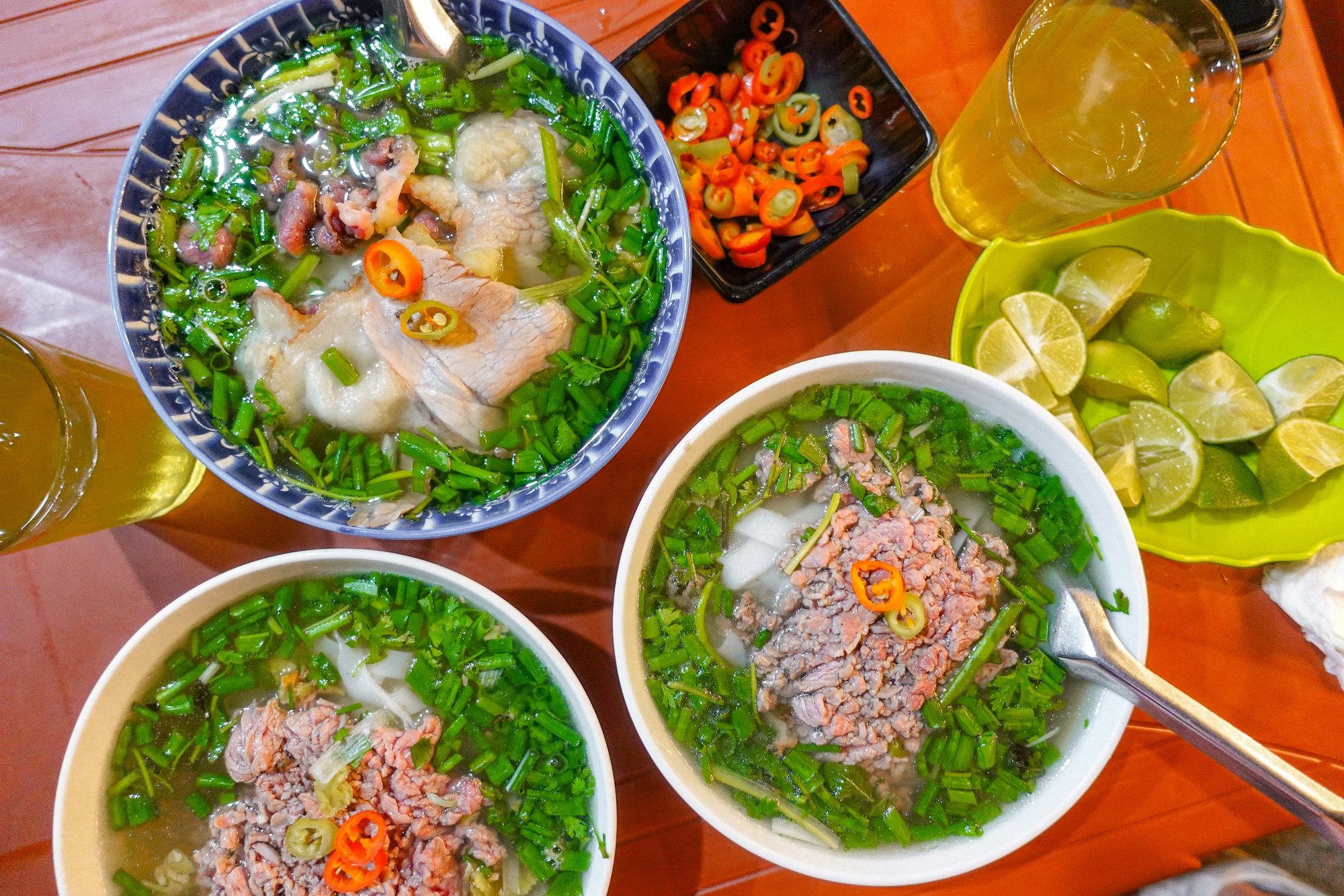
Nam Dinh Pho
- Hanoi Pho: The beef in Hanoi pho can be rare or well-done, usually thinly sliced and moderately tender (rare beef pho). The rice noodles are small, thin, and soft, yet still chewy and don't break apart when hot broth is poured over them.
- Nam Dinh Pho: The beef in Nam Dinh pho is usually cut into smaller pieces, tenderized, spread on a cutting board, arranged on top of the pho noodles, and then poured over with hot broth (also known as "pho tai miet" or "pho tai doi"). Beef brisket or flank may also be added, creating variety in texture and flavor. Fresh beef is thinly sliced, gradually minced until tender without breaking apart, then placed on the noodles and topped with boiling broth to allow the meat to cook slowly.
Regarding herbs and spices:
- Hanoi Pho: There are several characteristic herbs and spices used in pho, such as scallions, cilantro, and mint. However, for authentic Hanoi Pho, the mint used is typically grown in the Lang area, known as Lang mint or Lang basil. This was a suburban area of Hanoi in the past, specializing in growing herbs and spices. The herbs grown there have a unique flavor that cannot be found anywhere else. This also makes Hanoi beef pho different from Nam Dinh beef pho.
- Pho from Nam Dinh is usually served with scallions and cilantro.
Source: https://giadinh.suckhoedoisong.vn/3-khac-biet-dien-hinh-giua-pho-bo-ha-noi-va-pho-bo-nam-dinh-172240815141546395.htm































































































Comment (0)