

What will the Russia-Ukraine conflict look like, and to what extent will Washington support Kyiv if Donald Trump is re-elected? These are questions being asked as the US election approaches.
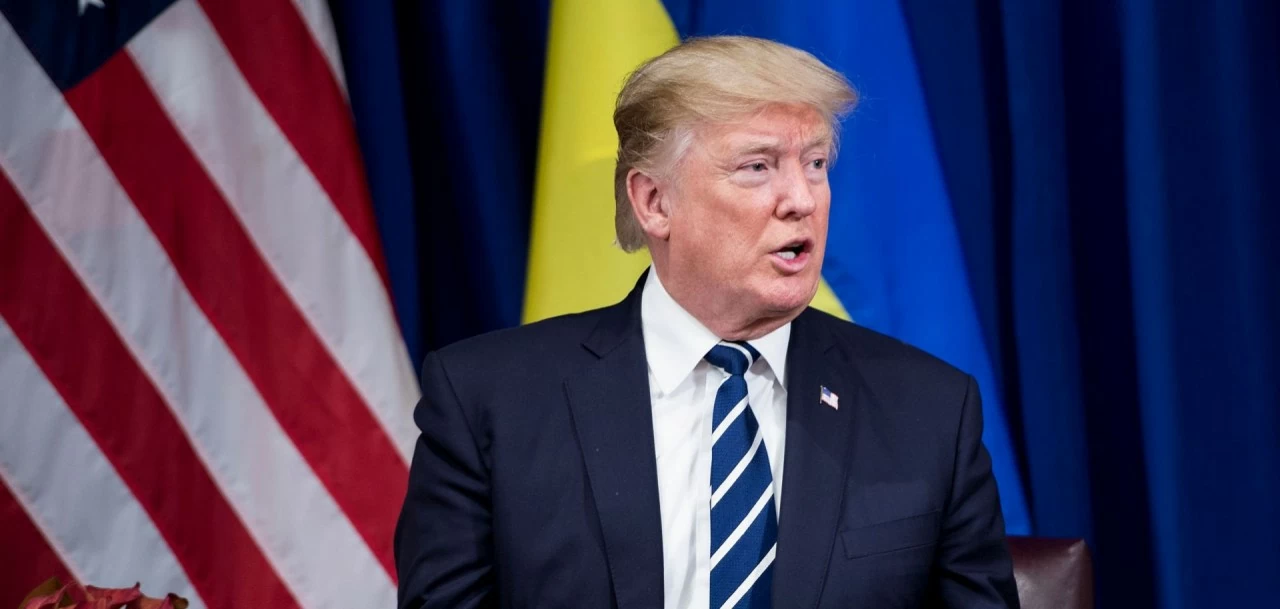 |
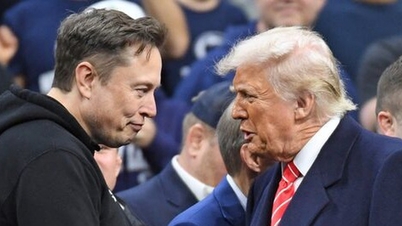
| The possibility of former US President Donald Trump being re-elected will significantly impact the future of the Russia-Ukraine conflict. (Source: Getty) |
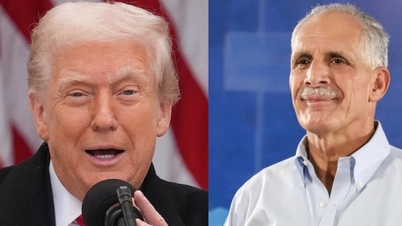
With the US presidential election approaching in November, the question of the country's policy toward Ukraine should Republican candidate Donald Trump return to the White House is gaining increasing attention.
Trump has repeatedly stated that, if he wins the 2024 US presidential election, he will quickly seek to end the conflict in Ukraine. This is also considered a top priority in the billionaire's campaign.
Following his meeting with Mr. Trump on July 11, Hungarian Prime Minister Victor Orban noted that the former US President had detailed and solid plans for immediately acting as a peace mediator in Ukraine and would not wait until after his inauguration to do so if he were re-elected.
On April 23, US Senator Vance argued that Washington's refusal to support Kyiv would increase the likelihood of a diplomatic solution to the conflict that would serve US interests. He stated that resources and funding allocated to the Eastern European nation could be better used to support domestic initiatives or compete with China.
Trump's approach to the conflict in Ukraine appears to contrast with incumbent President Joe Biden's approach of maintaining and increasing support to help the country better defend itself against Russia. Biden's ultimate goal is to increase Kyiv's leverage over Moscow in peace and ceasefire negotiations, while simultaneously reducing renewed tensions between Russia and Ukraine, which would allow the U.S. to allocate more resources to compete with China for power in the long term.
If Trump is re-elected as US president, in addition to other key players such as Russia, Ukraine, European countries, and China being willing to take risks, the course of the conflict in Ukraine will largely depend on whether the new US administration believes that acting to support Kyiv, from a security, political , and economic perspective, carries more risks than inaction.
There are four main scenarios regarding the potential impact of a Trump administration 2.0 on the conflict in Ukraine, as follows:
Ceasefire negotiations collapse, US reduces aid, but Ukraine continues fighting (likely to happen).
According to this scenario, the Trump administration 2.0 would reduce financial and military support, forcing Ukraine to negotiate with Russia. At the same time, Trump could engage in negotiations with Russian President Vladimir Putin regarding the conflict.
Most likely, Washington will act first to help Kyiv gain the upper hand in negotiations, possibly by easing restrictions on arms supplies to Ukraine and their use in attacking Russian territory.
However, the negotiations will eventually break down because one or both sides believe they will have the upper hand in future talks. Ukraine continues to push for the return of more territory.
Meanwhile, Russia remains determined to continue its special military operation in Ukraine and seeks to limit Western support for Kyiv, including freezing its chances of joining the North Atlantic Treaty Organization (NATO), on the assumption that the Eastern European nation will not receive further support from the US or stronger security guarantees from the military alliance.
If neither side is willing to compromise on key demands, ceasefire negotiations will collapse without reaching an agreement. Consequently, the White House and the U.S. Congress will either reject further aid packages for Ukraine, or slow down and reduce the scale of new aid, halting financial assistance as well as crucial weapons and ammunition.
The ceasefire negotiations collapsed, but the US continues to provide support to strengthen Ukraine's negotiating position and security (potentially).
According to this scenario, ceasefire negotiations also collapse, but the US decides to maintain or even increase crucial military support to Ukraine for fear that halting aid would severely weaken Kyiv's capabilities, thereby leading to a prolonged conflict and posing a greater threat to NATO countries.
This decision was also partly driven by US concerns that cutting aid to Ukraine could cast doubt on the world's largest economy's commitment to defending its allies globally, impacting its competition with China.
Washington's continued support assured Kyiv that an end to the conflict would ultimately be accompanied by stronger security assistance from the West and would bridge the gap for years until Ukraine joined NATO.
The ceasefire negotiations were successful, but the risk of renewed conflict remains (and could still occur).
According to this scenario, the US threat to cut aid would force Ukraine to the negotiating table. Russia would signal concessions in exchange for restrictions on US aid to Ukraine, including an unofficial but indefinite freeze on Kyiv's aspirations to become a NATO member.
The ceasefire negotiations were successful; however, as the US and the West cease supplying weapons to Ukraine, internal political infighting will become increasingly apparent within and among NATO member states.
On the other hand, the ceasefire allows Russia to consolidate its controlled areas in Ukraine and prepare for a renewed conflict depending on new developments.
Ukraine is taking a tougher stance in attacks on Russian territory, raising serious risks of escalation and a Russia-NATO conflict (unlikely).
According to this scenario, Ukraine miscalculated and assumed that both the risk of reduced US support and the risk of failure at the negotiating table existed. Therefore, Kyiv became increasingly hardline in the conflict, partly to garner stronger support from the West, even if this risked escalating tit-for-tat actions from Moscow.
This worst-case scenario could lead to an escalation of the Russia-Ukraine conflict and, more broadly, the risk of a Russia-NATO conflict, due to either intentional escalation or the accidental spread of the conflict.
Another risk is the possibility that Kyiv could violate Western restrictions on the use of its weapons in Russia and launch attacks on energy facilities and other infrastructure, leading to strong reactions from Moscow.
However, this scenario is unlikely to materialize because Ukraine is unlikely to make a miscalculation, as Western powers, especially under the Trump administration, have always avoided direct conflict with Russia. Therefore, it is highly probable that the US will decisively reduce its support for Ukraine if a Russia-NATO conflict is imminent.
Source: https://baoquocte.vn/4-kich-ban-cua-xung-dot-nga-ukraine-neu-cuu-tong-thong-my-donald-trump-tai-dac-cu-283646.html
















![[Photo] Prime Minister Pham Minh Chinh holds a phone call with the CEO of Russia's Rosatom Corporation.](/_next/image?url=https%3A%2F%2Fvphoto.vietnam.vn%2Fthumb%2F1200x675%2Fvietnam%2Fresource%2FIMAGE%2F2025%2F12%2F11%2F1765464552365_dsc-5295-jpg.webp&w=3840&q=75)



















































Comment (0)