

Hue cuisine is facing the opportunity to shift from a "cultural brand" to a "tourism brand" as the locality chooses its cuisine to build its application for participation in UNESCO's Creative Cities Network.
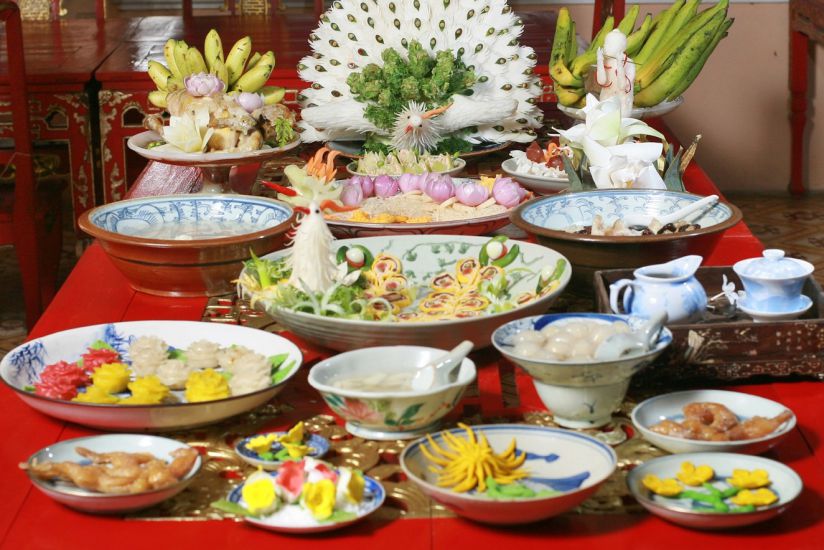
The "eight precious dishes of the royal court" was reserved only for emperors and royalty in Hue's imperial cuisine. Photo: Tuong Minh
The lack of a "Hue culinary delights" system: The city of Hue is building a dossier titled "Hue - Creative City" to nominate itself to join the UNESCO Creative Cities Network, focusing on the culinary sector. To build this dossier, Hue has a mountain of work to do. This includes establishing a working group to develop the dossier; holding seminars, thematic workshops, international conferences, and finalizing the dossier; publishing publications, books, and documentary films introducing Hue's potential in the culinary field; organizing culinary spaces, demonstrations, and cooking demonstrations of folk and royal dishes to promote Hue's potential in the field of culinary culture... It can be said that Hue's choice of cuisine to participate in the UNESCO Creative Cities Network is a logical decision. Because when talking about Vietnamese cuisine, one cannot fail to mention Hue cuisine. And this mention is not just empty pride, but is demonstrated through numbers and events. For example, Hue has been working towards the goal of becoming the "kitchen" of Vietnam, based on the fact that out of approximately 3,000 dishes nationwide, more than 1,700 are cooked in the Hue style! Furthermore, Hue was the capital of a unified Vietnam since 1802, after Emperor Gia Long founded the Nguyen Dynasty. During the Nguyen Dynasty, Hue was also the capital of culture, art, and fine arts, including culinary arts, to serve the needs of the royal court. Only in Hue was cuisine elevated to an art form, a cultural brand with profound and meaningful philosophies. Cooking in Hue was elevated to a standard of value, an essential virtue for women… Unfortunately, to this day, Hue cuisine is a "cultural brand," but not yet a " tourism brand," and it will be a long time before it reaches the title of "kitchen" of Vietnam for many reasons. First of all, in Hue, it's difficult to find many restaurants that fully showcase their strengths. A tourism expert commented that most establishments serving Hue cuisine only offer typical Hue dishes, lacking a system of "Hue delicacies" that are systematically and specifically promoted and developed according to the main and secondary culinary lines, regional cuisines, and spice systems. In particular, there hasn't been sufficient focus on incorporating vegetarian dishes – a strength of Hue cuisine – into tourism.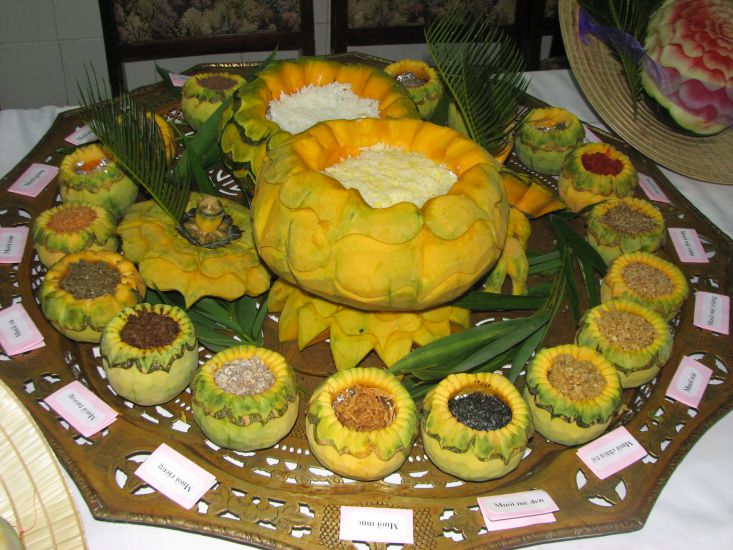
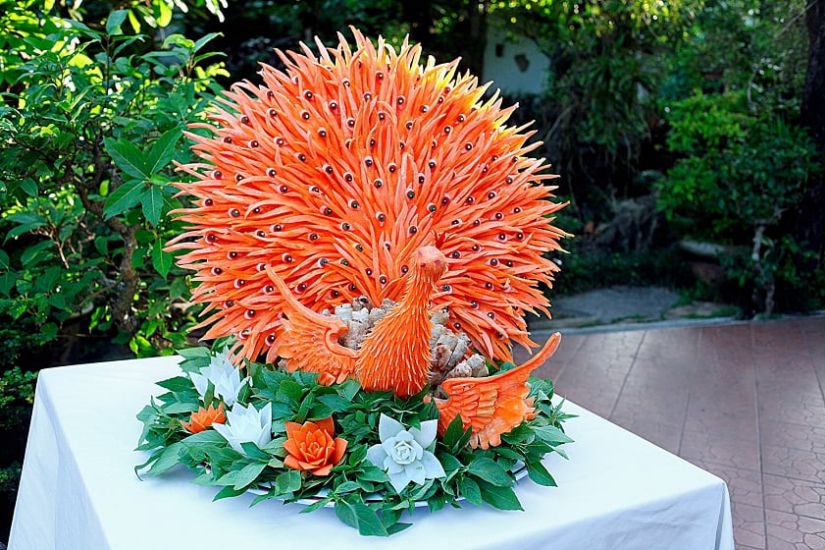
The famous "nem cong cha phuong" dish, a specialty of Hue Imperial cuisine. Photo: Hanh Nhon
Cuisine should be a tourism brand. The UNESCO Creative Cities Network, established in 2004, aims to promote international cooperation among internationally recognized cities, using cultural resources and creative arts as the foundation for sustainable urban development. Currently, more than 350 cities in over 90 countries and territories worldwide participate in this network. In Vietnam, the proposal and promotion to include cities such as Hanoi in 2019 (Creative Design City); Da Lat in 2023 (Creative Music City); and Hoi An in 2023 (City of Handicrafts and Folk Arts), as stated by Minister of Culture, Sports and Tourism Nguyen Van Hung, is part of the strategy for developing Vietnam's cultural industries until 2020, with a vision to 2030, approved by the Government. These are solid foundations for Vietnam to define its next phase goal: becoming a cultural industry hub attracting and converging creativity in Southeast Asia. If Hue successfully joins, it will face numerous opportunities, including interaction, exchange, and integration with 350 other cities from over 100 countries worldwide, not only in the culinary field but also in the other six creative areas of the network. This will contribute to realizing the goal of making Hue the "kitchen" of Vietnam, as well as other objectives. Hue cuisine is superior to many other localities, having already been established as a "cultural brand." However, to be included in UNESCO's Creative Cities Network, Hue cuisine must be upgraded to a "tourism brand" and, further, a product of the cultural industry. Cuisine, at this point, is no longer just a brand to show off or be proud of to friends, but must be a product – an ecosystem – that can generate significant revenue for the people and the locality.Laodong.vn
Source: https://dulich.laodong.vn/tin-uc/am-thuc-hue-tu-thuong-hieu-van-hoa-den-thuong-hieu-du-lich-1380318.html

































































Comment (0)