



On rainy days, it takes an hour or more to walk. In the bitterly cold winter, sweat still drenches our backs… before we even reach Tu Thuong. Back then, we reporters, those of us who experienced the journey to Tu Thuong, still get goosebumps whenever we recall those working trips… Yet, returning to Tu Thuong this time, we sped along the newly completed concrete road in August 2023, driving right up to the middle of the village.

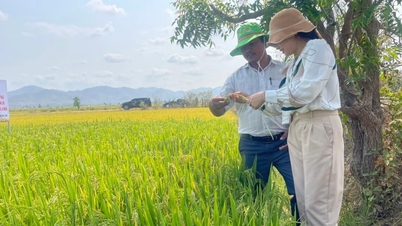
In October, after the harvest is over, the rice paddies, bare of stubble, stretch along the mountainside, after enduring the rains and sun, have nurtured the white, round grains of rice, bringing warmth and sustenance to the Green Hmong people – an ethnic group living in the high mountains of Nam Xe commune, Van Ban district – currently numbering only 125 households with nearly 1,000 people. The stories, tinged with mystery, and the attempts to decipher the history of the Green Hmong people on the slopes of Tu Thuong mountain remain mere speculations and legends passed down orally over time. All that is known is that this place is home to an ethnic group who live and love each other through the hardships of life, surviving and adding a bright color to the diverse tapestry of ethnic minority communities in Lao Cai .

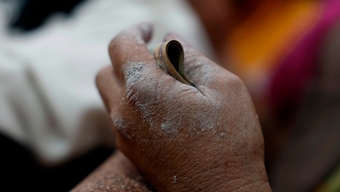
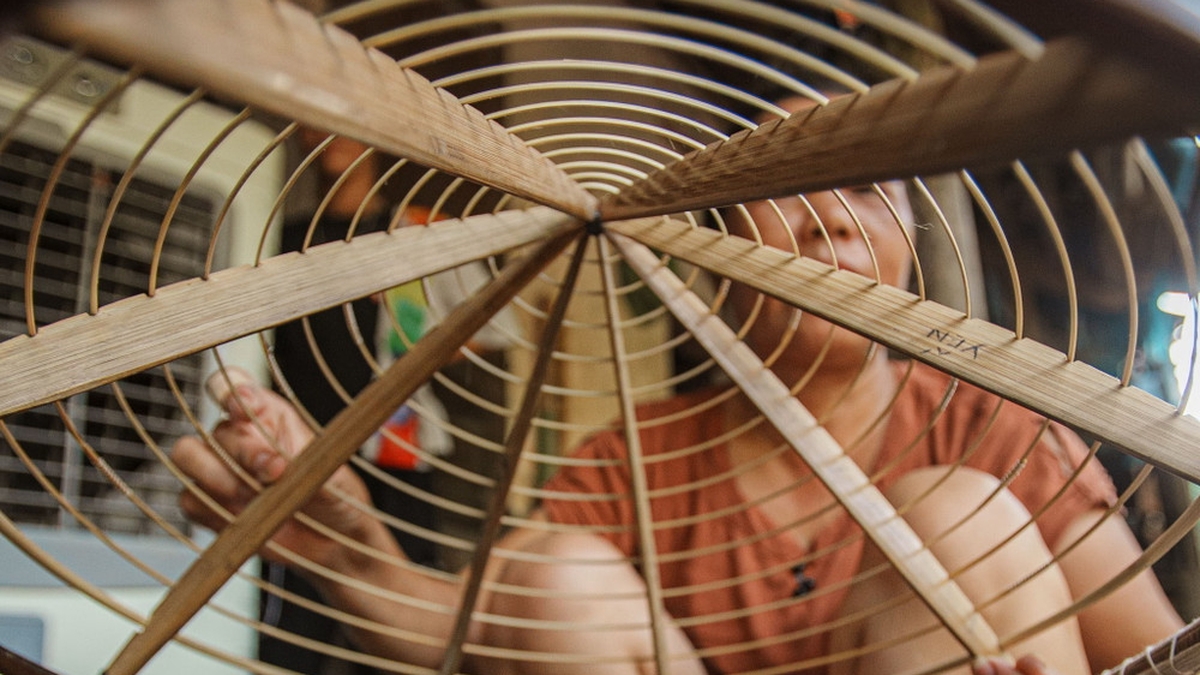
Along with the Hmong Hoa, Hmong Black, and Hmong White ethnic groups, the Hmong Green people in Tu Thuong also cultivate flax, weave cloth, dye with indigo, and embroider brocade, creating their own unique ethnic costumes. Mrs. Ly Thi Sai, considered a skilled weaver, happily chatted with us while guiding her granddaughter in stretching the flax threads.

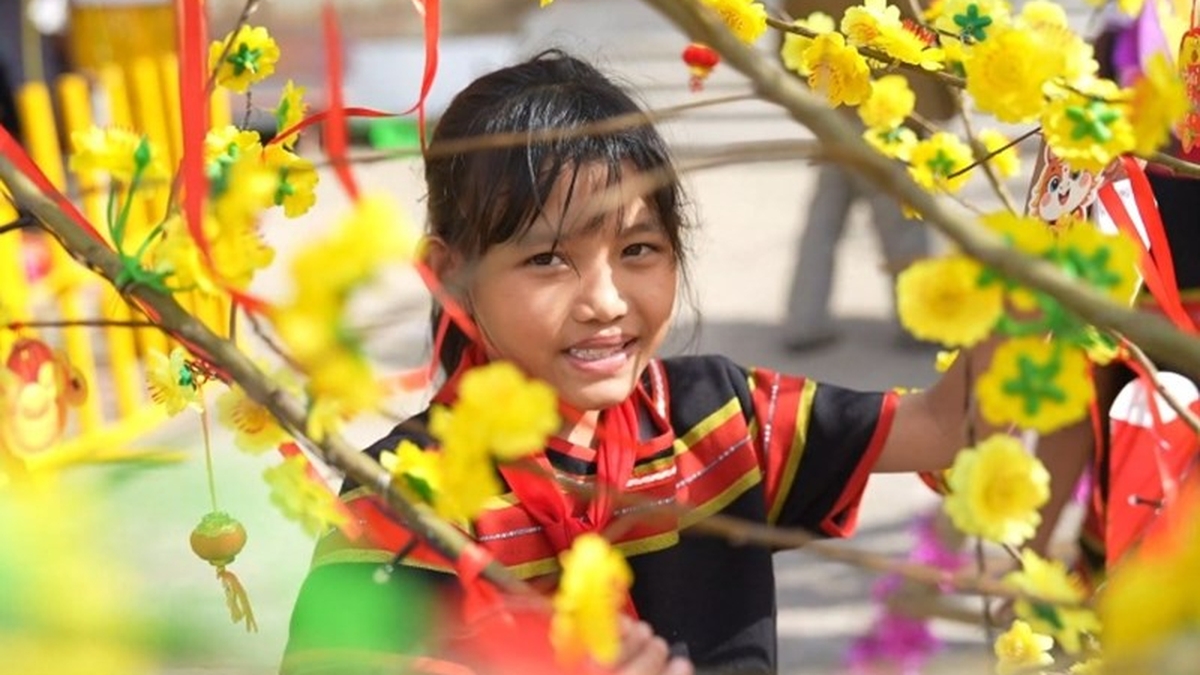
Speaking of Mr. Sai's granddaughter, Vang Thi Nam, she has graduated from high school. Four years ago, during a stay in Tu Thuong, I met Vang Thi Nam, and this time it was a chance encounter as Nam was waiting for a job.

I still remember that year, Vang Thi Nam was in 10th grade. She exuded the resourcefulness and quick wit of an older sister who cared for her younger siblings and helped her parents with all the household chores. The night we stayed was the full moon of the seventh lunar month. On the "Love Rock" at the edge of Tu Thuong village, under the bright moonlight, only the sound of flutes echoed through the mountains and forests. Young men and women, on the verge of marriage, whispered to each other by the cliff, shyly afraid of being overheard by strangers. That night, we slept late and drifted into an indescribable feeling about the green Hmong village. I can't forget the poignant scene the following afternoon as we parted ways with Tu Thuong. Vang Thi Nam stood at the kitchen door, politely waving goodbye: "Goodbye, Auntie. I won't come out to see you off, I'll cry..."

Today, as if reuniting with long-lost relatives, Vang Thi Nam excitedly chatted with us: "I applied to work as a factory worker in Bac Giang , but my grandmother is getting older and weaker, so I want to stay close to take care of her."
Therefore, since graduating from high school, Nam has remained in Tu Thuong and is currently an active member of the Nam Xe Green Hmong Ethnic Group's Cultural Preservation and Promotion Club.
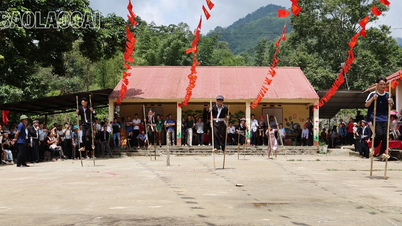
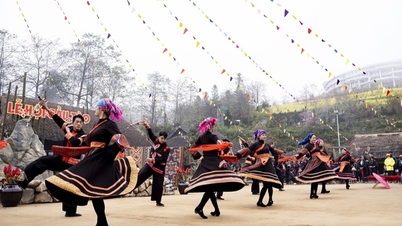
The Green Hmong Ethnic Culture Preservation and Promotion Club has 26 members. The club meets once a month. Activities include embroidery, sewing, singing, and folk games. Elderly members of the club pass on their knowledge to the younger generation. Besides flax cultivation and weaving, the Green Hmong people in Tu Thuong also preserve many other distinctive cultural features such as bamboo pipe singing, spinning tops, playing the bamboo flute, blacksmithing, casting, and basket weaving.

Mrs. Vang Thi Mao, an elderly woman in Tu Ha village, is 78 years old this year, but for her, it's not just about looking after the house while her children and grandchildren go to the fields to plant and harvest cardamom; she also reminds the children to focus on their studies and diligently sits every day spinning flax yarn, weaving cloth, and embroidering brocade.

In particular, since the Nam Xe commune established the Green Hmong Cultural Preservation Club, Mrs. Mao has enthusiastically taught traditional crafts to the club members. Stopping her embroidery work, Mrs. Vang Thi Mao smiled gently and said: "As long as my eyesight is still good and my hands can still thread a needle, I will continue spinning flax, weaving fabric, and embroidering clothes."

The Green Hmong village has always been prosperous thanks to the diligent hands of its people, driven by a determination to overcome poverty and backwardness of the past and to achieve economic independence for their families. Therefore, although the village has only a little over a hundred households, many families have developed their economies effectively, becoming exemplary models not only in the village but also in Nam Xe commune. Mr. Ly A Vang in Tu Ha village is one such exemplary farmer. When mentioning Mr. Ly A Vang, the villagers and people in the commune all admire his willpower and hard work. Like many other families in this area, Mr. Vang's family engages in agricultural production, mainly farming and small-scale livestock raising, with an annual income barely enough to live on.
With the available land, he and his family chose to develop their economy using an integrated agricultural production model, combining both crop cultivation and livestock farming. Initially, due to a lack of investment capital and limited manpower, developing the family's economy faced many difficulties. Now, Mr. Vang's family owns more than 2,000 m² of rice paddies and raises 10 pigs, with a fish pond of over 800 m² . On average, the family's annual income from livestock farming and crop cultivation exceeds 200 million VND...

Moreover, many young people from the Green Hmong community have bravely stepped out of their villages, descended from the mountains to learn to read and write, and excelled as exemplary ethnic minority cadres and Party members, leading and contributing to society. A prime example is Comrade Vang A To, Secretary of the Commune Party Committee, who, together with the local Party committee and government, has developed the highland commune of Nam Xe, promoting socio-economic development and cultural preservation. Or consider Ms. Vang Thi Phai, who bravely overcame the barriers of ancient customs; a Green Hmong woman born in the 1990s, determined to descend from the mountains to seek education, broadening her horizons beyond the Tu Thuong mountain and the Nam Tu stream, and is now a "leader" of her fellow Green Hmong women in her homeland...
As the Chairwoman of the Women's Association of the commune, young Party member Vang Thi Phai actively mobilizes members to preserve their traditional identity and culture. According to Ms. Phai, the Green Hmong women always cherish their ethnic culture, enjoy embroidery, sewing, dancing, singing, and participating in community activities. Therefore, the establishment of the Club for Preserving and Promoting the Green Hmong Ethnic Cultural Identity is a beneficial playground for many generations of the elderly and young in Nam Xe...

As time flows along with the four seasons of spring, summer, autumn, and winter, the Green Hmong people of Nam Xe wholeheartedly love and respect President Ho Chi Minh, trust in the leadership of the Party, and leverage their strengths to successfully accomplish their tasks. The Green Hmong love song on Tu Thuong mountain today is harmonized by the high and low notes of dynamism, of a spirit of daring to think, daring to act, and daring to overcome their own and their community's barriers to build a prosperous life...

Source























































Comment (0)