

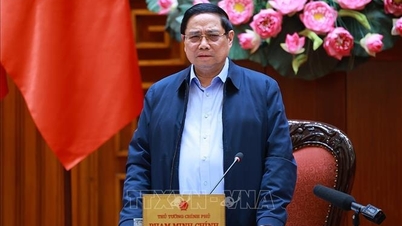
The government has just issued Resolution No. 143/NQ-CP on key tasks and solutions to urgently overcome the consequences of Typhoon No. 3, quickly stabilize people's lives, and promote the restoration of production and business.
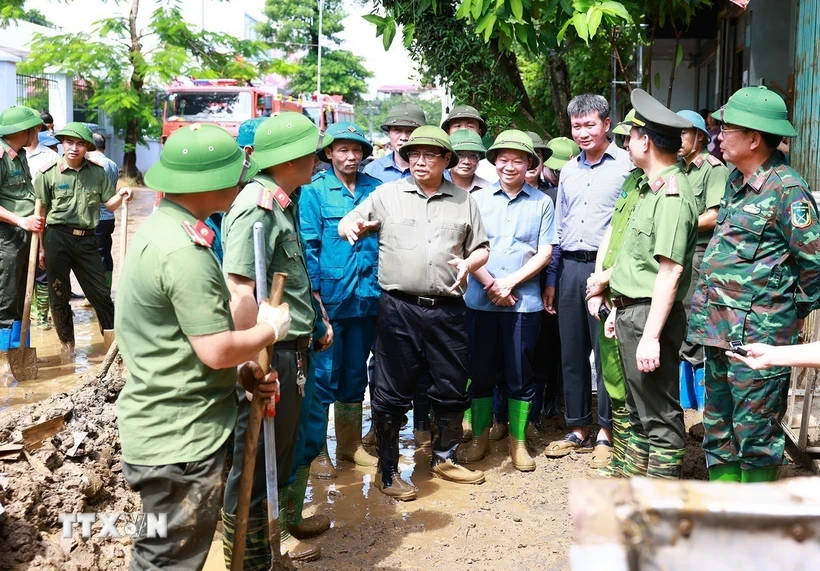
To urgently address the consequences of Typhoon No. 3 (Yagi), quickly stabilize the situation for the people, accelerate the restoration of production and business, actively promote economic growth, effectively control inflation, and continue striving for economic growth of approximately 6.8-7% for the whole year of 2024, the Government requests that ministers, heads of ministerial-level agencies, government agencies, other central agencies, and the Chairpersons of the People's Committees of the 26 provinces and centrally-administered cities affected by Typhoon No. 3 (hereinafter referred to as ministries, agencies, and localities), based on their assigned functions, tasks, and powers, urgently, decisively, promptly, and effectively implement the Politburo 's Conclusion, the Government's Resolutions and directives, and the Prime Minister's instructions, focusing on key tasks and solutions.
This is one of the main contents of Resolution No. 143/NQ-CP on key tasks and solutions to urgently overcome the consequences of Typhoon No. 3 (Yagi), quickly stabilize the situation of the people, promote the restoration of production and business, actively promote economic growth, and effectively control inflation, which has just been issued by the Government.
The government's view is that support policies and solutions must be quick, feasible, timely, effective, focused, and directly targeted at those affected; the procedures and conditions for receiving benefits should be simple, easy to implement, easy to check, monitor, and evaluate.
At the same time, mobilize all resources, manage and allocate them rationally and effectively, prevent loss, waste, corruption, vested interests, and policy abuse, and ensure transparency and openness.
The goal is to prioritize the protection of people's lives, safety, and health; to ensure social security; to quickly restore daily life and social activities to stabilize people's lives, especially in areas most severely affected by storms, floods, and landslides; to rapidly restore production, supply chains, and labor; to revive and develop production and business; and to maintain the growth and recovery momentum of localities and the economy in 2024.
The resolution clearly states that the scope and beneficiaries of the support include people, workers, vulnerable groups, business households, cooperatives, and enterprises in areas affected by Typhoon No. 3, flooding, landslides, and mudslides.
The support period is mainly in September and October 2024; some policies supporting household businesses and enterprises may be extended, with additional resources allocated until the end of 2025, to align with the recovery of businesses and household businesses and the seasonal factors in production and business.
The government has outlined six key tasks and solutions to urgently address the consequences of Typhoon No. 3, quickly stabilize the situation for the people, accelerate the restoration of production and business, actively promote economic growth, and effectively control inflation.
Key tasks and solutions for protecting the lives, safety, and health of the people.
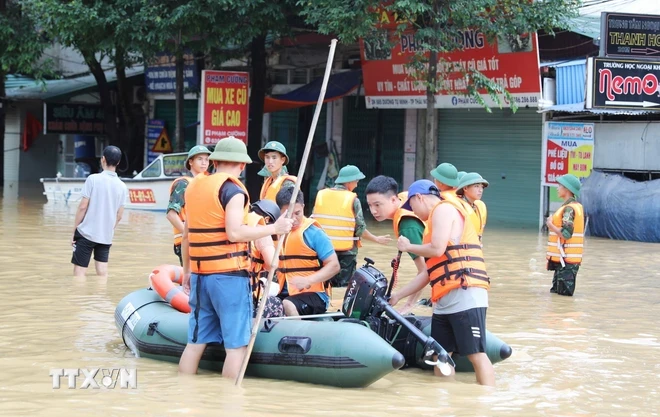
The Ministry of National Defence, the Ministry of Public Security, and local authorities at all levels are mobilizing maximum resources to search for missing persons; strengthening the deployment of forces and vehicles for patrolling, relocating and evacuating people from high-risk areas, and transporting aid and supplies to the people.
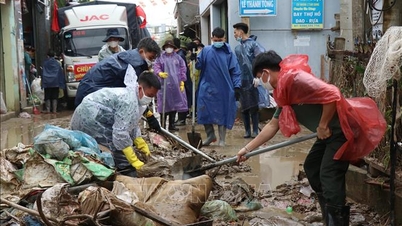
The Ministry of Health, in coordination with other ministries, sectors, and localities, is mobilizing and deploying sufficient medical personnel, ensuring the availability of medicines and medical supplies to treat the injured and sick; effectively carrying out disease prevention and control, handling and sanitizing the environment and water sources, and ensuring food safety to absolutely prevent outbreaks of disease after floods, especially in localities affected by flash floods, landslides, and mudslides.
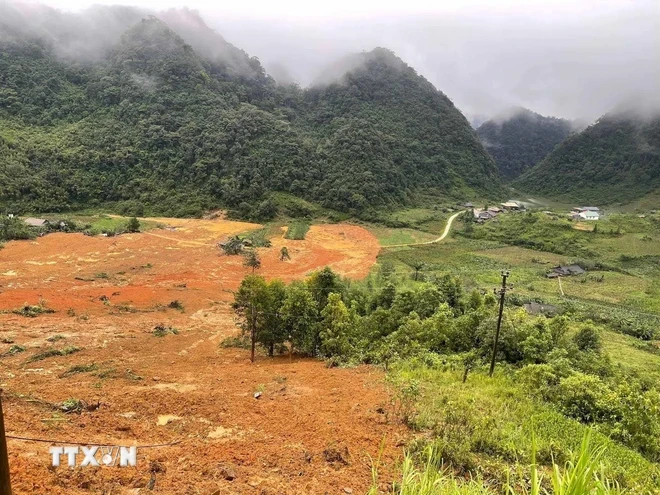
The Ministry of Finance and local authorities shall ensure the allocation of state budget funds to implement policies providing direct support for the burial of those who died, and for families with deceased, missing, or injured family members hospitalized due to the impact of Typhoon No. 3; fully and promptly resolve and disburse benefits and policies to the relatives of those who died; and utilize state budget reserves and other legal sources to urgently relocate households and residential areas in high-risk landslide areas, completing this before September 30, 2024.
The Ministry of Finance and other relevant ministries and agencies are urged to promptly release food, equipment, supplies, chemicals for environmental cleaning, disinfectants, water treatment chemicals, and medicines for disease prevention and control from national reserves to support localities.
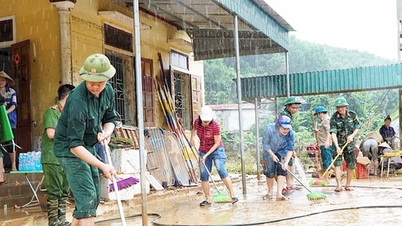
Local authorities, in coordination with the Ministry of National Defense and the Ministry of Public Security, are reviewing and inspecting areas that remain isolated, making every effort to reach them for relief and rescue operations; focusing on arranging temporary accommodation for people who have lost their homes, and providing food, supplies, and clean water to the affected population.
The group of key tasks and solutions focuses on supporting the restoration of daily life and social activities to stabilize people's lives.
The Ministry of Agriculture and Rural Development is responsible for determining the extent of damage and support needs of localities, and submitting the information to the Ministry of Planning and Investment and the Ministry of Finance for compilation and submission to the Prime Minister for allocation of central government budget reserves in 2024 to support localities in accordance with the law.
The Ministry of Labour, Invalids and Social Affairs, the Ministry of Construction, the Ministry of Finance, and other ministries, agencies, and localities, according to their assigned authority, functions, and duties:
Increase support for poor households, near-poor households, and households in difficult circumstances whose houses have collapsed, been completely damaged and need rebuilding, or are severely damaged and require repair and relocation, from the state budget, the National Fund for the Eradication of Temporary and Dilapidated Houses, the Fund for the Poor, support from the Central Committee of the Vietnam Fatherland Front, and other socialized sources.
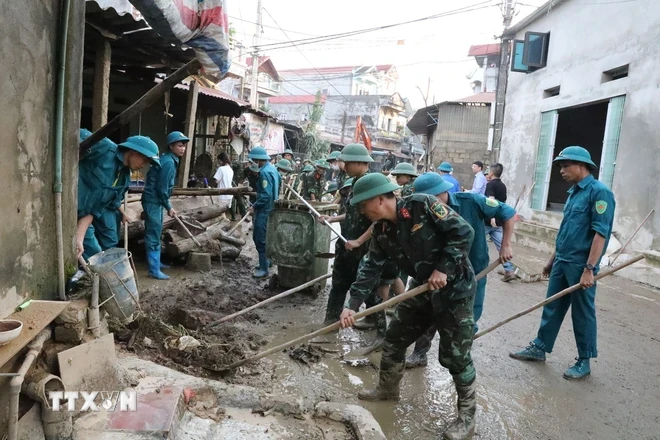
Implement current emergency support policies quickly and effectively for poor households, near-poor households, and households in difficult circumstances to repair severely damaged houses, relocate houses, etc., following the principle of "assessing the extent of damage and providing timely support accordingly."
The Ministry of Planning and Investment, the Ministry of Foreign Affairs, the Ministry of Finance, the Ministry of Agriculture and Rural Development, and other ministries, agencies, and localities are mobilizing partners and donors to secure financial resources and aid from countries and international organizations, and to provide prompt and timely support to affected people and localities.
The State Capital Management Committee at Enterprises directs corporations, general companies, and enterprises to focus all efforts on restoring essential infrastructure (electricity, water, telecommunications, etc.) as quickly as possible, fully and promptly meeting the living and communication needs of the people; preventing power outages, telecommunication disruptions, and other essential service interruptions caused by storms and floods.
The Ministry of Transport, the Ministry of Agriculture and Rural Development, and local authorities should use state budget reserves to urgently repair and quickly restore public works, schools, hospitals, medical facilities, health stations, irrigation systems, etc.; mobilize maximum legal capital sources to immediately reinforce vulnerable and severely damaged sections of dikes and embankments; repair and restore transportation infrastructure on key routes; repair vulnerable bridges and culverts; especially restore transportation connections to residential areas that have been cut off and isolated after the storms and floods; and plan for the reconstruction of severely damaged structures that cannot be repaired.
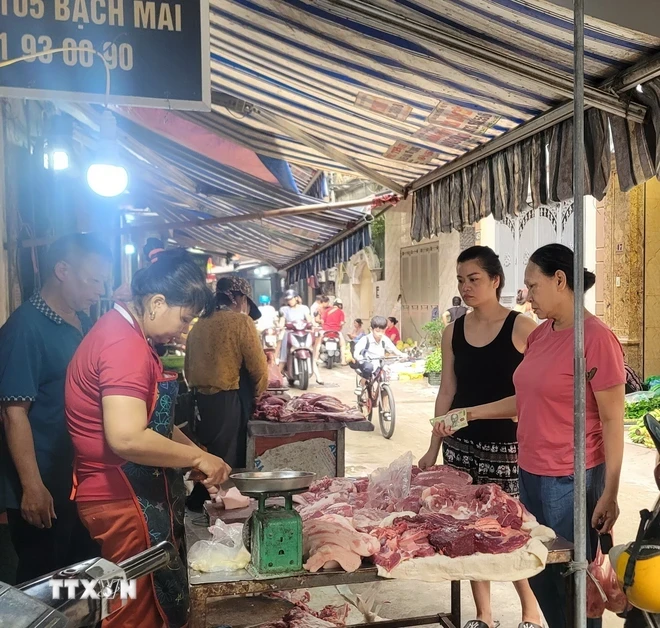
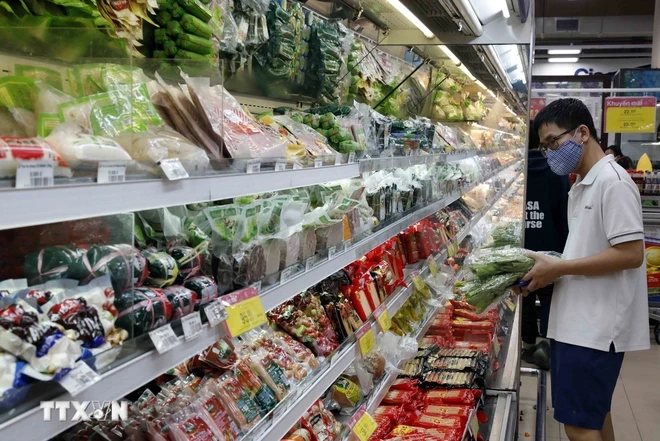
The Ministry of Industry and Trade, the Ministry of Agriculture and Rural Development, and local authorities are closely monitoring the situation and developments in the supply and prices of goods in their areas, especially in areas recently affected by flash floods, landslides, and mudslides. They are working to ensure timely supply, control prices, and prevent speculation, hoarding, price gouging, and exploitation of natural disasters and floods for profit.
The Ministry of Education and Training and local authorities will implement tuition fee waivers and reductions for students affected by Typhoon No. 3 in the 2024-2025 academic year.
The Ministry of Public Security is strengthening its efforts to ensure security, order, and social safety, especially in areas affected by storms and floods; directing local police forces to proactively advise local Party committees and authorities to enhance coordination and participation in ensuring social welfare and public safety.
The key tasks and solutions focus on supporting production facilities, business households, cooperatives, and enterprises to quickly restore production and supply chains, employment, and to revive and promote production, business development, and economic growth.
The Ministry of Agriculture and Rural Development is focusing on directing and planning flexible and effective production and implementing measures to mitigate the consequences of storms and floods to restore agricultural production immediately after them; compiling needs, promptly reporting and proposing to competent authorities to decide on support for seeds, feed, chemicals and necessary supplies for localities to restore agricultural production; directing the inspection, review, and compilation of incidents and damage to dike and irrigation reservoir systems caused by storms and floods, and compiling and reporting to the Prime Minister the funding needs for immediate repair and restoration to ensure safety.
The Ministry of Finance is urgently implementing effective policies on tax, fee, and land rent exemptions, reductions, and extensions for those affected and damaged by storms, floods, landslides, etc., as stipulated by law.
Based on the provisions of Clause 4, Article 147 of the Law on Credit Institutions 2024, the State Bank of Vietnam will report to the Prime Minister in September 2024 on the classification of assets, the level of risk provision, the method of risk provision, and the use of risk provisions to handle risks in order to support customers facing difficulties and losses due to the impact of Typhoon No. 3; directing credit institutions to proactively calculate support plans, restructure loan terms, maintain the same loan classification, and consider waiving or reducing interest rates for affected customers.
The Ministry of Planning and Investment, in coordination with the Ministry of Finance, will conduct research, provide advice, and report to the Government and the Prime Minister in October 2024 on supplementing resources for the Social Policy Bank to lend to credit programs currently being implemented at the Social Policy Bank, especially loans to poor households and other policy beneficiaries in the Northern Midlands and mountainous provinces; if necessary, report to the Prime Minister for consideration of adjusting the credit growth target for 2024.
The Ministry of Industry and Trade is researching and proposing policies to support the rapid restoration of damaged logistics facilities and warehouses to ensure uninterrupted supply chains.
The Ministry of Transport has instructed localities to urgently salvage ships sunk by Typhoon No. 3 to ensure waterway safety and facilitate repairs by businesses, so that they can soon resume services for tourists.
The Ministry of Culture, Sports and Tourism, in coordination with local authorities, is allowing tourism businesses in affected areas to reduce their travel service business deposit by 80% until June 2025.
The Government Inspectorate and ministries and agencies have temporarily suspended inspection and examination activities in localities to allow localities to focus on overcoming the consequences of natural disasters, storms, and floods.
The Social Policy Bank is focusing on accelerating the disbursement of policy credit programs; reviewing and compiling the losses of borrowers at the bank, developing needs for new borrowers and proposing funding sources for implementation, coordinating with the Ministry of Planning and Investment and the Ministry of Finance to report to competent authorities for consideration and decision.
Vietnam Social Insurance is studying the possibility of extending the deadline for social insurance contributions for tourism businesses damaged by Typhoon No. 3.
Ministries, agencies, and localities are directing contractors and construction units to inspect and review the current status of ongoing construction projects and construction machinery after the storm; dismantle, relocate, or repair damaged structures, machinery, and equipment; assess safety risks and implement remedial measures to ensure safe resumption of construction.
Key tasks and solutions for preparing for and responding to natural disasters, storms, floods, and landslides in the coming period.
The Ministry of Agriculture and Rural Development and local authorities are reviewing villages and families whose homes have been buried or destroyed, relocating people to safe areas, and completing this process no later than December 31, 2024; they are also reviewing critical and damaged irrigation works, dikes, dams, and reservoirs with high risks and hazards to develop plans for allocating state budget funds for repair, reinforcement, upgrading, and new construction, ensuring the requirements for disaster prevention, control, and response to future natural disasters, storms, and floods, especially in the last months of 2024.
The Ministry of Natural Resources and Environment is investigating and surveying the flood situation and the locations where landslides and rockfalls have occurred or are occurring; meticulously identifying areas at risk of landslides for warning purposes; researching and proposing plans to utilize a portion of the flood control capacity above the normal water level of large, important reservoirs to enhance flood mitigation capabilities for downstream areas in emergency and unusual situations; and strengthening the capacity for forecasting and warning of natural disasters, storms, and floods to promptly implement appropriate prevention, control, and response measures.
The Ministry of Transport and local authorities are reviewing and assessing the current state of transport infrastructure, focusing on weak bridges on key road and rail routes, in order to develop investment plans for repair, reinforcement, upgrading, renovation, and new construction to ensure adequate response to future natural disasters, storms, and floods.
The Ministry of Industry and Trade, in coordination with other ministries and agencies, will report to the competent authorities for consideration and adjustment of regulations allowing energy sector units to increase their reserves of spare parts and equipment to promptly respond to natural disasters.
The Ministry of Education and Training, other ministries, agencies, and localities should strengthen propaganda, training, guidance, and equip students, and the public with the necessary skills to respond, be self-reliant, and react promptly to natural disasters and epidemics.
The Ministry of Information and Communications has instructed localities and telecommunications enterprises to urgently restore telecommunications network infrastructure affected by Typhoon No. 3 and subsequent flooding; and to implement solutions to ensure communication services for government direction and management in the event of natural disasters and floods.
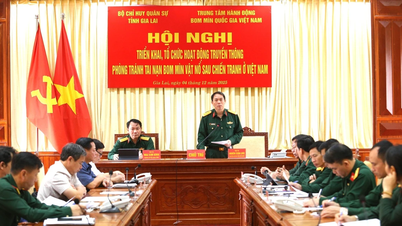
The Ministry of National Defence, in coordination with relevant agencies, will promptly consolidate the National Civil Defence Steering Committee to ensure that disaster prevention and control operations run smoothly, effectively, and efficiently. This will build upon the activities of the former National Steering Committee on Disaster Prevention and Control and the National Committee for Incident Response, Disaster Relief, and Search and Rescue, and develop response plans, especially for major natural disasters and floods, to avoid being caught off guard. This includes clarifying the operational mechanisms of disaster prevention and control that have been effectively implemented within the system from the central to local levels, ensuring consistency between the provisions of the Civil Defence Law, the Disaster Prevention and Control Law, and other relevant regulations.
Task group and solutions regarding mechanisms, policies, and solutions for reducing and simplifying administrative procedures to implement support policies.
The Ministry of Construction, other ministries, agencies, and localities shall review and study the reduction of administrative procedures in the management of construction investment; and allow production facilities, business households, and enterprises to apply the provisions of Articles 89 and 130 of the Construction Law, as amended and supplemented by Law No. 62/2020/QH14 amending and supplementing a number of articles of the Construction Law, to repair and rebuild works and factories affected by natural disasters so that businesses can quickly resume operations.
The Ministry of Foreign Affairs continues to mobilize resources from international partners and the Vietnamese community abroad to support localities and people affected by natural disasters, storms, and floods.
The Ministry of Industry and Trade, the Ministry of Agriculture and Rural Development, and other ministries and agencies are responsible for coordinating the supply of essential goods between provinces and cities affected by rain and floods and other provinces and cities upon request from local authorities, in order to ensure the continued supply of essential goods to students and patients in the affected areas.
Local authorities shall, based on the provisions of points a, b, and c, Clause 1, Article 23 of the Law on Bidding and Article 78 of Decree No. 24/2024/ND-CP, consider and decide, within their functions and authority, on the simplified direct contracting for packages that need to be implemented immediately to remedy or promptly address the consequences caused by Typhoon No. 3 and the subsequent floods; and, based on legal regulations, consider and decide, within their functions and authority, on the application of procedures for emergency public investment projects for projects that need to be implemented promptly to prevent, combat, and remedy the consequences caused by Typhoon No. 3 and the subsequent floods.
Tasks and solutions for controlling inflation and promoting economic growth.
Ministries, agencies, and localities, according to their assigned functions, tasks, and authority, must closely monitor market conditions and commodity prices to implement appropriate and effective solutions to stabilize the market; promote production and ensure adequate supply of goods; strengthen inspection and supervision of the implementation of regulations on price management and price stabilization of essential goods and raw materials for people's lives and production and business; and strictly handle, in accordance with the law, acts of speculation, hoarding, price gouging, and price manipulation.
At the same time, we must renew traditional growth drivers and strongly promote new growth drivers; maximize the utilization of external support resources to promote innovation, digital economic development, digital transformation, green transformation, and new industries such as semiconductors, clean energy, and hydrogen.
Ensure the availability of state budget resources to implement support policies.
The Government directs ministers, heads of ministerial-level agencies, government agencies, and chairpersons of People's Committees of provinces and centrally-administered cities to focus on thoroughly understanding and promptly organizing the synchronized, timely, and effective implementation of support solutions and policies, ensuring strict adherence to legal regulations, preventing losses, waste, corruption, and group interests; proactively handling difficulties, obstacles, and emerging issues within their authority, and reporting to higher authorities on issues beyond their jurisdiction.
The Ministry of Finance, the Ministry of Planning and Investment, and local authorities shall ensure the allocation of state budget resources to implement support policies.
Provinces and centrally-governed cities are urged to promptly review and complete damage statistics, maximizing the resources of local budgets to proactively implement solutions and policies to overcome the consequences of Typhoon No. 3, support people, businesses, households, cooperatives, and enterprises, and promote economic growth within their jurisdiction; they are also urged to promptly report on the damage situation and propose support from the central budget, sending the reports to the Ministry of Finance, the Ministry of Agriculture and Rural Development, and the Ministry of Planning and Investment before September 20, 2024, for compilation and submission to the Prime Minister for consideration and decision on support.
Vietnam Television, Vietnam Radio, Vietnam News Agency, and other media outlets will continue to provide information, communication, and encouragement to the people and businesses to overcome difficulties; leveraging the combined strength of the entire political system, the fine traditions of the nation, and the spirit of mutual support and compassion to protect and assist each other in times of hardship.
The Ministry of Interior is urgently proposing commendations and encouragement for collectives and individuals who are shining examples and role models in preventing, mitigating, and overcoming the consequences of natural disasters and supporting the people.
The government has requested the State Audit Office and the Committees of the National Assembly to consider temporarily suspending audits and supervision activities in localities according to the State Audit Office's audit plan, and supervision activities under the supervision program of the National Assembly, the Standing Committee of the National Assembly, and the Committees of the National Assembly, so that localities can focus on overcoming the consequences of natural disasters, storms, and floods.
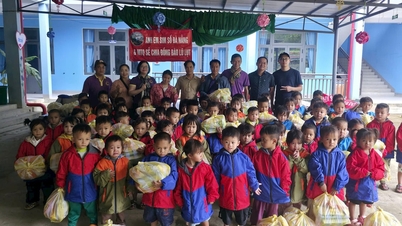
The Government respectfully requests the Central Committee of the Vietnam Fatherland Front and its member organizations, socio-political organizations, and the Vietnam Red Cross Society, within their respective duties and powers, to urgently organize programs to visit, encourage, give gifts, and support people affected by natural disasters, storms, and floods, especially vulnerable groups.
Social issues, especially healthcare, education, environment, rural and urban clean water, labor and employment, and people's livelihoods, need special attention, prioritized resources, and rapid implementation after storms and floods to stabilize people's lives.
From the moment Typhoon No. 3 formed and entered the East Sea, the Government and the Prime Minister directed close monitoring of the situation, accurate forecasting of the typhoon's intensity and trajectory, warning of the risk of floods and landslides, and implementing emergency response measures before, during, and after the typhoon.
The entire political system, at all levels, sectors, and localities, has urgently and decisively engaged in the effort, providing timely information and guidance to support people in responding to, mitigating the impact of, and overcoming the consequences of Typhoon No. 3… Thanks to this, we have minimized the extent of damage and potential risks, and have promptly addressed the aftermath of Typhoon No. 3.
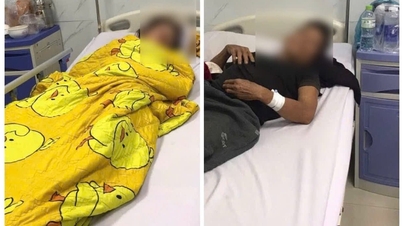
Typhoon No. 3 (Yagi) was the strongest typhoon in the South China Sea in the past 30 years and on land in the past 70 years, with many unprecedented characteristics: it was a super typhoon with extremely high intensity (wind gusts up to level 17); it had immense destructive power; it caused devastation on land and maintained its intensity for a long time; its affected area was very wide, covering all 26 localities in the northern region and Thanh Hoa; it impacted many areas; and it caused prolonged heavy rain, leading to serious natural disasters such as floods and landslides in many localities. Typhoon No. 3 caused serious and severe damage to people, property, crops, livestock, and socio-economic infrastructure; it greatly affected the material and spiritual lives of the people, production and business activities, especially agriculture, services, and tourism. According to preliminary statistics as of September 17, 2024, there have been 329 deaths and missing persons, approximately 1,929 injured; about 234,700 houses, 1,500 schools and many infrastructure facilities have collapsed or been damaged; 726 dike incidents; over 307,400 hectares of rice, crops, and fruit trees have been flooded and damaged; 3,722 aquaculture cages have been damaged or swept away; nearly 3 million livestock and poultry have died and nearly 310,000 urban trees have been broken or uprooted. The preliminary estimate of total property damage caused by Typhoon No. 3 is over 50,000 billion VND, and it is predicted that this could reduce the annual GDP growth rate by approximately 0.15% compared to the projected growth scenario of 6.8-7%. |
Source













































































Comment (0)