

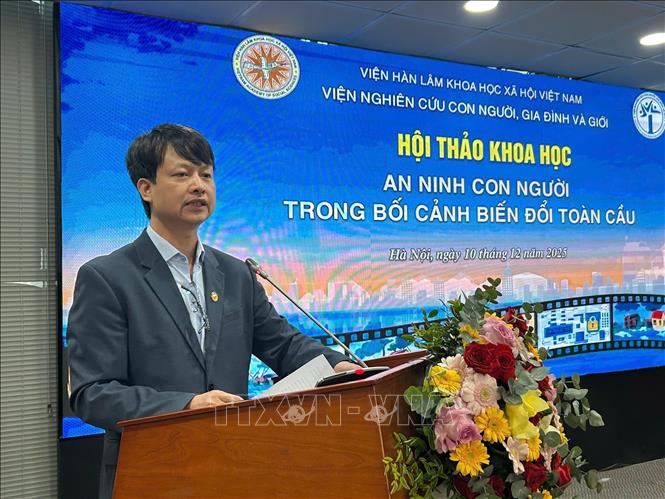
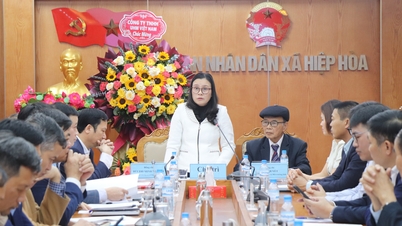
Speaking at the workshop, Dr. Dang Xuan Thanh, Vice President of the Vietnam Academy of Social Sciences , said that in recent years, natural disasters, storms, floods, droughts and epidemics have increased rapidly on a global scale as well as in Vietnam. Along with that, environmental degradation, climate change and emerging social issues are making human security more fragile and complex. This poses unprecedented challenges to the response capacity of countries, communities and individuals, especially vulnerable groups.
Approaching the issue of human security allows for a more comprehensive, systematic and in-depth look at the current threats to humanity, from emerging technologies, social moral degradation, environmental degradation to violations of individual rights. From there, policymakers can develop appropriate solutions, ensuring harmony between human security and national security, between human development and national development, between the implementation of human rights and the protection of sovereignty and national and ethnic interests.
“For Vietnam, people are always placed at the center, both as the subject, the goal and the driving force of development. This is the consistent viewpoint in the Party and State's policies through the Congresses. Therefore, ensuring human security is not only a goal to strive for, but also a prerequisite for the country to develop quickly and sustainably,” Dr. Dang Xuan Thanh emphasized.
Further clarifying the context and requirements, Dr. Nguyen Dinh Tuan, Director of the Institute for Human, Family and Gender Studies, said that Vietnam is consistently implementing the policy of "taking people as the center, the subject, the goal and the driving force of development" in the Party's documents, especially the Resolution of the 13th National Congress and the draft document submitted to the 14th National Congress. In that context, ensuring human security is not only an international obligation of a responsible country in the world community, but also an intrinsic requirement of the national development strategy.
Currently, Vietnam is being affected by many major trends such as: Climate change and extreme natural disasters; rapid population aging; labor migration; rapid urbanization; widespread digital transformation; and changes in family and community structures. These factors have both opened up new development opportunities and posed new threats and risks to human security, requiring timely updating of theories, identification of the current situation and proposal of solutions suitable to the specific conditions of Vietnam.
Dr. Nguyen Dinh Tuan said that the Institute for Human, Family and Gender Studies has been, is and will be implementing many research directions directly related to the topic of human security such as: Clarifying theoretical issues on human security; analyzing the relationship between population change, poverty and human security; assessing the impact of digital transformation, artificial intelligence and big data on life, privacy and personal security; researching and proposing a human security policy model suitable for Vietnam's conditions, referring to international experience and linked to domestic practices.
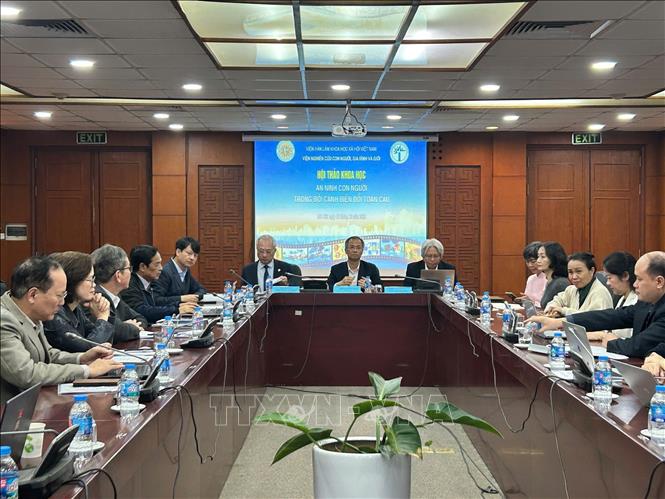
From an international comparative perspective, Associate Professor, Dr. Pham Hong Thai, Institute of Northeast Asian Studies (Vietnam Academy of Social Sciences) analyzed the case of Japan, a country facing a super-aging population. Japan must address many challenges to human security such as labor shortage, fiscal burden on the social security system, pressure on the health system, living environment for the elderly and intergenerational cohesion in the community.
To adapt, Japan has continuously adjusted its development model, reformed its social security system, encouraged the expansion of the workforce, especially women and the elderly; promoted the application of technology in health care and social services; and built community models to support the elderly to live independently and safely. These policies have helped to reduce risks to some extent, but have not yet been able to completely resolve generational imbalances and long-term budget pressures.
From Japan's experience, Associate Professor, Dr. Pham Hong Thai said that Vietnam is entering a period of rapid demographic transition with an increasingly evident population aging rate, and needs to proactively prepare early in terms of institutions, resources, infrastructure, technology and community cultural foundation. With appropriate strategies, the challenge of population aging can be transformed into a driving force to build a more inclusive, safer and more humane society, thereby strengthening human security on the basis of sustainable development.
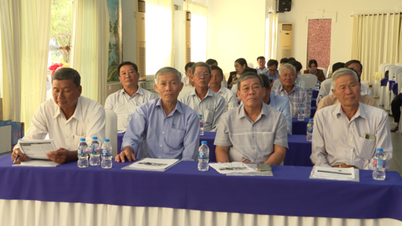
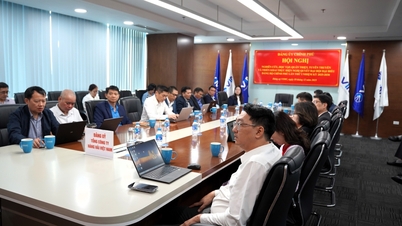
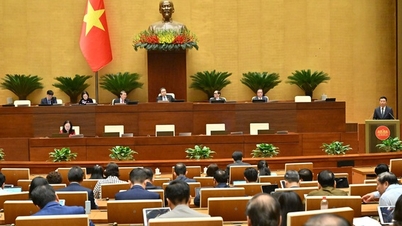
At the workshop, researchers and managers exchanged and shared many perspectives and practical experiences on human security in the face of rapid changes in the world. The presentations focused on more clearly identifying the challenges to human security in Vietnam in the new context, while suggesting some orientations and solutions to improve the response capacity of the State, the community and each citizen.
Source: https://baotintuc.vn/xa-hoi/bao-dam-an-ninh-con-nguoi-trong-boi-canh-bien-doi-toan-cau-20251210114211695.htm

![[Photo] The captivating scenery of the fragrant maple forest in Quang Tri](/_next/image?url=https%3A%2F%2Fvphoto.vietnam.vn%2Fthumb%2F1200x675%2Fvietnam%2Fresource%2FIMAGE%2F2025%2F12%2F10%2F1765353233198_lan09046-jpg.webp&w=3840&q=75)
![[Photo] Explore the US Navy's USS Robert Smalls warship](/_next/image?url=https%3A%2F%2Fvphoto.vietnam.vn%2Fthumb%2F1200x675%2Fvietnam%2Fresource%2FIMAGE%2F2025%2F12%2F10%2F1765341533272_11212121-8303-jpg.webp&w=3840&q=75)


















![[Video] The craft of making Dong Ho folk paintings has been inscribed by UNESCO on the List of Crafts in Need of Urgent Safeguarding.](https://vphoto.vietnam.vn/thumb/402x226/vietnam/resource/IMAGE/2025/12/10/1765350246533_tranh-dong-ho-734-jpg.webp)

















































Comment (0)