

Aiming to export high-value products.
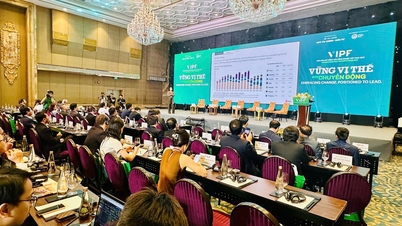
According to a recent report on the industrial real estate market published by Savills Vietnam, Vietnam is currently a focal point for attracting large projects with total registered capital reaching billions of USD.
Savills Vietnam experts also noted that Vietnam's stable growth is driven by key market drivers, including a young and dynamic workforce, competitive labor costs, an export-oriented economy , a stable business environment, and especially Vietnam's active participation in Free Trade Agreements.
This report also shows that Vietnam is moving up the value chain as an export-oriented economy for high value-added products, through the recording of a strong increase in revenue from the export of phones and phone components from Vietnam.
Specifically, data from 2016 to 2022 shows that exports of electronics and computers increased by 193%, and exports of mobile phones increased by 68%. Other high value-added items such as electronics, computers, and components had export value of $19 billion in 2016. However, by 2022, the export value had reached $56 billion. This segment accounted for 15% of total export value and increased by 10% compared to the previous year. Meanwhile, low value-added export sectors such as textiles and footwear accounted for only 10% and 4% of total export value, respectively.
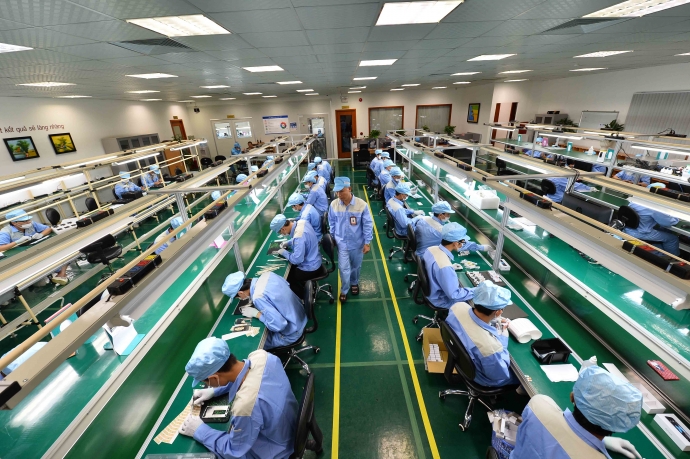
Vietnam is aiming to export high-value products.
The development is also evident in the attraction of foreign direct investment (FDI) into the manufacturing and processing sector. In the first half of 2023, FDI in this sector reached US$8.4 billion, accounting for 63% of total foreign investment. In addition, there were 379 new projects with newly registered capital of US$5.4 billion. Of the 345 existing projects, 225 projects increased their capital with a total additional investment of US$2.1 billion.
Some major investment projects in the northern region in the first half of 2023 include the Fulian Precision Technology project, with an investment of US$621 million in Bac Giang ; the US$280 million project of Goerteck (Hong Kong) Co. in Bac Ninh; and the US$165 million project of Boltun Corp & QST International Corp in Quang Ninh.
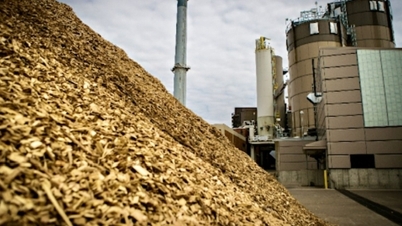
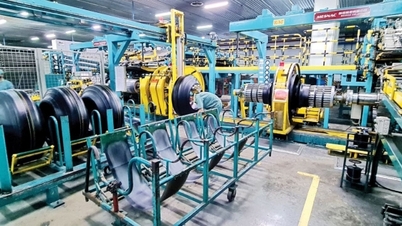
In the South, notable projects include Shandong Haohua Tire's $500 million project in Binh Phuoc; Suntory Pepsico Vietnam's $185 million project in Long An ; and Pandora Production Holdings A/S's $163 million project in Binh Duong.
Of these, Bac Giang province recorded the largest amount of newly registered FDI capital in manufacturing nationwide with 1.06 billion USD, equivalent to 20% of the total investment capital. This was followed by Binh Phuoc with 11% of the total registered capital worth 577 million USD and Bac Ninh in third place with 9% of the total registered capital worth 486 million USD.
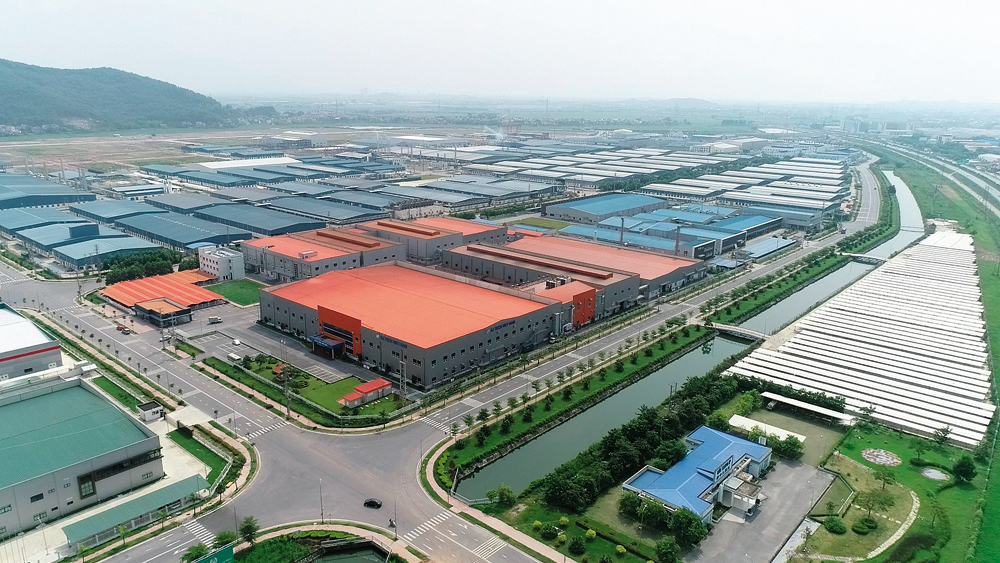
Bac Giang is leading the way in industrial real estate development.
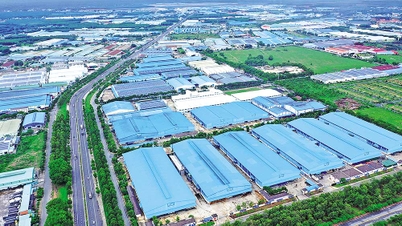
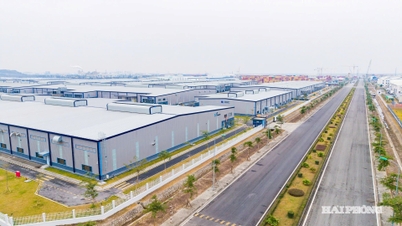
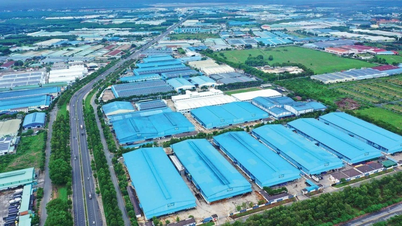
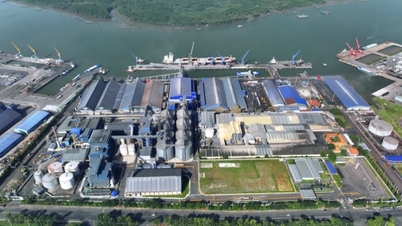
To date, 397 industrial parks have been established with a total land area of 122,900 hectares. 292 industrial parks are currently operational with a total land area of over 87,100 hectares. Another 106 industrial parks are under construction with a total land area of 35,700 hectares. Industrial parks nationwide have a high occupancy rate of over 80%, with key provinces in the North reaching 83% and key provinces in the South reaching 91%.
In particular, the Northern key economic zone recorded 68 industrial park projects with a leased land area of 12,000 hectares. Land lease prices increased by 30% year-on-year, reaching an average of US$138/m2/lease cycle. Tenants in this area mainly operate in the electronics and computer sectors, automobile manufacturing and assembly, machinery and equipment, as well as components related to solar energy.
Meanwhile, in the Southern key economic region, 122 industrial park projects were recorded with a leased land area of 24,883 hectares. Land lease prices increased by 15% year-on-year and reached an average of 174 USD/m2/lease cycle. Tenants mainly operate in the food and beverage processing, construction materials, textiles, and rubber and plastic products sectors.
Industrial real estate will face many challenges in the coming period.
According to Savills Vietnam, despite global challenges, Vietnam is expected to maintain rapid economic growth in the medium term as exports recover and continue to benefit from the shift in global manufacturing supply chains to competitive production hubs in Southeast Asia.
The years 2022 and 2023 witnessed significant milestones for the growth of the industrial sector in the Mekong Delta. In September 2023, the investor VSSIP commenced its first project in Can Tho, covering an area of 900 hectares, which is expected to be a complex of industrial, high-tech, service, and residential centers. Phase 1 will cover an area of 293.7 hectares with an investment of over US$152 million.
VSIP also invested in the construction of a $7.4 million road connecting the project to National Highway 80 during the preparatory phase. Regarding infrastructure, according to the Development Plan for the period 2021-2030, with a vision to 2050, the Mekong Delta is expected to further develop its infrastructure, creating an attractive foundation for industrial real estate with 6 expressways totaling 1,166 km.
However, John Campbell, Deputy Director and Head of Industrial Services at Savills Vietnam, also pointed out some specific challenges facing Vietnam's industrial real estate market in the coming period, including:
The quality and reliability of all transportation infrastructure in Vietnam remain lower than in other countries in the region. Although transportation infrastructure is expanding rapidly, development has not kept pace with economic and social growth. The rapid growth in urban population and freight transport is the main driver of infrastructure demand, while the capacity of ports and seaports has not been fully utilized.

Mr. John Campbell, Deputy Director, Head of Industrial Services, Savills Vietnam.
As Vietnam's focus shifts towards attracting high value-added industries and increasing productivity to match regional standards, the demand for skilled labor will increase. Although labor costs in Vietnam are only one-third of those in China, productivity is also lower at a comparable level.
Strict new fire safety regulations were implemented at the end of 2022, which hampered industrial developers, manufacturers, and logistics companies. Major foreign investors are struggling to obtain the necessary certifications, and several projects have been delayed due to this issue.
To address existing challenges, the expert suggested that the government needs to continue investing in infrastructure and upgrading the skills of Vietnam's workforce to improve productivity and efficiency. In addition, promoting supporting industries, strengthening supply chains, simplifying investment and land use procedures, and applying digitalization are all key areas of focus for Vietnam's industrial sector.
Source


![[Photo] Prime Minister Pham Minh Chinh holds a phone call with the CEO of Russia's Rosatom Corporation.](/_next/image?url=https%3A%2F%2Fvphoto.vietnam.vn%2Fthumb%2F1200x675%2Fvietnam%2Fresource%2FIMAGE%2F2025%2F12%2F11%2F1765464552365_dsc-5295-jpg.webp&w=3840&q=75)


![[Photo] Closing Ceremony of the 10th Session of the 15th National Assembly](/_next/image?url=https%3A%2F%2Fvphoto.vietnam.vn%2Fthumb%2F1200x675%2Fvietnam%2Fresource%2FIMAGE%2F2025%2F12%2F11%2F1765448959967_image-1437-jpg.webp&w=3840&q=75)






































![[OFFICIAL] MISA GROUP ANNOUNCES ITS PIONEERING BRAND POSITIONING IN BUILDING AGENTIC AI FOR BUSINESSES, HOUSEHOLDS, AND THE GOVERNMENT](https://vphoto.vietnam.vn/thumb/402x226/vietnam/resource/IMAGE/2025/12/11/1765444754256_agentic-ai_postfb-scaled.png)
















































Comment (0)