

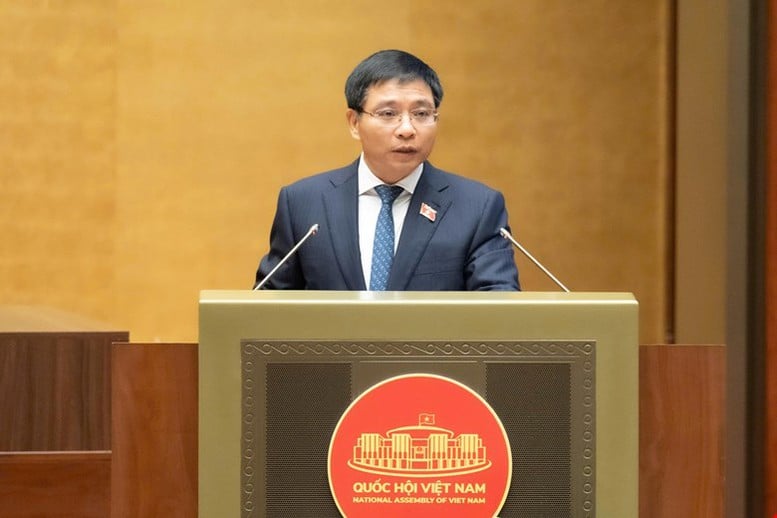
Minister of Finance Nguyen Van Thang
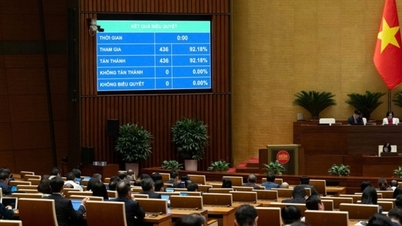
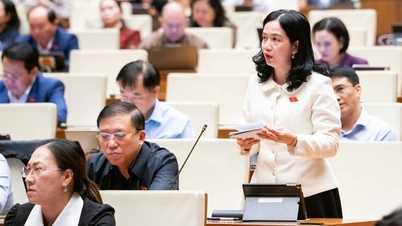
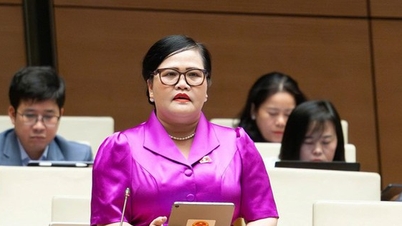
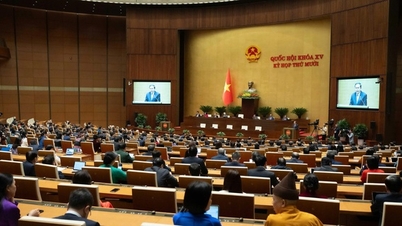
On the morning of December 11th, the National Assembly passed the amended Law on National Reserves with 436 out of 436 participating delegates voting in favor.
The amended Law on National Reserves consists of 6 chapters and 36 articles. A key new feature is the addition of the concept of "strategic reserves" to ensure national strategic autonomy, increase market regulation capacity, and contribute to socio -economic stability.
The law also promotes decentralization and delegation of power, entrusting the Government with the authority to regulate the list of national and strategic reserves appropriate to each period; at the same time, it supplements the mechanism for socializing national reserves, allowing the mobilization of legitimate resources from businesses, with support for management, storage, tax and interest costs as prescribed.
Minister of Finance Nguyen Van Thang stated that the Government has incorporated and revised the principles for managing national reserves. Furthermore, regulations on the State's policy regarding national reserves have been revised to prioritize investment, research, and development in science, technology, innovation, and digital transformation in the field of national reserves to modernize national reserve operations.
The regulations on strategic reserves for natural resources, important minerals, and digital resources are revised as follows: Strategically important resources and minerals, national energy, and high-tech products that meet the requirements of economic security, energy security, and food security strategies.
Regarding the socialization of national reserves, the Government has incorporated and revised the draft to ensure that units, organizations, and enterprises participating in strategic reserves receive preferential treatment in terms of taxes, credit, and other preferential policies as stipulated by the Government in each period, guaranteeing the legitimate rights and interests of the State and all participants in strategic reserves.
The purchase and sale of strategic reserves, using both state budget and non-state budget funds, shall be carried out through agreements, voluntary participation, and contracts as prescribed by the Government and other relevant laws.
The purchase and sale of strategic reserve goods from legitimate sources by units, organizations, and enterprises is supported by the State with management and storage costs and other support as prescribed by the Government.
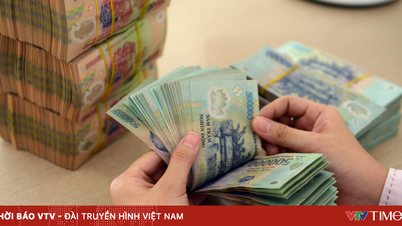
Regarding the scope of strategic reserves, the draft law does not address the issue of reserves of money, gold, or foreign currency, as these are already governed by banking laws and other relevant legislation.
Regarding international integration and cooperation in reserve management, the draft law stipulates proactive international integration and cooperation, exchange, and sharing of resources in national reserve management activities, ensuring national interests and sovereignty.
Regarding the pilot model of revolving reserves, the Government will study it when drafting the Decree to ensure its feasibility, effectiveness, and to avoid wasting state budget funds.
Regarding policies and regulations for those working in national reserves, the draft law inherits and retains the current regulations, without adding any new types of allowances.
The Minister of Finance stated that, in practice, this policy has been implemented stably for over 12 years, creating a secure working environment for national reserve officials and civil servants, especially those who have to perform urgent tasks, promptly releasing and delivering national reserve goods under very difficult and dangerous conditions due to natural disasters, storms, floods, and landslides to localities in need of emergency relief.
Thu Giang
Source: https://baochinhphu.vn/bo-sung-khai-niem-du-tru-chien-luoc-tang-suc-chong-chiu-truoc-rui-ro-bien-dong-thi-truong-102251211113701382.htm
![[Photo] Closing Ceremony of the 10th Session of the 15th National Assembly](/_next/image?url=https%3A%2F%2Fvphoto.vietnam.vn%2Fthumb%2F1200x675%2Fvietnam%2Fresource%2FIMAGE%2F2025%2F12%2F11%2F1765448959967_image-1437-jpg.webp&w=3840&q=75)










































![[OFFICIAL] MISA GROUP ANNOUNCES ITS PIONEERING BRAND POSITIONING IN BUILDING AGENTIC AI FOR BUSINESSES, HOUSEHOLDS, AND THE GOVERNMENT](https://vphoto.vietnam.vn/thumb/402x226/vietnam/resource/IMAGE/2025/12/11/1765444754256_agentic-ai_postfb-scaled.png)












































Comment (0)