

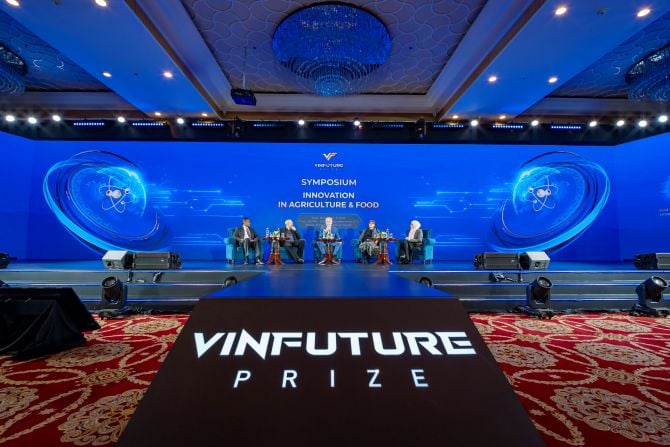
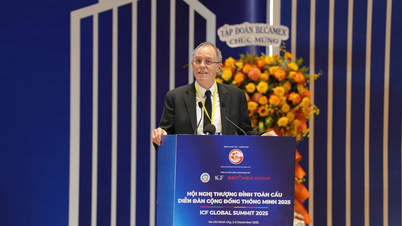
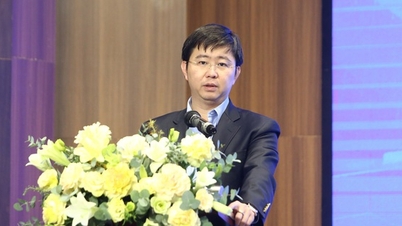
Scientists attended the seminar on Innovation in Agriculture and Food on the afternoon of December 3.
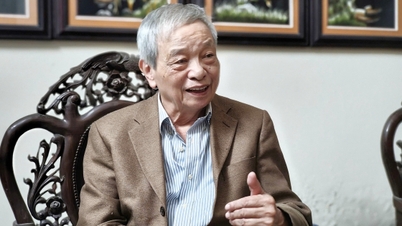
The research of Professor Pamela Christine Ronald, University of California, Davis (USA), member of the VinFuture Prize Council, focuses on the PSY 1 gene. This gene helps the root system grow faster than conventional plants. When tested under favorable conditions, the rice variety with this gene reduced methane emissions by 40%. “The focus is on analyzing the microbial community in the soil and identifying rice genes that control root exudates and the connection with soil microorganisms. The research uses plant genetics to develop new rice varieties that can reduce methane emissions,” said Professor Pamela Christine Ronald.
Meanwhile, Professor Raphaël Mercier, Max Planck Institute for Plant Genetics (Germany) focused on the problem of plant reproduction. He created a healthy F1 hybrid plant, without the need to control the quality of the parent plant, but only the quality of the hybrid. According to Professor Raphaël Mercier, the form of asexual reproduction allows the preservation of desired characteristics and the rapid creation of pure lines, used for many types of crops, supporting farmers.
Focusing on finding ways to reduce the amount of nitrogen fertilizer used on plants, thereby protecting soil and water resources, Dr. Nadia Radzman, Sainsbury Laboratory, University of Cambridge (UK) discovered how to use peptide bioswitches to regulate carbon in the air. The peptides work by affecting the root system, sending signals to the plant, and the plant will send signals back to change physiological responses (increasing nodules, helping to increase nitrogen fixation).
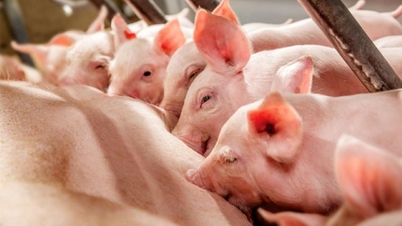
Similar to rice farming, the livestock industry contributes about 14.5% of global GHG emissions, mainly enteric methane. Research by Professor Ermias Kebreab, University of California, Davis (USA), Member of the VinFuture Prize Preliminary Jury, shows that adding by-products to the cow's diet (including seaweed, Vietnamese wild tea, cassava leaves and pulp) can significantly reduce methane emissions while still providing protein and nutrients for cows. Notably, when cows eat seaweed, the amount of methane emitted is reduced by 30%.
“Use local by-products to help reduce emissions, improve productivity and circularity,” recommends Professor Ermias Kebreab.
However, according to the speakers, financial investment in research is essential to make “dreams” such as the dream of asexual reproduction come true. Along with that, global cooperation and the use of advanced technology, such as artificial intelligence, in research are also emphasized to promote scientific achievements and practical applications, solving urgent problems that life poses.
Source: https://doanhnghiepvn.vn/cong-nghe/cac-nha-khoa-hoc-quoc-te-tim-loi-giai-cho-tuong-lai-nong-nghiep-phat-trien-ben-vung/20251204095216809


![[Photo] Cat Ba - Green island paradise](/_next/image?url=https%3A%2F%2Fvphoto.vietnam.vn%2Fthumb%2F1200x675%2Fvietnam%2Fresource%2FIMAGE%2F2025%2F12%2F04%2F1764821844074_ndo_br_1-dcbthienduongxanh638-jpg.webp&w=3840&q=75)








































![[VIMC 40 days of lightning speed] Da Nang Port: Unity - Lightning speed - Breakthrough to the finish line](https://vphoto.vietnam.vn/thumb/402x226/vietnam/resource/IMAGE/2025/12/04/1764833540882_cdn_4-12-25.jpeg)










































Comment (0)