


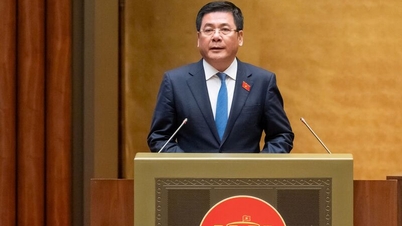
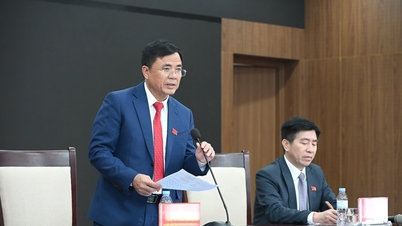
Dr. Tran Hau Ngoc, Vice Chairman of the National Committee for Standards, Metrology and Quality, spoke at the working session.
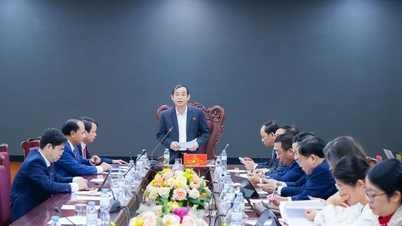
Following the positive results from the working trip to Ha Tinh, on August 13, Working Group No. 7 of the Ministry of Science and Technology led by Dr. Tran Hau Ngoc , Vice Chairman of the National Committee for Standards, Metrology and Quality, came to work with the People's Committee of Quang Tri province. Attending the working session were Mr. Hoang Xuan Tan, Vice Chairman of the Provincial People's Committee, and representatives of leaders of departments, branches and sectors.
The program is part of a plan to survey and evaluate the implementation of the two-level local government model in the field of science and technology in localities, thereby promptly removing obstacles and promoting the effectiveness of state management of science and technology.

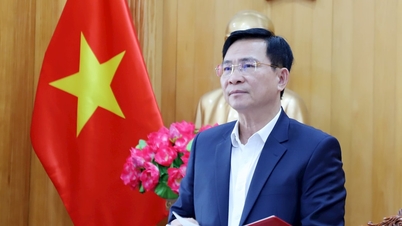
Mr. Hoang Xuan Tan, Vice Chairman of the Provincial People's Committee, delivered a speech at the working session.
According to the report of the Department of Science and Technology of Quang Tri province, after the two-level government model officially came into operation from July 1, 2025, the province has proactively and urgently implemented Decrees No. 132 and 133/2025/ND-CP of the Government, to ensure unified and synchronous management, without interruption, overlap or omission of tasks.
The province's shared information systems operate smoothly and stably, actively supporting the operations of the two-level government. The administrative procedure information system has integrated 100% of online public services on the National Public Service Portal, meeting the centralized "one-window" model. In particular, the electronic document system is also sent and received smoothly with the Central Government, demonstrating the rapid adaptation of the apparatus.
In addition, the list of administrative procedures in the field of science and technology has been issued promptly. The work of building a process for handling electronic administrative procedures has also been urgently deployed, creating convenience for people and businesses.
In addition to the positive results, Quang Tri province also pointed out some difficulties and limitations in the implementation process. Specifically, some detailed guidance documents of the Ministry of Science and Technology have not been fully issued, causing confusion in application, especially in highly specialized fields such as radiation safety, intellectual property, telecommunications and internet. The slow training of officials, especially at the grassroots level, makes the implementation of new administrative procedures difficult. The province also encountered difficulties in granting radio frequency licenses to offshore fishing vessels due to difficulties in accessing and propagating to fishermen.
During the meeting, representatives from Quang Tri province proposed several recommendations to the Ministry of Science and Technology and related units, including:
- Promptly issue comprehensive and detailed guidance documents, especially in specialized fields.
- Provide guidance to local authorities on building specialized databases and sharing access to data repositories on national standards and regulations.
- Support the organization of in-depth professional training courses for grassroots officials.

The working group conducted a survey at the Public Administrative Service Center of Quang Tri province.
On behalf of the working delegation, Dr. Tran Hau Ngoc highly appreciated the preparation, proactiveness and sense of responsibility of the Quang Tri provincial authorities in implementing Decrees 132 and 133. The results achieved have shown the rapid adaptability of the two-level government apparatus, which is a premise for the locality to improve the effectiveness of state management of science and technology, better serving the people and businesses.
Dr. Tran Hau Ngoc proposed a number of solutions for Quang Tri province, including: (1) There needs to be strong and unified direction from the heads of Party committees and authorities for effective decentralization and delegation of power. (2) Perfecting infrastructure and human resources, decentralization needs to be associated with perfecting the legal corridor, organizing a reasonable apparatus and especially improving the capacity of the staff. He also proposed a "special" plan in the initial phase: Mobilizing digital technology enterprises, organizing community digital transformation, even students with technology skills to support solving short-term human resource problems. This is considered a creative and flexible solution, helping localities quickly resolve administrative procedures related to information technology. (3) Promoting technology application, synchronous investment in information technology infrastructure systems, shared databases and digital platforms, especially in difficult areas. (4) Establish a coordination mechanism between central and local agencies, regularly share information, data and provide professional support.
The members of the delegation, representing 14 units under the Ministry, discussed and answered a number of local issues. In addition, Dr. Tran Hau Ngoc said that the delegation will fully acknowledge the recommendations of the province so that the Ministry of Science and Technology can review and propose amendments and supplements to inadequate legal documents, and continue to accompany the province in improving skills in information technology, digital transformation and professional skills.
At the end of the working session, Vice Chairman of the Provincial People's Committee Hoang Xuan Tan acknowledged the efforts of the departments and branches and affirmed the province's goal of making science and technology a key driving force, contributing to building Quang Tri to develop quickly and sustainably.

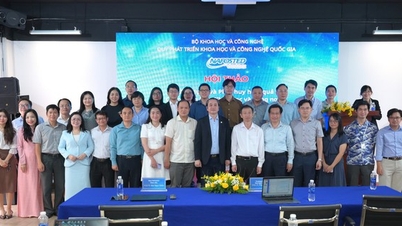
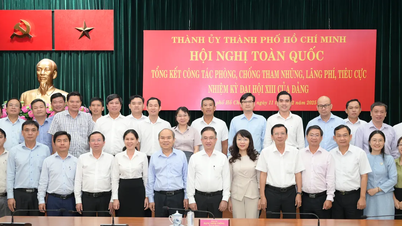
The delegation took a souvenir photo.
Source: https://mst.gov.vn/chinh-quyen-2-cap-o-quang-tri-van-hanh-thong-suot-nhung-van-con-khoang-trong-197250814092132583.htm








































































Comment (0)